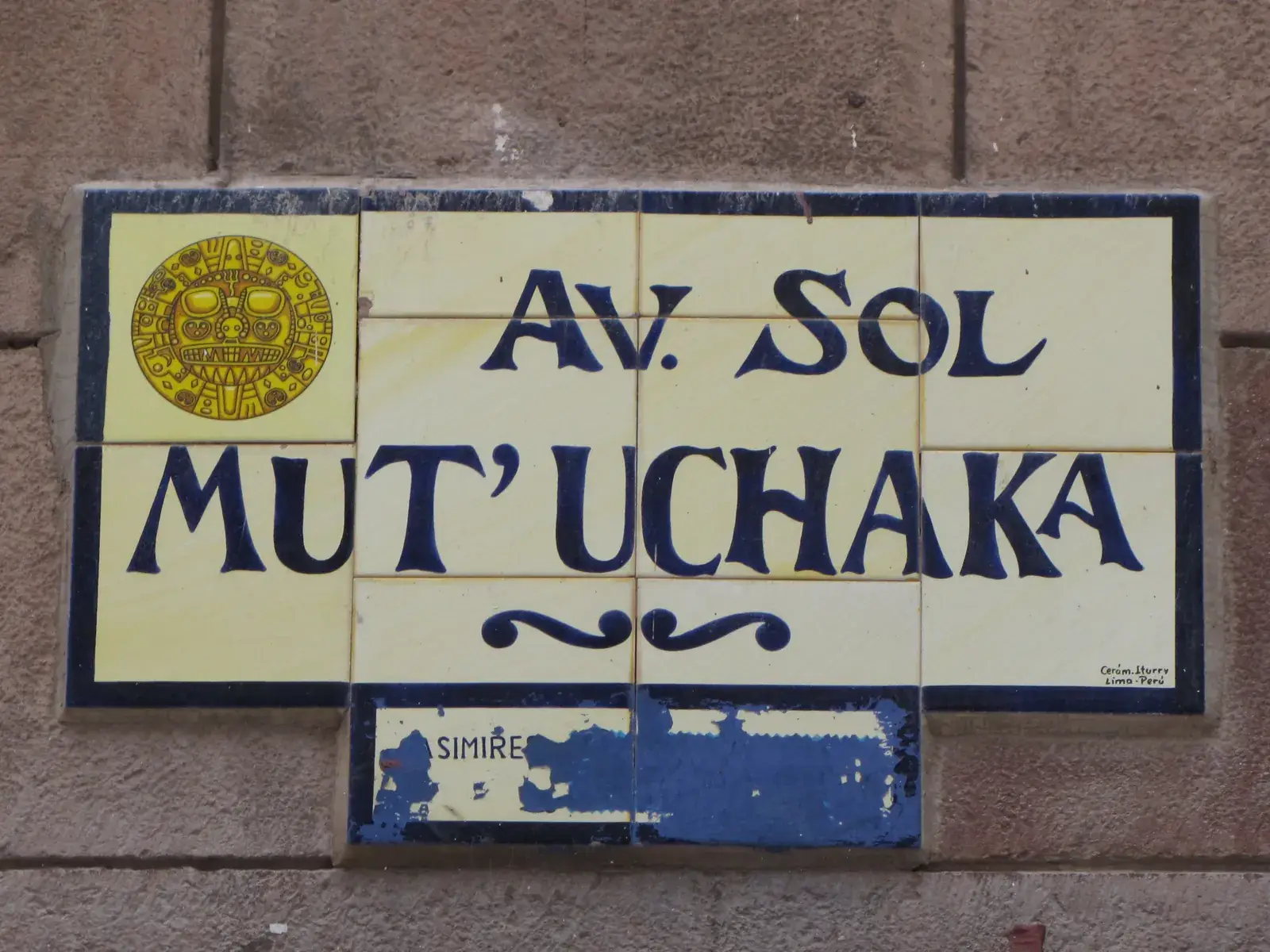
Most words a visitor needs in Peru fall into six groups: transport (colectivo, combi, mototaxi), food (menú del día, chifa, picantería), landscape (sierra, puna, apu), heritage (huaca, ayllu, quipu), customs (Pachamama, despacho) and money (sencillo, boleto turístico). Spanish is the language of daily travel, and Quechua appears in place names, ruins and festivals.
The sections below explain each term in the way you are likely to meet it: on a sign, in a menu, from a guide or in a ticket office. Quechua origins are mentioned only where they are widely agreed. Pair this page with a list of Spanish phrases for things to say, not just to recognise.
Getting around: colectivo, combi, terminal terrestre, mototaxi
A colectivo is a shared car or van that runs a fixed route and leaves when it fills; it is a standard way to cover short distances between towns, such as in the Sacred Valley. A combi is a small minibus that works like a city bus, with a conductor calling out the destinations from the door. Routes are shown by a board or by shouting, so it helps to know the name of your stop. See colectivos for how they work in practice.
A terminal terrestre is a bus station. In some cities long-distance companies run their own terminals rather than a single shared one, so check which one your ticket departs from, and read buses in Peru. A mototaxi is a three-wheeled motorbike taxi, common in small towns and the Amazon, where it is often the main local transport. Agree the fare before getting in, and use taxis and apps in larger cities, where ride apps are an alternative to street taxis.
Eating: menú del día, chifa, cevichería, picantería
The menú del día is a fixed-price set lunch, usually a starter, a main course and sometimes a drink, and it is how many Peruvians eat at midday. A chifa is a Chinese-Peruvian restaurant, a long-established cuisine of its own and a common everyday meal; the page on chifa explains it. A cevichería is a restaurant specialising in ceviche and other fish dishes, traditionally associated with lunchtime, and ceviche covers the dish itself.
A picantería is a traditional restaurant, especially associated with Arequipa, serving spicy regional dishes. Anticuchos are grilled skewers, classically of beef heart, sold at street stalls and restaurants; see anticuchos. Pisco is the grape brandy behind the national cocktail, explained in pisco. Chicha can mean a fermented drink or a sweet purple drink, and ají means chilli pepper, so ask how hot a dish is. For the full picture of the cuisine, see food.
Landscape: costa, sierra, selva, altiplano, puna, quebrada
Peru is usually described as three regions: the costa, the dry coast; the sierra, the Andean highlands; and the selva, the Amazon lowlands and its forested slopes. Each has its own climate, food and dress. The altiplano is the high plateau around Lake Titicaca, and puna is the cold, treeless grassland above the tree line, where llamas and alpacas graze. A quebrada is a ravine or small valley, often the route of a trail or road.
An apu is a mountain regarded in Andean tradition as a protective spirit, and the word often appears in the names of peaks; guides may speak of the apus with respect. A mirador is a viewpoint, signed as such at many sites. A tambo was an Inca roadside inn or storehouse, and the word survives in village and site names. In towns the plaza de armas is the main square, the natural starting point; see the Plaza de Armas in Cusco and the villages of the Sacred Valley.
Heritage: Inca, Inka, ayllu, quipu, huaca, ushnu, chullpa
Inca is the usual Spanish and English spelling for the people and the empire, and Inka is the spelling closer to Quechua; both are correct and you will see each. In Quechua the word originally referred to the ruler. An ayllu is a traditional kin-based community that shared land and work, and the concept survives in rural life. A quipu is a system of knotted cords used for record-keeping, and you may see examples in museums.
A huaca is a sacred place or object, from a rock to a temple mound, and the term is used for pre-Inca sites on the coast too, as in Huaca Pucllana. An ushnu is a ceremonial platform found in Inca administrative centres. A chullpa is a funerary tower, best known around Lake Titicaca; see Sillustani. Many of these terms appear on site signs and in guides' talks, and they tie into the wider story of the Inca sites near Cusco.
Festivals and customs: Pachamama, despacho, Inti Raymi
Pachamama is Mother Earth, an important figure in Andean belief, and offerings to her are common in rural life and at the start of many ceremonies. A despacho, or pago a la Pachamama, is an offering of items such as coca leaves, food and flowers, made by a specialist, sometimes offered to visitors in tourism settings. Treat it as a ritual to watch respectfully, and ask before photographing.
Inti Raymi is the festival of the sun, staged in Cusco on 24 June, and the word inti means sun in Quechua. Other terms you may meet include fiesta patronal, the annual festival of a town's patron saint, and Fiestas Patrias, the national independence holidays at the end of July. Dates and details are covered in festivals and holidays, and the months are compared in Peru month by month. For behaviour around ceremonies and local people, see etiquette.
Money and services: soles, sencillo, boleto turístico, propina
The currency is the sol (plural soles), and prices in tourist areas are sometimes quoted in dollars too, so check which currency a price is in. Sencillo means small change, and asking for it is a daily habit: taxi drivers, market stalls and small shops often cannot break large notes, so keep small notes and coins. See money for cash machines, cards and exchange.
The boleto turístico is a combined ticket sold in the Cusco region that covers several sites and museums; what it includes and whether it is worth buying depends on your plans, so check the current terms before purchase. A propina is a tip, customary in restaurants and for guides and drivers, covered in tipping. A casa de cambio is an exchange office and a cajero is a cash machine. A recibo is a receipt, worth asking for in hotels and tours.
Language: Spanish and Quechua in daily travel
Spanish is the language of travel in Peru: hotels, buses, shops and restaurants run in it, and basic phrases make a real difference outside the main tourist areas. Quechua is spoken in the Andes, including around Cusco, and Aymara is spoken around Lake Titicaca. In towns used to visitors, English is common in tourism businesses, but not in daily life.
Quechua words reach visitors mostly through names of places, peaks, foods and festivals, and through a few greetings that guides share. Do not be put off by spellings: a word may appear in several forms, because Quechua was written down in Spanish letters before standard spellings existed. Use the names that appear on the site you are visiting. When in doubt, a polite greeting and a smile in Spanish go a long way; the page on Spanish phrases lists the most useful ones.
Frequently asked questions
How do you pronounce Cusco?
In Spanish it sounds like KOOS-koh, with the stress on the first syllable. Cusco and Cuzco are both seen, but Cusco is the official modern spelling, and it is the one used on signs and by the city.
Is it Inca or Inka?
Both are used. Inca is the standard Spanish and English spelling, while Inka follows Quechua spelling and is preferred by some writers and local guides. Which you use rarely matters, and either will be understood.
Is Spanish enough to travel in Peru?
Yes. Spanish is the working language of travel across the country, and no Quechua is needed. Learning some Spanish phrases helps with transport, markets and small restaurants. See Spanish phrases.
Where is Quechua spoken?
Mainly in the Andean highlands, including the Cusco region, Ayacucho and Huancavelica, and in many rural communities. Many speakers also use Spanish. Aymara is spoken near Lake Titicaca. Local varieties differ.
What is a combi and how is it different from a colectivo?
A combi is a small minibus on a set city route with a conductor, while a colectivo is usually a shared car or van that leaves when full. Both are cheap and used by residents. See colectivos for more.
What does sencillo mean?
It means small change. Peruvians use it to ask whether you have coins or small notes, because taxi drivers and small shops often cannot break large ones. Keeping small denominations on hand is a practical habit.
What is the difference between chifa and cevichería?
A chifa serves Chinese-Peruvian food, while a cevichería specialises in ceviche and other fish and seafood dishes. They are different kinds of restaurant. See chifa and ceviche.
What is a boleto turístico?
A boleto turístico is a combined ticket for several sites and museums, best known in the Cusco region. What it covers and its validity change, so check the current terms at the seller and compare against buying single entries.