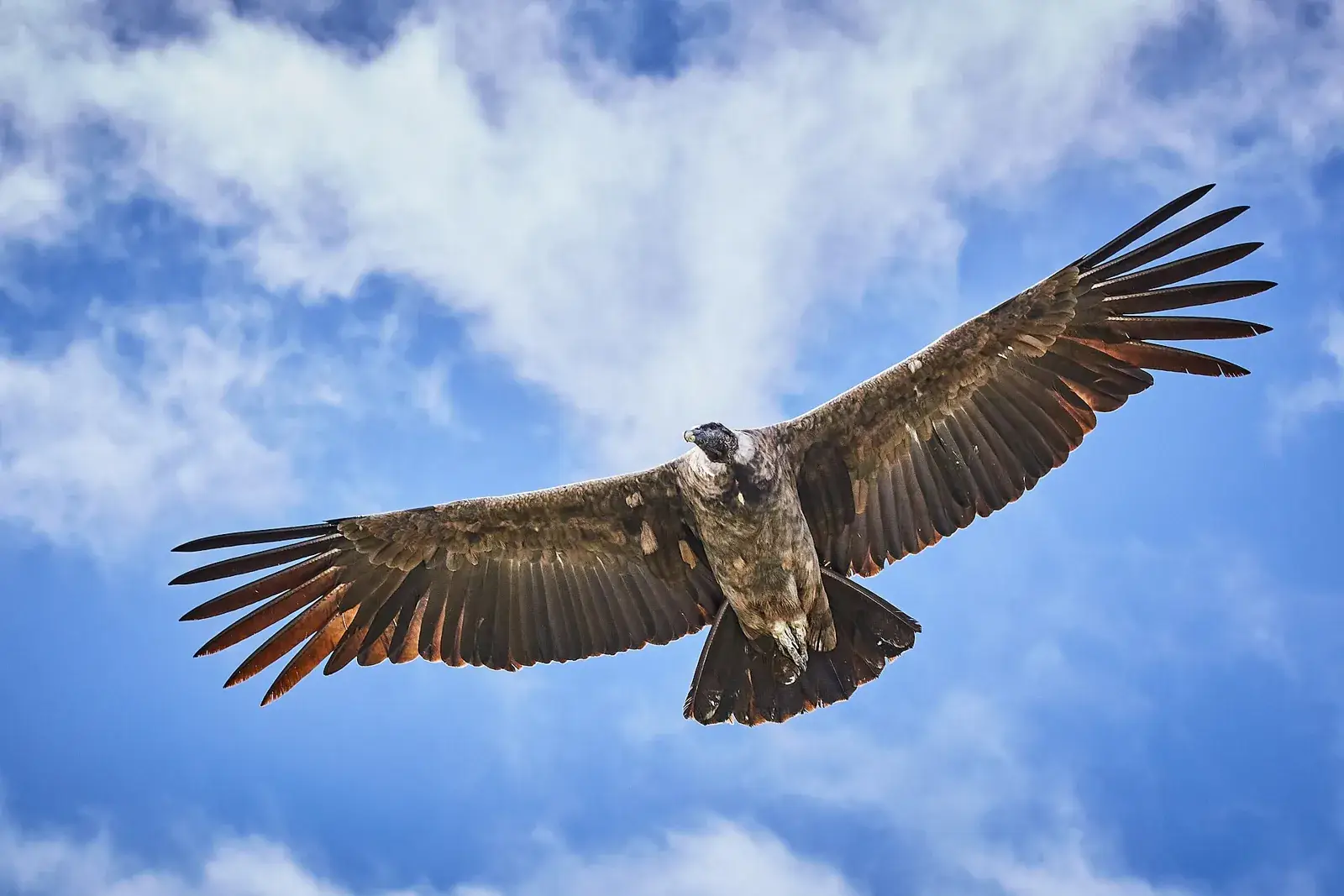
Allow two days and one night from Arequipa for the Colca Canyon, three if you want to hike inside it. The journey crosses a high pass above 4,000 m, so the altitude matters more here than the distances suggest. Go for the condors at the Cruz del Condor viewpoint, and stay for the villages and the hot springs.
In this section
-
 Destination guide
Colca Canyon Tours
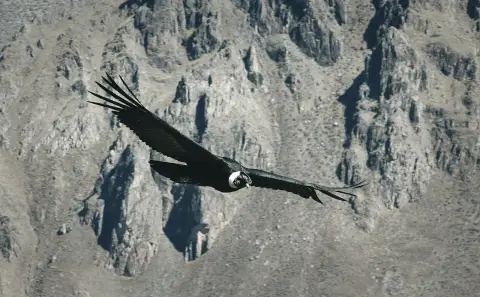
The Colca Canyon is reached on long road journeys, and the choice between one and two days changes the whole experience.
-
 Attraction
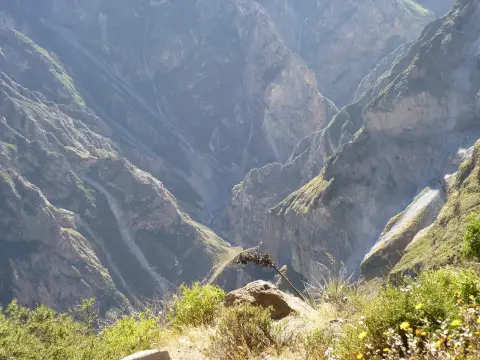
Cruz del Cóndor
The best-known condor viewpoint in Colca Canyon, where birds often glide past the rim in the morning.
-
 Destination guide
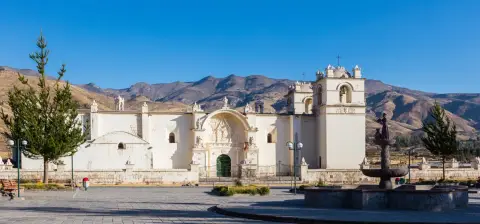
Colca Canyon Villages: Chivay to Cabanaconde
A stage-by-stage guide to the villages on the Colca road, from the main base at Chivay to Cabanaconde near the condor viewpoint.
-
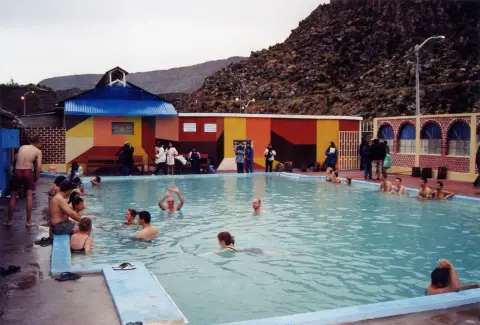 Attraction
La Calera Hot Springs
A complex of open-air thermal pools a few kilometres from Chivay, the usual soak at the end of a day in the Colca Valley.
-
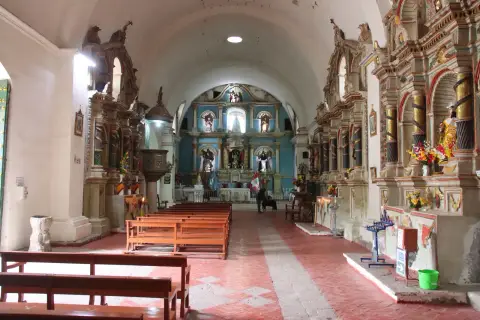 Attraction
Yanque Church
The Franciscan Immaculate Conception church on Yanque's plaza, one of the most admired colonial churches of the Colca Valley.
A canyon with people in it
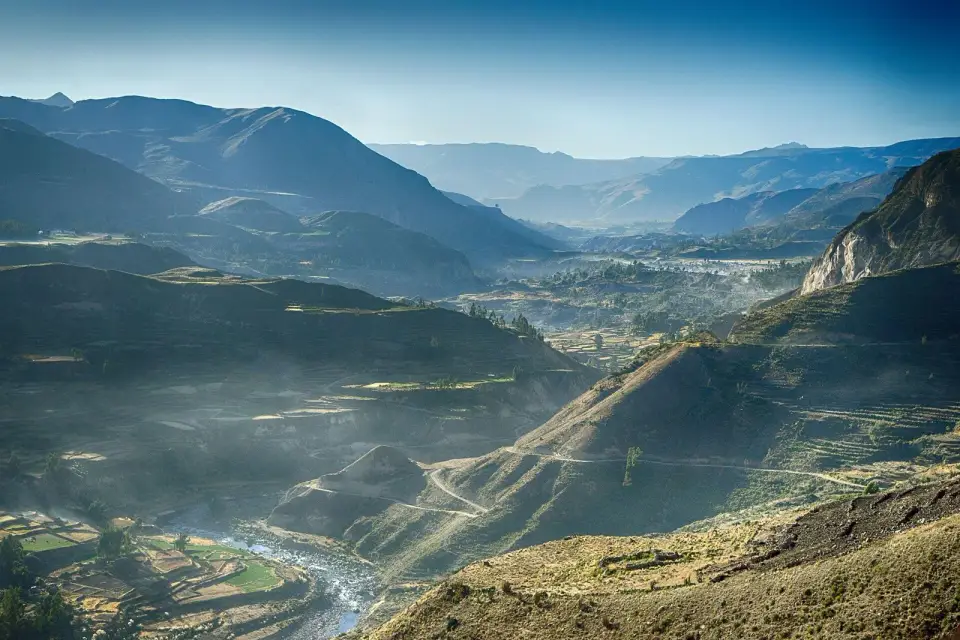
The Colca is not a wilderness. Collagua and Cabana communities have farmed its terraces for centuries, and the villages along the rim keep traditional dress, festivals and church architecture. Women in embroidered hats and skirts are a common sight in the main square of Chivay, the largest town and the usual stopping point.
The canyon is often described as among the deepest in the world. Its sheer scale is best felt from the viewpoints, where the river is a thin line at the bottom of an enormous drop. Because the terraces are still farmed, the landscape is as much agricultural as natural: green strips of barley and maize cling to the slopes, and stone walls mark fields that are many generations old. Visiting respectfully means asking before taking photographs of people and staying on paths rather than crossing crops.
The Cruz del Condor
The famous viewpoint, the Cruz del Condor, is a spot along the canyon rim where Andean condors often glide on rising air in the early morning. Tours arrive early to catch them, and the viewing is a matter of luck: some mornings are full of birds and some are quiet. Stay still, keep a respectful distance from the cliff edge and do not try to attract the birds with food. The crowds can be large, so find a spot along the rail and be patient.
Condors rely on warm air currents to soar, which is why the early morning, once the sun heats the canyon walls, is the best window. Bring warm clothes for the wait, since the rim is cold before the sun rises, and take binoculars if you can. A long lens helps photographers, though many of the best moments happen when the birds pass close enough for a phone.
How many days
A two-day, one-night tour from Arequipa is the standard: drive up, stop at viewpoints, soak in hot springs near Chivay, sleep in a village, visit the Cruz del Condor in the morning and return. A three-day version adds a hike into the canyon and a night at an oasis in the bottom, which is a tough descent and climb; the Colca trek is described in detail. Some tours end in Chivay and continue to Puno, so you can do the canyon as a transfer.
Colca tours versus independent travel compares the options. A single-day tour from Arequipa exists, but it is very long and leaves almost no time at the viewpoints, so it is best avoided unless you have no alternative. Think of the canyon as a short, slow trip, not a quick tick on a list.
Villages, hot springs and food
Chivay has a market and thermal baths, and villages such as Yanque, Maca and Cabanaconde offer churches, viewpoints and simple guesthouses. Cabanaconde is the usual starting point for canyon hikes. Local menus include alpaca, trout and quinoa soup.
The hot springs are a welcome treat after a day of travel, though they can be crowded in the late afternoon, and facilities vary, so shower before you enter and bring a towel. Meals in the villages are simple and filling, and the main dining rooms often cater to tour groups. For a taste of the regional cooking from the city, see eating in Arequipa.
Getting there and moving on
The standard approach is by road from Arequipa, which takes several hours in a minibus or coach. The options, from tours to public buses, are set out in Arequipa to Colca. Public buses leave from the terminal in Arequipa and head for Chivay and onward, while tours include stops at viewpoints on the way.
If you are continuing to Cusco or Puno, a one-way transfer through the canyon avoids a return to Arequipa. Arequipa to Puno covers the main road towards the lake, and many tour companies offer a combined option. Whatever you choose, build in a buffer, since road conditions and weather can slow the journey.
What to pack
Layers are essential. Mornings are cold and the sun is strong, and the road passes through very different temperatures within a few hours. Bring a warm jacket, a hat, gloves, sunscreen and sunglasses, and good shoes for viewpoints and uneven paths. A swimsuit and towel are needed for the hot springs.
Carry some cash in soles for small purchases in villages, since cards are not widely accepted. Water is important at altitude, and a small first-aid kit with the medication your doctor advises is sensible. For general items for the Andes, see packing list, and for what to watch for as you climb, see altitude sickness.
When to go
The dry season, roughly May to September, gives clear skies and the best condor viewing, with very cold nights. The wetter months, roughly December to March, are greener but bring rain, cloud and occasional road problems. The shoulder months can be a good compromise, with fewer visitors and still reasonable weather.
In the rainy season, landslides and washouts can delay journeys. What the months mean across the Andes is explained in the dry season, and for the best months for hiking inside the canyon, see Colca trek.
Map
Where to sleep
-
Chivay
Main town of the Colca Valley, hot springs nearby
The main town of the valley, with a market, restaurants and hot springs nearby. A comfortable base for the night before the condor viewpoint, with the widest choice of hotels.
Keep in mind: It is high, and nights are cold. The Cruz del Cóndor viewpoint is roughly an hour and a half by road, so you will leave early.
Find hotels → -
Cabanaconde
Village at the canyon rim, near the trails down
A village on the canyon rim, at the start of the trail down to the Sangalle oasis and a short drive from the Cruz del Cóndor. A good choice for walkers.
Keep in mind: Hotels and restaurants are simple, and not every place takes cards, so carry some cash.
Find hotels →
Weather in Chivay
Forecast: MET Norway
Frequently asked questions
Is a Colca tour from Arequipa worth it?
Yes if you like landscapes, wildlife and village life. The long drive is the cost, so choose the two-day version to avoid rushing.
Will I definitely see condors?
No. Sightings are common but not guaranteed, and mornings are best.
Can I go from Colca to Puno?
Yes, many tours and buses link the canyon with Puno, which saves backtracking to Arequipa.
How cold is it at the Cruz del Condor?
Early mornings are cold at the rim, often close to freezing in the dry season, and warm up once the sun rises. Dress in layers and bring a hat and gloves.
Is the Colca Canyon deeper than the Grand Canyon?
It is often described as one of the deepest canyons in the world, and some measurements put it deeper than the Grand Canyon, but claims vary depending on how depth is measured. Treat the comparison as a talking point, not a precise fact.
Can I visit the canyon in the rainy season?
Yes, and the landscape is greener, but road disruptions, cloud and rain reduce the viewing. Condor sightings can be less reliable.
Are there cash machines in Chivay?
Cash is available in Chivay, but the machines can be unreliable, so bring enough soles from Arequipa. Many smaller villages have no machines at all.
Should I take altitude medication?
Ask a doctor or travel clinic before you go. Do not rely on advice from tour operators, and see altitude sickness for general information.