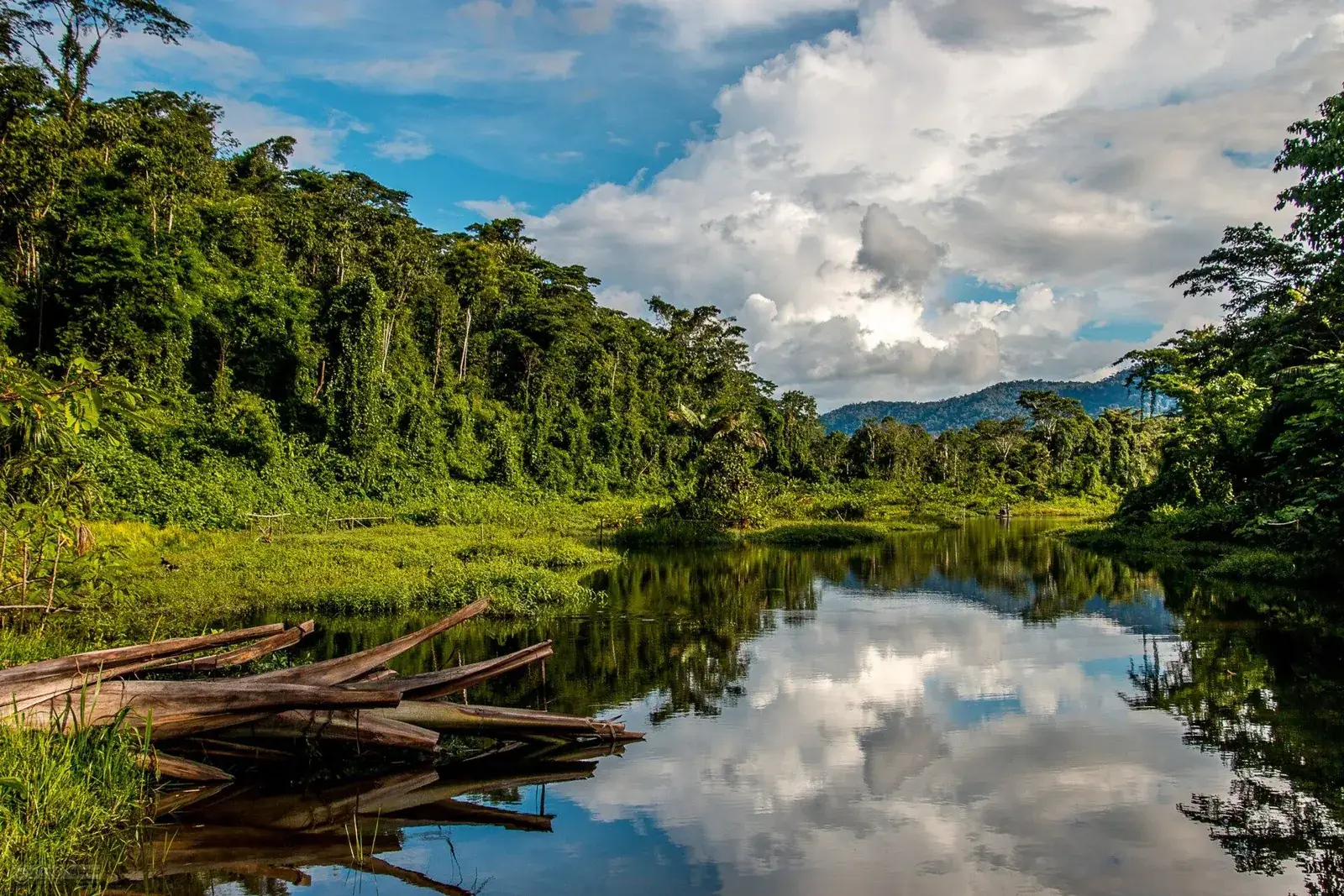
Manu is a serious expedition, not a casual add-on. Allow at least five to nine days from Cusco, go with a licensed operator and expect long road and river travel. It is one of the most biodiverse places on earth, and it is also the most controlled: in its core zone no tourists are allowed at all. Speak to a doctor or travel clinic early.
In this section
-
 Attraction
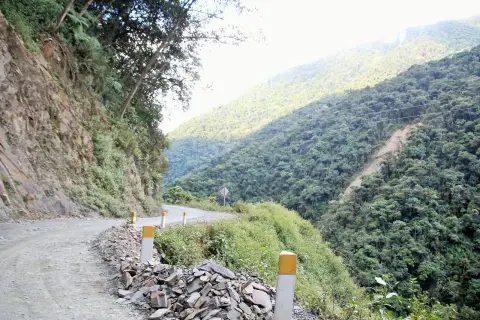
Manu Cultural Zone
The accessible outer zone of Manu National Park, where the Andes drop into cloud forest and the lowland rainforest begins.
-
 Attraction
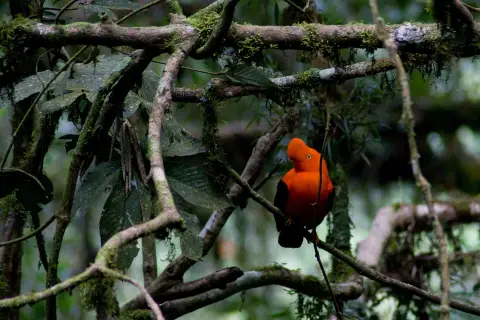
Andean Cock-of-the-Rock Lek
A dawn display site in the Manu cloud forest where male Andean cock-of-the-rocks, Peru's national bird, gather to compete for females.
-
 Attraction
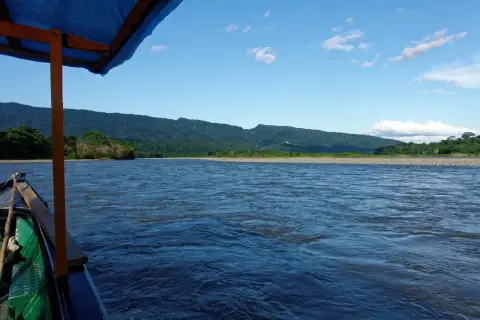
Pantiacolla Mountains
A forested sub-Andean ridge rising above the Alto Madre de Dios river, seen mostly from the boat and from lodge trails.
What Manu is
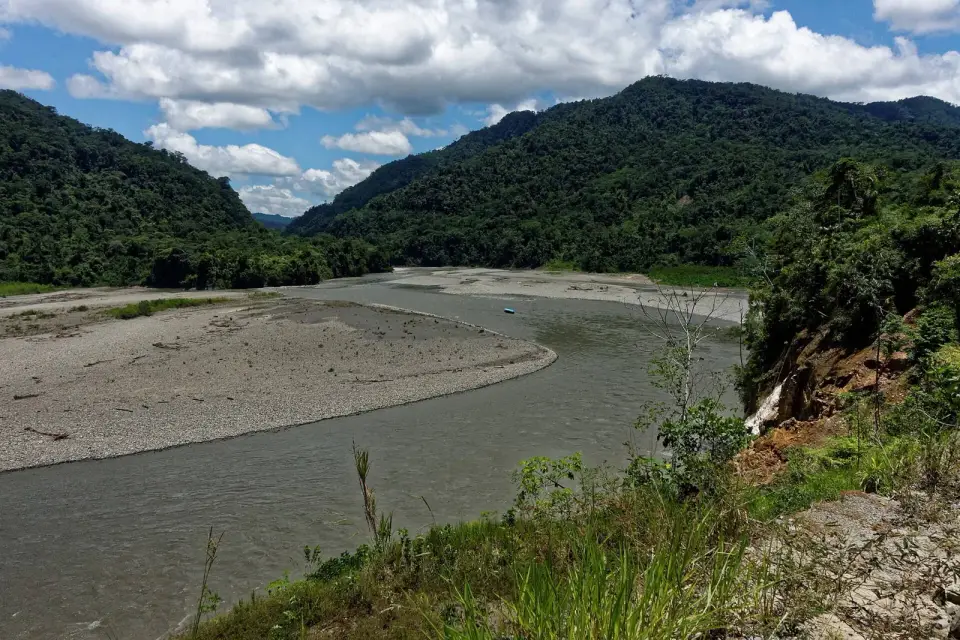
Manu National Park covers a huge area on the eastern slope of the Andes, falling from cold highlands through cloud forest to tropical lowland. This range of altitude is why it supports so many species, from the Andean cock-of-the-rock to giant otters and many primates. It is a UNESCO biosphere reserve and World Heritage site, and parts are home to communities that live in voluntary isolation and must not be disturbed.
The park is divided into zones with different rules. A strictly protected core is closed to visitors, a reserved zone allows limited, licensed tourism, and a cultural zone includes local settlements. The scale is hard to grasp from a map: the park drops from high, windswept grassland to steamy lowlands in a single journey, passing through some of the richest habitat on the planet, and each stage has its own birds, plants and light. Understanding the zones helps explain why access is controlled, and why a trip needs a proper operator. Tambopata offers a more accessible way to see the lowland forest, which may suit those with less time.
How access works
Independent entry to the reserved zone is not allowed. Visits to the reserved zone are organised by authorised operators and require permits, which are limited, so book well ahead. The journey starts in Cusco, with a long road drive over high passes and down through cloud forest, then continues by boat on the river. Some operators include a flight to the lowlands to shorten the trip. Cultural-zone lodges and the cloud-forest section can be visited with shorter, more flexible programmes.
Cusco to Manu explains the road and the options in more detail. Whichever route you choose, you will travel in a vehicle with a driver and a guide, because there is no public transport into the park. Keep your schedule flexible, since landslides on the mountain road and changes in river levels can alter the plan, so build a spare day into the trip.
What to expect
Days are spent on guided walks and boat trips, with early starts for birds and clay licks. Nights are in lodges or camps, often without electricity or with limited hours. The cloud-forest road is a highlight in itself, with birdlife and views, and the lowland section offers a chance to see monkeys, caimans, tapirs and, with great luck, large cats. Wildlife viewing is never guaranteed, and the long journey is part of the experience.
Expect simple accommodation, a fixed timetable and limited contact with the outside world. Mobile coverage is poor or absent for most of the trip, so tell family where you will be and agree check-in points. The food is plain but filling, with meals prepared by lodge staff. Pack light, because space in vehicles and boats is limited, and keep valuables in a waterproof bag. Bring a head torch, a dry bag and a good attitude, and be ready for a very early start on most mornings.
Choosing an operator
Check that the operator is licensed for the reserved zone, ask about group size, guide qualifications, health and safety procedures and what happens in case of delays. Smaller groups and experienced local guides tend to give a better trip. Compare itineraries rather than headline prices, since a longer programme gives more time in the forest.
Ask how the operator works with local communities, how waste is handled and what the company does in an emergency. A reputable operator will answer clearly and provide references. Be wary of an operator who cannot show their licence or who promises sightings of specific animals. Where to go in the Amazon explains how Manu compares with the alternatives, and health and vaccines is a starting point for planning precautions.
Is Manu right for you
Manu suits travellers who want wildlife and remoteness more than comfort, who have the time and budget for a long trip and who can cope with basic conditions. It is less suited to those on a tight schedule, to people with limited mobility or to anyone who dislikes long journeys.
If you want a shorter, easier introduction to the Amazon, Puerto Maldonado and Tambopata are more convenient, while Iquitos offers a different, river-based experience. Whether the jungle is worth the time is worth weighing before you commit. A well-chosen trip to Manu can be one of the highlights of a visit to Peru, but a poorly planned one can be tiring and disappointing.
When to go
The drier months, roughly May to October, are the main season for visiting, with more reliable roads. The wetter months, roughly November to April, bring heavy rain and sometimes closures of roads or parts of the park. Confirm access with your operator for your dates.
Cloud-forest roads are the most affected in the wet season, when landslides can delay or reroute trips. In the dry season, the lowland rivers are lower and the beaches and clay licks are easier to reach. Whenever you go, pack for both heat and cold, because the route climbs and descends through very different climates in a few days.
Map
Weather in Manu
Forecast: MET Norway
Frequently asked questions
Can I visit Manu without a tour?
Not to the reserved zone. A licensed operator is required, and permits are limited.
How many days should I allow?
Five days is a minimum for a meaningful visit, and seven to nine is more typical.
Is Manu better than Tambopata?
It is wilder and more remote, but also more demanding and costly. Tambopata is easier to reach.
Can I see uncontacted people in Manu?
No. Communities living in voluntary isolation must not be approached, and responsible operators follow strict rules to avoid any contact. Be wary of anyone who suggests otherwise.
Is Manu suitable for children or older travellers?
It is a demanding trip with long journeys and basic conditions, so it suits fit, adaptable travellers best. Ask the operator about age limits and medical facilities, and talk to a doctor.
What wildlife might I see?
Typical sightings include macaws, monkeys, caimans and giant river otters, and with luck tapirs. Large cats are rarely seen. The variety of birds, from the cloud forest to the lowlands, is one of the main attractions.
Does Manu have mobile coverage?
Very little, and often none. Plan for long periods without contact, and agree check-in points with family. Your operator may have a radio or satellite phone for emergencies.
Is it safe to travel in Manu?
With a licensed operator and sensible preparation, most visitors have no serious problems, though the remoteness raises the stakes in case of illness or accident. Choose carefully and carry insurance.