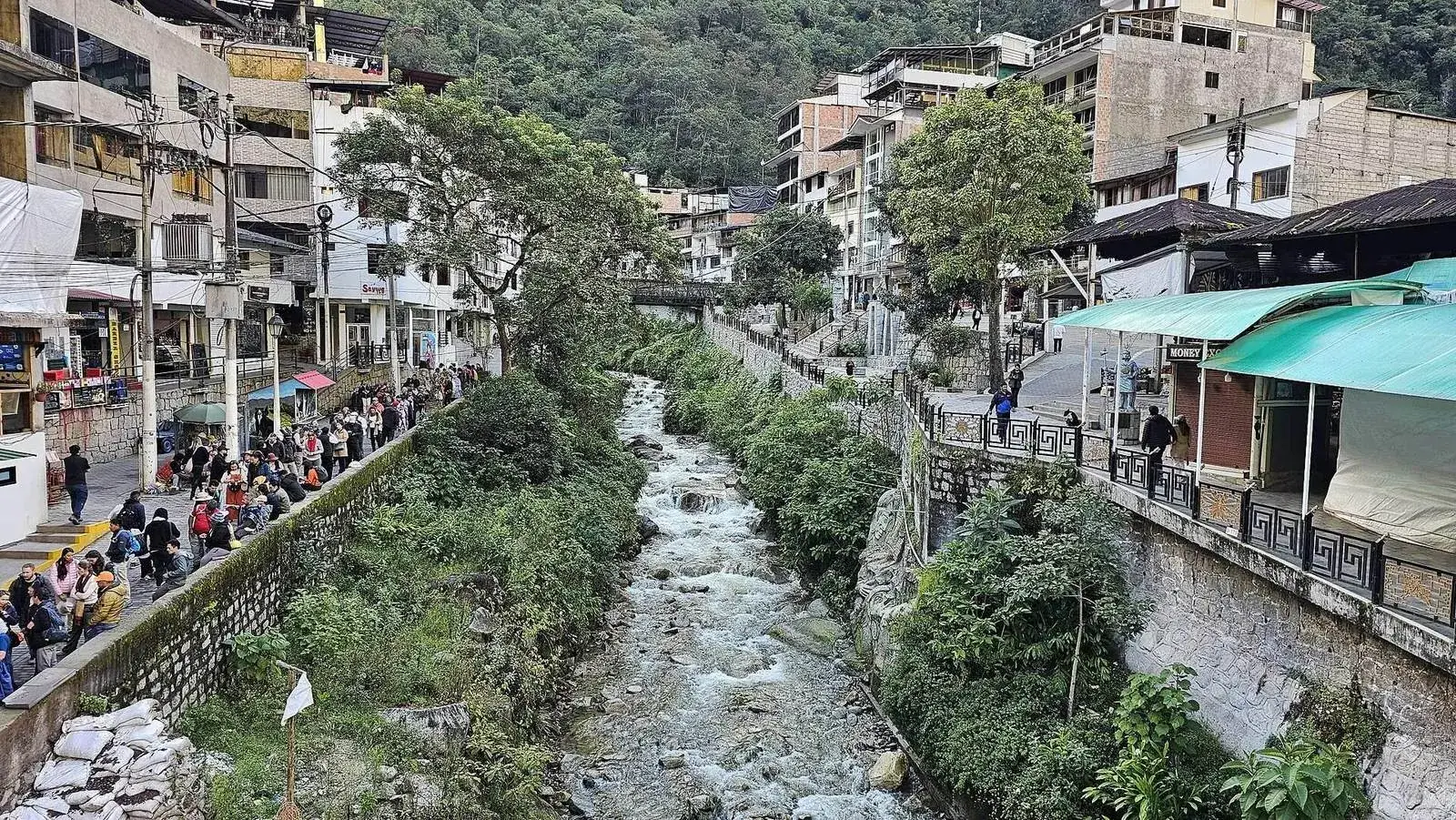
Aguas Calientes, officially called Machu Picchu Pueblo, is where you sleep the night before visiting Machu Picchu if you do not want an exhausting single-day trip. One night is the usual stay. You arrive by train, or on foot along the rail line, and buses climb from the town to the ruins in the morning. Ticket, train and bus details change often.
In this section
-
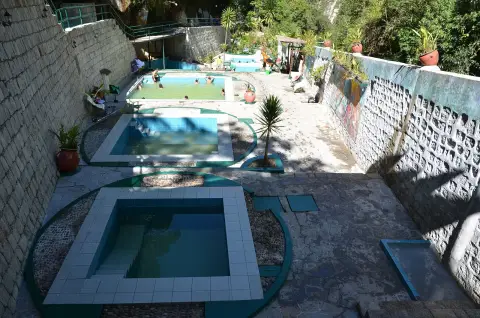 Attraction
Aguas Calientes Hot Springs
The public thermal pools on the upper edge of Machu Picchu Pueblo, the baths that gave the town its name.
-
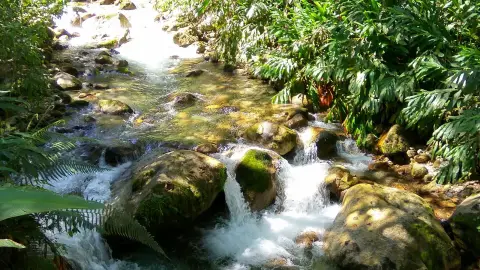 Attraction
Mandor Gardens and Waterfall
A private cloud-forest garden and a waterfall reached on foot along the railway from Aguas Calientes, a half-day walk that needs no ticket for Machu Picchu.
-
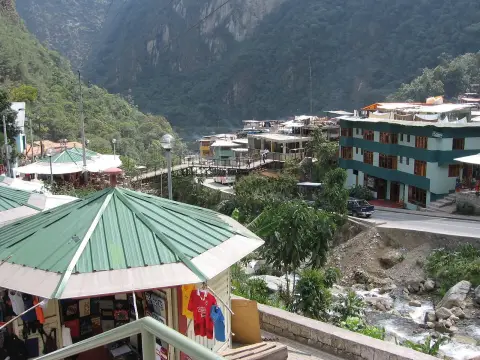 Attraction
Machu Picchu Site Museum
A small state museum at the foot of the Machu Picchu road that explains the citadel and the Urubamba gorge, with an orchid garden next door.
-
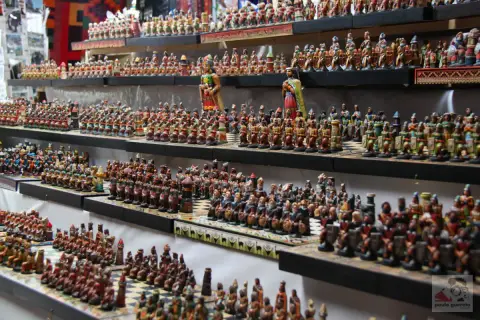 Attraction
Aguas Calientes Artisan Market
A large souvenir and craft market in Aguas Calientes, beside the railway station, where most visitors pass before and after Machu Picchu.
What it is
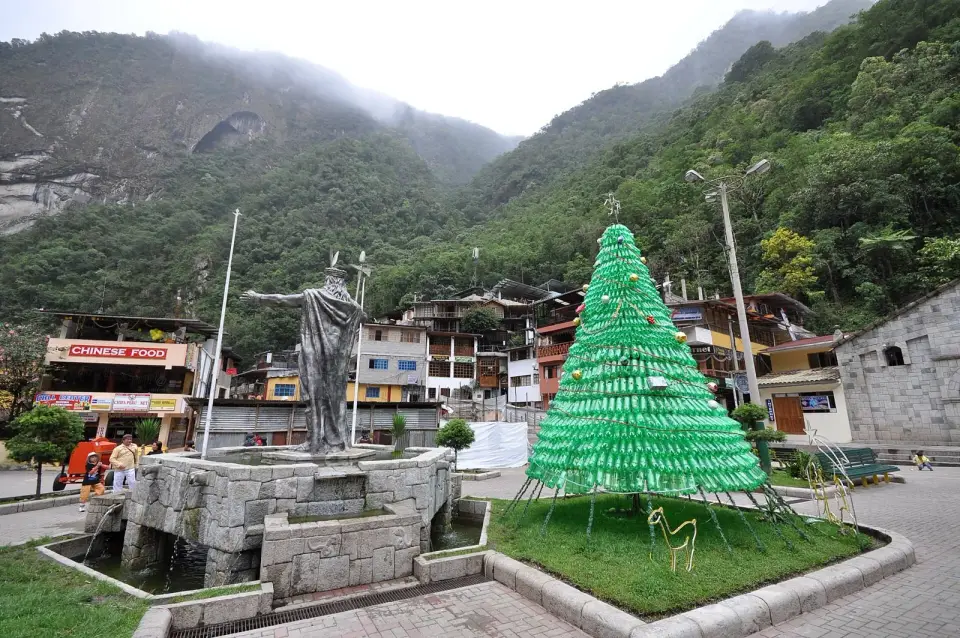
The town is squeezed into a narrow gorge where the Urubamba river and a railway line run side by side. The railway is effectively the main street. There is no road connection to the rest of the country, which is why everything arrives by train or by foot. The setting is dramatic, with cloud forest on every side, but the town itself is built for visitors: restaurants, souvenir stalls, hotels and a small market.
Locals sometimes dislike the name Aguas Calientes in official branding, and you will see Machu Picchu Pueblo on signs and bookings. They refer to the same place. At about 2,040 m it is well below Cusco, and many visitors notice that they sleep and breathe more easily here than in the high city, though the climate is humid and mild rather than dry.
Why sleep here
Staying overnight lets you be among the first buses to the ruins, avoids a rushed return train, lets you take the visit at your own pace and gives you time to adjust to the cloud forest climate. It is also a good idea if you want a later entry time without worrying about connections. If you are on a very tight budget or schedule, some visitors manage a day trip from Cusco or the Sacred Valley, but the day is long.
The trade-offs of how many days to spend at Machu Picchu are worth weighing, and where to stay at Machu Picchu covers how to choose a hotel in the town. Many people find that the town feels crowded in the middle of the day, when day trippers arrive and depart, and calmer in the evening and early morning. A single night is enough for most people, and two nights are only worthwhile if you want a second visit to the ruins or a full rest day.
Tours and activities
Bookable online, chosen for their traveller reviews.
-
★ Top rated From €49 per person
Aguas Calientes
Machu Picchu Entry Ticket for Circuit 1, 2 or 3
-
From €179 per person
Aguas Calientes
Private Machu Picchu Tour with Guide, Entry and Bus
-
From €139 per person
Aguas Calientes
Machu Picchu Guided Tour from Aguas Calientes with Bus
-
From €126 per person
Aguas Calientes
Machu Picchu Small-Group Tour with Entry Ticket
Things to do in the evening and the next day
Walk by the river and along the railway, where the water runs fast and loud over boulders and the air smells of wet leaves, browse the craft market and eat early, because you will probably have an early start. The town has thermal baths that give it its name, on its edge, which are pleasant after a day of walking. A small museum about the site and its excavation sits on the way down the river, and a botanical garden trail is an easy alternative for birds and orchids.
The next morning, buses to the site queue from before dawn. Allow time for the line, and carry your entry ticket and passport. For how the shuttle works and what the alternatives are, see Machu Picchu buses. If you want to watch the sunrise, see what is realistic in sunrise at Machu Picchu.
Getting here and leaving
Trains arrive from Ollantaytambo and sometimes from Cusco, with different classes of service and different departure points. A long hike along the Inca routes and rail line is another way to arrive, and the Inca Jungle and Salkantay routes finish near here. Book trains early in high season, and leave a margin on your return day, since delays are possible.
The services are compared in trains to Machu Picchu, and every route is laid out in how to get to Machu Picchu. A late afternoon return can be tight if you want to see the whole site, so avoid a departure that leaves no margin for a delayed bus.
Eating, shopping and money
Restaurants cluster along the main street and by the railway, and most offer set menus aimed at visitors. Quality varies, and prices are higher than in the valley because everything is brought in by train. Look for places busy with local people, and consider the market for fruit and snacks.
Prices for food and drink are noticeably higher than in the valley, which is worth bearing in mind if you are budgeting a night here. Cash machines exist but can run low, so carry some soles with you from Cusco or Ollantaytambo. Souvenirs sold here are rarely cheaper than elsewhere, and the craft market is a convenient but not the best place to buy; see souvenirs for ideas. Keep your passport with you, since you need it for entry to the ruins and trains.
When to go
The dry season, roughly May to September, gives the clearest views and the highest demand. The wetter months, roughly November to March, bring rain, mist and a lush landscape, with some changes to trails and trains possible. Town accommodation is most expensive and fullest in the dry season.
Mornings often start with mist hanging in the gorge, which usually burns off by the time the first buses reach the ruins. Even in the dry months, showers can appear, and the cloud forest is rarely entirely clear. A light waterproof and an extra layer for early mornings are useful all year. For what to expect month by month and how it affects the views, see Machu Picchu weather.
Map
Where to sleep
-
Aguas Calientes
Sleep at the foot of Machu Picchu for an early entry
A compact town of steps, restaurants, a market and hot springs, with the buses to the entrance leaving from the town. Staying a night lets you enter early, before the day trippers, and avoid a rushed return train.
Keep in mind: Everything costs more here, rooms are often small, and the train times set your plans. A tight town, busy with tour groups.
Find hotels →
Weather in Aguas Calientes
Forecast: MET Norway
Frequently asked questions
Is Aguas Calientes worth staying in?
Yes, for one night, because it makes the Machu Picchu morning much easier. It is not a place to linger for several days.
Is Aguas Calientes the same as Machu Picchu Pueblo?
Yes. The official name is Machu Picchu Pueblo, but Aguas Calientes is still widely used.
Can I walk up to Machu Picchu?
A steep path climbs from the town, which many people use at dawn. Buses are the alternative.
Are the hot springs worth it?
They are a pleasant way to relax after a day of walking, though they can be crowded in the evening. Facilities and prices vary, so look at current reviews before you go, and shower before entering.
Is there a cash machine in Aguas Calientes?
Yes, but supply can run short, so bring enough soles with you. Many restaurants and hotels accept cards, though connections can fail.
Can I leave luggage in Aguas Calientes?
Most hotels will store bags for guests, and the trains have strict luggage limits, so travel light. Leave larger bags in Cusco or Ollantaytambo. Ask your train operator for the limits.
How early should I queue for the bus?
The first buses leave before dawn and queues build up well before them. If you want an early entry, plan to join the line early, and carry your ticket and passport. Ask your hotel about the schedule the day before.
Is it safe to walk around at night?
The town is small and generally comfortable, but the main road is the railway, so watch for trains and use a torch on unlit stretches. As anywhere, keep valuables out of sight.