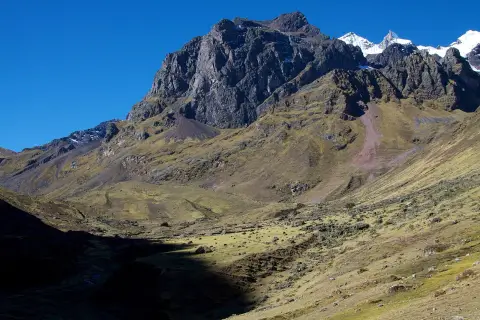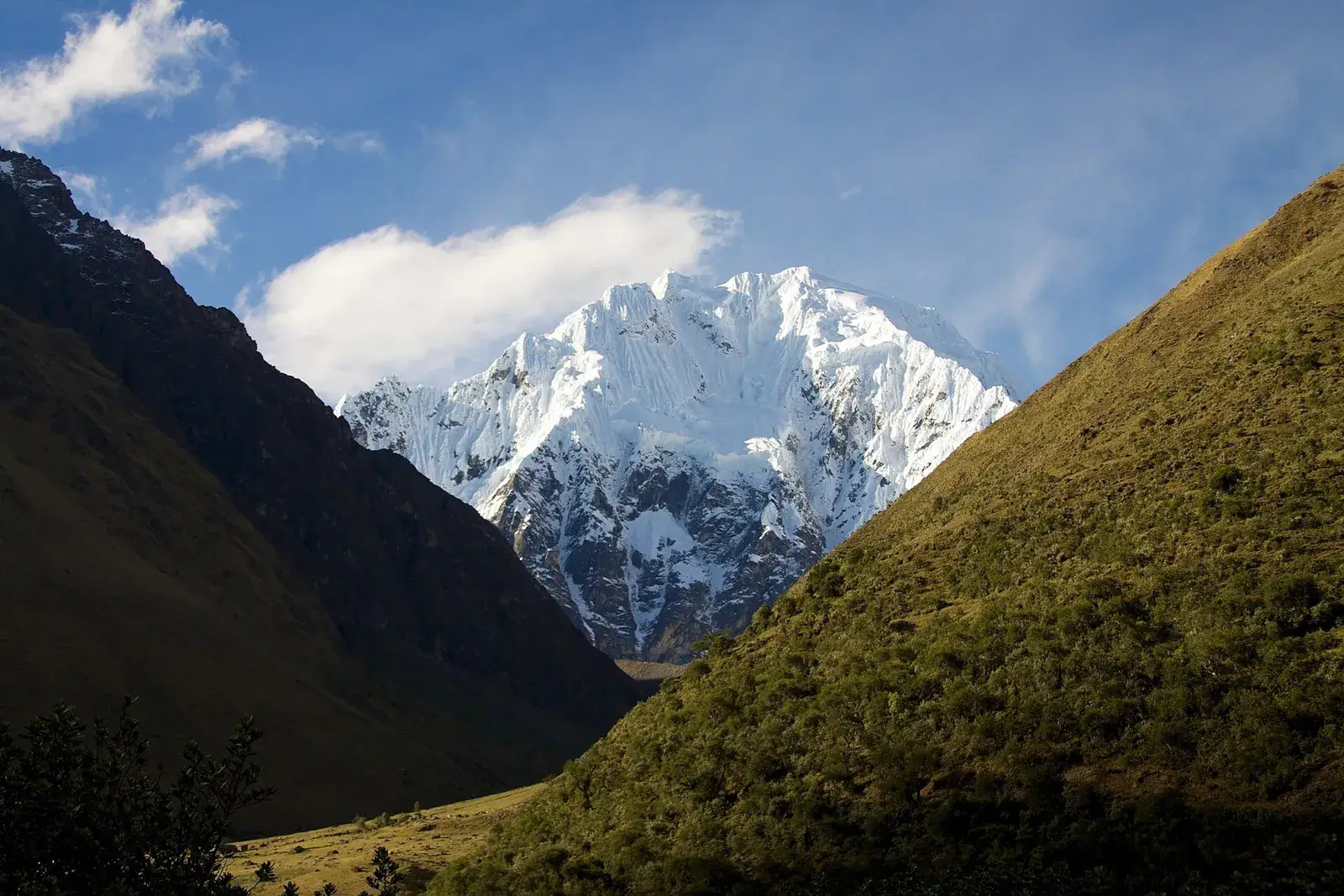
The Salkantay trek is a four- or five-day walk of roughly 60 km from the Mollepata area to Machu Picchu, crossing a pass at about 4,600 m beside the Salkantay peak. It is demanding mainly because of the altitude and the cold on day two. Unlike the Inca Trail, it does not use a limited daily permit, so dates are easier to find, but you should still book ahead in the dry season.
Route map
Route character
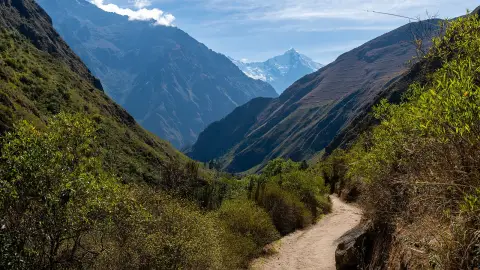
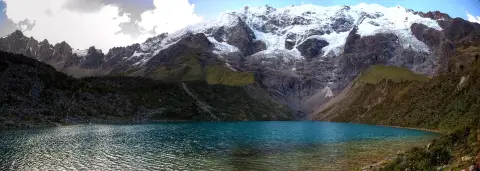
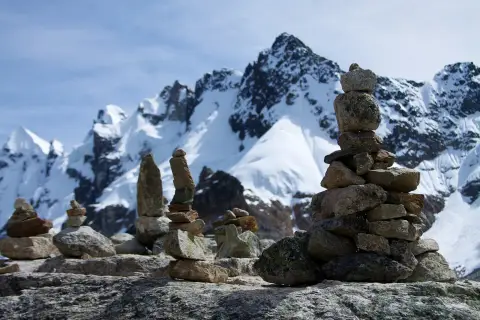
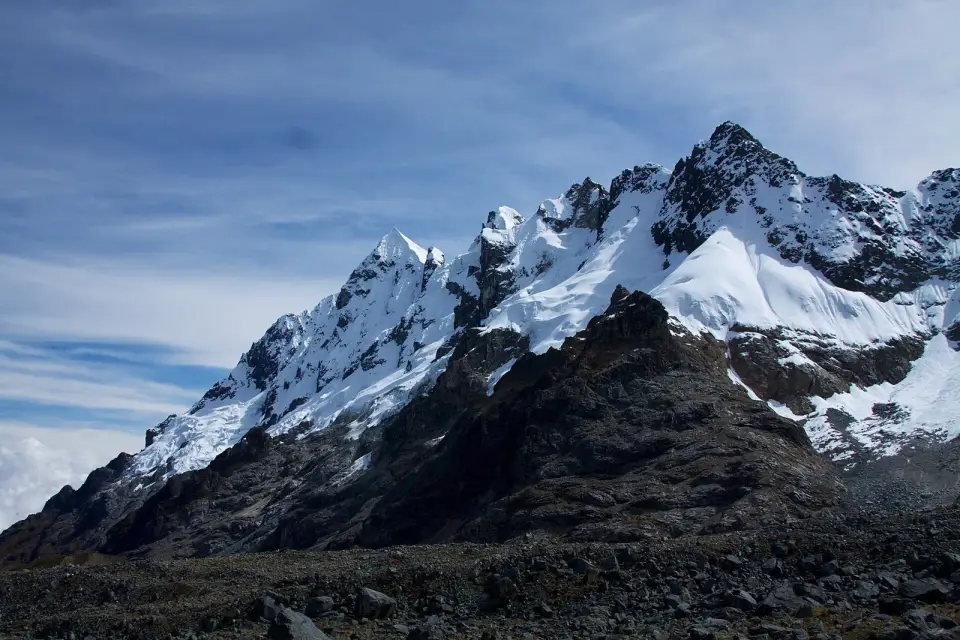
Salkantay is a walk of contrasts. It starts in the cold, dry highlands, climbs beside glaciated peaks to a stony pass at about 4,600 m, and then drops for two days through cloud forest and into warm, humid valleys with coffee, banana and avocado farms. The glacial scenery is the headline, and the changing climate is part of the interest: you can go from snow to sweat in about two days.
It is more of a landscape trek than an archaeological one. Machu Picchu is reached at the end, usually after a stay in Aguas Calientes, rather than by an Inca road, and the route to get there often involves part of a train or road transfer. Check exactly how each operator handles the final stretch.
Typical stages
Day one usually begins before dawn with a drive from Cusco to the trailhead area, then a walk of about 10 to 12 km up to a high camp at roughly 3,800 to 3,900 m. Many itineraries include a side visit to Humantay Lake, either on this day or the next morning, as an acclimatisation walk (see Humantay Lake).
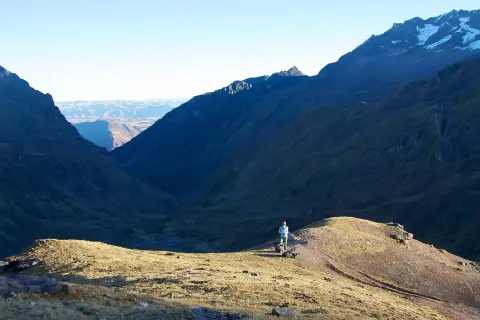
Day two is the big one: a climb of about 700 to 800 m to the Salkantay pass at about 4,600 m, followed by a long descent to a camp at lower altitude. It is cold, often windy, and can bring snow or rain. Day three continues down along a river valley into warmer forest, with a camp or lodge near the village of Santa Teresa on many itineraries. Day four is commonly a mix of walking, a visit to hot springs, a short transport leg and an afternoon walk or train to Aguas Calientes. The final morning is Machu Picchu.
Four-day versions compress days three and four; five-day versions add a rest stage or visit a few Inca sites along the way.
Tours and activities
Bookable online, chosen for their traveller reviews.
-
★ Top rated From €23 per person
-
★ Top rated From €22 per person
-
★ Top rated From €23 per person
-
★ Top rated From €17 per person
Season, weather and fitness
The dry months, roughly May to September, are the best choice, with clearer views of the peak but very cold nights, often below freezing at the high camps. In the wet season, from roughly November to March, rain and fog are common, the path can be slippery and landslides sometimes close sections of road or trail. Shoulder months can be good, but forecasts are less reliable.
You do not need to be an athlete, but you should be able to walk six to eight hours a day for several days in a row, with some steep climbing. Training at home with hill walking and long days on foot helps more than gym work. A sleeping bag rated for freezing temperatures is important, even if the operator supplies one.
Booking and what to ask
Because the trek is not tied to a daily quota, many operators run it, and quality varies a great deal. Ask what the group size is, who carries the baggage, whether the mules are treated well, what meals and tents are included, and how the final day to Machu Picchu works, including the entrance ticket and train. The Machu Picchu ticket usually has to be booked separately or by the operator well ahead, so confirm who does it and for which date; see ticket for the rules. A guide who knows the route and speaks your language matters more than a long list of extras.
How it compares with the Inca Trail and Lares
The usual choice is between three Cusco routes. For the stonework and the Sun Gate arrival but a hard permit system, see Inca Trail; Salkantay trades that for glaciers and a higher pass; the Lares trek is gentler, with villages and weaving communities as its focus. If you are weighing the first two, see Inca Trail versus Salkantay for the differences in cost, comfort and difficulty.
Salkantay also suits people who cannot get an Inca Trail date at short notice. Because operators run it in many group sizes, departures are frequent in the dry season, although the best weeks still fill. The trade-off is that the trail is shared with other groups and some campsites feel busy in July and August, so ask where your group will sleep and how many tents share the site.
Camps, lodges and comfort levels
Salkantay is sold at several comfort levels. Budget departures use basic tents and shared dining tents, while higher-priced versions use domes with proper beds or lodges with private rooms and hot water on some nights. The difference matters most at the high camp, where temperatures can fall well below freezing and a dome or a lodge room changes how well you sleep before the pass.
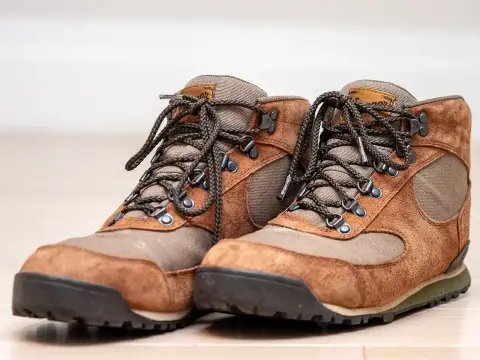
Ask exactly what is provided: sleeping bag and mat, tent sharing, meals and snacks, boiled water, and whether a portable toilet is offered or you rely on camp facilities. Be aware that the weight of baggage is limited for mules, so a heavy duffel can cost extra or be refused. For what to rent locally and what to bring from home, see gear.
The last days: valleys, springs and the approach to Machu Picchu
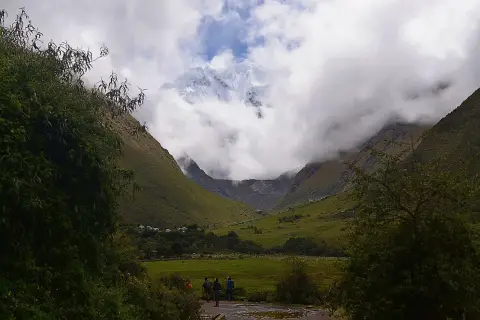
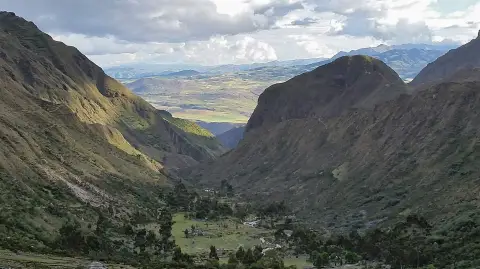
The lower half of the trek is where the character changes. After the pass, the path follows a river down through cloud forest, past waterfalls, orchids and small farms that sell fruit and drinks to walkers. Humidity rises, insects appear and the trail becomes muddy after rain, so lightweight rain gear and insect repellent are more useful than extra warm layers from this point.
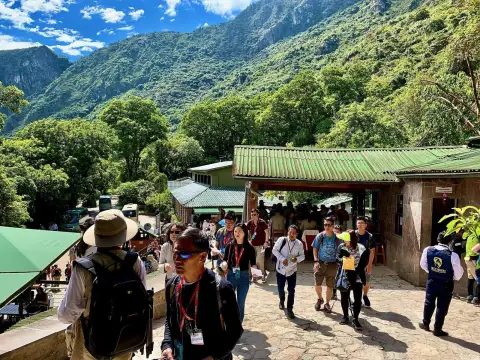
The final stage differs between operators. Some walk part of the old railway line towards Aguas Calientes, others use a vehicle for a section and some add a visit to a coffee farm or a zip line as optional extras. These add-ons are not part of the trek itself, so check whether they are included in the price. The last morning is usually an early bus or walk up to the citadel, with a guided tour of about two hours before free time and the journey back to Cusco by train and road.
Where to sleep
-
Find hotels
Plaza de Armas and historic centre
Everything on foot, at the price of noise and crowds
-
Find hotels
San Blas
Artisans' quarter with steep lanes and views, a short walk uphill
-
Find hotels
All of Cusco
Compare every area and price level in one search
Frequently asked questions
Is Salkantay harder than the Inca Trail?
Usually yes in terms of altitude and cold, because the pass is higher. The Inca Trail has more stairs and archaeology; Salkantay has fewer people and bigger mountain scenery.
Do I need a permit for Salkantay?
There is generally no limited daily permit like the Inca Trail, but you still need a Machu Picchu ticket for the final day, and rules can change, so check with your operator.
How many days should I choose?
Five days is more relaxed and gives you time to acclimatise; four days is common and workable for fit walkers who have already adjusted to altitude.
Can I do it independently?
It is possible for experienced, self-sufficient trekkers, but navigation, cold camps and the logistics for Machu Picchu make most people prefer an organised trek.
How long does the Salkantay trek take?
Most itineraries take four or five days including the visit to Machu Picchu. The walking itself is usually three days, followed by transport and a day at the citadel.
What is the best time of year for Salkantay?
The dry months, roughly May to September, give the clearest views. Nights are coldest in June and July, so the sleeping bag and layers matter more than the date.
Do I need to acclimatise before Salkantay?
Yes. The pass is at about 4,600 m, so spend at least two or three nights in Cusco or the Sacred Valley first. For how to plan this, see acclimatisation.