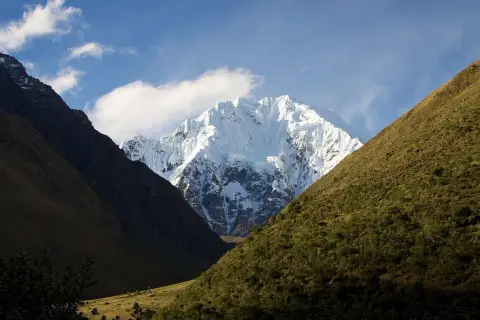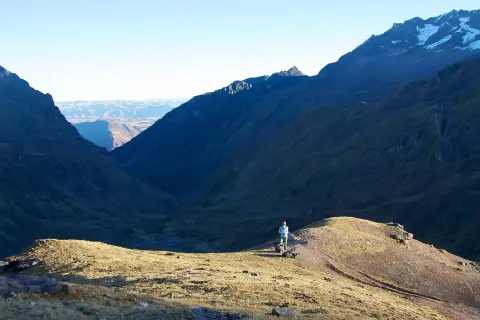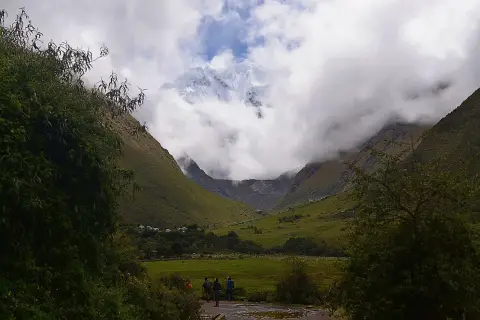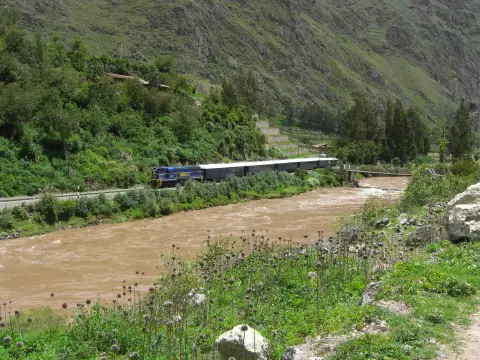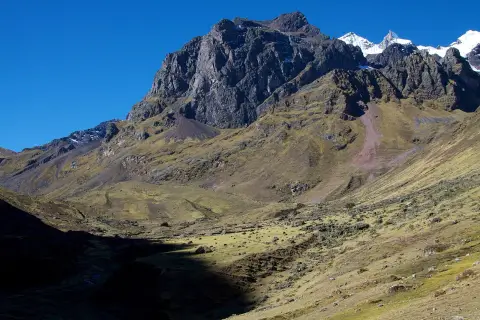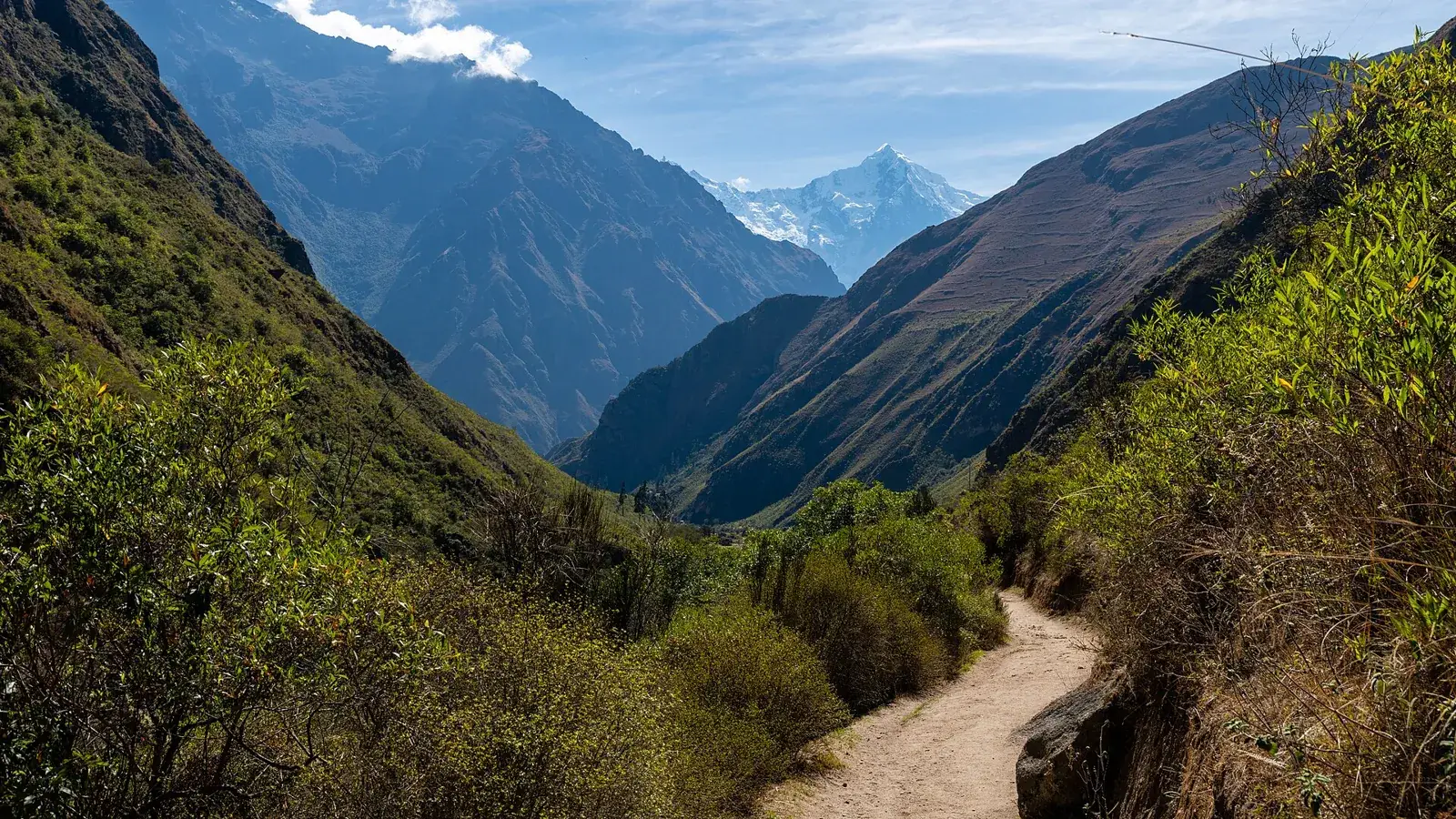
The classic Inca Trail is a four-day, three-night walk of about 43 km that finishes at Machu Picchu through the Sun Gate. The high point is Dead Woman's Pass at about 4,200 m on day two. It is a moderate to demanding trek, and entry is controlled: you need a permit, which you can only get through a registered operator, and permits for the dry season sell out months in advance.
Book first, then arrange flights.
Route map
- 38 km on foot
- Climb 4300 m
- Descent 4600 m
What makes the Inca Trail different
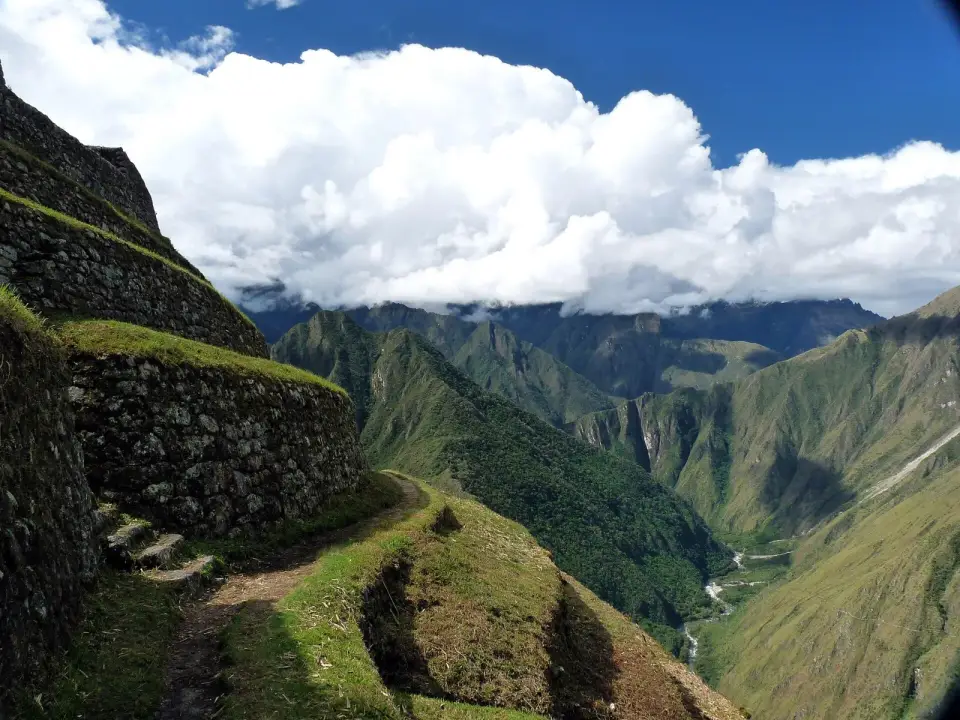
The Inca Trail is the one trek in Peru that follows a stretch of the original Inca road network, with paved stone sections, stairways cut into the rock, tunnels and a series of small ruins along the way. Many people find that the archaeology is the main reward: the path passes several sites that are not reachable any other way, and the final approach drops into Machu Picchu from above at the Sun Gate rather than from the entrance below.
That experience comes with limits. The number of walkers entering the trail each day is capped, porters and guides are included in the organised groups, and the camps are shared. It is not a wilderness walk, but it is a well organised one. For a wider view of the options around Cusco, see trekking.
Day one and day two: the climb
Day one is the easy introduction: a walk of about 12 km from the starting point near the Urubamba river, rising gently past farmland and the first ruins to a camp at roughly 3,000 m. The effort is modest, but it is the day when the group settles into its rhythm, and when porters and guides show how the trek is run. Lunch is usually served in a tent, and camp is set up before you arrive.
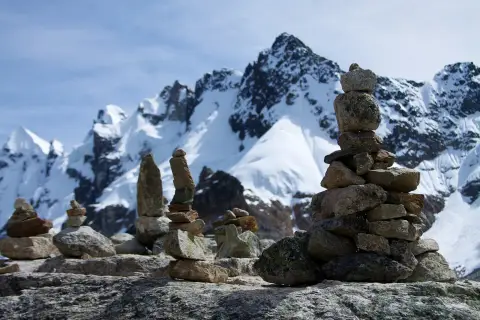
Day two is the hard one: a long climb of about 1,200 m to Dead Woman's Pass at about 4,200 m, followed by a steep descent to the next camp. The climb comes early, the air is thin and the last section is a staircase of uneven stone. Many walkers find this the toughest day of any trek they have done, and it is worth going slowly, drinking regularly and keeping layers within reach, because the temperature drops sharply at the top.
Tours and activities
Bookable online, chosen for their traveller reviews.
-
★ Top rated From €49 per person
Machu Picchu
Machu Picchu Entry Ticket for Circuit 1, 2 or 3
-
★ Top rated From €23 per person
-
From €178 per person
Machu Picchu
Private Machu Picchu Tour with Guide, Entry and Bus
-
★ Top rated From €22 per person
Day three and day four: ruins, forest and the Sun Gate
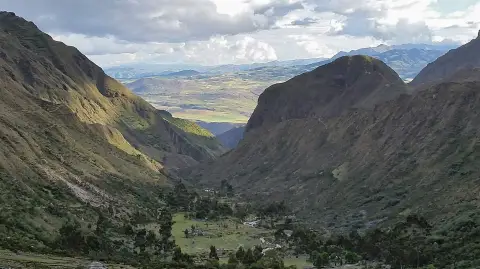
Day three is often the most interesting: a second pass, then a series of ruins, cloud forest and long Inca staircases, finishing at a camp with a view of the valley. The landscape changes from bare highland to dripping forest with orchids and ferns, and the knees feel the descent more than the climb. Because the camp on this night is the last, people tend to stay up late, but the wake-up call the next morning is early.
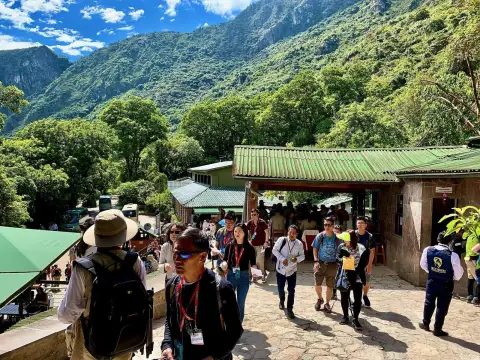
Day four starts very early, often in the dark, because walkers queue at a control point that opens at dawn. A final stretch of about 5 to 6 km leads to the Sun Gate and then down to Machu Picchu itself. Most groups arrive in the morning, tour the site with the guide, then go down to Aguas Calientes and take the train back. Check whether your entrance ticket for the citadel is included, since Machu Picchu tickets are handled separately on some trips.
Shorter versions exist, including a two-day route that joins the trail near the end. They use different permits and are less demanding, but they do not give the full experience.
Permits and booking
Access is limited by a daily quota that covers walkers, guides and porters together, so a given date can sell out for walkers long before the day itself. In the dry season, permits are commonly gone many months ahead. The trail is normally closed for maintenance for part of the wet season, so February is not an option.
You cannot walk it independently: a licensed operator must buy the permit on your behalf and needs your passport details exactly as they appear on your travel document. Names on permits generally cannot be changed freely, and the rules on transfers and refunds are strict, so read them before paying. If the dates you want are full, Salkantay and Lares are the usual alternatives, and Inca Trail versus Salkantay helps with the decision.
Choosing an operator and what to check
Because every operator sells the same permit, the difference lies in what surrounds it. Ask how many walkers are in a group, how many porters there are per client, what weight porters carry and how they are paid and equipped. Check whether the price includes the entrance fee to Machu Picchu, the return train, sleeping bags and mats, and what happens if the trail closes or you fall ill. Ask about the guide-to-walker ratio and whether guides hold current first-aid training.
Be wary of a price far below the rest: it usually means a cut somewhere, often in porter welfare or food. How to choose an agency goes through these questions in more detail, and for how to compare offers without relying on star ratings alone, see best tours.
Best time to go
The dry season, roughly May to September, has the clearest weather and the hardest permits to get. June to August is the coldest at night and the most crowded. The shoulder months are quieter but wetter. Wet-season walking is possible outside the closure, but mud, cloud and landslide risk make it a less reliable choice.
Think about the full trip as well as the trek. Arrive in Cusco early, acclimatise, and keep a spare day after Machu Picchu so a delay does not cost you a flight. For what to expect month by month, see dry season, and for how to build the buffer, see acclimatisation.
Fitness, gear and the rhythm of the day
Most people who struggle on the Inca Trail do so because of altitude, poor sleep or the wrong footwear rather than lack of fitness. A realistic preparation is several weeks of long hill walks with a loaded daypack, including stairs, since the trail is a succession of steps. Walking days run from about six to nine hours with rests, starting soon after sunrise, and tents are generally put up for you by the support crew.
Porters carry the group equipment, food and some personal items within a weight limit, so you carry a daypack with water, a rain layer, a warm layer, sun protection and snacks. Duffel bags are usually provided or specified by the operator. For what to take and what to rent, see gear; train versus trek is useful if you are still deciding whether to walk at all.
Where to sleep
-
Find hotels
Plaza de Armas and historic centre
Everything on foot, at the price of noise and crowds
-
Find hotels
San Blas
Artisans' quarter with steep lanes and views, a short walk uphill
-
Find hotels
All of Cusco
Compare every area and price level in one search
Frequently asked questions
How difficult is the Inca Trail?
It is moderate to demanding. The distances are not extreme, but day two includes a steep climb to about 4,200 m and long stone staircases, and the altitude makes everything harder.
Can I do the Inca Trail without a tour?
No. Entry requires a permit bought through a registered operator, and you walk with a licensed guide.
How far ahead should I book?
For the dry season, many months ahead. Permit sales open on a fixed schedule, so secure the permit before you buy flights.
Is the Inca Trail better than the Salkantay trek?
They are different. The Inca Trail has the archaeology and the Sun Gate arrival; Salkantay has bigger mountain scenery and is easier to book.
Is the Inca Trail open all year?
No. It is normally closed for maintenance for part of the wet season, usually February.
Do I tip the porters and guides?
Tipping is customary and is a real part of porters' income. Ask your operator how the group tip is usually handled, and carry small notes in local currency for the end of the trek.
Can I do the Inca Trail with a heavy cold or after arriving in Cusco?
It is not advisable. Illness and a lack of acclimatisation are the most common reasons for failing to finish. Arrive at least two or three days early, and see a doctor if you feel unwell.