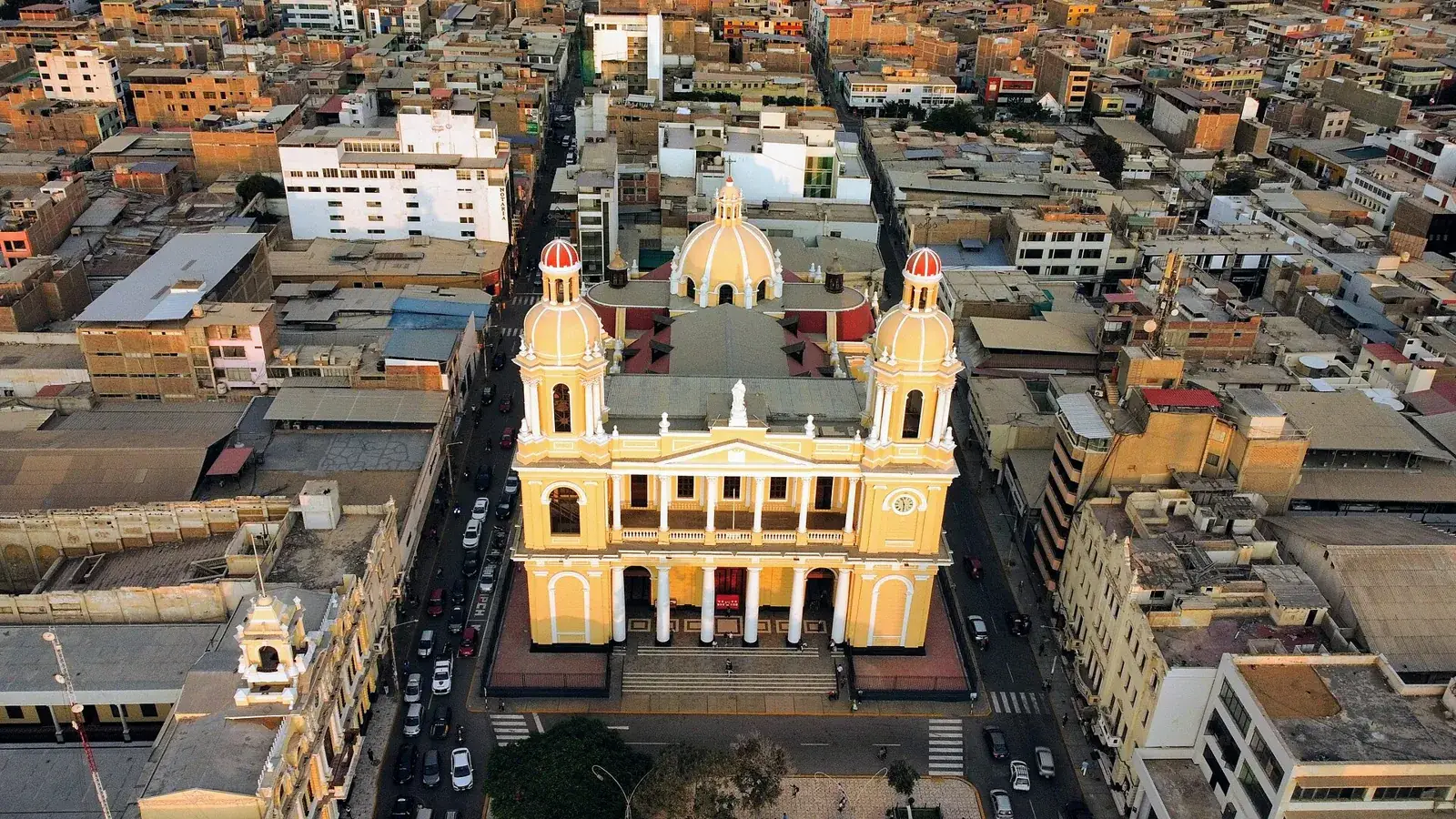
Plan two nights in Chiclayo, one of them with a long dinner. The city is not beautiful, but it is the base for the Lord of Sipan museum, the Tucume pyramids and some of the best cooking on the north coast. It rewards travellers with an interest in archaeology, and it fits best after Trujillo or before Chachapoyas.
In this section
-
 Attraction
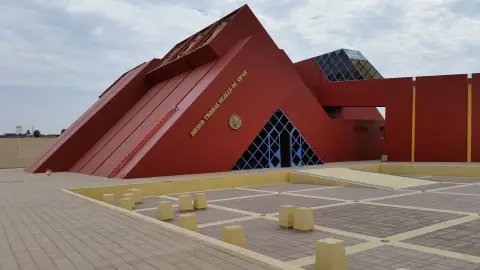
Lord of Sipán Museum
A museum built like a pyramid, displaying the gold and ceramics of a Moche ruler buried more than 1,500 years ago.
-
 Attraction
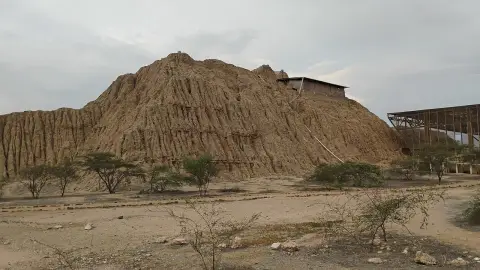
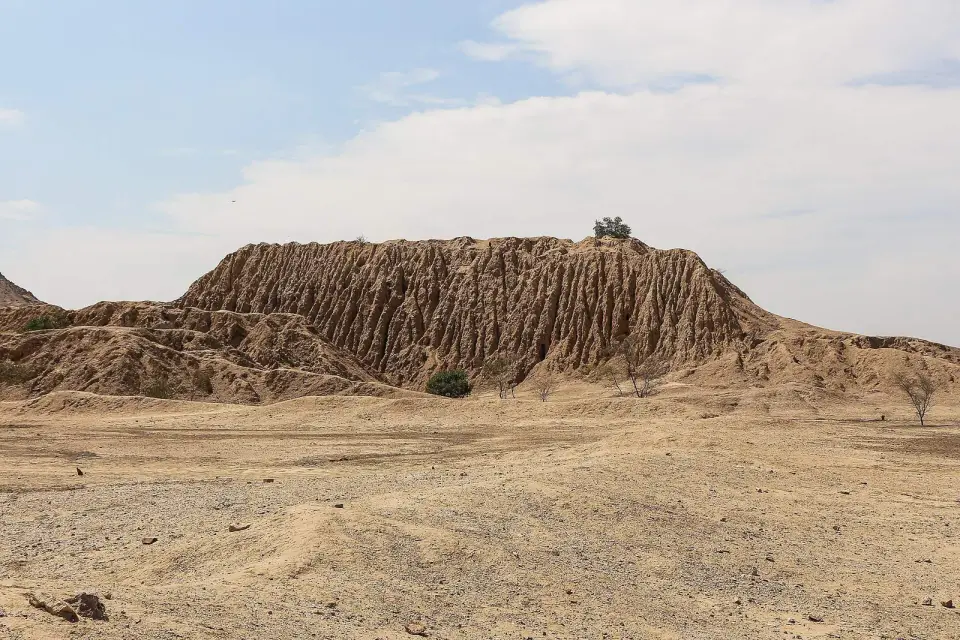
Túcume Pyramids
A plain of 26 eroded adobe pyramids below a rocky hill, an hour from Chiclayo, built by the Lambayeque culture and later held by the Chimú and the Inca.
-
 Attraction
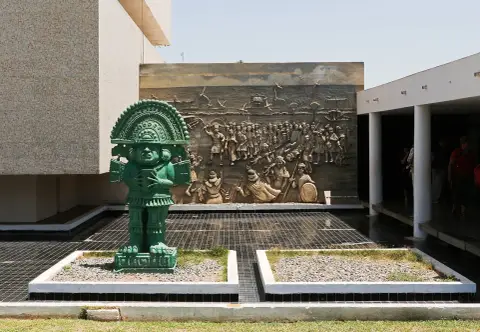
Brüning Museum
Peru's first regional museum, in Lambayeque town, built around a German collector's finds and a Gold Room of Lambayeque (Sicán) metalwork.
-
 Attraction
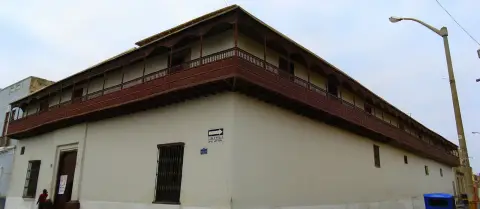
Lambayeque Old Town
A small colonial town a few kilometres from Chiclayo, known for carved wooden balconies, a claim to Peru's first cry of independence and the sweet called king kong.
-
 Attraction
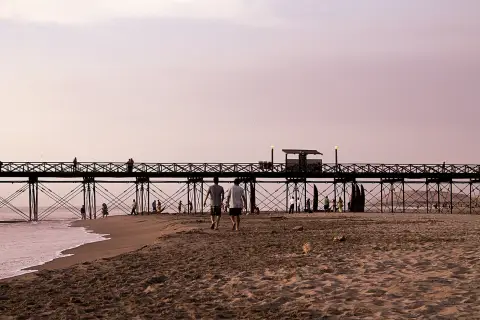
Pimentel Beach and Pier
A fishing town and beach resort on the coast near Chiclayo, known for its long pier and its traditional reed fishing craft.
-
 Attraction
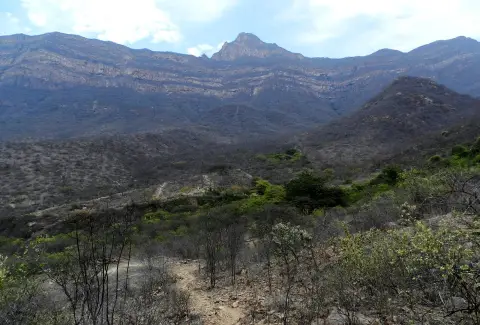
Chaparrí Ecological Reserve
A large community-owned dry-forest reserve in the hills east of Chiclayo, known for its spectacled bears and rare birds.
A city to use, not to admire
Chiclayo is a hot, commercial hub for the north, with markets, traffic and a lively centre. It does not have a famous colonial core, and its attractions lie in the museums and in what surrounds it. People come to eat, to see the finds from tombs of the Moche and later cultures, and to use it as a jumping-off point to the highlands.
It is a useful, friendly city, and the people are known for their hospitality and sense of humour. Compared with Trujillo, it is less elegant but more energetic, with a busy street life that continues late into the evening. Treat it as a base for two days of excursions, with the city itself offering a market, a plaza and a good dinner. A relaxed attitude and a little Spanish go a long way here.
The Lord of Sipán
In the 1980s, excavators discovered the intact tomb of a Moche ruler near the village of Sipán, with gold, silver and turquoise ornaments, one of the richest finds ever made in the Americas. The finds are displayed in a purpose-built museum in Lambayeque, a short ride from Chiclayo, in a building shaped like a pyramid. It is the highlight of the area. Near the original site, a smaller museum and the adobe mounds can also be visited.
For the discovery and what you will see, read about the Lord of Sipán. The museum arranges its displays so that you follow the tomb's layers from the top downwards, and the replicas in the original burial chamber at the site complement the originals in the museum. Allow a morning, and consider a guide for the museum, since the labels cannot tell the whole story.
Pyramids and the forest of Pómac
Tucumé, a cluster of large adobe pyramids on a plain, is reached by a short walk to a viewpoint above the site, with a small museum. Further afield, Batán Grande lies in the Pómac historical forest, a dry carob forest with ancient temples. Ferreñafe has a museum of Sicán culture. Together these make a good second day by taxi or tour.
The pyramids look like eroded hills from a distance, and the viewpoint helps you see the layout. The dry forest is a surprise: its trees, spaced and gnarled, shelter birds and ancient adobe ruins. Bring a hat, water and good shoes, and ask your driver to wait, because public transport is sparse and distances between sites are large. The day pairs well with a late lunch in the city and an evening stroll in the plaza.
Markets and food
The Mercado Modelo is a huge market, with a corner devoted to traditional healing: herbs, charms and potions sold by healers, often called the witches' market. It is an intriguing visit, though some stalls are touchy about photography. For food, arroz con pato (rice with duck), ceviche and sweet king kong pastries filled with dulce de leche are local favourites. Eat lunch where the locals do, and ask for recommendations at your hotel.
Food in the north describes the northern kitchen in more detail. Many restaurants fill up at lunchtime and close early in the evening, so plan accordingly. If you are nervous about the market, go in the morning and keep belongings close. A walking tour can add context for the healing stalls and the produce.
Getting there and when to go
Chiclayo has an airport and long-distance buses from Lima, Trujillo and the northern highlands; see flying in Peru and buses for the main options. It is also the usual transit point for buses towards Chachapoyas. The climate is hot and dry, with the warmest period roughly from December to April.
If you are heading for the highlands, expect a long journey that often runs overnight. Check which company you are using and where its terminal is, since several operate from separate stations. A flexible plan with a night in Chiclayo before or after the highlands avoids a difficult connection.
Where to stay and how to get around
Hotels cluster around the centre and the main plaza, with a range from simple guesthouses to comfortable business hotels. Choose somewhere with air conditioning in the hot months and check that the room is not facing a busy street if you want to sleep. Because the city is spread out, taxis are the easiest way to reach sights, but agree the fare before you set off.
For excursions, tours and private drivers are the most practical way to reach Sipán, Tucumé and the forest of Pómac in a single day. Public minibuses connect the main towns, but connections are slow and information is hard to find. Ask your hotel to help arrange transport the evening before.
Combining Chiclayo with the rest of the north
Chiclayo forms the middle of a northern loop. From Trujillo you come with a grounding in Chimú and Moche history, and from Chiclayo you can continue inland to Cajamarca or Chachapoyas. The northern itinerary places each stop in order.
If you have more time, Máncora is a beach finish, a long journey north. If you have less time, choose Sipán and Tucumé and skip the rest. The north rewards patience: roads are long, distances are real and local transport runs on its own rhythm. Build in a spare day and avoid a connection to an international flight on the same day.
Map
Where to sleep
-
Chiclayo
Base for the Sipán tombs, pyramids and the north's food
A busy provincial city with a central plaza, markets, restaurants and a good choice of hotels. The easiest base for day trips by taxi or tour.
Keep in mind: It is hot and busy, and the sights are outside the city, so leave early.
Find hotels →
Weather in Chiclayo
Forecast: MET Norway
Frequently asked questions
Is Chiclayo worth visiting?
For archaeology and food, yes. If you want a pretty town, other places in the north may suit better.
How many days do I need?
Two nights gives time for the Sipán museum, Tucumé and a market. A shorter stop would make you choose between them.
Can I do both Trujillo and Chiclayo?
Yes, they are a few hours apart by road. Together they form the core of an archaeology trip on the north coast.
Is Chiclayo safe?
It is a busy commercial city where petty theft occurs, especially in markets. Keep belongings close, use registered taxis.
Is the Lord of Sipán museum open every day?
Opening days and times can change, and some sites close on certain days of the week. Keep your schedule flexible.
What is king kong?
It is a regional sweet: layers of biscuit with dulce de leche, fruit paste and sometimes peanuts. It is very sweet and is sold across the city, so one portion is plenty to share.
Can I reach Chachapoyas directly from Chiclayo?
Yes, buses run from Chiclayo to Chachapoyas, usually overnight over mountain roads. Check the schedule and company reputation. See Lima to Chachapoyas for another view of the route.
Is it hot all year?
It is warm all year, and hottest from roughly December to April. Winter evenings can be cooler, and light layers are useful. The sun is strong at midday, so wear a hat and sunscreen.