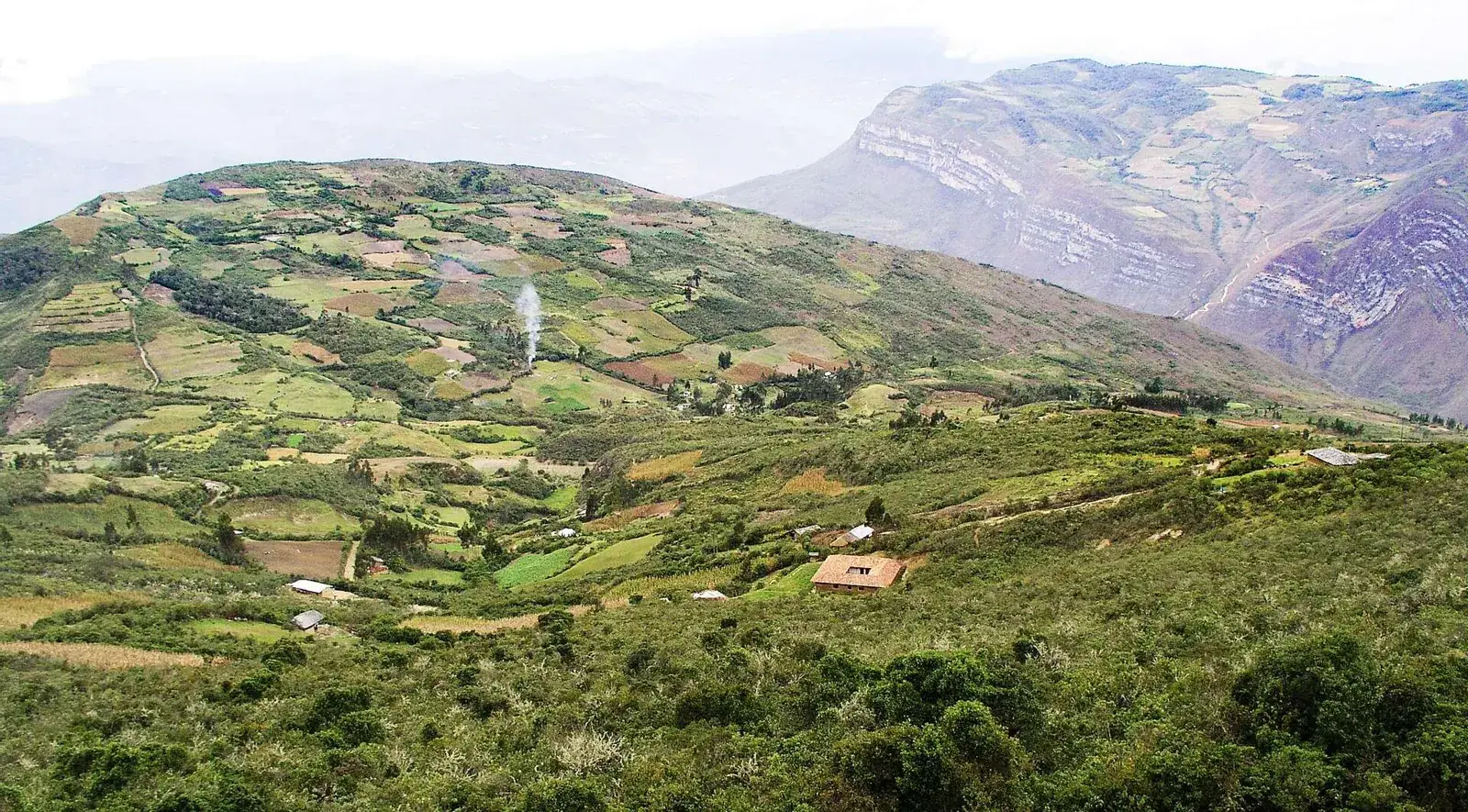
Chachapoyas is remote. The common route is a flight from Lima to Chiclayo, then a bus of about eight to ten hours up to Chachapoyas via Pedro Ruiz. A direct bus from Lima takes more than a day. The roads climb and drop through river canyons, so a few extra days of buffer matter more here than almost anywhere else in Peru.
Why it takes so long
Chachapoyas sits at about 2,300 m in the northern Andes, on the far side of the Marañón river canyon. No road runs straight to it from Lima. The route goes along the coast, then turns inland and climbs, crosses a pass, descends to river level, and climbs again. The distance from Lima by road is well over 1,000 km, so the sensible approach is to split it into two stages.
The pay-off is a region of ruins, waterfalls and cloud forest that few travellers reach. Chachapoyas describes what is there, and the two headline sights are Kuélap, a fortified settlement on a ridge, and the Gocta waterfall.
Fly to Chiclayo, then take the bus
The usual plan is to fly from Lima to Chiclayo, a flight of about an hour and a half, then take a bus or shared car inland. The road from Chiclayo to Chachapoyas passes through Olmos, climbs the Porculla pass, goes down to Bagua and follows the river valley to Pedro Ruiz, where the road to Chachapoyas branches off. It takes roughly 8 to 10 hours in total, with a change of vehicle at Pedro Ruiz in some cases. Some travellers prefer to go in two legs: a day to Pedro Ruiz or Chachapoyas by day bus, so as to see the landscape.
Other airports in the region, such as Jaén and Tarapoto, offer alternative entries, at times with onward road transport of several hours. Chachapoyas has its own small airfield, but regular passenger flights have been intermittent, so do not rely on them.
The direct bus from Lima
Direct buses exist and take roughly 22 to 26 hours or more, going north along the coast and then inland. It is cheap and demanding. Only consider it if you have time and a low budget, and plan a stop at Chiclayo or Trujillo.
If you try it, choose a reputable operator with comfortable seats, carry warm clothing for the mountain section and keep valuables on you. Long-distance buses explains how to compare companies. Tell your accommodation in Chachapoyas your expected arrival time, as delays on this route are common.
Building the trip around the road
Because the journey is long, treat Chachapoyas as a destination of several days rather than a quick stop. Two or three nights lets you see Kuélap and Gocta without rushing, and a buffer day protects the flight home. Do not plan a same-day return to Lima after a visit to the ruins.
A good shape for the north is a loop: fly into Trujillo or Chiclayo, take the coast and the museums first, then go inland to Chachapoyas, and finally return to the coast or fly out from a regional airport. The northern Peru itinerary sets out how to link the places, and Chiclayo and Cajamarca cover the nearby cities.
Arriving and moving around
Buses arrive at the terminal in Chachapoyas, and taxis are available for the short ride to the centre. The town is small and walkable, with a main square, and most of the sights are reached by shared vans, tours or private cars. Agree prices for excursions before setting out, and ask about the road conditions on the day.
The altitude of about 2,300 m is easy for most people, but the roads to the sights climb higher. Weather is changeable, with cool mornings, afternoon showers and fog in the wet season. Carry a waterproof layer, sun protection and sturdy shoes for the paths at the ruins.
Other ways in
Some travellers approach from Cajamarca, which is on the other side of the mountains, and combine the two in a single loop. The road is long and winding, and conditions vary. Others use flights to Jaén or Tarapoto and continue by road, which can save time if the schedule suits.
Whichever approach you choose, accept that it takes time and that a delay is more likely here than on the coast. Strikes and road blockades explains how disruptions affect northern routes, and domestic flights covers the air options.
Frequently asked questions
How long does it take to get from Lima to Chachapoyas?
By air to Chiclayo plus bus, a long day. By direct bus, a day and a night or more.
Is there an airport in Chachapoyas?
There is a small airfield, but regular commercial flights have been irregular.
Is Chachapoyas at altitude?
Moderately, at about 2,300 m, much lower than Cusco, but the roads cross higher passes.
How many days should I allow?
At least three nights in Chachapoyas to see Kuélap and Gocta, plus a day on each side for the journey. A tight schedule leaves no margin for delays on the mountain roads.
Can I do Chachapoyas as part of a northern loop?
Yes, and that is the best way to use the journey. See the northern Peru itinerary for a route linking the coast and the highlands.
Is the road to Chachapoyas dangerous?
It is narrow and winding, and landslides occur in the wet season. Travel by day, choose a reputable company and leave extra time. See the safety for general advice.
Should I go via Cajamarca?
It is possible and scenic, but long. If you want to see both, plan extra days and ask about the road conditions before you set out.