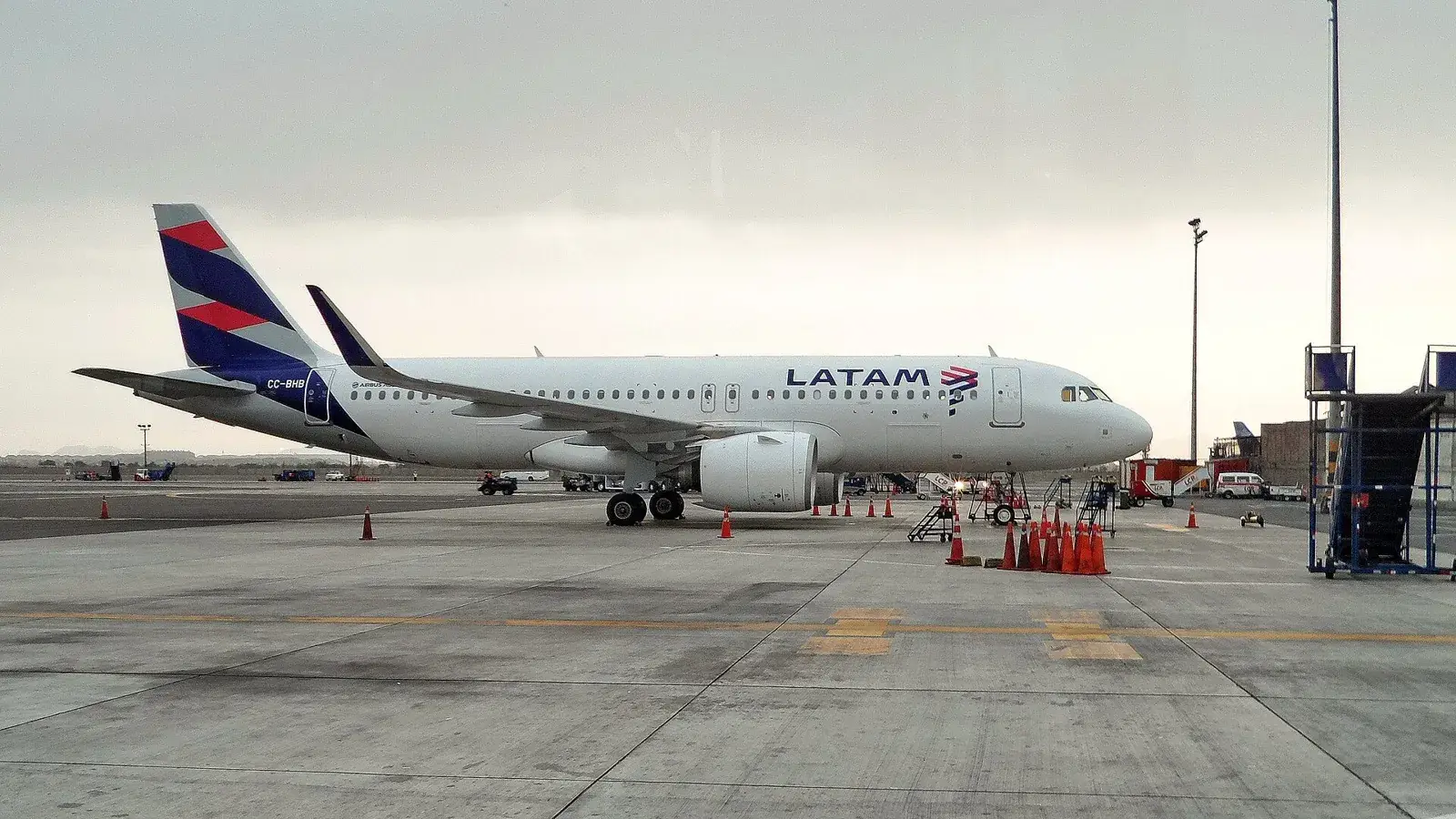
Almost every domestic flight in Peru goes through Lima, so a trip between two regional cities often means a change in the capital. Flying is the sensible choice for Lima to Cusco, Arequipa, Iquitos or Puerto Maldonado, where the alternative is a day or more on the road. Check the luggage allowance before booking, because cheaper fares often allow only a small cabin bag.
A hub-and-spoke network
Lima's Jorge Chávez airport is the centre of the network. From it, flights fan out to Cusco, Arequipa, Juliaca for Lake Titicaca, Puerto Maldonado, Iquitos, Tarapoto, Piura, Trujillo, Chiclayo, Cajamarca, Ayacucho and others. Direct links between two regional cities exist on a few routes, such as Cusco to Arequipa at some times of year, but they are the exception. Plan on a connection through Lima for most trips, and allow time for it.
The main national carriers include LATAM Peru and lower-cost airlines, and the mix of companies and routes changes from year to year. Compare the same dates on several sites and on the airlines' own pages. For the airports themselves, see Peru's airports.
Which routes are worth flying
The strongest case is Lima to Cusco: about an hour and a half in the air against a day or more on the road. Lima to Arequipa, Lima to Iquitos, which has no road connection to the rest of Peru, and Lima to Puerto Maldonado also make sense. Lima to Trujillo and the northern coast are closer calls, since the bus is comfortable but takes most of a day. Between Cusco and Lake Titicaca, many travellers fly to Juliaca and continue by road to Puno, which is usually faster than the overland route but loses the scenery.
Short flights over the Nazca Lines are a separate, optional activity, sold from Nazca and sometimes from Ica; see Nazca flight for them.
Check the flights for your dates
Fares, times and airlines for your route, in one search on Booking.com.
Delays, fog and connections
Flights in the Andes depend on weather. Cusco, at about 3,400 m, sees most departures in the morning, and mountain cloud or strong winds can cause delays. Lima has a low winter cloud layer that sometimes slows morning departures. Strikes and road blockades can also stop airport access without closing the airport itself.
Leave at least a few hours between connections, and do not book a same-day international flight after a domestic one. If you travel on separate tickets, a missed leg is your problem rather than the airline's. For what to do, see missed flights, and weather blocking your route shows how to build a margin into the plan.
Choosing a time of day
Early flights are usually the least likely to be disrupted by wind in the mountains, and they leave the rest of the day free at the other end. Late-afternoon departures from highland airports are more exposed to weather and, if cancelled, leave you with a night of rebooking. If you have a fixed commitment at the destination, such as a pre-booked Machu Picchu entry or a train, aim to arrive the day before rather than the same morning.
The same logic applies in reverse. A flight home from Cusco or Arequipa on the morning of an international departure from Lima is a gamble; give yourself a night in Lima, which also lets you deal with the airport transfer calmly. See Lima airport to the city for the practical points.
Booking, changes and baggage
Fares move with demand, and the cheapest prices tend to appear well before the busy dry season. Read the change and cancellation conditions before paying: the lowest fares are often the least flexible, and a change fee can erase the saving. Passenger names must match the passport exactly, and foreign visitors need to carry the passport for check-in.
Weigh your bags before leaving the hotel. Fees at the desk for overweight or an extra bag can be higher than buying the allowance online in advance. If you carry trekking poles, penknives, camping gas or similar items, check the airline's rules about what may travel in the cabin and what must be checked. For ways to cut costs without taking risks, see the money-saving tips.
Fly, bus or both
Flying does not have to replace the bus; combining the two is often the best plan. A common pattern is to fly one way and return overland, or to use the bus on a short scenic leg and the plane for the long one. Between Cusco and Arequipa the road is a serious alternative to a connection through Lima, and on the south coast the long-distance bus is simpler than any flight.
Add the hidden hours before you compare. A one-hour flight normally means a taxi to the airport, a check-in window, a wait and a transfer on arrival, so the real door-to-door time is several hours. A day bus can look slow but may have fewer moving parts. Choose according to how much of your trip you can spare.
Seasonality and the Amazon
Demand peaks in the dry season in the Andes and around national holidays, when flights to Cusco fill. The rainy season brings more cloud and more weather delays on mountain routes, but also lower demand. Flights to the Amazon, such as to Puerto Maldonado and Iquitos, depend on the weather in the lowlands; heavy rain can cause delays.
The Amazon cities are also where flying matters most. Iquitos cannot be reached overland from the rest of Peru, and the road to Puerto Maldonado is long. See Lima to Iquitos and Cusco to Puerto Maldonado for the practical choices on each.
Frequently asked questions
Can I fly directly between Cusco and Arequipa?
Direct flights have operated on some schedules, but they are not guaranteed all year. Otherwise you connect through Lima, which makes the bus a serious alternative for this pair.
How early should I arrive at the airport?
Airlines generally ask for about two hours before a domestic flight, and more at Lima in busy periods.
Is it safe to fly in the Andes?
Scheduled flights are routine. The practical risk is delay and cancellation caused by weather, not safety, so keep your schedule flexible.
Do I need my passport for a domestic flight?
Yes, carry it. Airlines ask for identification at check-in, and the name on the ticket must match it. A photocopy or a photo on a phone is generally not accepted in place of the original.
What should I do if my domestic flight is cancelled?
Contact the airline at the desk or through its app, ask to be rebooked on the next flight, and keep every receipt. If you also have a rail ticket or an international flight, tell those providers as early as possible. See missed flights for the options.
Is it worth flying to Juliaca instead of taking the bus to Puno?
If you are coming from Lima, yes, because the overland route is very long. From Cusco the bus or tourist train is a legitimate alternative if you want the scenery. See Cusco to Puno for the comparison.
Should I book a flight or a bus for the Amazon?
For Iquitos, a flight is the only practical option. For Puerto Maldonado, many travellers fly from Cusco or Lima; the road exists but is long and winding.