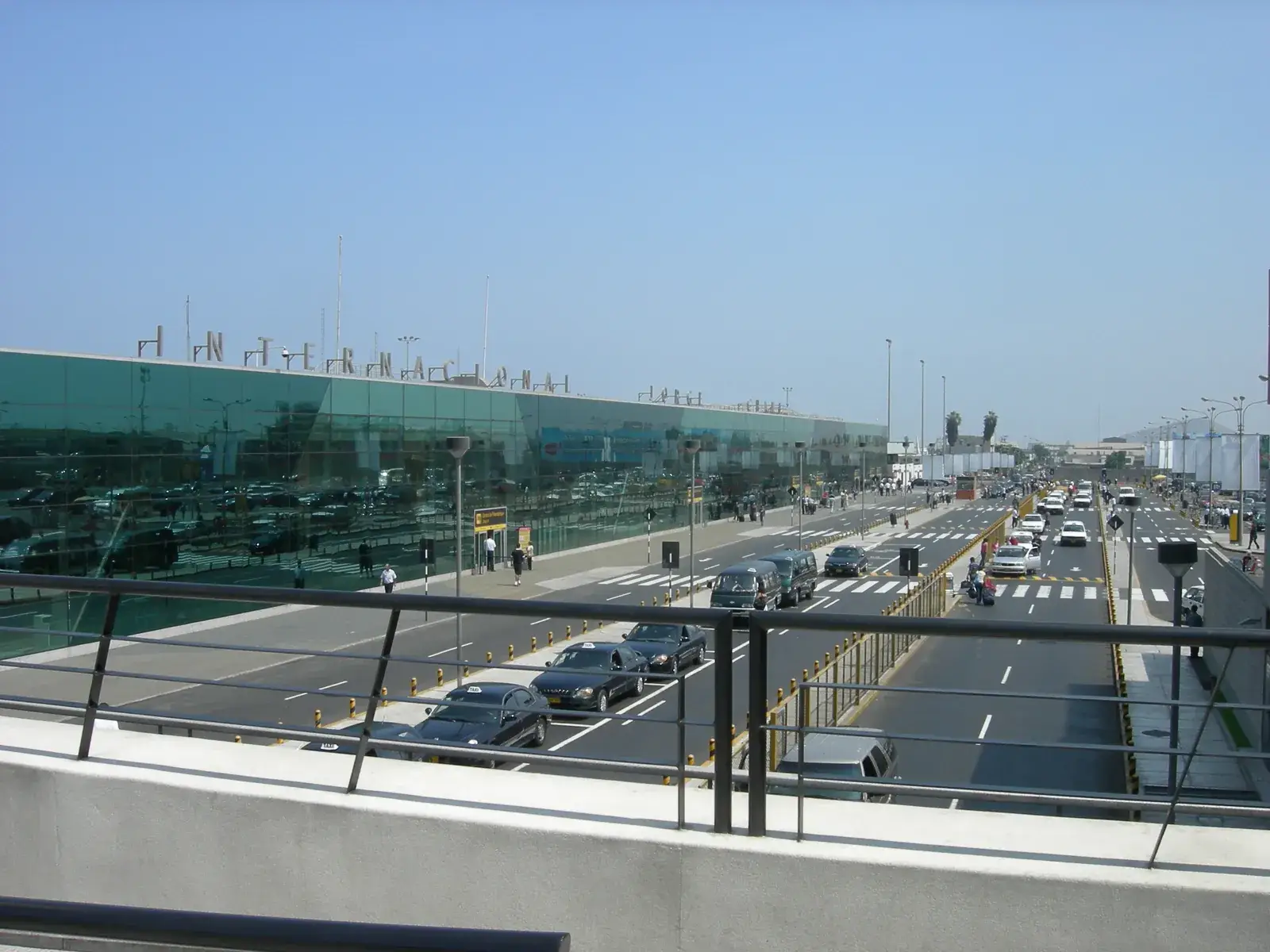
The simplest, safest option from Lima's airport is a pre-booked transfer or an official airport taxi, with the price agreed before you get in. Ride-hailing apps work too, with pick-up at a designated point. The airport is about 12 to 15 km from Miraflores, but the trip takes anywhere from about 40 minutes to well over an hour, depending on traffic.
Distance and time
Jorge Chávez airport is in Callao, on the western edge of the metropolitan area. The centre and Miraflores are both roughly 12 to 15 km away, but Lima's roads are congested, especially in the morning and from late afternoon into the evening. A ride that takes 40 minutes at midday can take well over an hour at rush hour. Flights that land late at night usually have a faster road. Allow for this when you plan your first day, and more so when you travel the other way to catch a flight.
Bear in mind that the distance is almost the same to all the visitor districts, so the choice of neighbourhood barely changes the journey. What changes the trip is the time of day, which is why a late-night arrival is often the easiest one to plan.
The options
Official airport taxis have counters in or near the arrivals hall and work to fixed prices by zone, so you know the fare before you leave. They cost more than street taxis but remove the guesswork. A pre-booked transfer through your hotel or an agency is similar in cost, and the driver waits with your name, which is the easiest choice after a long flight.
Ride-hailing apps such as Uber, Cabify and inDrive operate in Lima. Drivers collect from a pick-up area, and the rules change from time to time, so follow the instructions in the app. Fares are shown in advance on some apps and negotiated on others. Public transport is possible but poorly suited to someone with luggage and no local knowledge; most visitors skip it. The general rules for taxis and ride-hailing apply here too.
Going back to the airport
Book the return transfer the day before, and ask the hotel to confirm the time. For an international flight, leave at least three hours for the check-in and the road, more at peak hours. Taxis called from the street are cheaper but less predictable; the hotel's recommended driver is usually the safest compromise.
If you are flying out on a domestic flight at the end of a trip, the same logic applies, with a shorter margin. A tight schedule leaves no room for a traffic jam, and the cost of an extra hour is far less than a missed flight. Missed flights shows how quickly a small delay becomes an expensive problem.
Choosing where to stay for an early or late flight
If your arrival or departure is at an awkward hour, the best answer may be to sleep close to the airport or in a district with an easy road to it, rather than crossing the city twice. A late arrival followed by a night in Miraflores or Barranco works well, since both are tourist districts with plenty of choice and a short taxi from the most direct roads.
For a very early flight home, the opposite applies: stay the night before in a hotel that arranges a reliable pre-dawn car. Where to stay in Lima and Miraflores or Barranco help you pick the district.
Arriving late at night
Many intercontinental flights land in the small hours or late in the evening. At that time the road is quicker, but you are tired and the arrivals hall can attract the wrong kind of attention. Pre-arrange the pickup and tell the hotel your flight number so the driver can track delays. Check that reception is staffed all night, or confirm in advance how late check-in works.
Keep your hand luggage with you and avoid showing expensive equipment in the pickup area. A transfer with the driver's name displayed lets you head directly to the car without negotiating. If you do use an app, check that the registration number and driver's face match before you get in, and share the ride details with someone.
Paying, cash and exchange
Official counters and many transfer companies accept cards, but taxis and some apps work in cash, so having some small soles is useful. Exchange counters in the airport have worse rates than banks or reputable exchange offices in town, so change only what you need for the first ride. An ATM inside the airport is the usual way to get cash on arrival, and money and ATMs explains what to watch for.
If a driver says there is a problem with the fare, a toll, or extra charges for luggage, ask to see the price in writing or in the app before you pay. Complaints about extras are a recognised scam; common scams lists others to avoid.
Frequently asked questions
How much is a taxi from Lima airport to Miraflores?
Fares depend on the operator, time of day and the zone. Ask for the price at the official counter or in the app before you set off, and compare two options.
Can I walk out and take any taxi?
It is better not to. Use an official counter, an app or a pre-booked car, particularly at night.
How long does the airport transfer take?
Between roughly 40 minutes and over an hour and a half, depending on traffic and your destination.
Is there a train or metro from Lima airport?
There is no rail link that works as a practical airport transfer for visitors. The usual choices are a taxi, an app or a transfer; some local buses pass the area, but they are poorly suited to luggage.
Should I change money at the airport?
Only a small amount for the first ride. Rates are usually better in town, and an ATM is often the better source of soles. See the money for details.
Is it safe to take a taxi from Lima airport at night?
It is safe enough if you use an official counter, a pre-booked transfer or a verified app ride. Avoid anyone who approaches you in the hall, and do not share a ride with strangers.
Can the hotel arrange the transfer?
Most hotels in Miraflores and Barranco can, often for a fare comparable to the official taxis. Ask when you book and give your flight details so the driver can track it.