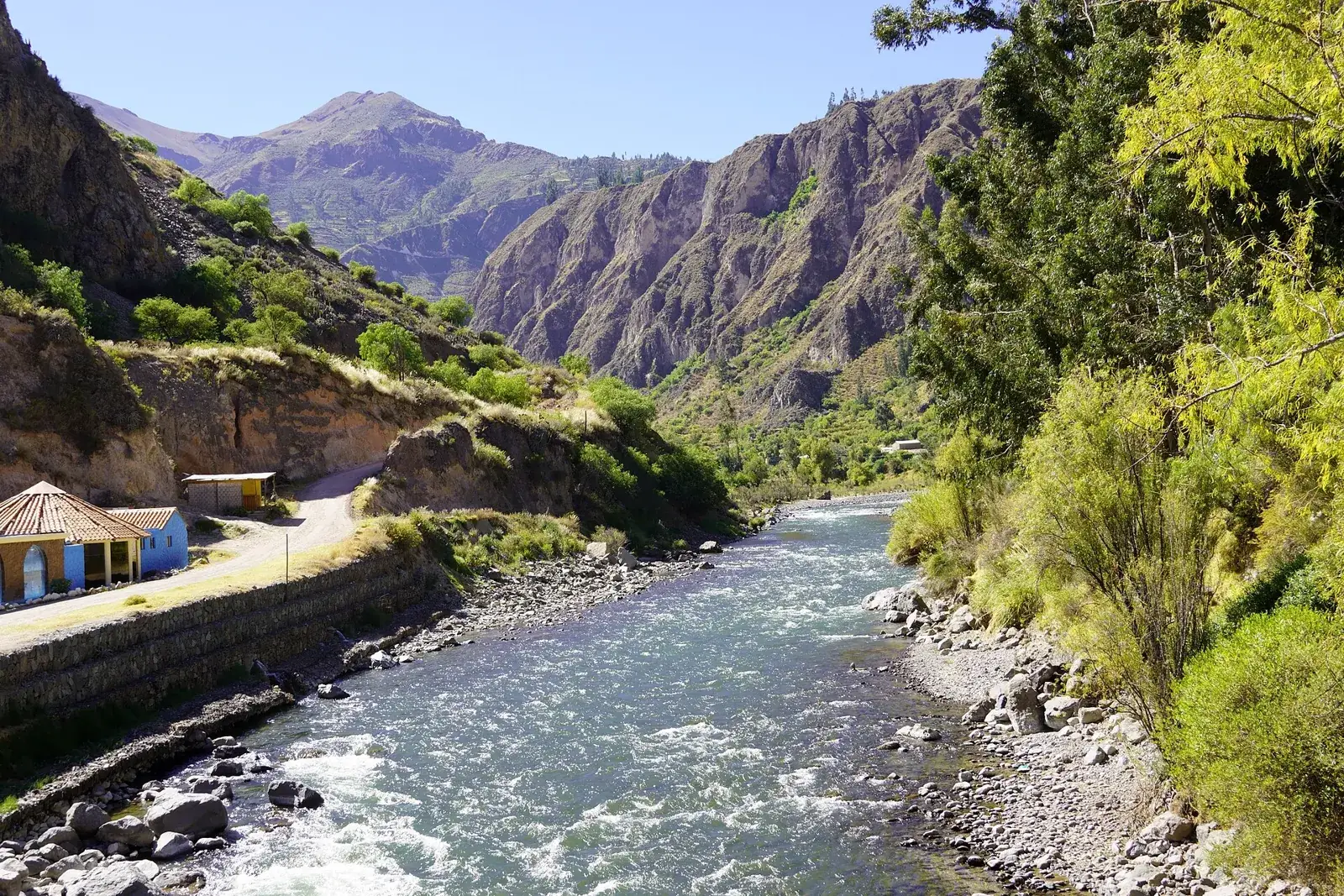
Cotahuasi Canyon is a remote river gorge in the Arequipa region, often described as one of the deepest in the world, and it sees only a small fraction of the visitors who go to Colca. It rewards travellers who want waterfalls, terraced villages and empty landscapes, and who accept a long road journey from Arequipa and basic services.
Plan at least four or five days from Arequipa, in the dry season, with cash and a flexible schedule. If you only have a couple of days, or dislike long bus rides, Colca Canyon is the easier choice.
In this section
-
 Attraction
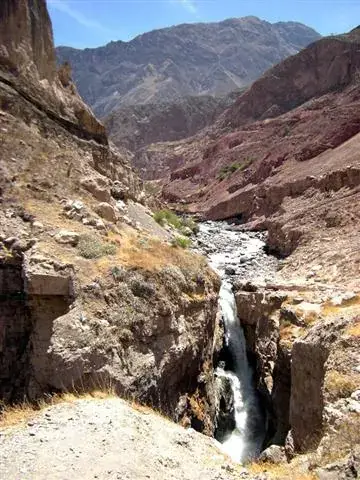
Sipia Falls
A waterfall of about 150 m on the Cotahuasi river, the best-known single sight of the canyon, reached by road and a short final walk.
-
 Attraction
Cotahuasi Scenic Reserve
A large protected landscape in the Arequipa highlands that covers the Cotahuasi river basin, its terraced villages and the high puna above the canyon.
-
 Attraction
Luicho Hot Springs
The best-known thermal baths of the Cotahuasi Canyon, a short ride from Cotahuasi town and the usual reward after a day of waterfalls and villages.
Why go to Cotahuasi
Cotahuasi is the name of both a small provincial town and the river canyon that runs past it, in the highlands of the Arequipa region. The canyon is often ranked among the deepest on Earth, and measurements and comparisons with other gorges differ, so treat any exact depth you read with care. What is not in doubt is its scale and its isolation.
The appeal is the absence of crowds. Where the Colca valley has coach parties at the main viewpoint, Cotahuasi has terraced hillsides, villages that still farm in traditional ways, waterfalls and long empty roads. Services are limited and distances are large, which is exactly why some travellers prefer it.
The canyon is part of a protected landscape reserve, which helps to explain the well-preserved scenery. Come with realistic expectations: this is a trip for people who enjoy the journey itself and are comfortable without a fixed programme, not for someone who wants a polished day tour.
How it differs from Colca
Both canyons are in the Arequipa region, but they feel very different. Colca is well organised, has a main road, many hotels and a famous condor viewpoint, and can be visited in two days. See Colca Canyon for that side of the picture. Cotahuasi is further away, has fewer lodgings, almost no organised tours and no single headline attraction.
In Colca you go to see condors at a viewpoint; in Cotahuasi you travel through the canyon itself, from one village or waterfall to the next. The canyon walls are less accessible, and many of the sights need local transport or a guide. Prices and services are simpler.
If you are undecided, the guide to Colca tour or independent shows how much structure a trip like that needs, and Cotahuasi needs more flexibility still. Some travellers visit both on one long trip from Arequipa, but that adds many days.
Getting there from Arequipa
The journey is long. Public buses run from Arequipa to the town of Cotahuasi, and the trip usually takes most of a day or a night, on roads that climb to high passes before dropping into the canyon. Ask locally about the current schedule, the bus company and the road conditions, because all of these change. Do not rely on a timetable you find online.
Tours exist in small numbers, mostly from agencies in Arequipa that organise multi-day trips, often with a private vehicle. Because services are few, ask exactly what is included and how many nights are spent where. For the road to the neighbouring canyon, see Arequipa to Colca, which is a much shorter run.
Landslides and road works can block the route in the wetter months. Allow a spare day at the end of the trip, particularly before an international flight.
Altitude and climate
Altitude varies a great deal in the canyon, which is part of its charm. The town of Cotahuasi lies at roughly 2,600 m, while the high passes on the road from Arequipa and the upper villages are much higher, so the trip can involve long climbs above 4,000 m. The canyon floor is lower, warmer and drier than the plateau above.
Because you move up and down in a day, altitude effects can be sudden even if you have acclimatised. Read altitude sickness before travelling, and take it slowly on arrival, especially if you come directly from sea level. Arequipa, at about 2,330 m, is a sensible first stop.
Days are warm in the sun and nights cold on the plateau, so pack layers, a hat and sun protection. The sun at altitude is strong, and shade is scarce in the canyon. Bring a rain jacket in the wet season, which is roughly November to March.
Best time to go
The dry season, roughly May to September, is the best time. Skies are clearer, roads are more reliable and walking is easier. The dry season page explains how it works in the Andes. Nights are coldest in June and July.
The wet months, roughly November to March, bring greener scenery and fuller waterfalls, but also landslides and delays on the single access road. In a place with so few transport options, a blocked road can cost days. If you travel in the wet season, keep your schedule loose and ask locally before you leave Arequipa.
Local festivals fill the small towns with visitors and can make rooms scarce. If your dates match a village festival, book ahead by phone or through your lodging. A tour operator in Arequipa can also check the festival calendar for the dates you plan.
What to see and do
Most visits combine several short outings. Waterfalls are the best known: the Sipia waterfall is usually described as the canyon's main cascade and is reached by a walk from a road end. Ask locally how long the walk takes and whether guides are recommended. Villages such as Alca, Tomepampa and Huaynacotas are known for their terraces and traditional architecture, and some have thermal baths nearby.
Viewpoints along the road show the scale of the canyon, and the area around Pampamarca is known for unusual rock formations and a canyon of its own. Treat the list as a starting point, because names and access change; confirm each place locally.
For active travellers there are general options: day hikes between villages, river rafting on the Cotahuasi river in suitable months with a specialist operator, and longer treks with local guides. Ask about safety equipment and experience before you book any river activity, and check whether permits are required in the reserve.
Where to base yourself
Most travellers use the town of Cotahuasi as their main base. It has the widest choice of basic lodgings, a plaza, a market and restaurants serving simple local food. From there you can make day trips by shared transport or a hired vehicle, and the distances between sights are manageable.
Some visitors add a night in a smaller village such as Alca or Tomepampa, which have fewer rooms and shorter evenings but more atmosphere. Do not expect luxury: rooms are plain, hot water may be limited and heating is often absent, so bring a warm sleeping layer. See where to stay by type of traveller for how to judge basic lodging.
Plan meals as well. Restaurants close early and variety is limited, so carry snacks, water and a basic first-aid kit. In smaller villages, ask your host in advance about dinner so that it is ready when you arrive.
Tours or independent travel
A tour takes care of transport and logistics, which is helpful when public connections are sparse. It costs more, but it saves time, especially if you want to see several places in a few days. Check what is included, how many people travel together, and whether a local guide joins.
Independent travel is feasible if you speak some Spanish and tolerate delays. Use shared taxis or hired cars between villages and confirm return arrangements before you set off, as there may be only one or two services a day. A few phrases from Spanish for travellers go a long way in small communities.
A middle route is to take public transport to Cotahuasi and arrange local guides and drivers once there, which is often cheaper and supports local families. Either way, tell someone your plans and keep a margin of time for the return.
Safety, cash and who should skip it
Remoteness is the main risk: help, hospitals and repairs are far away. Travel with insurance that covers medical evacuation, carry a basic first-aid kit, and avoid hiking alone on unmarked routes. General precautions are in staying safe in Peru.
Cash is essential. Cotahuasi town may have limited banking services, and many small businesses accept only cash, so withdraw enough soles in Arequipa and carry small notes. See money in Peru for how to manage it. Mobile coverage is patchy, so download maps and tell your lodging where you are going.
Allow four to five days at the least from Arequipa, and more if you want to hike. Skip the canyon if you have only two or three days, dislike long rides on winding roads, have mobility problems, or need reliable services. For them, Colca is far more practical.
Map
Weather in Cotahuasi
Forecast: MET Norway
Frequently asked questions
How deep is Cotahuasi Canyon?
It is widely described as one of the deepest canyons in the world, but quoted figures vary with the method and the points measured. Rather than rely on a single number, treat it as comparable to or deeper than Colca. Ask locally or check official sources for current figures.
How long does it take to get from Arequipa to Cotahuasi?
Expect a long road journey, usually most of a day or an overnight trip, depending on the service and road conditions. Confirm the current schedule locally because buses and routes change. Allow a spare day in case of delays.
Is Cotahuasi better than Colca?
They suit different travellers. Colca is easier, with condors and many services, while Cotahuasi is quieter, remote and more demanding. Choose by how much time and tolerance for rough travel you have.
How many days do I need?
Plan at least four to five days from Arequipa to make the long journey worthwhile. Add more if you want to hike or raft. A shorter trip would be mostly travelling.
Can I visit without a tour?
Yes, if you speak some Spanish and accept delays. Public buses run to Cotahuasi town, and shared transport or hired drivers cover the villages. Ask about return times before you leave each place.
Is there an ATM in Cotahuasi?
Do not count on it. Banking services in remote towns can be limited or unreliable, so withdraw cash in Arequipa and carry small notes. See money in Peru.
When is the best month to visit?
The dry season, roughly May to September, is the most reliable for roads and views. The wet season gives greener scenery but a higher risk of landslides. See dry season for details.
Is Cotahuasi affected by altitude sickness?
It can be, because the route crosses high passes and the villages lie at varied altitudes. Acclimatise in Arequipa first, drink water and go slowly. Read altitude sickness and ask a doctor if you have health conditions.