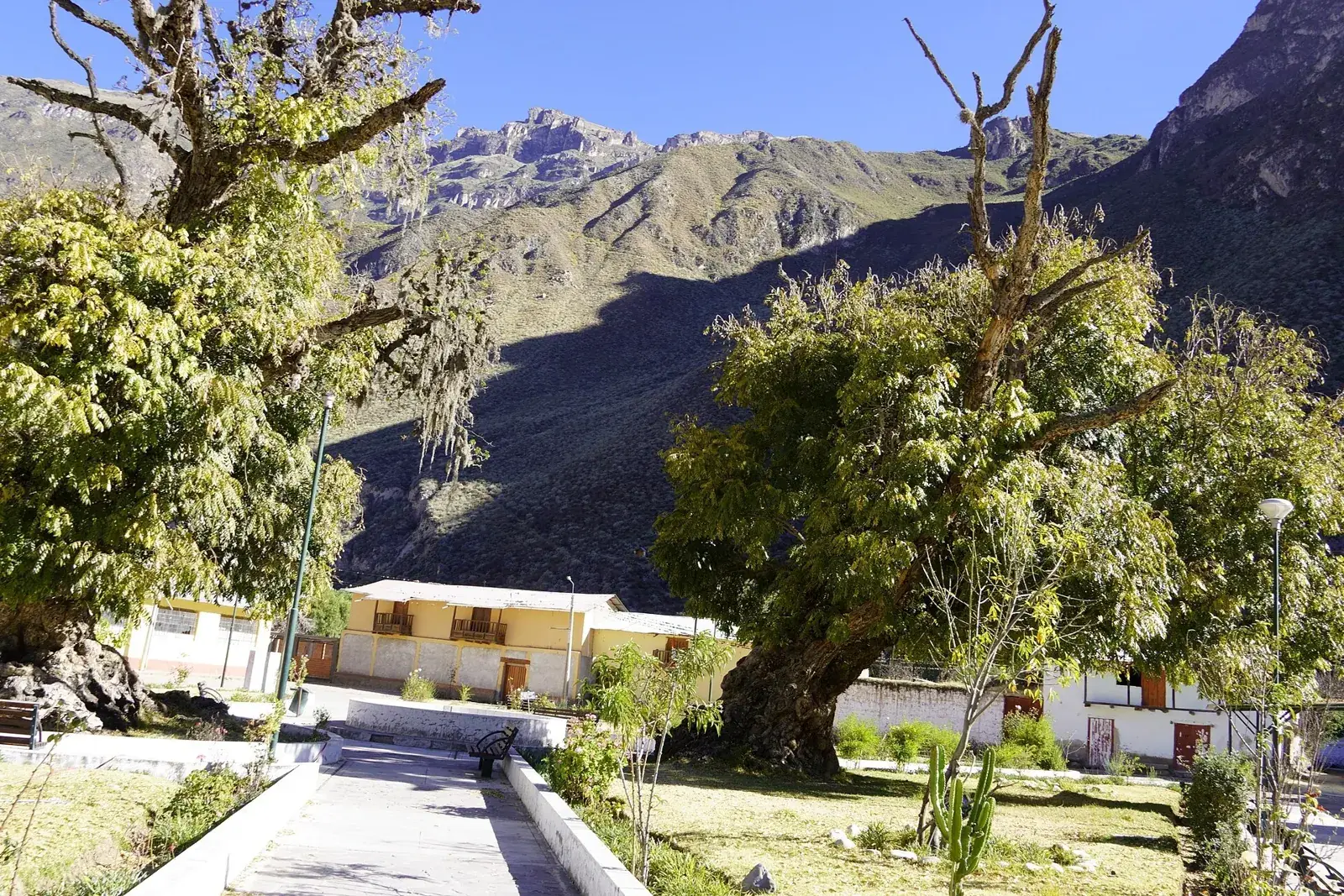
Luicho is the best-known hot spring in the Cotahuasi Canyon, in La Unión province of the Arequipa region, a short drive from the town of Cotahuasi near the village of Alca. Operators and local sources describe a few pools of warm, mineral water, some outdoors and one covered, at a comfortable bathing temperature.
Plan one to two hours for the soak, usually on a day that also includes a waterfall or a village. Prices, hours and the exact access arrangements change, so confirm them in Cotahuasi before you go.
Map
What Luicho is
Luicho is a thermal spring complex in the Cotahuasi Canyon, in La Unión province of the Arequipa region. It is the most frequently named bathing spot of the canyon and is usually described as one of its main recreation attractions, together with the waterfalls and the terraced villages covered on the Cotahuasi Canyon page. The water rises from a spring on Luicho hill and is channelled into a small number of pools.
Do not expect a spa. The setting is a rural canyon, the facilities are simple, and the interest is in soaking in warm water after hours on dusty roads or trails, with a view of the valley walls. Many travellers use it as a pause between more demanding outings, and some local sources recommend it precisely for tired muscles after a long walk.
There is little written documentation about the site beyond tourism pages, and none of it is an official or scientific source, so treat details such as temperatures and the number of pools as approximate.
The pools and the water
Tourism sources describe three pools fed by the spring: two open-air pools and one indoor pool, with water at roughly 33 to 38 degrees Celsius, which is warm rather than scalding. Another source gives a figure around 35 degrees. A separate national press article mentions much hotter water, in the region of 48 to 49 degrees, which probably refers to the water at the source before it is mixed or cooled for bathing, so do not assume that every pool is comfortable at every moment.
The water is described as mineral-rich and is traditionally recommended for aches, stiffness, rheumatism and stress. Treat those claims as local belief rather than medical advice. People with heart conditions, high blood pressure or pregnancy should be careful with hot water at altitude and should ask a doctor first, as explained in health and vaccines.
Sit in the water for short periods, drink plenty of water, and get out slowly. Heat, sun and altitude together can make you light-headed faster than you expect.
Where it is and how to get there
Luicho lies in the middle section of the canyon, close to the village of Alca, and is reported to be about 25 minutes by road from the town of Cotahuasi, which is the usual base. Alca itself is roughly 17 km from the town according to travel sources. The practical way to reach the springs is a hired car or taxi from Cotahuasi, a place in a tour vehicle, or a local shared car; ask your lodging what is running that day.
You can also read of a longer approach on foot, along the canyon from the Sipia area, which takes several hours. Sources disagree on the details and the trail conditions change with the seasons, so do not plan a walk from a single description. Ask in Cotahuasi, or hire a local guide.
The journey from Arequipa to Cotahuasi is long and is described on the main page; see also Arequipa for the city where most trips start and Arequipa tours for organised multi-day options that include the springs.
How long to stay and when to go
Most guided days allow a bath of about 30 minutes, but if you come independently you can stay longer. One to two hours is a comfortable visit, with time to change, soak twice and have a snack. Trout is a common lunch in the canyon, and some tours finish the soak with a trout meal near the springs.
The best moment is late afternoon after the outings of the day, or early in the morning when the air is cold and the steam is more evident. The cold, clear nights of the dry season make the warm water particularly welcome, and the dry season page explains when roads are most reliable. In the wet months, roughly November to March, rain and landslides can interrupt the canyon road, so build in a spare day.
Weekends and local holidays are the busiest times for Peruvian visitors. A weekday gives a quieter pool.
Altitude, sun and effort
Cotahuasi town lies at roughly 2,600 m, and the canyon floor is generally lower and warmer than the plateau above. The springs are therefore less of a high-altitude outing than the passes on the road from Arequipa, but you will still feel the thin air if you have just arrived. Hot water raises the heart rate, so take the first soak gently and read altitude sickness before the trip.
The effort is low. The springs need no hard walking if you go by road, and the site suits families, older travellers and anyone who wants a gentler day. Children should be watched in the water and kept out of the hottest part.
The sun in the canyon is strong even when the air is cool, so use sun cream and a hat between baths. A towel and a dry layer are essential because evenings are cold, as the packing list explains.
What to bring and what to expect
Bring a swimsuit, a towel, sandals, a plastic bag for wet clothes and a warm top for afterwards. Changing rooms and toilets are basic, and you should not rely on towels or lockers being available. Keep valuables with your guide or in your lodging rather than at the poolside.
The entry fee, if any, is small by international standards, and payment is in cash. Many shops and services in the canyon do not take cards and the nearest cash machines are limited, so bring enough soles from Arequipa; see money and ATMs. Sources list a range of opening hours, and some reports mention very early opening, so check locally rather than assuming a schedule.
Respect the other bathers, wash before entering the pool if asked, and take your rubbish with you.
Combining Luicho with the rest of the canyon
A usual day pairs Luicho with the village of Alca, a stroll among terraces, and a view of the canyon, ending with a trout lunch. A second day may continue to the waterfalls and the villages further up the canyon. Hikers who come down from the high trails often find that the springs are the natural end of a long day, and tour itineraries of two to four days usually put them near the end.
If you also plan time in the neighbouring canyon, compare this site with the La Calera hot springs near Chivay in Colca Canyon. La Calera is larger, more developed and easier to reach; Luicho is smaller, quieter and more remote.
Because the whole area is thin on services, the sensible approach is to treat the springs as one stop on a loose plan. Ask your lodging in Cotahuasi to call ahead, or check with a local guide that the pools are open and clean on the day.
Frequently asked questions
Where are the Luicho hot springs?
They are in the Cotahuasi Canyon, in La Unión province of the Arequipa region, near the village of Alca. Local sources put them about 25 minutes by road from the town of Cotahuasi, which is the base for most visitors.
How hot is the water at Luicho?
Tourism sources describe three pools at roughly 33 to 38 degrees Celsius, two outdoors and one indoors. Temperatures can vary, and the spring itself is said to be much hotter, so test the water before entering.
Can I visit Luicho as a day trip from Arequipa?
Not realistically. The road from Arequipa to Cotahuasi takes most of a day or a night, so the springs are visited from the town. See the Cotahuasi Canyon page for the journey and the number of days to plan.
How much does it cost to enter?
There is a small entry fee reported by travel guides, but the amount has changed over the years and published figures may be out of date. Ask in Cotahuasi and carry cash in small notes, as described in money and ATMs.
Is it worth visiting if I have already been to La Calera?
Yes, if you are in Cotahuasi anyway. Luicho is smaller and quieter, set in a less visited canyon, while La Calera is larger and busier. They are not comparable in facilities.
What should I bring?
A swimsuit, a towel, sandals, a warm layer, sun protection, drinking water and cash. Changing facilities are basic, so wear your swimsuit under your clothes if you prefer.
Is it safe for children and older travellers?
It is a low-effort stop if you go by road, and the water is warm rather than very hot. Keep children in the cooler pools, avoid long soaks, and ask a doctor first if you have heart or blood pressure problems. See altitude sickness too.