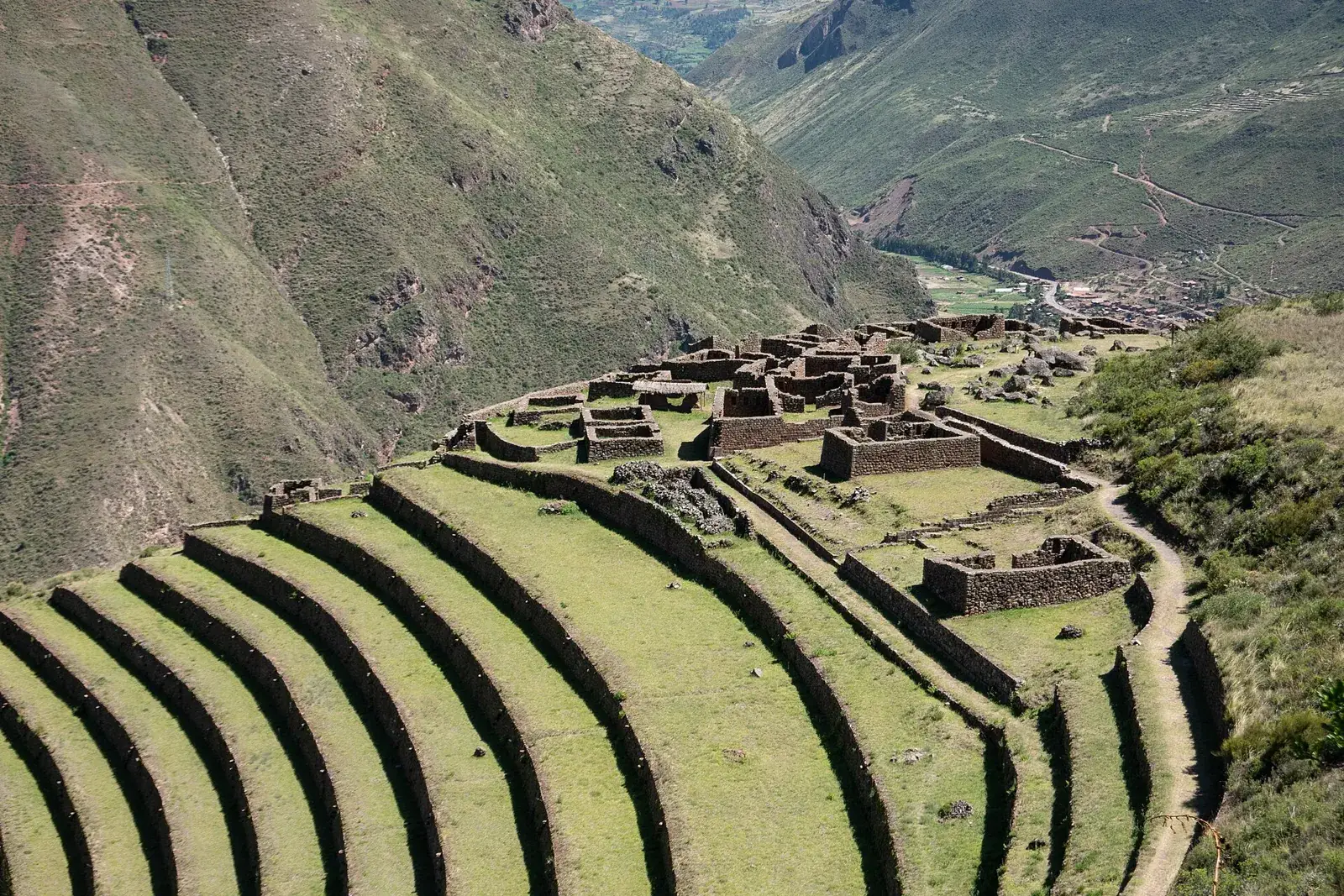
Give the Sacred Valley two nights as a base before or after Cusco, and a third if you want to see Moray, Maras and Pisac at an easy pace. Its towns sit roughly 500 to 600 m lower than Cusco, so many travellers sleep here first to acclimatise. Ollantaytambo is the best base for Machu Picchu, Urubamba for comfort and Pisac for the market and the ruins.
In this section
-
 Destination guide
Where to Stay in the Sacred Valley
The valley is lower, warmer and quieter than Cusco, and the town you choose depends on what you plan to do next.
-
 Destination guide
Sacred Valley Tours
Most Sacred Valley tours cover the same handful of sites in different orders, so the details of the route are what set them apart.
-
 Attraction
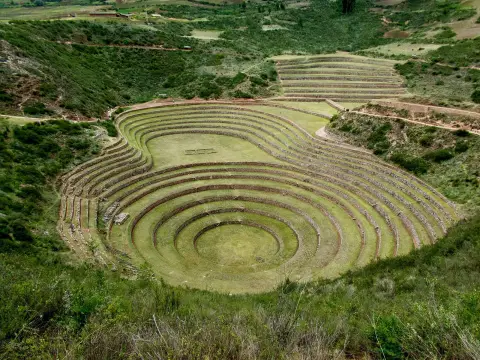
Moray
A set of deep, circular Inca terraces on a high plateau, usually visited with the Maras salt mines.
-
 Attraction
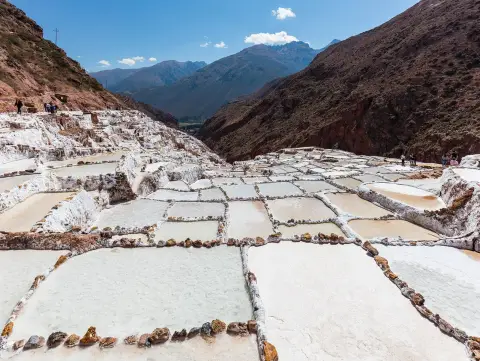
Maras Salt Mines
A hillside of thousands of small salt pans fed by a salty spring, still worked by local families.
-
 Attraction
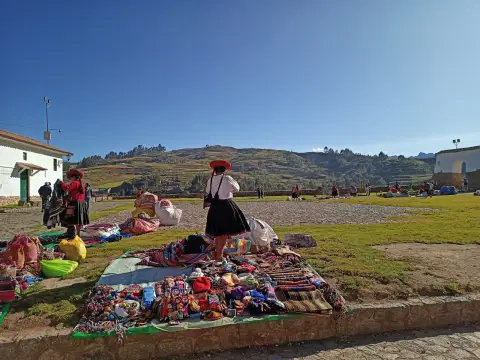
Chinchero: Inca Ruins and Weaving Village
A high Andean village on the Cusco-Urubamba road with Inca terraces, a colonial church and a strong weaving tradition.
-
 Attraction
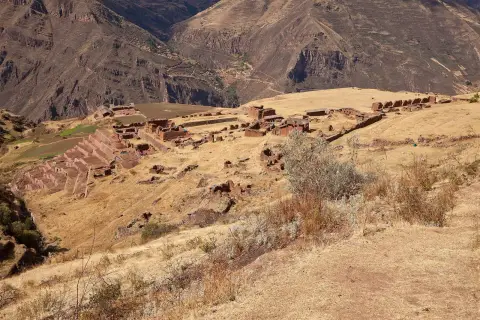
Huchuy Qosqo
A quiet Inca royal estate on a ridge above Lamay, reached only on foot, with a great hall, terraces and long views over the Sacred Valley.
-
 Attraction
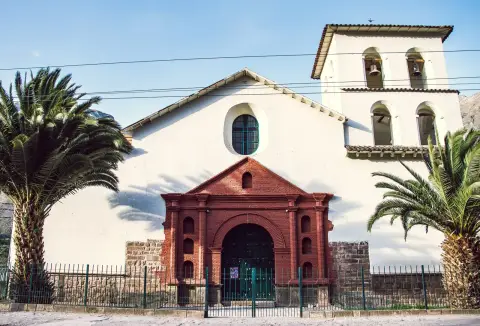
Yucay
A small colonial village on the valley floor, built on a royal Inca estate, with a palace, a plaza, a church and terraces within a short walk.
-
 Attraction
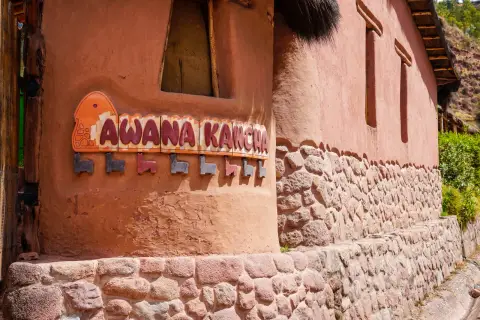
Awana Kancha
A camelid farm, weaving demonstration and craft shop beside the Cusco to Pisac road, a short stop on the way into the Sacred Valley.
What the Sacred Valley is
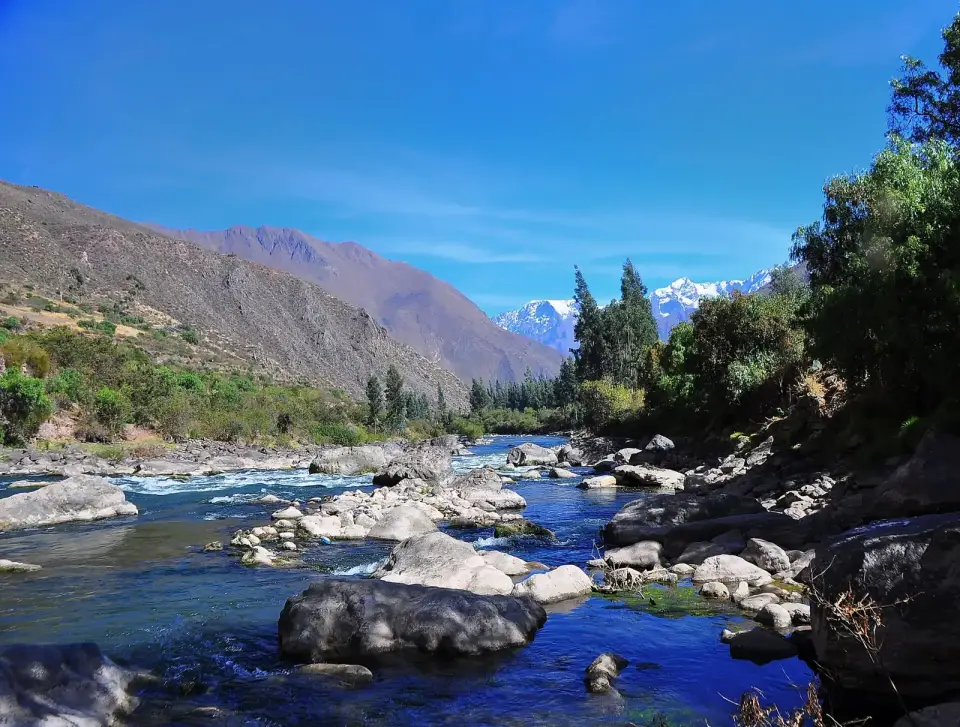
The Urubamba river runs through a broad, fertile valley north-west of Cusco, and the Incas valued it for its maize and its milder climate. The valley is dotted with agricultural terraces, ceremonial sites and royal estates, and the towns along it still hold much of the Inca layout. It is not a single sight but a stretch of countryside that you move through, usually by road, with several stops.
Two things make it more relaxed than Cusco: it is lower, and it is quieter in the evening. Many visitors prefer to sleep here and visit Cusco in day trips, especially at the start of a trip. Who benefits from each choice is set out in Sacred Valley and Cusco as a base.
The valley also changes character along its length. The Cusco end is open and agricultural, the middle is wide and green, and the far end narrows into a steep gorge as the river heads towards the cloud forest and Machu Picchu. That variety is why a slow drive through it is worth as much as any single ruin.
Choosing a base
Pisac is at the Cusco end of the valley, with its artisans' market, a ruined hillside citadel and a more small-town feel. Urubamba is the central town, with the largest range of hotels, restaurants and quiet haciendas, and it works as a hub for day excursions. Ollantaytambo, at the far end, is the most atmospheric: a living Inca town with cobbled lanes, an imposing fortress and the main train station for Machu Picchu. If you have an early train, sleeping in Ollantaytambo removes a stressful start.
Smaller villages and rural lodges between these towns are quieter again, and suit those who want views and a slow pace over convenience. See Pisac and Ollantaytambo for the detail of each town, and where to stay in the Sacred Valley for how to weigh price, comfort and location.
Tours and activities
Bookable online, chosen for their traveller reviews.
-
From €107 per person
Sacred Valley
Private Sacred Valley Day Trip with Local Guide
-
From €107 per person
Sacred Valley
Moray and Maras Day Tour from Ollantaytambo to Cusco
-
Day trip From €62 per person
Sacred Valley
Moray ATV Tour from Cusco with Salt Mines and Tasting
-
From €65 per person
Sacred Valley
Private Half-Day Maras and Moray Tour from Ollantaytambo
What to see
The ruins and markets are the core. Pisac and Ollantaytambo each have a major Inca site, and the circular terraces of Moray and the salt pans of Maras are often combined in one half-day. Chinchero, on the plateau above the valley, is known for its weaving. Distances between stops are short, but the roads wind and traffic in the towns can be slow.
A full day by tour or private car covers several of these. Independent travellers can use local buses and shared taxis between the towns, which is cheap and straightforward but slower. Sacred Valley tours explains what the standard day trips include and what they leave out.
Using the valley to acclimatise
Sleeping in the valley first is a widely used way to ease into the Andes. The floor of the valley is roughly 2,800 to 2,900 m, a clear step below Cusco at about 3,400 m, so most people sleep better and get fewer headaches on the first nights. After two nights you can go up to Cusco with a better chance of enjoying it.
This works best if you fly from Lima to Cusco and then drive straight down to the valley, rather than staying in the city first. Be sure to plan a quiet first day regardless of where you sleep. For the symptoms to watch for and when to seek medical advice, see altitude sickness; none of this replaces a conversation with a doctor or travel clinic.
Travellers who plan to walk the Inca Trail or another trek will gain the most from this approach, since the extra nights at moderate altitude are the best preparation for the high passes ahead.
Getting here and onwards
From Cusco, the valley is reached by road in somewhere between one and two hours depending on the town and the traffic; getting from Cusco to the Sacred Valley compares buses, shared taxis and private cars. From Ollantaytambo, the train runs to Aguas Calientes, the base for Machu Picchu, and there are also buses and taxis to the train station at other points. Buy train tickets early in high season, since seats on the most convenient departures sell out.
If you are heading to Machu Picchu, see trains to Machu Picchu and how to get there for the options. Treat the station times as the fixed point of your day and plan the valley around them, not the other way round.
When to go
The dry season from roughly May to September gives clear days and cold nights, and the busiest months. The rainy season, roughly November to March, makes the valley very green but can disrupt roads and tours. Harvest and festival dates also bring crowds, so check dates before you commit to an exact base.
Mornings in the valley are often bright even in the wetter months, with showers more likely in the afternoon, so an early start is useful at any time of year. Evenings are cool and can be properly cold in the dry season, which surprises people who expect a lower valley to be warm. What each means in practice is described in the dry season and the rainy season.
Mistakes to avoid
The commonest mistake is trying to do the whole valley in a single rushed day on the way to Machu Picchu. Pisac, Moray, Maras and Ollantaytambo are each worth an hour or two, and visiting them back to back leaves little memory of any. Choose two or three and give them time.
A second mistake is booking a hotel in Pisac or Urubamba on the night before an early train, which means a long drive in the dark. Sleep in Ollantaytambo instead. A third is leaving all your sightseeing to the last day, when the weather or a transport delay can ruin it. Build a spare half day into the plan, particularly in the rainy season, when road disruptions are more likely.
Map
Where to sleep
-
Find hotels
Urubamba
Central, with the most choice and the easiest road links
-
Find hotels
Ollantaytambo
Inca town with the trains to Machu Picchu
-
Find hotels
Pisac
Market town with a citadel above it, closest to Cusco
-
Find hotels
Yucay
Quiet and green between Urubamba and Ollantaytambo
Weather in Sacred Valley
Forecast: MET Norway
Frequently asked questions
Is the Sacred Valley better than Cusco to sleep in?
For the first nights, many people find it easier because it is lower and quieter. For museums and nightlife, Cusco is better.
How many days do I need in the Sacred Valley?
Two days covers the main sites, three lets you slow down. Add a night in Ollantaytambo if you take an early morning train.
Can I visit the Sacred Valley without a tour?
Yes. Buses and shared taxis connect the main towns, but sites such as Moray and Maras are easier with a driver.
Is the Sacred Valley worth it if I have limited time?
Yes, if you can spare at least a night. With only a day, choose one town and one site, and do not try to see everything. The valley is the natural bridge between Cusco and Machu Picchu, so it usually costs you little extra time.
Which town in the Sacred Valley is best for a first visit?
Ollantaytambo suits most first-time visitors, because it combines a major ruin, a charming old town and the train to Machu Picchu. Pisac is better if the market is the main draw.
Do I need a ticket for the Sacred Valley sites?
Most of the main archaeological sites in the valley are covered by a combined ticket sold for the Cusco region, although arrangements change. Carry your passport.
Is the Sacred Valley warm?
Daytime in the dry season is pleasant and sunny, but nights are cold. The valley is lower than Cusco, yet it is still a highland climate, so pack layers rather than expecting tropical weather.
Can I walk between the towns?
Short sections are walkable, and there are routes along old Inca paths, but the towns are far enough apart that most people use a car, bus or shared taxi. Walking at altitude is slower than it looks.