Chinchero is a high Andean village on the road between Cusco and Urubamba, roughly 3,700 m above sea level. It is known for its Inca terraces and foundations, a colonial church built on an Inca site, weaving demonstrations and a Sunday market. Allow one to two hours, more if you plan to watch a full demonstration.
It is usually combined with Moray, Maras and Ollantaytambo on a Sacred Valley day, and the archaeological site is normally covered by the Cusco tourist ticket.
Map
Where Chinchero sits
Chinchero is a village on a high plateau, at roughly 3,700 m, which makes it higher than Cusco and well above the floor of the Sacred Valley. It lies on the road between Cusco and Urubamba, so it is one of the first places travellers pass on the way into the valley, and many tour itineraries stop here for an hour or two before descending.
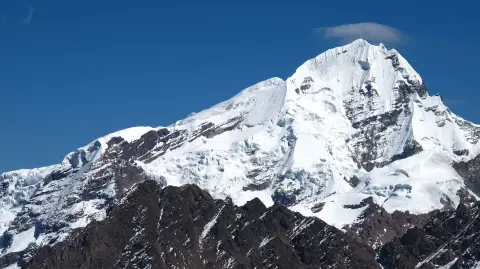
The setting is open and windswept, with fields, terraces and snow-capped peaks visible on a clear day. The air is thin and temperatures can be cold, particularly in the morning and evening, even in the dry season. Those arriving from sea level should read about altitude sickness and take things slowly.
The village is small, quiet outside event days and still lived in by farming families. It is sometimes described as the place where the rainbow was born, a local saying that should be taken as tradition rather than fact. For the wider area and how Chinchero fits among other bases, see the Sacred Valley.
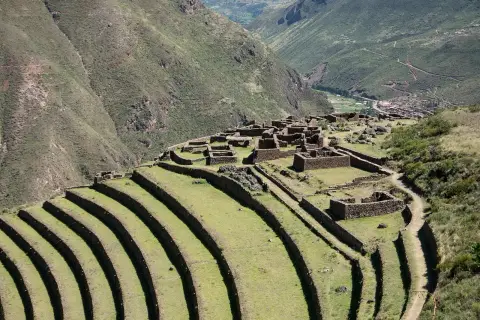
Inca ruins and terraces
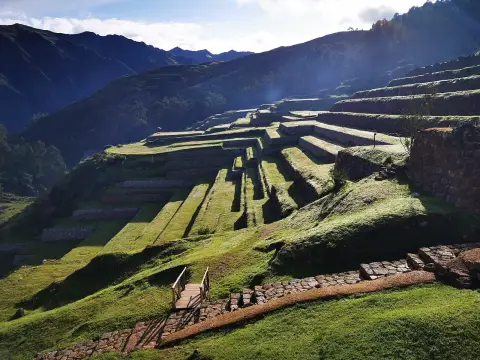
The archaeological site sits at the edge of the village and includes broad Inca terraces, large stone walls with trapezoidal niches and open ground that was once part of a royal estate. Chinchero is usually linked with the Inca ruler Túpac Yupanqui, who is thought to have had an estate here, although the details of its use are not fully documented.
Walking the site is straightforward: a path leads across the terraces, past the main walls and down to views over the valley. The terraces are still farmed in places, which gives a sense of the continuing life of the landscape. The masonry is less dramatic than at Sacsayhuamán, so expectations should be modest, but the scenery is part of the interest.
Allow about 30 to 45 minutes for the ruins. The ground is uneven and exposed, so wear sturdy shoes and carry sun protection, because UV is strong at this altitude. A guide can explain which walls are Inca and which are later additions, which is useful when the two are close together.
Tours and activities
Bookable online, chosen for their traveller reviews.
-
From €107 per person
Sacred Valley
Private Sacred Valley Day Trip with Local Guide
-
From €107 per person
Sacred Valley
Moray and Maras Day Tour from Ollantaytambo to Cusco
-
Day trip From €62 per person
Sacred Valley
Moray ATV Tour from Cusco with Salt Mines and Tasting
-
From €65 per person
Sacred Valley
Private Half-Day Maras and Moray Tour from Ollantaytambo
A colonial church on Inca walls
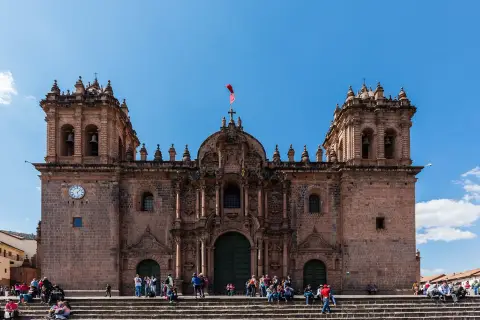
Beside the plaza stands a small colonial church, generally dated to the seventeenth century, built on Inca foundations and walls. The contrast of whitewashed colonial facade and dark Inca stonework is typical of the region. Inside, the ceiling and walls are known for painted decoration, and the church is regarded as one of the more interesting small colonial churches near Cusco.
Photography may be restricted inside, and entry arrangements can change, so look for signs and ask at the door. The church is a place of worship, so dress modestly and keep your voice low if a service is in progress.
The plaza in front of the church has a large Inca wall with a row of niches, and an open space that hosts the market and local gatherings. It is a good place to sit for a few minutes and watch village life. If you want to compare Inca stonework, the nearby site at Ollantaytambo is a more monumental example, and the Qorikancha in Cusco shows a refined temple wall.
Weaving demonstrations and natural dyes
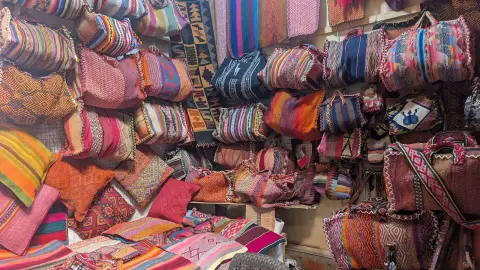
Chinchero is best known for its weaving. Several women's cooperatives and family workshops welcome visitors to see the process, from washing and spinning wool to dyeing it with plants, minerals and insects, and weaving it on traditional back-strap looms. A demonstration usually includes a short talk, a display of colours and a chance to see finished pieces.
The demonstrations are informative and are worth watching even if you do not plan to buy. Natural dyes are a highlight: the red from cochineal, an insect that lives on cactus, is often shown by crushing it and adding lime juice or other substances to change the colour. How the dyes are made and which colours come from which plants are details you can ask about.
Be aware that demonstrations are also sales settings. You are under no obligation to buy, but good prices depend on quality, so ask about materials, such as alpaca or sheep wool, and check the finish. For wider buying advice see souvenirs in Peru. Prices are not always fixed, but haggling should be polite.
The Sunday market
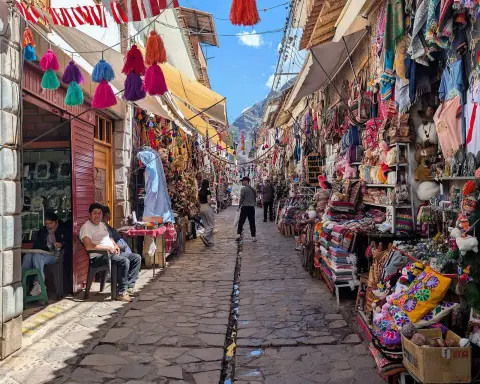
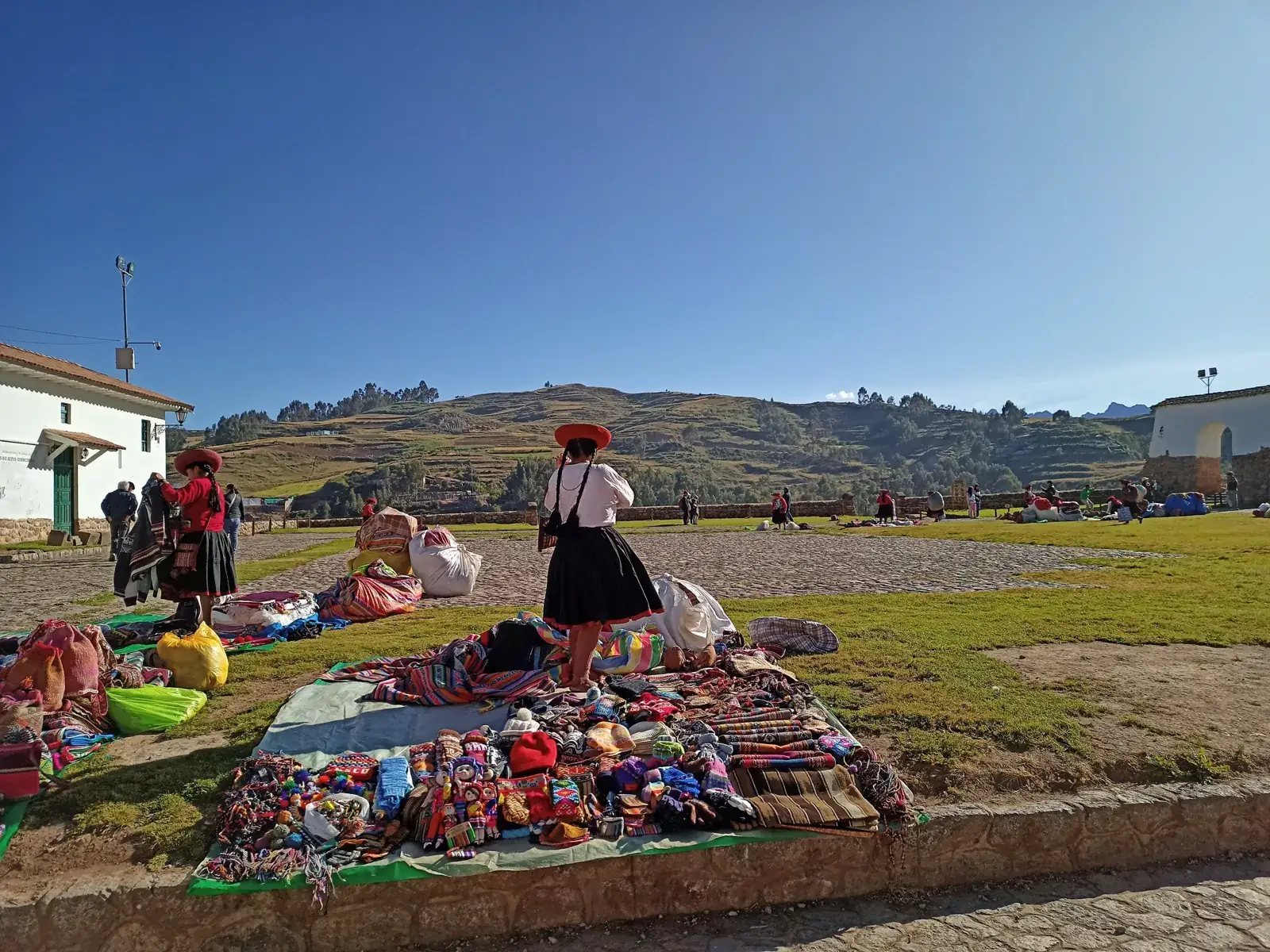
On Sundays Chinchero hosts a local market that mixes everyday trade with items for visitors. Villagers from surrounding communities bring produce, and goods such as potatoes, maize and cheese are traded. In parts of the market, it is also common to see barter, although how widespread this is today is uncertain.
The market is more local than the better-known one at Pisac, and is generally quieter, but on Sundays it can get busy with tour groups and parking becomes tight. Go earlier in the day for a calmer experience, and bring small notes and coins for purchases.
Market days and hours can vary, and there may also be a separate craft market on other days, so check the current pattern with your accommodation or a local operator. If you want to compare, Pisac also has a well-known market and is on a different side of the valley.
Pay attention to your belongings in crowds, and ask before photographing people, as many vendors prefer to be asked first.
Getting there and tickets
Chinchero is reached by road from Cusco, usually in under an hour by taxi, tour minibus or shared transport, though journey times vary with traffic. Collective vans run along the road towards Urubamba and may drop you at or near the village. Because it lies on the way to the valley, it fits naturally into an excursion. See Cusco to the Sacred Valley for general transport options.
The archaeological site has normally been part of the boleto turístico, the combined ticket for Cusco and the Sacred Valley, which is checked at the entrance. Prices, partial options and which sites are included change, so check the current arrangements before buying. The church may be covered by a separate ticket, or by none.
Public information on the future of the area has included plans for a major new airport nearby, but its status is uncertain, so check current news before relying on any assumption about travel or development.
Combining Chinchero with other sites
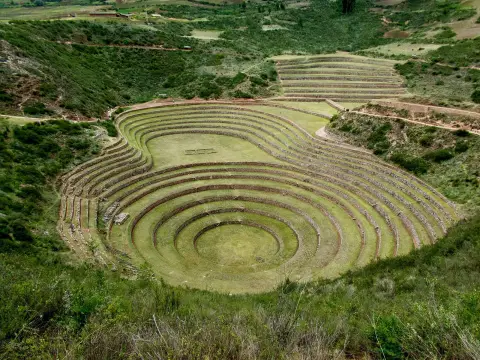
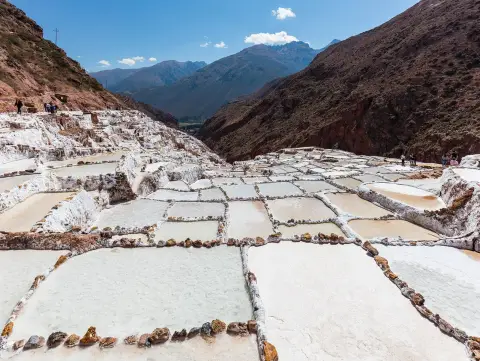
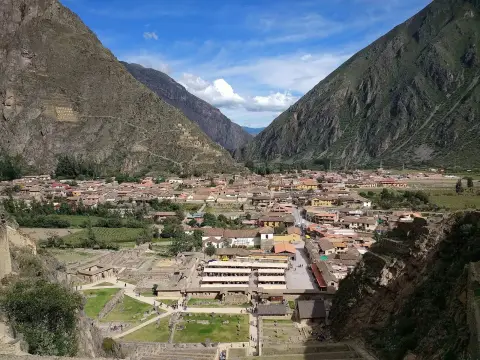
A typical Sacred Valley day starts in Cusco, stops at Chinchero, continues to Moray and the Maras salt mines and then descends to Urubamba or on to Ollantaytambo. Chinchero works well as the first stop because the weaving demonstration is warm and sheltered, and the village is less crowded early in the day.
For a lighter plan, pair Chinchero with Moray and Maras only, which keeps the day relaxed. If your time is limited, choose between the ruins and the demonstration instead of doing both at length, and give priority to whichever interests you.
If you are weighing a guided day against an independent one, see Sacred Valley tours for what these tours usually cover. Common mistakes include arriving on a Sunday without planning for crowds, expecting a large ruin like Machu Picchu, and underestimating the cold. Bring layers, water and sun protection.
Where to sleep
-
Find hotels
Urubamba
Central, with the most choice and the easiest road links
-
Find hotels
Ollantaytambo
Inca town with the trains to Machu Picchu
-
Find hotels
Pisac
Market town with a citadel above it, closest to Cusco
-
Find hotels
Yucay
Quiet and green between Urubamba and Ollantaytambo
Frequently asked questions
How high is Chinchero?
Chinchero is at roughly 3,700 m above sea level, higher than Cusco. The altitude affects most visitors, so take a slow pace, drink water and avoid heavy exertion on your first days.
When is the Chinchero market?
The main local market is on Sundays, with a smaller craft market at other times. Days and hours can vary, so check with your accommodation or a local operator before planning around it.
How long do I need in Chinchero?
One to two hours is enough for the ruins, the church and a short demonstration. Allow more if you want to take part in a longer weaving session or visit the market.
Is Chinchero included in the Cusco tourist ticket?
The archaeological site has normally been included in the combined boleto turístico. Details, validity and the status of the church ticket change, so check at the official ticket system before buying.
Is Chinchero worth visiting?
Yes, if you are interested in weaving, village life and a lower-key Inca site. It is less dramatic than the major ruins, so it works best as part of a day that includes Moray and Maras.
Are the weaving demonstrations genuine?
They are real workshops where women show wool preparation, natural dyeing and weaving, though they also serve as sales points. Ask questions about materials and techniques, and buy only what you like. See souvenirs for more.
Can I visit Chinchero by public transport?
Shared vans and buses run along the Cusco to Urubamba road and can drop you in or near the village. Schedules and starting points change, so ask locally. A taxi or tour is more straightforward if you also want Moray and Maras.