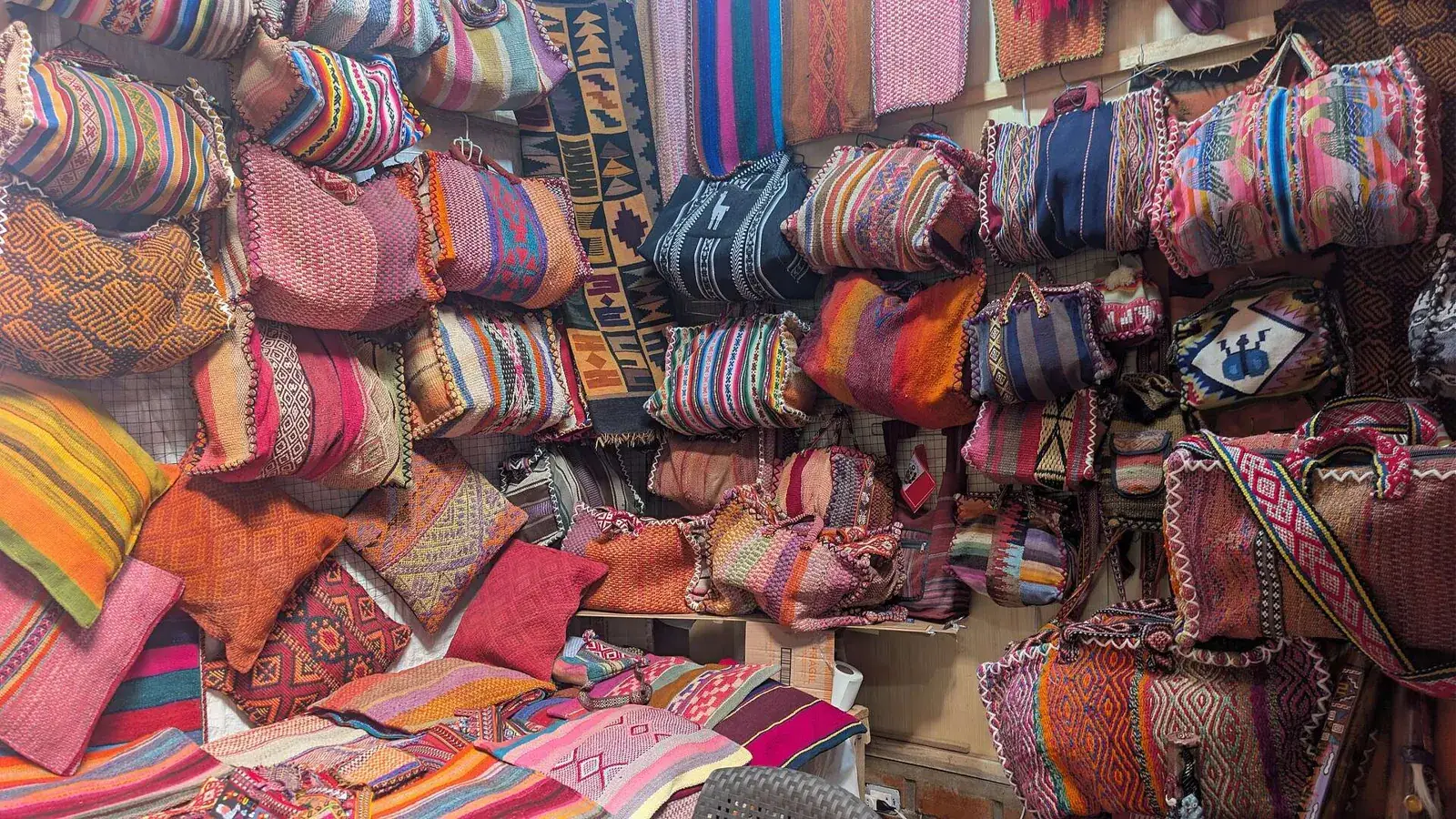
Good souvenirs from Peru include alpaca and wool textiles, hand-woven goods, ceramics, silver, chocolate, coffee and pisco. Buy from artisans or reputable shops, learn to spot synthetic fibre sold as alpaca, and avoid products made from protected wildlife, plants or antiquities. Check your home country's import rules for food and alcohol.
Textiles and crafts
Alpaca is the classic purchase: sweaters, scarves, gloves and blankets. The quality ranges from baby alpaca, which is very soft, to blends with synthetic fibre sold at low prices. Pure alpaca feels warm and slightly textured, while very shiny, very cheap items may be acrylic. Labels are not always reliable, so buy from shops that can show what is in the product, and be realistic about price.
Hand-woven textiles from Andean communities, such as belts, bags and cloths made on backstrap looms, are best bought directly from weavers or from cooperatives where possible. Look for natural dyes, even stitching and a story about the weaver. Other crafts include ceramics, carved gourds, retablos, silver jewellery and the painted bulls often placed on roofs.
Food, drink and where to shop
Peruvian chocolate, coffee, quinoa products, dried fruits, spices and ají pastes pack well. Pisco is the typical spirit, and a bottle fits in checked luggage, though you must wrap it carefully; see pisco for the styles. Check import allowances at home for alcohol and food, and the rules for seeds, plants and animal products.
In Cusco, the San Pedro market, San Blas workshops and the artisan markets are popular, and Lima has craft markets and boutique shops. Prices in markets can be negotiated politely, while shops usually have fixed prices. Compare a few stalls before buying, and check items for damage.
Buying well
Ask who made the item, pay a fair price, and prefer shops and cooperatives that pay artisans properly. Carry cash in small notes, since markets rarely take cards; see money to understand what to carry. Wrap fragile ceramics well, and keep receipts for valuable items. If you want something large, ask the seller about shipping, and be cautious about paying in advance.
Judging quality in textiles
Hold knitwear up to the light and look at the weave: even, tight and consistent stitching signals care. Rub a small area gently, since pilling quickly or a plasticky feel may indicate a synthetic blend. Check the inside seams and the finish at cuffs and hems. Natural fibres are warm, lightweight and breathable, and do not smell strongly of chemicals.
Ask the seller to explain the difference between baby alpaca, alpaca, llama and sheep wool, since the answer shows how much they know. Prices that seem too good to be true usually are. Authentic hand-woven pieces take days or weeks to produce, so a very low price should make you ask what has been left out. See saving tips to understand how to save money without undercutting makers.
Ceramics, silver, retablos and masks
Ceramics vary from simple pots to fine reproductions of pre-Inca designs, and sellers should state that they are replicas. Silver jewellery should carry a stamp and be bought from reputable shops, as plated items can be sold as silver. Retablos, which are small painted boxes showing scenes of religion or daily life, make light, distinctive gifts.
Carved gourds, painted masks from festivals and knitted chullo hats are common in markets and workshops. Prefer pieces from named workshops or cooperatives, which usually mean better quality and fairer payment. For large or fragile pieces, ask the seller to pack them for travel and keep your receipt, and see Cusco for neighbourhoods where artisans work.
Taking things home
Check your own country's import rules before buying food, plants, wood, feathers and anything made from animal products. Customs services can confiscate prohibited items, and some can fine you. Alcohol is limited by quantity, and the rules for seeds and fresh produce are strict. Keep receipts for expensive items, since you may be asked to declare them.
Leave space in your luggage and weigh bags before flying, because heavy textiles and bottles add up and domestic airlines can have tight limits, as the packing list notes. If you buy something large, consider posting it, but choose a reliable service and keep tracking details. Do not buy items that you cannot legally carry home, however attractive.
Gifts that give back
Buying directly from artisans and cooperatives means more of your money reaches the makers. Ask whether a weaving centre pays its members fairly and whether proceeds support the community. Be wary of "women's cooperative" labels with no detail, and ask to meet the makers when you can.
For how to spend well, see responsible travel, and for haggling, etiquette. A few good pieces are worth more than a bag of cheap ones, and you will be reminded of the trip each time you use them.
Frequently asked questions
How can I tell real alpaca?
Feel and price are guides, but labels vary. Buy from reputable sellers who can verify the fibre content.
Can I bring pisco home?
Usually, within your allowance. Check your home country's alcohol and customs rules.
Are antiques okay to buy?
No. Trade in archaeological items is illegal. Buy replicas sold as such.
Where is the best place to buy alpaca in Cusco?
Cusco has markets, workshops and shops. Compare several, ask about the fibre and buy where sellers can explain the products. Cooperatives often give more information about the makers.
Is it okay to bargain for crafts?
Yes, in markets, politely and fairly. Avoid pushing the price below what the maker needs, and do not bargain in fixed-price shops.
Can I bring coca tea home?
Coca tea is legal in Peru but may be illegal or restricted in other countries, so check your home customs rules before buying it.
What is a good small gift to bring back?
Chocolate, coffee, a small textile or a retablo pack well and are easy to share. Check the import rules for food before you fly.