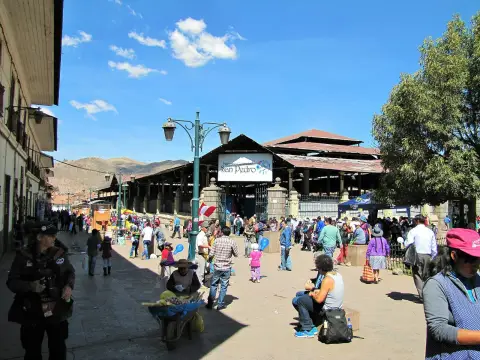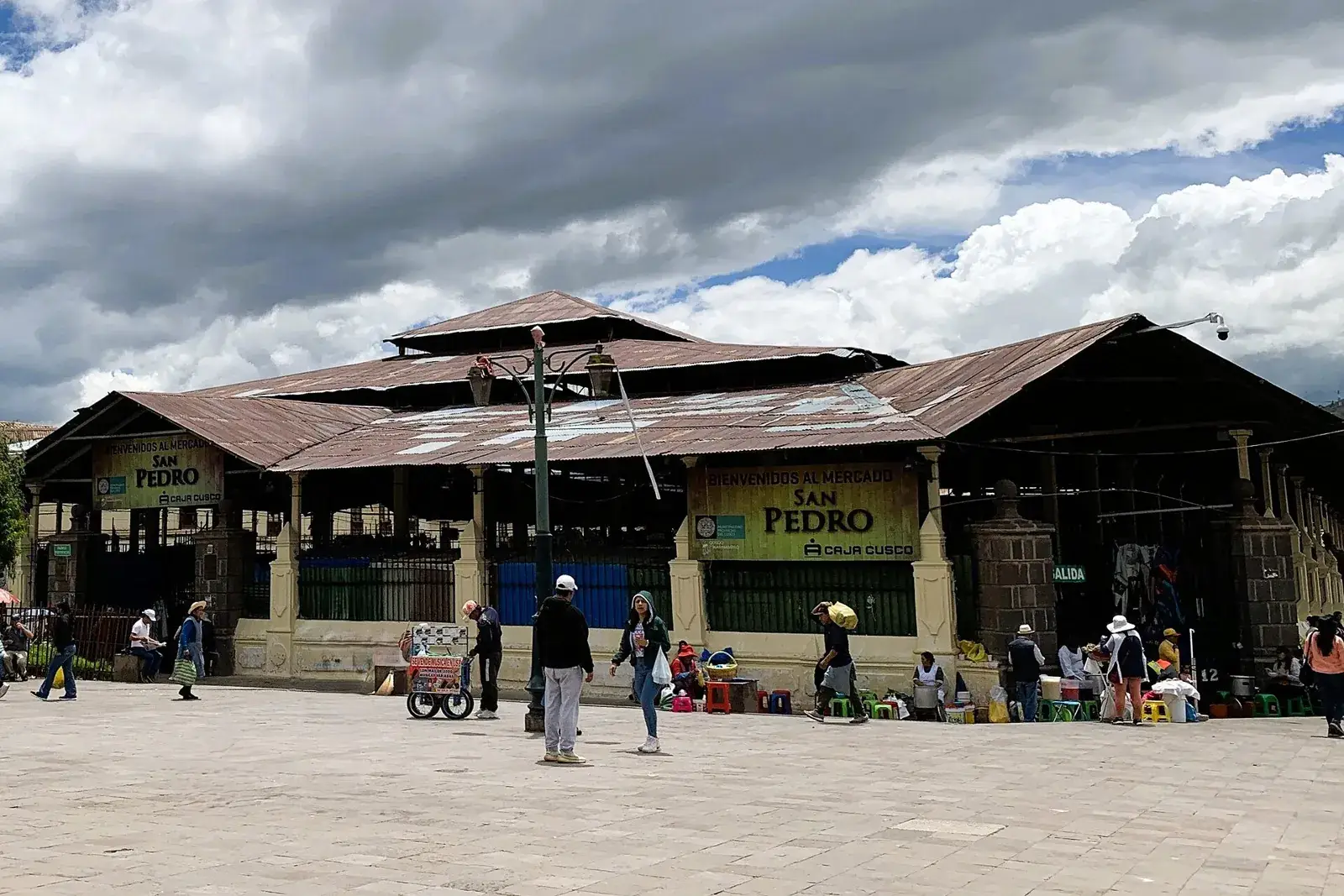
San Pedro is the busiest central market in Cusco, a short walk from the Plaza de Armas. Come for fresh fruit juices, bread, soups and the produce stalls, and give it about an hour. It is a good place to see how the city eats, but go with a little caution: choose busy food stalls, carry only small amounts of cash and keep your bag in front of you.
Map
What the market is like
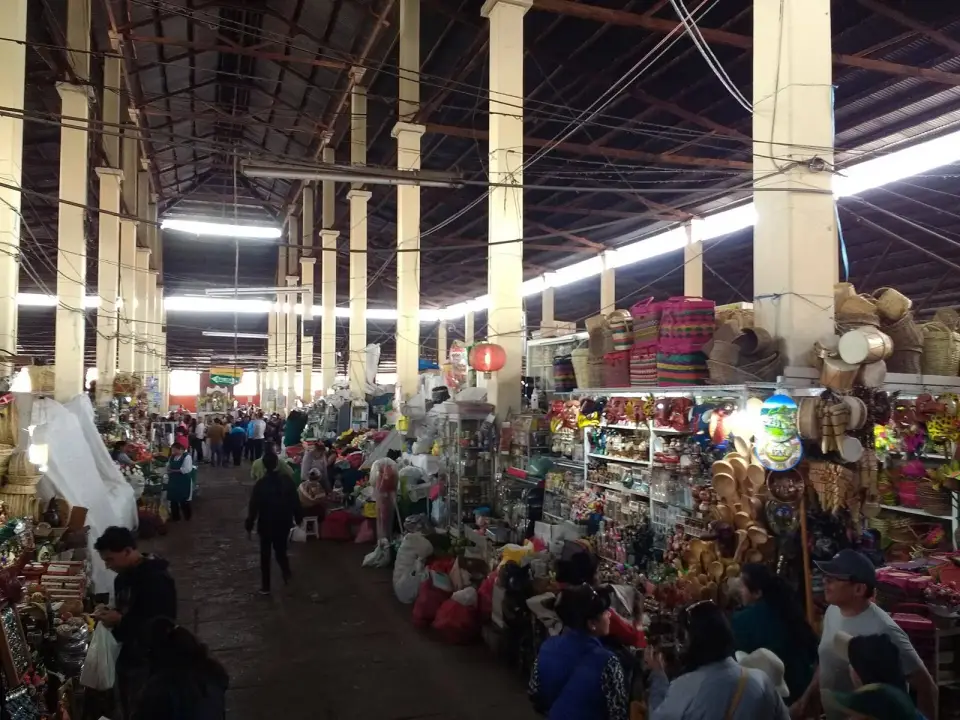
San Pedro is a covered market, laid out in aisles by product. You will pass heaps of fruit and vegetables, including potatoes in many varieties and fruit from the lowlands, then butchers, cheese and bread sellers, medicinal herb stalls and rows of small kitchens. It is mainly a market for local shoppers, which is why it is more interesting than a market built for visitors.
The noise, the smells and the crowds at midday can be a lot, especially in your first days at altitude. Visit in the morning, when produce is freshest and the aisles are easier to move through. A short walk from the main square puts the market within easy reach of anywhere in the historic centre of Cusco.
What to eat and drink
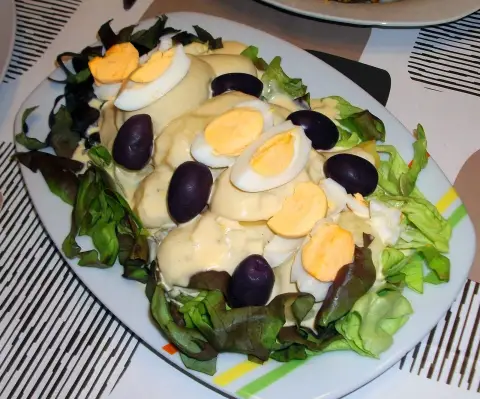
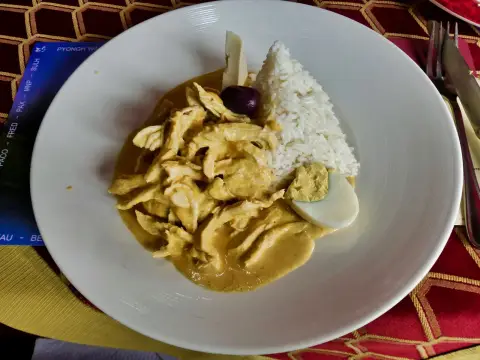
The juice stalls are the classic stop. You choose fruit from the display and it is blended in front of you, often with a second refill if you stay. Bread stalls sell the round loaves of the region, and many kitchens serve a set lunch of soup followed by a main course, aimed at people working nearby.
Visitors with sensitive stomachs should be selective. Choose stalls that are busy and where food is clearly cooked fresh and served hot. Be careful with anything that has been washed in tap water, such as salads, and with ice. If you are unsure, fruit that you peel yourself is the safest option. Read water and food safety before you eat from stalls in your first days.
For a wider idea of what to look for in Cusco, including regional dishes you can try at restaurants as well as at the market, see eating in Cusco.
Tours and activities
Bookable online, chosen for their traveller reviews.
-
★ Top rated From €23 per person
-
★ Top rated From €22 per person
-
★ Top rated From €23 per person
-
★ Top rated From €17 per person
A walk through the aisles
Walking the market in a loop is the easiest way to understand it. The produce aisles show how much of Peru's variety ends up in one place: Andean tubers, grains such as quinoa, lowland fruit from the jungle side, and herbs sold for cooking or for infusions. Cheese and meat sections are busy and practical, and the smells change from stall to stall.
The ready-to-eat corners are usually the liveliest. Cooks work from large pots, and regulars sit at counters. Do not worry if you cannot read the menu board: pointing at what others are eating is normal, and the set lunch usually has a single option.
If you cook for yourself, the market is a good place to buy fruit, bread and snacks for a day trip. Buy what you will eat the same day, and carry it in a bag you can close. Vegetarians can find fruit, bread, cheese and vegetable-based soups. See vegetarian food to understand what to ask for.
Shopping and behaviour
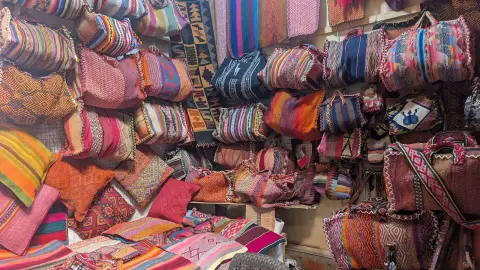
Alongside food there are stalls selling textiles, hats, bags and other souvenirs, usually at the edges of the market. Quality varies a great deal and so does the origin of what is sold, so look closely at the weaving and ask where an item was made. Prices are often negotiable at souvenir stalls, but not on food sold by weight, where you can simply check the posted price. See souvenirs to understand what to look for and what to avoid.
Ask before photographing people or their stalls. Many vendors will agree, some will not, and a small purchase is the polite way to open the conversation.
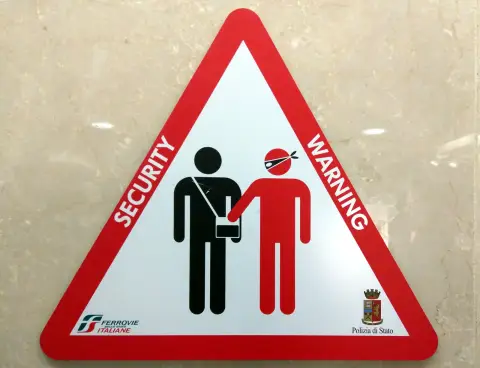
Markets in busy tourist cities attract pickpockets. Keep your phone and wallet in a front pocket or zipped bag, and avoid carrying valuables. Carry small notes and coins, since vendors may not have change for large denominations.
Fitting the market into your day
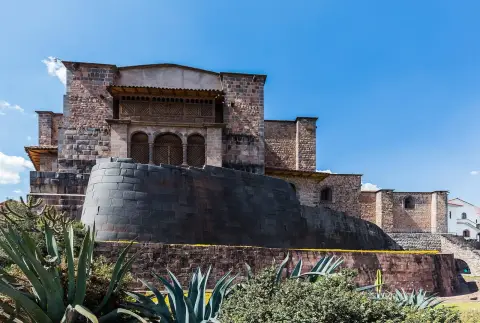
San Pedro works best as part of a walking morning in the centre. A common plan is to start with the market, have a juice and some bread, and then walk on to the Qorikancha before the day gets busy. Both are close to the main square, and neither involves much climbing, which is helpful while you are still adjusting to 3,400 m.
If you want more ideas for the rest of the day, see things to do in Cusco for other central sights. For a first full day, keep the plan light: the altitude affects appetite and energy, and a large meal of unfamiliar food on arrival is rarely a good idea.
Visitors who prefer a guided introduction to local food can look at what Cusco tours include, although a market visit is easy to do alone.
Eating carefully on your first days
Most travellers who get an upset stomach in Peru trace it to food or water in the first week, when the body is also coping with altitude, tiredness and a change of diet. At a market the same rules apply as anywhere. Eat food that is cooked in front of you and served hot, avoid raw items that have been washed in tap water, and drink bottled or treated water. Hand hygiene matters as much as the choice of stall.
Many visitors keep the heavier market meals for later in the trip, starting with juice, bread and fruit on the first days. That is a sensible approach rather than an overreaction. Ice in drinks is a risk because it may be made from tap water.
If you do get ill, the general advice on water and food safety is the starting point, and a doctor or pharmacist should be your next step for anything that lasts.
Where to sleep
-
Find hotels
Plaza de Armas and historic centre
Everything on foot, at the price of noise and crowds
-
Find hotels
San Blas
Artisans' quarter with steep lanes and views, a short walk uphill
-
Find hotels
All of Cusco
Compare every area and price level in one search
Frequently asked questions
How long should I spend at San Pedro Market?
About an hour is enough to walk the aisles, try a juice and have a look at the produce. Add time if you plan to eat a full lunch there.
Is it safe to eat at the market?
Many visitors eat there without trouble, but stomach problems are a risk anywhere. Pick busy stalls, hot food and peelable fruit, and avoid raw salads and ice in your first days.
When is the best time to go?
Mornings are best, when stalls are fully stocked and the market is less crowded than around midday.
Do I need cash at San Pedro Market?
Yes, carry small notes and coins in soles, as most stalls do not take cards and may lack change for large notes. Keep the cash in a front pocket rather than a bag you carry behind you.
Can I buy souvenirs at San Pedro Market?
Yes, textiles, hats and small gifts are sold at the edges. Compare several stalls and ask where items were made, and read souvenirs for what to look for.
Is San Pedro Market good for vegetarians?
It can be. Fruit, juice, bread, cheese and vegetable soups are easy to find, but many soups are made with meat stock, so ask before ordering. See vegetarian for useful phrases.
Is the market worth visiting if I am short of time?
It is worth an hour if you like food or everyday life, and it is close to the main sights. If you only have a day in Cusco, put the Qorikancha first and fit the market around it.