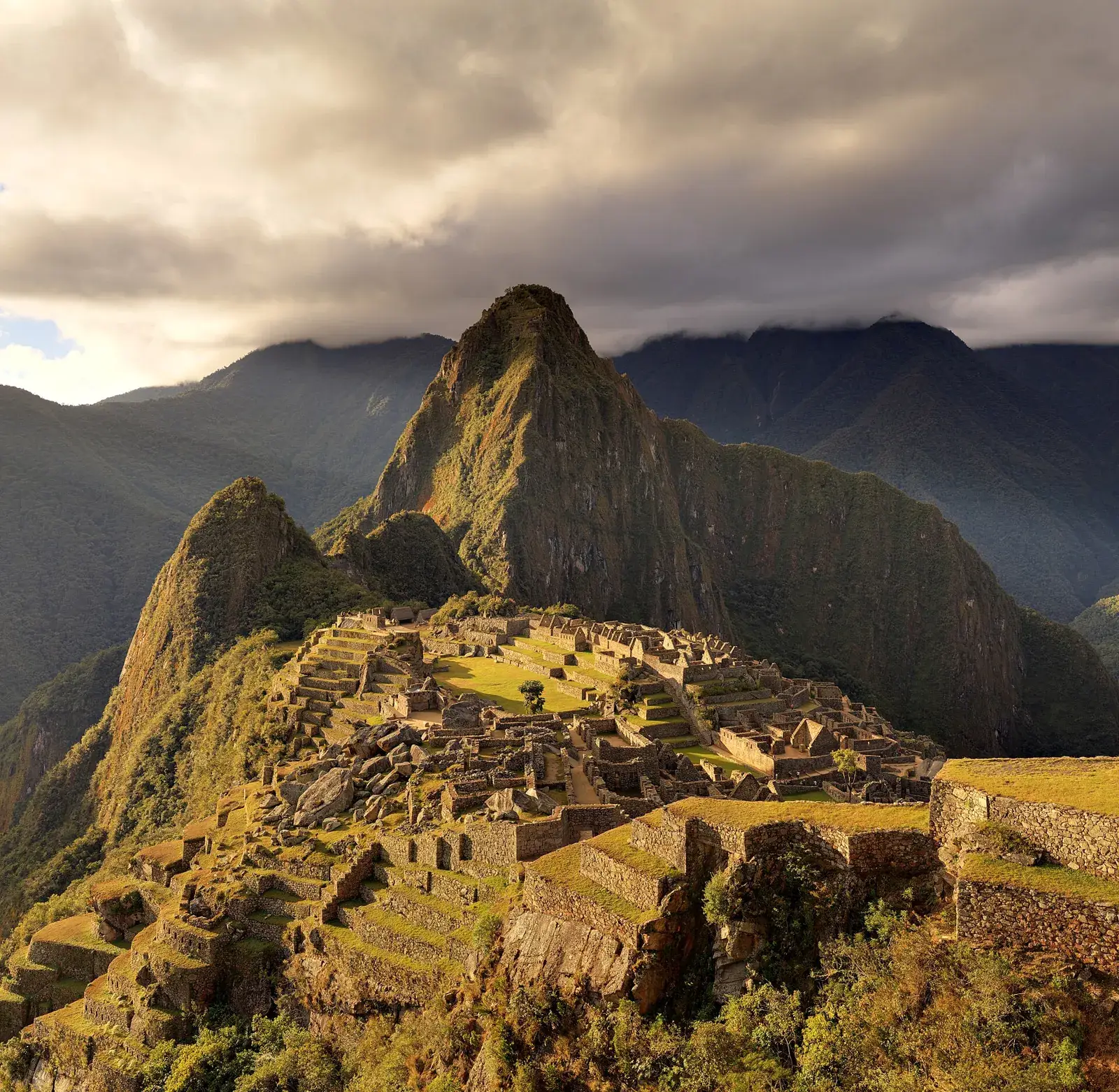
Machu Picchu is visited with a timed entry ticket tied to a circuit, so the order of planning is: pick your dates, secure the ticket, then book the train or trek and your accommodation around it. Most visitors base themselves in Cusco or the Sacred Valley and spend one night in Aguas Calientes, the town below the ruins.
In this section
-
 Machu Picchu
 Tickets
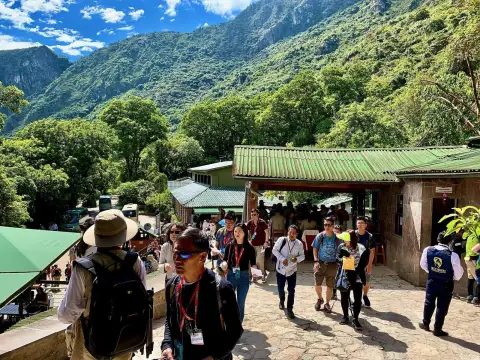
Tickets are dated, timed and tied to a circuit, so the ticket decides the shape of your whole trip.
-
 Machu Picchu
How to Get to Machu Picchu
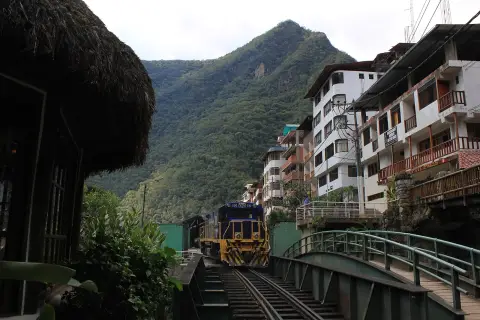
Four realistic routes lead to the ruins, and the right one depends on your time, budget and appetite for walking.
-
 Machu Picchu
Trains to Machu Picchu
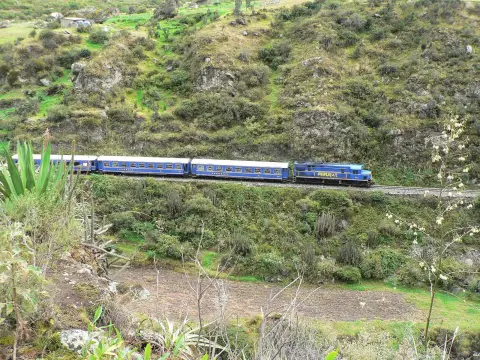
Train travel to Aguas Calientes is simple in principle, but stations, services and luggage rules shape which seat you should book.
-
 Machu Picchu
Days Needed for Machu Picchu
Two days and a night in Aguas Calientes is the comfortable minimum, but there are good plans at both ends.
-
 Machu Picchu
 Mistakes
Most Machu Picchu problems are planning mistakes that are easy to prevent if you know about them in advance.
-
 Machu Picchu
Where to Stay for Machu Picchu
Your base decides how early you can enter, how tired you will be and how much the trip costs.
-
 Machu Picchu
 Tours
A tour can be just a guide at the gate or a complete package with transport and lodging, and the difference matters.
-
 Machu Picchu
 Circuits
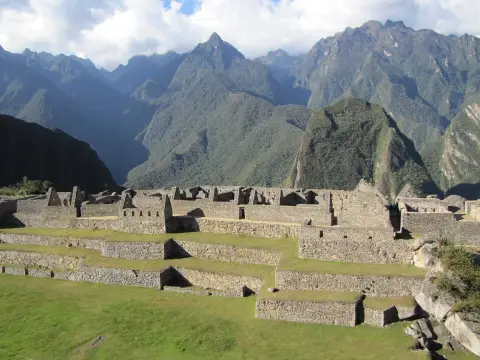
Circuits decide which parts of the citadel you can walk through and which viewpoints you can reach.
-
 Machu Picchu
 Buses
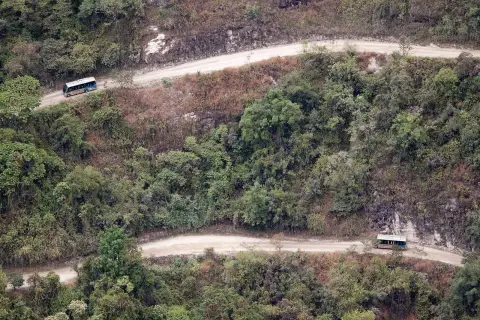
A single winding road links Aguas Calientes to the entrance, and the bus queue can shape your morning.
-
 Machu Picchu
Best Time for Machu Picchu
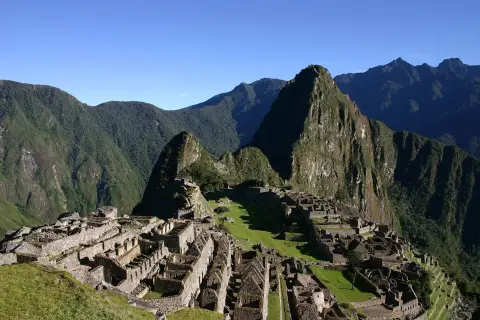
The dry months bring clearer skies and the biggest crowds, while the rainy months trade views for quiet and green.
-
 Machu Picchu
 Weather
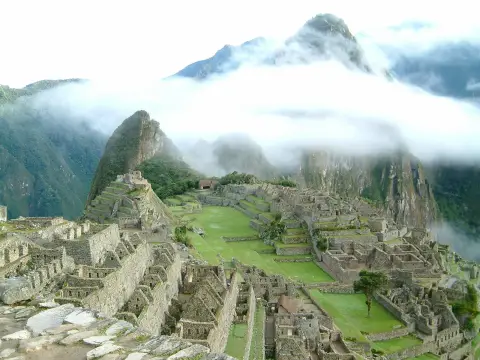
Machu Picchu sits in cloud forest, so weather changes quickly and the day can feel like several seasons.
-
 Machu Picchu
 Opening Hours
Opening hours matter less than your own entry window, which is printed on the ticket and enforced at the gate.
-
 Machu Picchu
 Trip Cost
The entry ticket is only one line; the train, lodging and guide often cost more.
-
 Machu Picchu
Is Machu Picchu Worth It?
For most travellers it lives up to its fame, but the crowds, the cost and the logistics are real.
-
 Machu Picchu
Huayna Picchu
Huayna Picchu is the peak in the classic photo, and climbing it is a separate, limited and demanding add-on.
-
 Machu Picchu
 Mountain
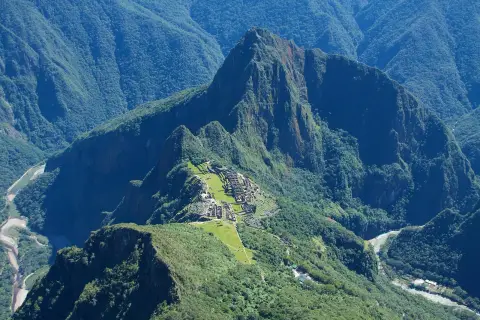
Machu Picchu Mountain is a longer, steadier climb than Huayna Picchu, ending at the highest viewpoint in the area.
-
 Machu Picchu
What to Bring to Machu Picchu
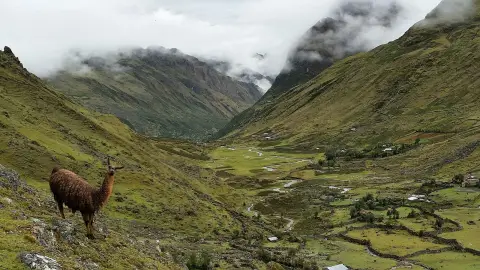
A small, light bag with documents, layers and water is all you need, and much of what people carry is not allowed.
-
 Machu Picchu
 Rules
The rules exist to protect a fragile World Heritage site, and guards enforce them firmly.
-
 Machu Picchu
 Altitude
Machu Picchu is lower than Cusco, which is why many people feel better there than in the city.
-
 Machu Picchu
 at Sunrise
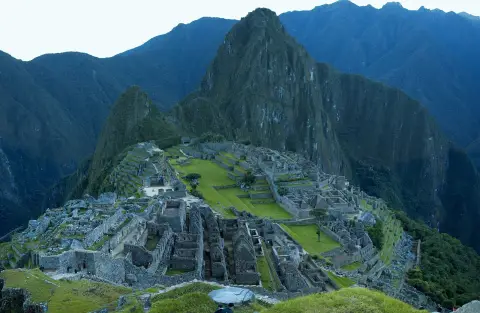
True sunrise from inside the ruins is not guaranteed, but the first hours of the day are the best time to be there.
-
 Machu Picchu
 Crowds
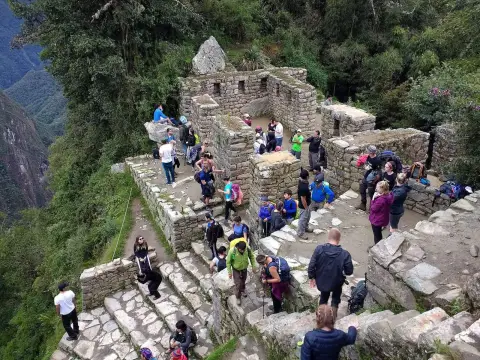
The quota limits numbers, but visits bunch into the same hours, so timing and route matter more than the month.
-
 Machu Picchu
 With Kids
Machu Picchu can work well with children, if the trip is paced for them and health questions go to a doctor first.
-
 Machu Picchu
 Accessibility
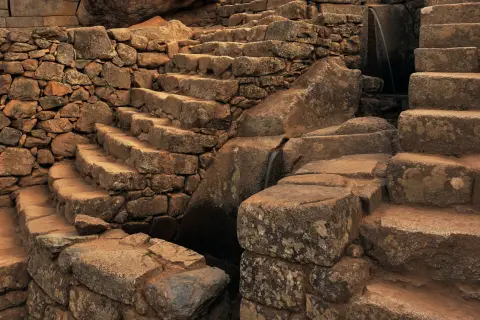
The terrain is mostly steps and uneven stone, so a visit with limited mobility needs careful planning.
What Machu Picchu is
Machu Picchu is a royal estate built in the mid-1400s on a ridge between two peaks, about 2,430 m above sea level and well below Cusco. Scholars link it to the emperor Pachacuti, and it was probably a retreat and ceremonial centre rather than a city in the usual sense. It was abandoned around the time of the Spanish conquest and was never found by the colonial authorities, which is a large part of why its stonework survived so well.
The site became known to the wider world after the American explorer Hiram Bingham reached it in 1911, with the help of local families who already farmed the terraces. It was inscribed as a UNESCO World Heritage Site in 1983 and is protected today as both a cultural and a natural area.
How a visit is organised
Entry is controlled to protect the ruins. Visitors buy a ticket for a particular date and entry window, and the ticket usually fixes the circuit, the one-way route you follow through the site. A guide is generally required inside, and the rules about bags, walking sticks and re-entry are strict. Because the quota is limited and the best dates sell out, the ticket is the first thing to settle.
Each piece has its own detail: the ticket types, the circuits, the opening hours, the rules on what you may carry, and the optional climbs of Huayna Picchu and Machu Picchu Mountain.
Arrive at the gate with your passport, the ticket and a small bag, and expect staff to check all three before you pass the turnstile.
What you see inside
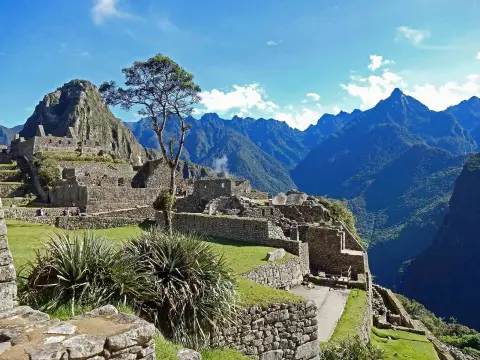
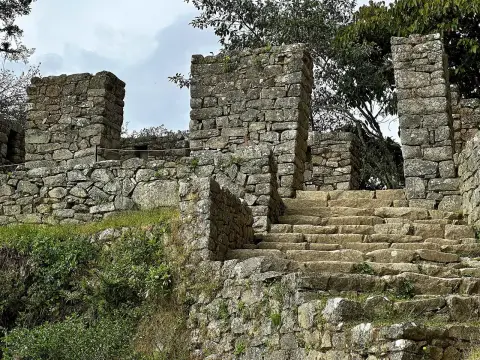
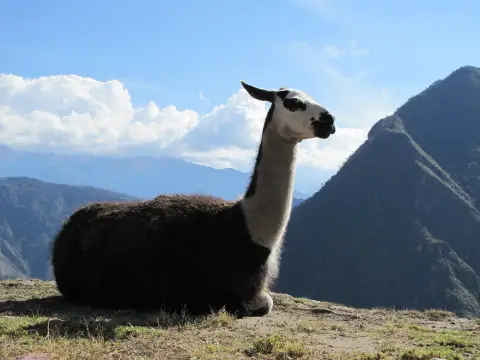
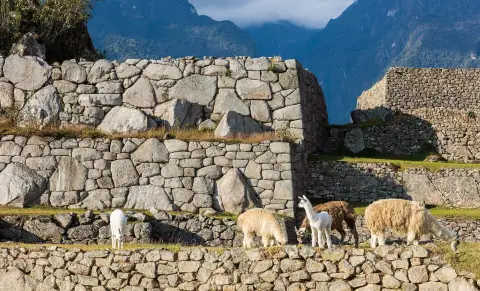
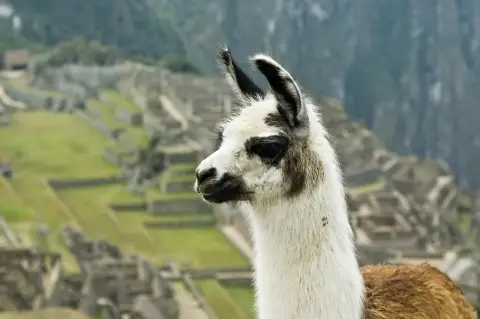
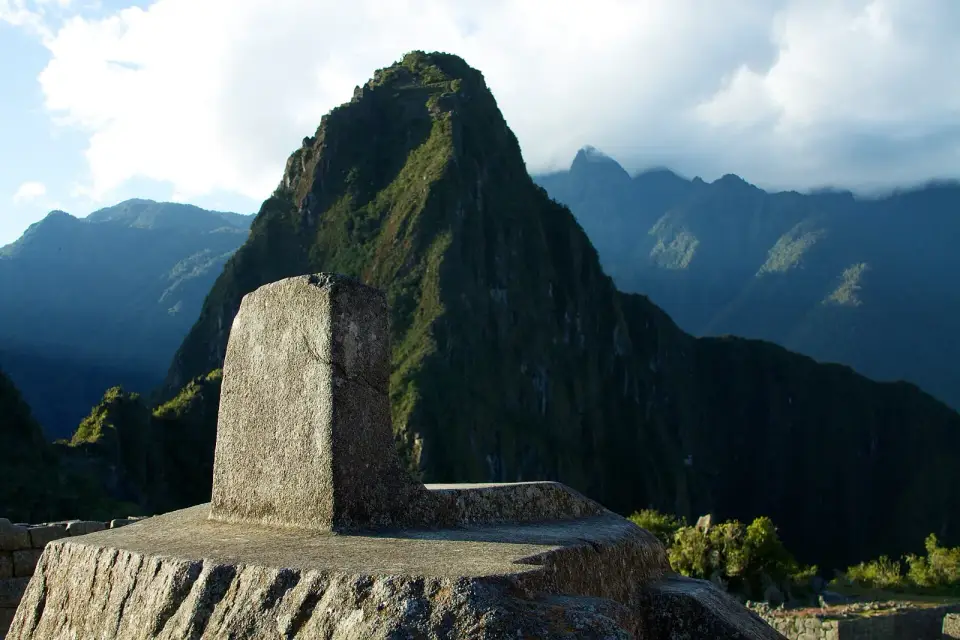
The citadel is divided into an agricultural sector of long stone terraces and an urban sector of temples, plazas and houses. The highlights that nearly every circuit includes are the Temple of the Sun, the Intihuatana stone, the Sacred Rock and the Temple of the Three Windows, all famous for tightly fitted masonry that uses no mortar. Llamas graze on the lawns and are part of the scene.
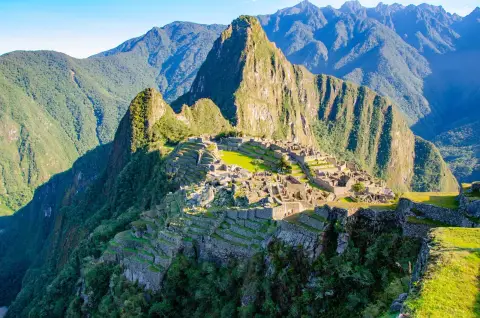
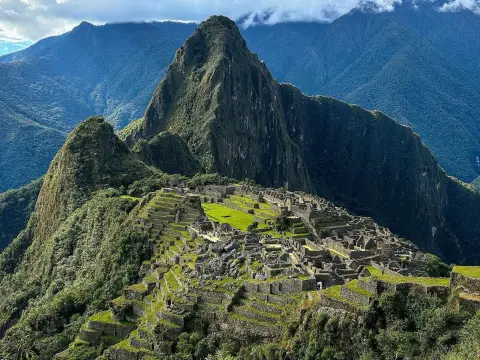
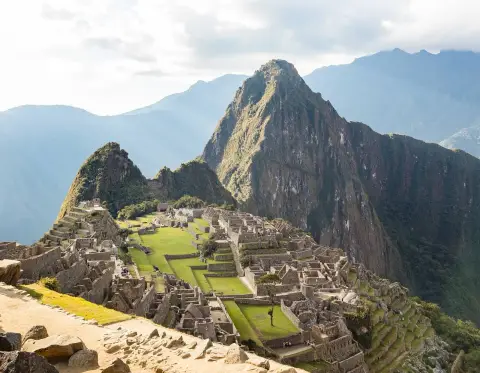
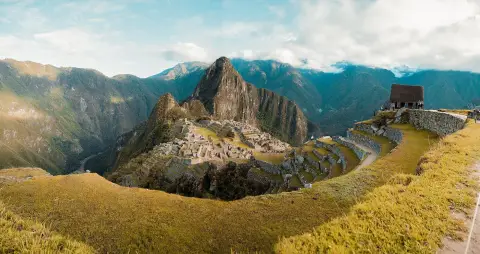
The classic photograph is taken from a high terrace above the ruins, with the sharp peak of Huayna Picchu behind. Which viewpoints you reach depends on the circuit printed on your ticket, so choose it with the photograph in mind. See circuits for the differences.
Allow time at each stop rather than rushing for the viewpoint, because the guide's explanations are what turn the stones into a story.
Getting there in outline
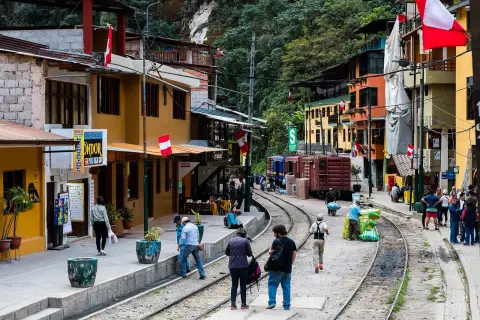
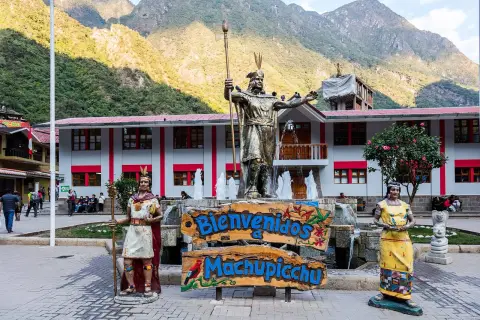
There is no road to the ruins from Cusco that ordinary traffic can use. The usual route is a train from the Sacred Valley to Aguas Calientes, followed by a short bus ride or a steep walk up to the entrance. The alternative is to arrive on foot, by the Inca Trail or one of the other treks, which ends at the site. Each option has its own trade-offs between time, cost and comfort, and getting there puts them side by side.
Allow for the fact that the whole chain, road transfer, train, bus and entrance, runs on fixed times. A delay at one link affects the next.
Each leg has its own booking, so keep the confirmations together in one folder on your phone, and save copies offline in case the signal fails.
Planning order that works
Start with the season, because it decides how crowded and how wet the visit will be. Then secure the entry ticket, then the train or trek, then the bed in Aguas Calientes. If you are short of time, a single-day visit is possible but tiring; a night in the town lets you enter early and leaves room for weather delays.
Allow for the altitude of Cusco at the start of the trip, and read the guide to altitude sickness if you are flying in from the coast.
Treat the whole plan as a chain of dependencies and book the scarcest link first, which is nearly always the ticket.
Season, crowds and cost
The dry season, roughly May to September, brings the clearest skies and the biggest crowds, and it is when tickets and trains sell out first. The rainy season, roughly November to March, is greener and quieter but wetter, with a higher risk of cloud and of disrupted transport. The shoulder months either side are often a good compromise; see best time for month by month.
Machu Picchu is not a cheap day out, because the ticket, train and bus are separate purchases and a night in the town adds to the total. The cost breakdown shows where the money goes and where it can be saved.
Whatever the month, early entry windows are the quietest, and the first hours of the morning give the cleanest light.
Two climbs and other extras
Two mountains rise beside the ruins and each can be added to a ticket. Huayna Picchu, the sharp peak in the classic photograph, is a short but steep and exposed climb, and Machu Picchu Mountain is a longer, broader climb that gives a wider view. Both have separate limited quotas, and both are covered separately: Huayna Picchu and Machu Picchu Mountain.
Other extras include walking to the Sun Gate or the Inca Bridge, subject to current access rules, and a visit to the museum near the base of the hill. Sectors are closed for conservation from time to time.
Neither climb is a casual stroll, so read up on each before you pay for the add-on.
Who the visit suits
Machu Picchu suits most travellers, but the logistics differ. Families should read visiting with children, and anyone with reduced mobility should check accessibility before choosing a circuit, because the site is steep and uneven with many stairs. People who dislike crowds should look at the crowds and consider an early or late entry window.
Finally, do not try to squeeze Machu Picchu into a trip with too many cities. It rewards a calm pace, a night in the valley below and a spare day for weather.
Older travellers and anyone unsure about stairs can still enjoy the lower sectors, which is where a short plan and a patient guide matter most.
Map
Frequently asked questions
Do I need to book Machu Picchu in advance?
Yes. Entry is limited and tied to a date and window, so book the ticket as soon as your dates are fixed, especially for the dry season. Trains and the climbs sell out as well, so do not leave them to the last week.
Can I visit Machu Picchu without a tour?
Often yes for the ticket itself, but a guide is generally required inside the site, so the rule is worth knowing before you go. Many visitors hire a guide at the entrance or book one with their ticket.
Is Machu Picchu high altitude?
Not by Andean standards. The ruins are about 2,430 m, lower than Cusco, so many people feel better there than in the city. Read up on altitude if you are climbing one of the mountains.
What is the best way to see Machu Picchu?
For most people it is a night in Aguas Calientes and an early morning entry, because it avoids a single exhausting day. A multi-day trek suits fit travellers who want the approach on foot.
Is Machu Picchu worth the cost and effort?
Most visitors say yes, as long as they plan around the crowds and the weather. It is worth looking honestly at who may be disappointed.