Trains to Aguas Calientes run from Ollantaytambo and, on some services, from Poroy near Cusco, and the journey takes a few hours depending on the origin. Services range from a basic panoramic carriage to premium and luxury options, all sold by the operators or through agencies.
Book the train after you have secured your entry ticket, and read the luggage rules before you pack.
Two stations, two experiences
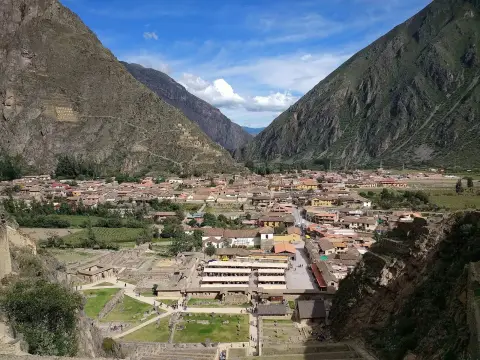
Ollantaytambo is the main departure point and the shortest ride, with a good chance of daylight views of the gorge. Poroy, on the edge of Cusco, is longer and tends to be chosen by people who want to avoid the road transfer through the Sacred Valley, although the services that start there are fewer and may be limited by season. Check which station your ticket uses, because the transfer from your hotel depends on it.
If you are staying in the Sacred Valley, Ollantaytambo is nearly always the practical answer. If you are in Cusco and short of time, compare the cost and time of the road transfer, described in Cusco to the Sacred Valley, against the longer train. The small town around the Ollantaytambo station is worth a look in its own right. See Ollantaytambo to understand why many visitors stay a night there.
Types of service
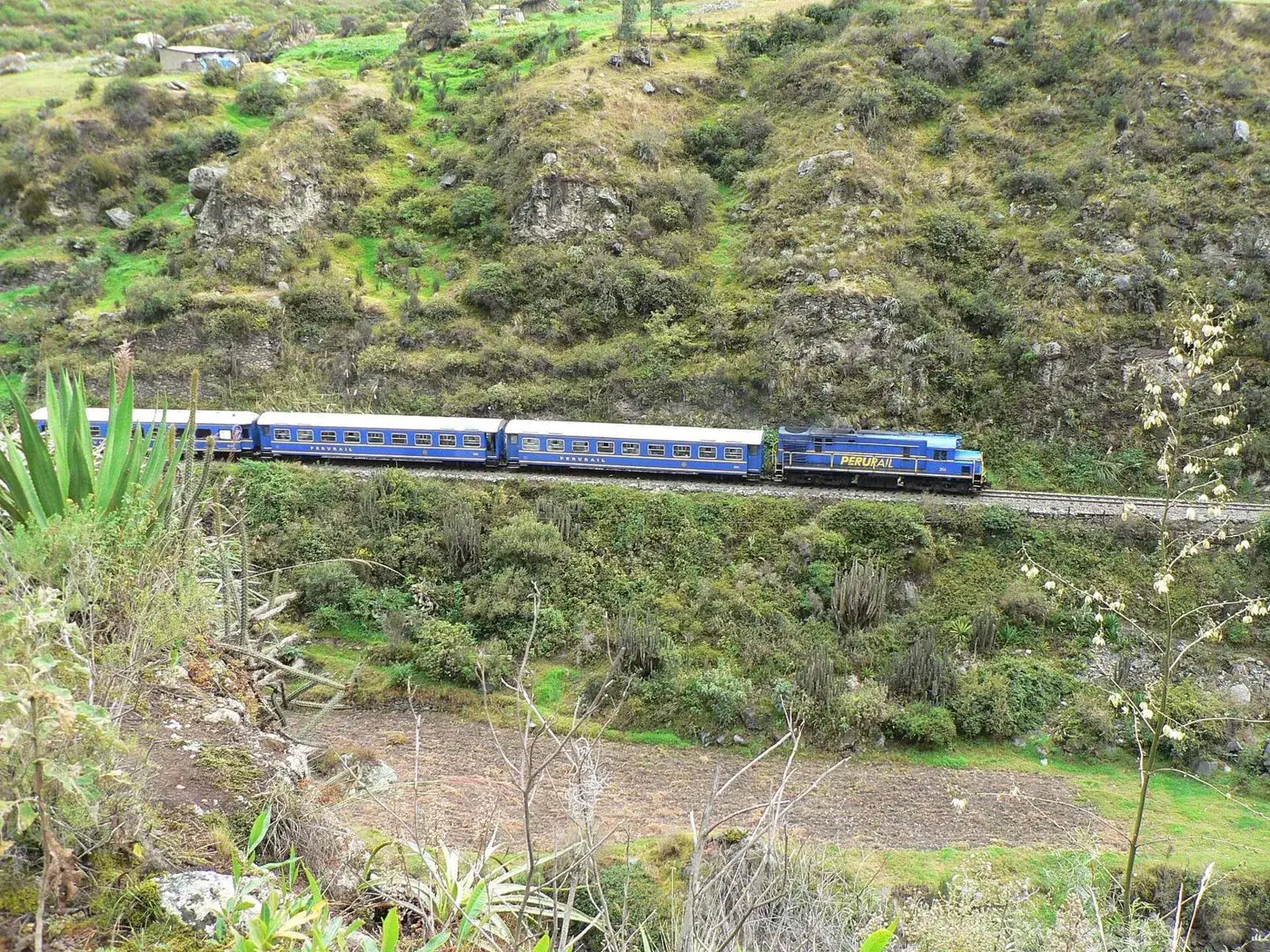
Two companies have traditionally operated the line, and between them they sell several tiers. The entry level is a comfortable seat with large windows. The middle tier adds a skylight roof, a drink and a snack. The top tier offers lounge cars, dining and in some cases a private transfer at either end. The differences are about comfort, scenery and service, not about the speed of the journey, since all trains share the same track.
The luxury services are a destination in themselves, but for most visitors the standard panoramic train does the job. Choose the more expensive option only if the experience is part of what you want to remember. Departure times, carriage names and tier names are revised from season to season, so read the description at the point of sale and do not rely on an old review. The broader network, including the Lake Titicaca route, is covered in trains in Peru.
Tours and activities
Bookable online, chosen for their traveller reviews.
-
★ Top rated From €49 per person
Machu Picchu
Machu Picchu Entry Ticket for Circuit 1, 2 or 3
-
★ Top rated From €23 per person
-
From €178 per person
Machu Picchu
Private Machu Picchu Tour with Guide, Entry and Bus
-
★ Top rated From €22 per person
What the journey is like
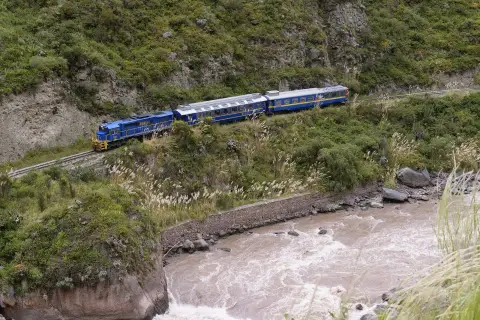
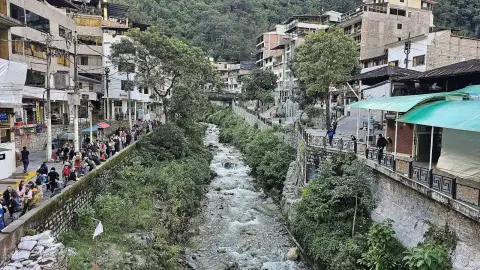
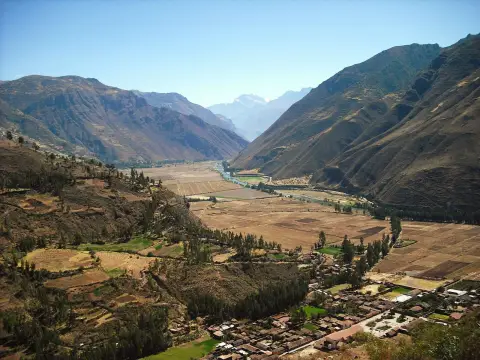
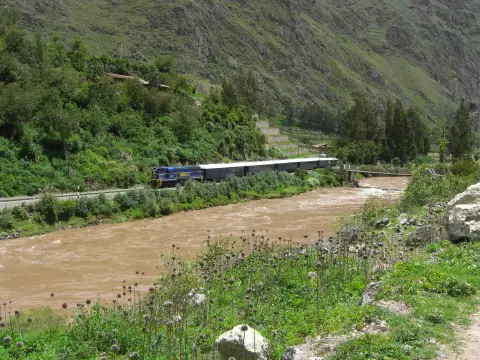
The line follows the Urubamba river downstream, and the landscape changes steadily as you drop. Near Ollantaytambo the valley is open and farmed, with terraces and eucalyptus; further on the walls close in, the river becomes loud and white, and the vegetation turns to dense green cloud forest. Windows and roof panels on the better carriages are designed to show the peaks above.
The ride from Ollantaytambo takes roughly one and a half to two hours, with the exact time depending on the service. From Poroy it is longer, often more than three hours. Sit on the side of the river if you can, but remember that views are good on both sides in daylight. Late afternoon return trains travel through dusk, so you may see little, which is a reason to take the morning train on the way in.
Booking and timing
Tickets are sold on the operators' own sites and through agencies, usually in advance, and the best times fill up early in the dry season. The schedule also depends on the entry window to the ruins, so pick a morning train if you want an early entry and an evening return if you are on a day trip. Allow enough margin between the arrival in Aguas Calientes and your entry time to queue for the bus.
Rail operators sometimes suspend services because of landslides, strikes or maintenance. Keep the booking reference accessible offline. Names on train tickets must match your passport, as they do for the entry ticket, which is explained on tickets.
Practical tips on the day
Arrive at the station with time to spare, because identity checks and luggage tags take a few minutes. The seats are assigned, with the better views on one side depending on the direction, so choose carefully if you can. Travelling in daylight in both directions gives more scenery than a night return. Bring a light layer, since air-conditioning on some carriages can feel cool after the warm outdoors.
Keep your passport and the printed or downloaded tickets within reach rather than in a packed bag, and carry snacks and water if you are on the entry-level service, since the catering on board differs between tiers. Some travellers are surprised by how short the stop in the station is, so be ready to board as soon as the train is announced.
Arriving in Aguas Calientes
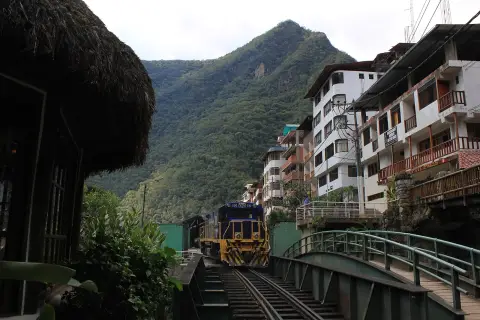
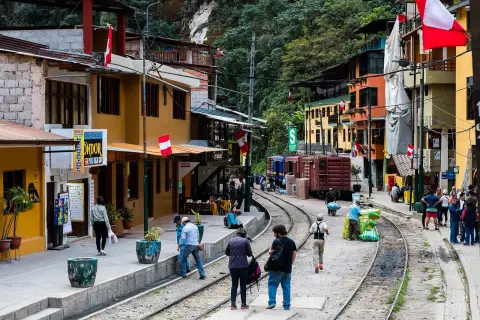
The station sits in the middle of the town, beside the market and a tangle of narrow streets. Porters and hotel staff often wait at the exit, and a small hotel may be only a few minutes away on foot. Streets climb on both sides of the river, so check the walking distance if you have luggage. The town and its hotels are described in Aguas Calientes, and the options for places to sleep are compared in where to stay for Machu Picchu.
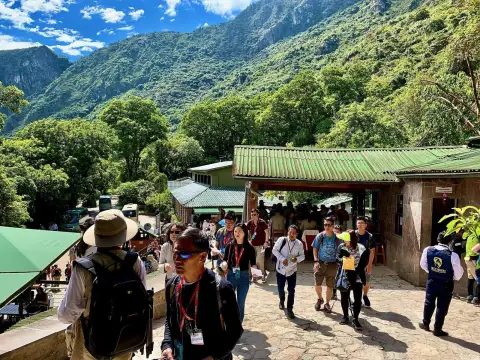
The bus departure point is a short walk from the station. If you arrive the evening before your visit, collect your bus ticket and find the stop in daylight, so that you do not have to search for it in the dark the next morning.
When not to take the train
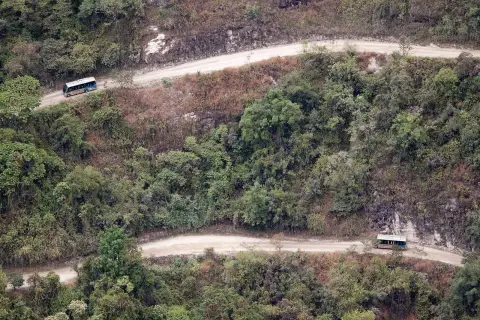
The train is not the only way, and for some travellers it is not the best way. Trekkers arrive on foot and may return by train, and budget travellers sometimes prefer the overland road and the walk along the rails. Compare these alternatives in reaching Machu Picchu from Cusco and in Machu Picchu by train or trek.
If you suffer from motion sickness, note that the track has many curves. If you are worried about weather disruption, ask about flexible fares and consider insurance that covers missed connections.
Whichever way you arrive, the entry ticket remains the fixed point, and a cheaper route is only a saving if it does not force you to miss your window or pay for an extra night.
Where to sleep
-
Find hotels
Aguas Calientes
Sleep at the foot of Machu Picchu for an early entry
-
Find hotels
Ollantaytambo
Early trains to Machu Picchu and a walkable old town
-
Find hotels
Plaza de Armas and historic centre
Everything on foot, at the price of noise and crowds
-
Find hotels
San Blas
Artisans' quarter with steep lanes and views, a short walk uphill
-
Find hotels
All of Cusco
Compare every area and price level in one search
Frequently asked questions
Which station is better, Ollantaytambo or Poroy?
Ollantaytambo is shorter and more common. Poroy suits people who prefer to leave directly from Cusco, if the service they want runs from there.
Is the more expensive train worth it?
For most travellers the standard panoramic carriage is enough. The premium services add comfort and food, not speed.
Can I take a big suitcase on the train?
Usually not. Luggage allowances are limited, so leave bulky bags at your hotel and pack a small overnight bag.
How long is the train from Ollantaytambo?
Roughly one and a half to two hours, depending on the service. From Poroy it is noticeably longer.
Do I need to print my train ticket?
Many operators accept an electronic ticket, but a printed copy and your passport are a sensible backup. Check the instructions in your confirmation.
Can I change my train time after booking?
Changes depend on the fare and the operator, and the cheapest fares are usually the most restricted. Read the conditions before you pay and ask about flexible options.
Is there a train from Cusco itself?
Services have run from Poroy, on the edge of the city, depending on the season and operator. Many travellers still take a road transfer to Ollantaytambo.