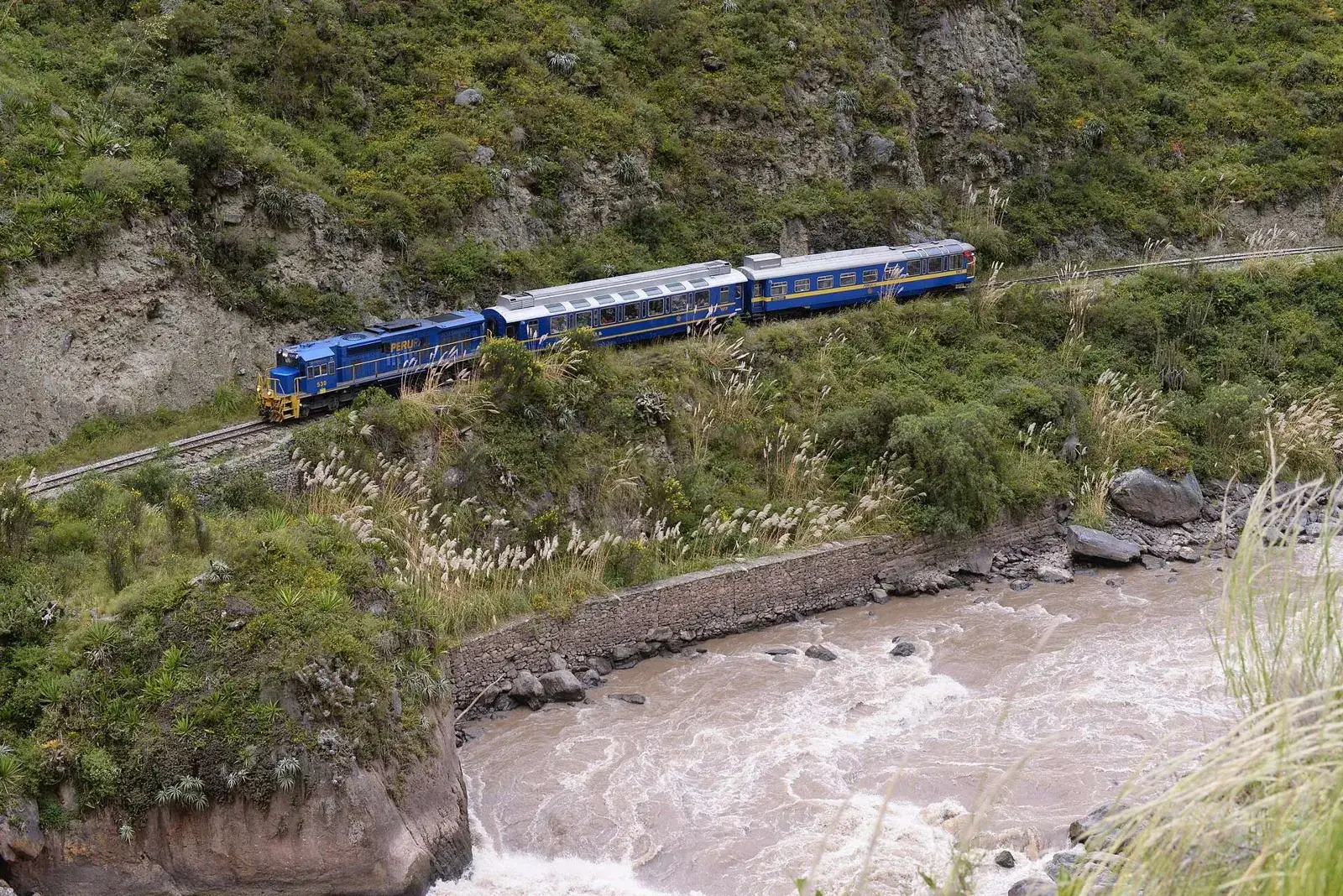
Trains in Peru are not a general transport network. The ones that matter to visitors are the services to Machu Picchu, run by two operators, PeruRail and Inca Rail, and the long scenic day between Cusco and Puno. Book Machu Picchu trains well ahead in high season. For everything else in the country, you will use buses and planes.
Trains to Machu Picchu
There is no road to Aguas Calientes, the village below Machu Picchu, so most visitors arrive by train from Ollantaytambo or, on some services, from the Cusco area. The two operators are PeruRail and Inca Rail. They offer several comfort levels, from basic carriages with panoramic windows to luxury services. Seats sell out in the busy season, so tickets are best booked as soon as your dates are fixed.
Trains do not serve the citadel itself: from Aguas Calientes a shuttle bus climbs to the entrance. Machu Picchu trains compares the services in detail, and how to get to Machu Picchu shows where the train fits among the other options.
Cusco to Puno by rail
A tourist train has linked Cusco and Puno for many years, crossing the high plateau, with a stop at the La Raya pass at about 4,300 m. It is long, runs only on certain days and sells at a high price relative to the bus, because the point is the journey: the views, the lunch and the lounge car. If you want to get from A to B cheaply or quickly, take a bus. If you want the experience and have a day to spare, the train is worth considering.
The comparison with the road is covered in Cusco to Puno, which also explains the daytime bus tours that stop at the same sights on the way.
Practical advice
Luggage limits on the Machu Picchu trains are strict, so a small bag for the night in Aguas Calientes and a large bag left in a hotel in Cusco or Ollantaytambo is the usual solution. Ticket names must match your passport, and you will need your passport at the station. Allow for delays: trains can be affected by landslides in the rainy season, and by strikes or protests that block the line.
Pack with the baggage rules in mind. Items that look harmless, such as a tripod or a large rucksack, can be refused or have to be checked in, and a soft duffel is easier to fit than a rigid case. Keep cameras and documents with you in a small daypack.
Where the train starts
For Machu Picchu, the departure point matters as much as the operator. Services leaving from the Sacred Valley save the long transfer by road from Cusco, which is why most travellers combine a night in the valley with an early or mid-morning train. Ollantaytambo is the main station, a small town in its own right with an Inca fortress, and it works well as a base before or after the train.
Leaving from Cusco area stations is possible on some services but takes longer and depends on the timetable. See Cusco to the Sacred Valley to understand how to get to the station on time. Check which station your ticket names, because the choice changes the travel time on the day.
Choosing a service level
The cheapest Machu Picchu trains are comfortable enough for the roughly two-hour trip, with large windows, a small snack and a luggage rack. Higher tiers add observation cars, more legroom, hot food and sometimes a longer or more scenic schedule. For a short ride, the extra cost buys comfort rather than speed, so decide whether it is part of your holiday or simply a way to arrive.
Schedules vary from season to season, and the first and last trains of the day may not match the bus times from Aguas Calientes to the citadel. Pair the train time with your entry slot rather than choosing one first. See Machu Picchu tickets to understand how the two interact.
Train or trek
The train is not the only way to reach Aguas Calientes. Hikers arrive on foot by the Inca Trail, the Salkantay route and other treks, with the train used for the return. Machu Picchu by train or trek helps decide. See Inca Trail for permits.
If your time is limited, the train gives the easiest and fastest access, and in the rainy season it is also the more reliable option when trails close. If you have a few extra days and good fitness, a trek gives a very different experience at a different cost.
Frequently asked questions
Can I take a train around Peru the way I would in Europe?
No. Passenger rail is limited to a few tourist routes. Buses and domestic flights carry almost all long-distance traffic.
Is the Cusco to Puno train worth it?
It is a scenic experience rather than a transport solution. If you have the time and like the idea of the journey, yes. For speed or price, the bus is better.
Is there a road to Machu Picchu?
There is a road from Aguas Calientes up to the entrance, used by shuttle buses. Aguas Calientes itself is reached by train or by walking, not by a public road.
How long is the train from Ollantaytambo to Aguas Calientes?
The ride takes roughly one and a half to two hours, depending on the service. Check your ticket for the exact time and station.
Do I need to book the train before the Machu Picchu ticket?
Book the entry ticket first when possible, since slots are limited, then choose a train that fits it. Both can sell out in the dry season, so do not leave either to the last week.
Can I bring a large suitcase on the Machu Picchu train?
No. Operators set strict limits on size and weight, so most travellers leave larger bags at their hotel and take a small one for the night.
Are trains ever cancelled?
Yes, occasionally. Landslides in the rainy season, track works and protests can cause delays or cancellations, so leave a buffer before an international flight.