Take the train if you have a short trip, want comfort, are travelling with children or older relatives, or have not booked ahead. Choose a trek if you have the time, reasonable fitness, and want the journey to be part of the experience. Both end with the same ticket to the site, so the choice is about how you want to spend your days, not what you will see.
The criteria
Time: by train, Machu Picchu can be done in a single long day from Cusco or, much more comfortably, with a night in Aguas Calientes. A trek takes between two and five days, plus acclimatisation beforehand.
Altitude: Machu Picchu itself is lower than Cusco, at roughly 2,400 m, so the train route is easy on the body. Most treks cross passes above 4,000 m.
Effort: the train asks for nothing beyond a short walk or bus ride at the end. Treks involve several days of hiking, camping or simple lodges, and variable weather.
Cost level: the train is a significant cost in itself, but a guided trek is generally the more expensive option once guides, porters, food and permits are added. Prices vary widely by operator and season.
Crowds: the train and the site get busy at peak times. Treks spread you out on the trail but converge on the same final entrance.
Season: the train runs all year, though the rainy months can bring disruptions. Trekking is best in the dry season and some routes close for maintenance.
Booking pressure: the train and site tickets should be reserved ahead in high season. The classic Inca Trail needs a permit months ahead. Other treks are easier to book late.
Risk: for the train, the main risk is delay or a cancelled service because of weather or other disruption. For a trek, altitude, weather and fitness matter.
What each route gives you
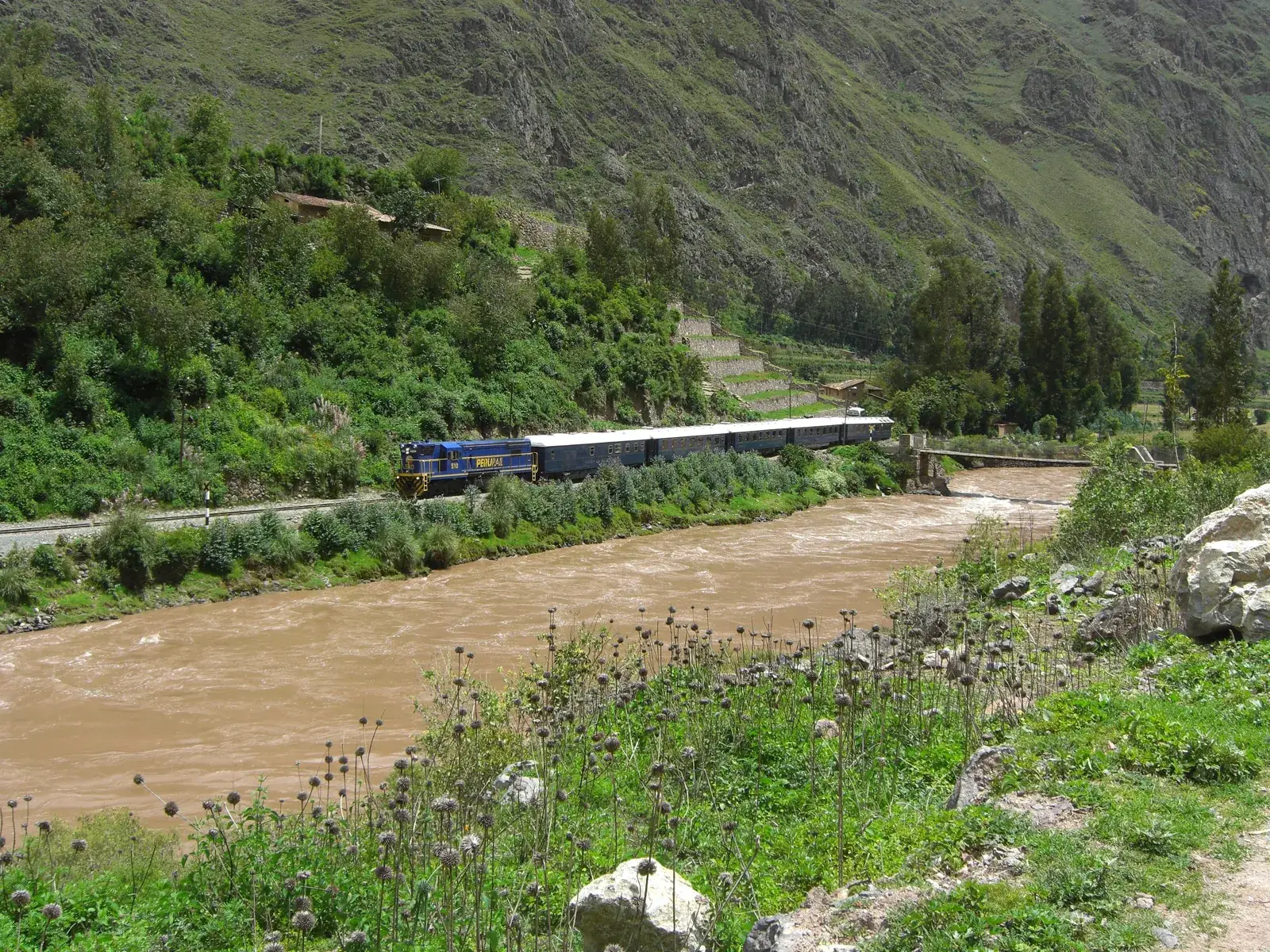
The train is a scenic ride along the river, ending in Aguas Calientes, the town below the site. It lets you visit Machu Picchu fresh and without having to carry anything. The downside is that you arrive among many other visitors, and the town is functional rather than charming. See Machu Picchu trains for the services and what to check.
A trek gives you time, scenery and a sense of arrival. Some routes pass other ruins; others cross glaciated landscapes or cloud forest. The trade-off is that you commit several days, usually a higher budget, and often a schedule set by the permit or operator. Most treks also end with a train or a bus anyway, so you may use both. The Inca Trail versus Salkantay comparison covers the two best-known options.
The middle options
The choice is not strictly train or trek. Several routes sit between the two. The Inca Jungle route combines downhill cycling, rafting and walking over about four days, and is aimed at people who want activity without a high-altitude pass; see Inca Jungle. Shorter hikes from the Sacred Valley, such as the Lares route, finish at the train.
Some travellers also take the train one way and walk the other. For example, you might take the train to Aguas Calientes, visit the site, and then return by foot along part of the rail corridor in good weather, though access depends on rules and conditions that change. A bus runs between Aguas Calientes and the entrance, and many people also walk up in the early morning to be among the first at the gate.
Whatever you choose, how many days to spend at Machu Picchu depends mostly on whether you want to sleep nearby.
Booking pressure and the order of decisions
Book in this order. First fix the dates of anything with a hard limit: an Inca Trail permit if you want one, then the Machu Picchu entry ticket for the day you will enter. After that, reserve the train, since the seat has to match the entry time. Hotels and the rest of the itinerary come last.
The reverse order, booking a train and hotel first and the entry ticket later, is the most common way people end up with no space on the day they wanted. See tickets for the current system.
Allow a buffer day after the visit before an international flight. Delays from landslides, strikes or weather are rare but real, and a missed flight costs far more than an extra night in Cusco.
Verdict by traveller type
Short trips of a week or less: the train, with a night in the valley or Aguas Calientes if you can.
Families with young children and travellers with limited mobility: the train.
Active travellers with at least a week around Cusco: a trek, planned around acclimatisation and booked early if you want the Inca Trail.
Budget travellers: the independent route by train or road plus walking is usually cheaper than a guided trek.
The answer changes in the rainy season, when treks are less pleasant and the train is more exposed to delays, and whenever your dates are fixed, since permits and tickets can run out.
Frequently asked questions
Can I walk to Machu Picchu without booking a trek?
There are independent routes that combine road, rail and walking, and some people take them. Access rules have changed over time.
Is it better to arrive by train the day before?
Many travellers prefer to, since it avoids a very early start on the day and gives a margin if the train is delayed.
How do I get to the train from Cusco?
Services leave from stations in or near Cusco and from Ollantaytambo in the Sacred Valley, depending on the operator. Check the departure point when booking, as it affects how early you need to leave your hotel.
Do trekkers still need a Machu Picchu ticket?
Yes. A trek does not replace the entry ticket to the site, and some treks include it while others do not. Confirm this in writing with your operator.
Which option is cheaper?
The train plus a night in Aguas Calientes is usually cheaper than a guided multi-day trek, though both vary by season and operator. Compare complete costs, including the entry ticket, food and transfers.
What if my train is cancelled?
Contact the operator at once and ask about changes or refunds, then adjust your entry time. Travel insurance may help, so read insurance before you go.
Is the walk from Aguas Calientes to the site hard?
It is a steep uphill path on steps, usually walked in the early morning, and the alternative is the shuttle bus. It is manageable for most fit visitors but tiring in the heat.