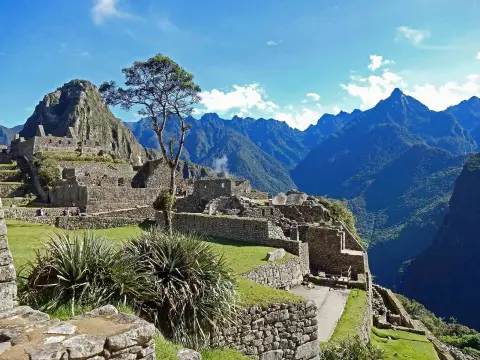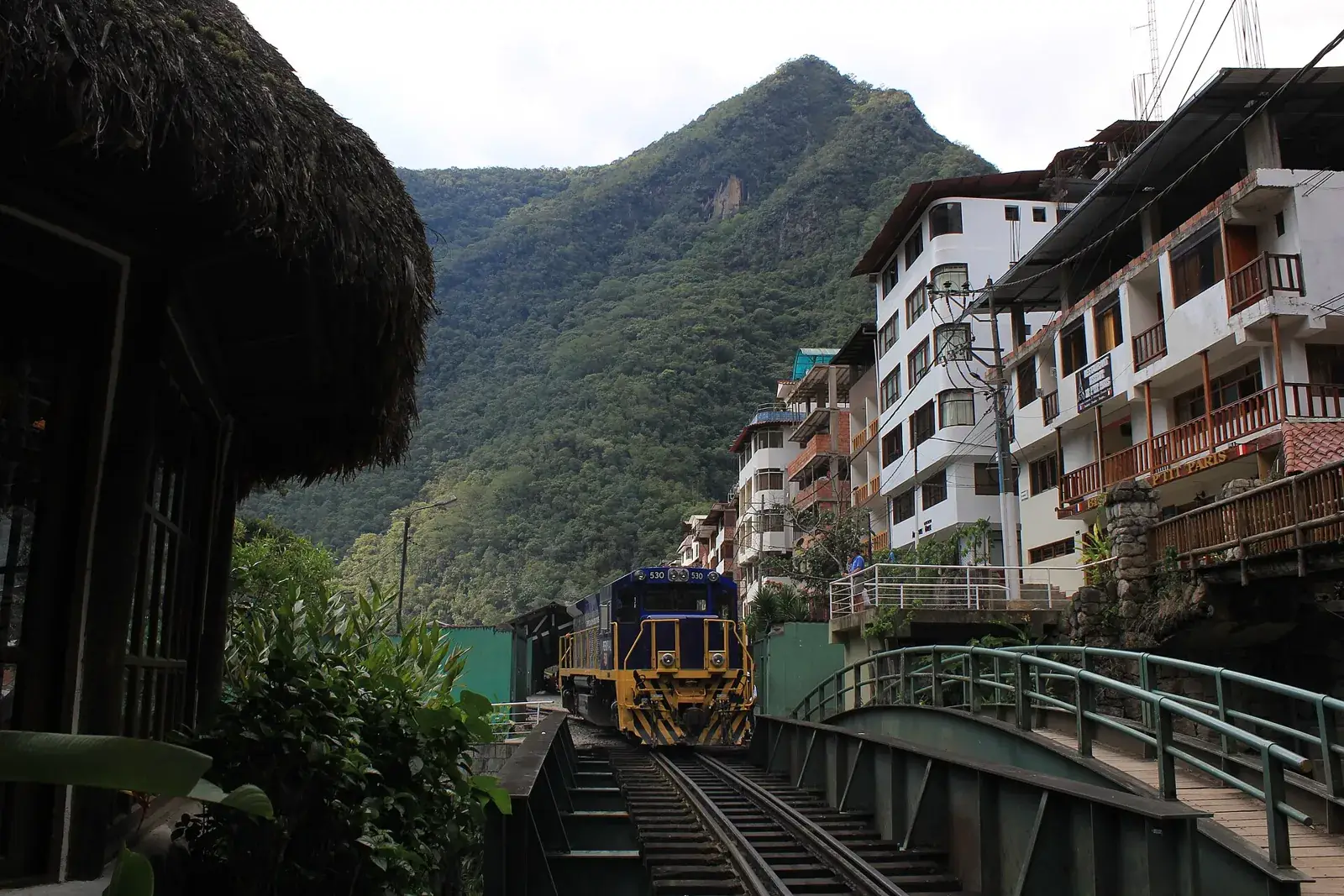
Most travellers take a train from Ollantaytambo or Poroy to Aguas Calientes, then a bus or a walk up to the gate. The cheaper alternative is an overland route by minibus and road to Hidroeléctrica followed by a walk along the rails. Trekking in is the fourth option and takes several days.
Operators, schedules and fares change often.
Why it is not a simple drive
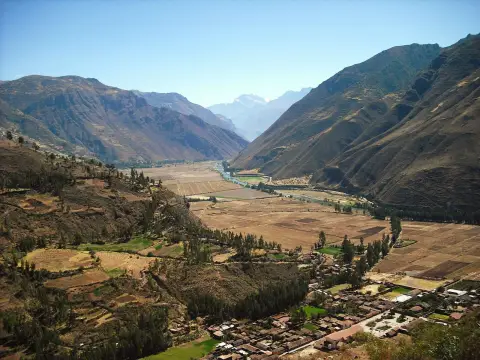
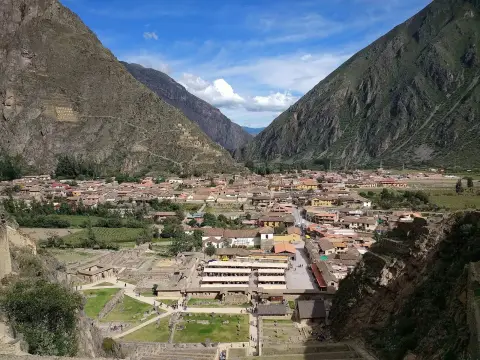
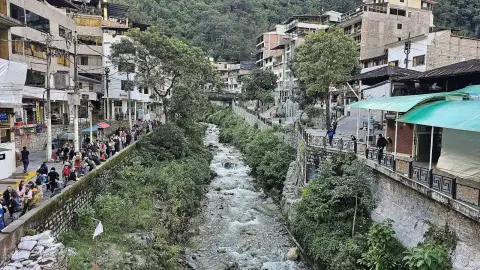
Aguas Calientes, the town at the foot of the ruins, has no road link to the rest of Peru. The valley is narrow, the river runs through a gorge, and the only ways in are the railway, the footpaths and the roads that stop short of the town. That geography shapes every option below.
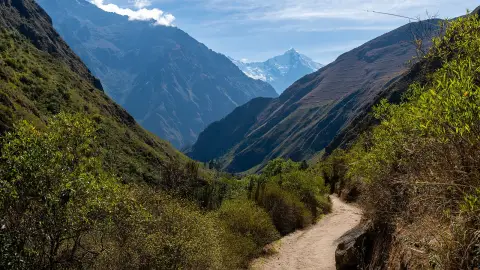
It also explains why the journey feels longer than the map suggests. Cusco and Machu Picchu are only a short distance apart in a straight line, but the ground between them is a range of ridges and river valleys, and every route has to follow the valleys. Plan for a full day of movement whichever way you go.
Rainfall matters, because a single landslide can change which route works on your day.
Route 1: train all the way
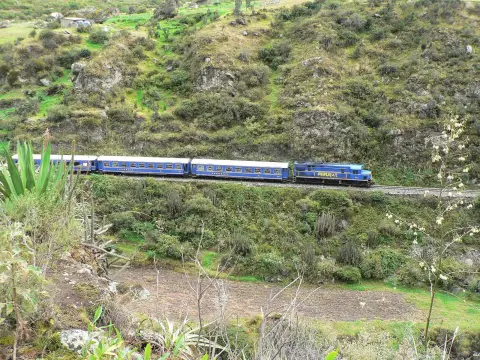
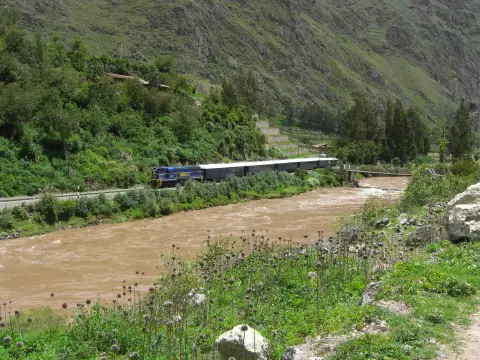
The straightforward way is a train to Aguas Calientes. Services start from Ollantaytambo in the Sacred Valley and, on some seasons and operators, from Poroy near Cusco. From Cusco you reach the departure station by road transfer, either arranged with the train ticket or on your own by taxi or collectivo. The ride through the valley takes a couple of hours and is scenic in daylight, with large windows on some trains.
This is the most comfortable and the most expensive choice. It is also the one that most agencies sell as a standard package. The stations, the service tiers and the luggage rules are covered in trains, and the road leg in Cusco to the Sacred Valley.
Tours and activities
Bookable online, chosen for their traveller reviews.
-
★ Top rated From €49 per person
Machu Picchu
Machu Picchu Entry Ticket for Circuit 1, 2 or 3
-
★ Top rated From €23 per person
-
From €178 per person
Machu Picchu
Private Machu Picchu Tour with Guide, Entry and Bus
-
★ Top rated From €22 per person
Route 2: the budget overland route
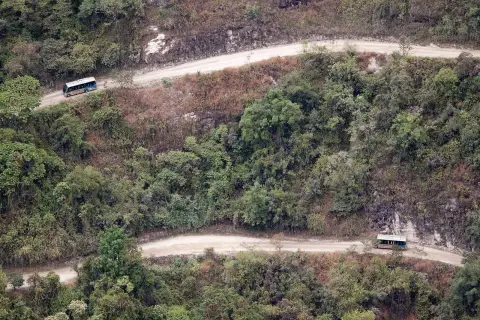
The cheaper route combines a road journey from Cusco towards the Hidroeléctrica area, near the hydroelectric station, with a walk of a couple of hours along the railway line to Aguas Calientes. It is shorter on cost and longer on time, takes a full day each way, and depends on roads that can be closed by landslides in the wet season.
The road usually goes through the mountains by way of Santa María and Santa Teresa, and the journey is often sold as a shared minibus. The walk is flat but unlit in places, so a head torch is useful if you will be moving late in the day. Do not assume that a route used by a friend last year is still running.
Route 3: the final climb
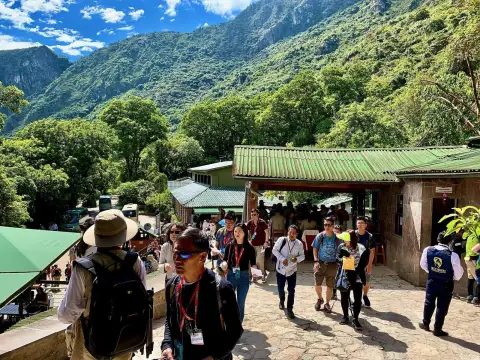
From Aguas Calientes there are two ways up. Buses climb the zigzag road and take roughly half an hour, and a footpath with stone steps climbs directly for those who prefer to walk, which is steep and takes a good while. Both end at the entrance, so the choice depends on energy and time rather than on a separate ticket.
Walking up saves the bus fare but costs the energy you will need inside the site, which involves a lot of stairs. Many walkers set off before dawn to be at the gate for the first entry, and carry a torch and a water bottle. Most people take the bus up and walk down.
Take a layer for the early morning, as it can be cool before the sun clears the ridge.
Route 4: trekking in
The Inca Trail, Salkantay, Lares and the Inca Jungle routes all end at Machu Picchu after several days. They cost more in effort but give a different arrival, and the Inca Trail in particular needs permits arranged well in advance through an operator. These trips include the entry ticket in most packages.
The classic Inca Trail is about 43 km over four days and arrives through the Sun Gate. If you are undecided between the hike and the train, the comparison of Machu Picchu by train or trek lays out the trade-offs without pushing you either way.
Treks sell out as well, so start with the permit and the ticket, and book everything else around them.
Fitness and acclimatisation matter far more here than on the train routes.
Choosing between the routes
Match the route to your constraints. If you have limited days and want comfort, take the train and spend a night in town. If your budget is tight and you have time to spare, the overland route can save a good amount of money, at the cost of a long and tiring day. If you are fit, acclimatised and organised well ahead, a trek turns the visit into the finish of a journey.
Whichever you choose, secure the entry ticket first. The best train and bus times are tied to the entry window, and a route that looks cheap loses its advantage if it forces you to pay for an extra night. The question of how long to allow is answered on days needed.
Getting from Lima or the coast
Almost everyone reaches the region by air. Flights from Lima land at Cusco, which sits at about 3,400 m, and the transfer to the Sacred Valley takes you lower, to about 2,800-2,900 m. Arriving from sea level and heading straight to the train is possible, but starting in the valley is gentler on the body than starting in Cusco.
Do not schedule the return flight on the same day as your Machu Picchu visit, and treat the final morning in Cusco as a spare buffer. If you are combining the site with a longer journey through southern Peru, the Sacred Valley shows how to fit it in.
Where to sleep
-
Find hotels
Aguas Calientes
Sleep at the foot of Machu Picchu for an early entry
-
Find hotels
Ollantaytambo
Early trains to Machu Picchu and a walkable old town
-
Find hotels
Plaza de Armas and historic centre
Everything on foot, at the price of noise and crowds
-
Find hotels
San Blas
Artisans' quarter with steep lanes and views, a short walk uphill
-
Find hotels
All of Cusco
Compare every area and price level in one search
Frequently asked questions
Can I do Machu Picchu as a day trip from Cusco?
Yes, with an early start and a return late the same day, but it is long. A night in Aguas Calientes gives more time at the site.
Is there a road to Machu Picchu?
Only from Aguas Calientes up to the entrance. The town itself has no connection to the national road network.
Which route is cheapest?
The overland route with the walk along the rails is usually the cheapest, though it costs time and carries more weather risk.
How long does the journey from Cusco take?
Allow most of a day door to door. A road transfer of one to a few hours to the station is followed by a train ride of a couple of hours, depending on the departure point.
Can I walk from Aguas Calientes to the ruins?
Yes, on a steep stepped path that starts near the bridge and climbs to the entrance. It takes a good while, so allow extra time and bring water.
Is it safe to walk along the railway?
The overland route walks beside an active line, so stay off the track when a train passes and avoid the walk in the dark if you can. Ask your operator about current conditions.
Do I book the train before the entry ticket?
No. Secure the entry ticket first, because the train times depend on your entry window.