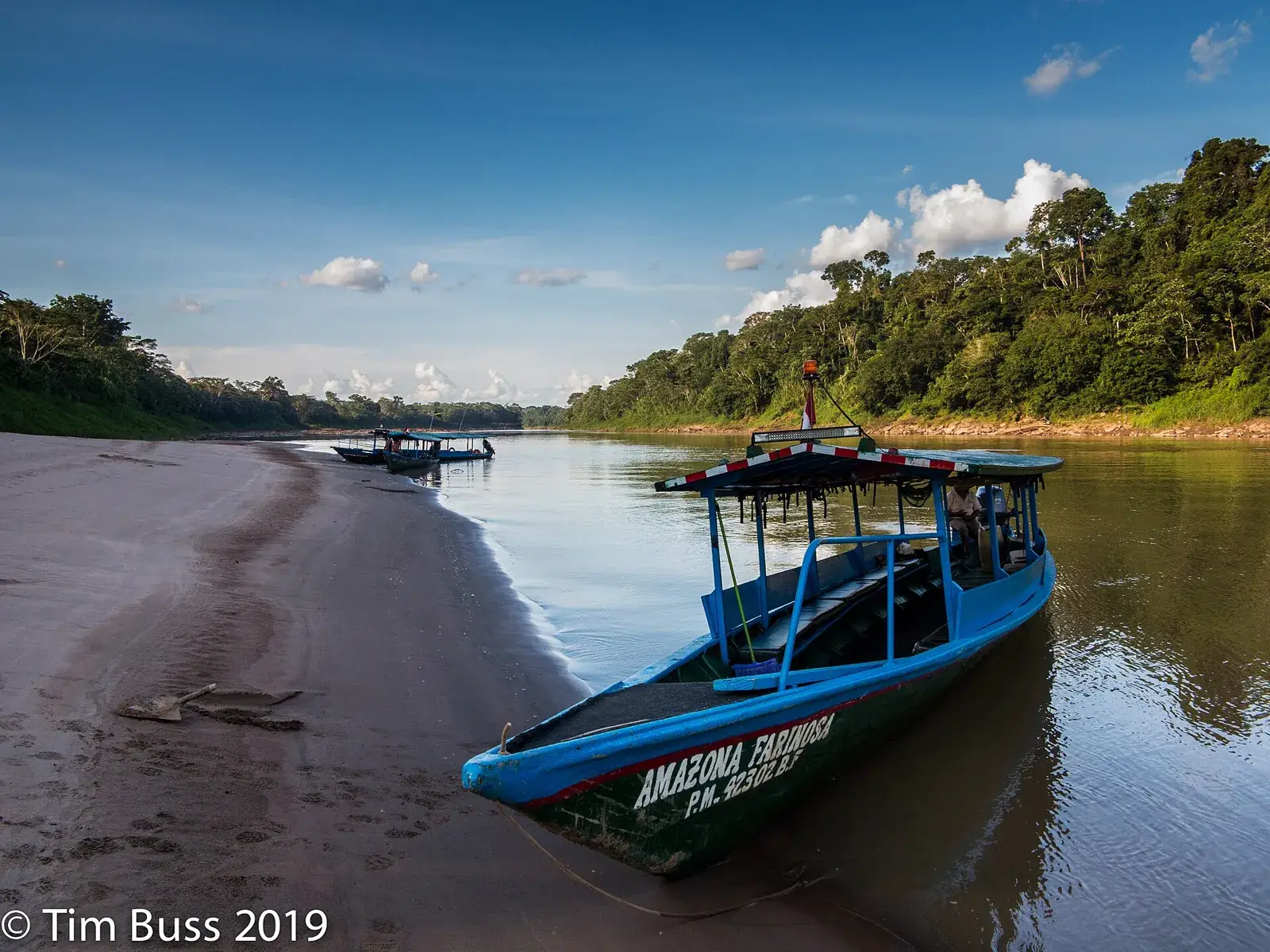
Puerto Maldonado is a transit point, not a destination. Most visitors land at the airport, are met by a lodge representative and go straight upriver or downriver to a jungle lodge. Spend at least three nights at a lodge to make the journey worthwhile. The Amazon has health considerations, so speak to a doctor or travel clinic before you book.
In this section
-
 Destination guide
Jungle Lodges near Puerto Maldonado
Lodges near Puerto Maldonado differ mainly in how far they are by boat, how remote the forest is and what is included.
What the town is like
Puerto Maldonado sits at the meeting of two rivers in Madre de Dios, a region known for its biodiversity and also for gold mining, which has left scars on parts of the forest. The town is warm, humid and busy with motorbike taxis, and it is a long way in feel from the highlands. A riverside promenade, a market and a few simple restaurants are the extent of the tourist sights, and one night is more than enough. It works best as a short stop before or after the lodge, not as a destination in itself.
Its role is logistical. Banks, ATMs, shops and the airport are here, and lodges depend on it for supplies and transfers. Withdraw cash before heading upriver, since lodges are remote and card machines rarely work there. If you are arriving from Cusco, the change of climate is abrupt, so dress for heat and humidity as soon as you step off the plane.
Getting here
Most visitors fly from Cusco, a short hop that crosses from the Andes to the jungle in under an hour, or from Lima. A long overland route exists from Cusco, but it is slow and is mainly for those with extra time; see Cusco to Puerto Maldonado to compare the options. Pack a small bag for the lodge and leave the rest in your city hotel, since boats and rooms have limited space.
Flights in this region can be delayed or cancelled by weather, so do not schedule a tight connection to an international flight the day after your return. If you are flying with luggage limits, check the allowance for the small planes and boats, and ask your lodge what it will store for you in town.
Tours and activities
Bookable online, chosen for their traveller reviews.
-
Day trip From €85 per person
Puerto Maldonado
Sandoval Lake Day Trip with Canoeing from Puerto Maldonado
Choosing a lodge
The lodges along the rivers differ widely in comfort, distance from the town, ratio of guides to guests and the kind of forest they sit in. Questions worth asking include: how long is the transfer by boat, is the lodge inside or next to the protected reserve, what do guides specialise in, and how many people join each walk. See Puerto Maldonado lodges for the criteria to compare.
Remember that good wildlife viewing is a matter of luck as well as location. A lodge deep within the reserve offers a better chance of seeing large species than one close to town, but it also means a longer boat journey. See Tambopata for the reserve most lodges serve. See Manu for a more remote alternative. Ask each lodge how long the boat journey takes before you book.
What you may see
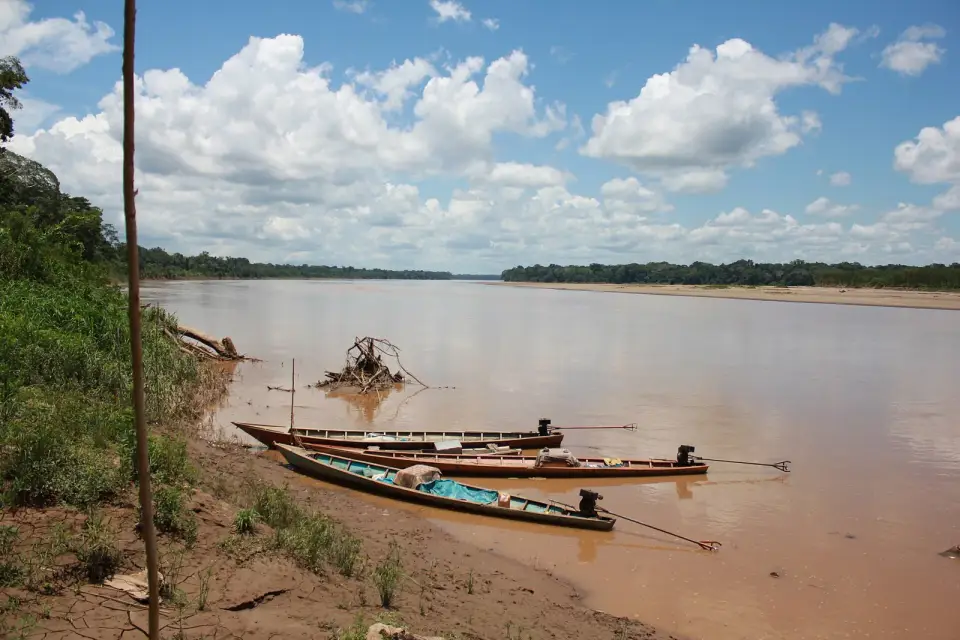
Typical highlights include macaws gathering at clay licks, monkeys, giant river otters and caimans seen on night boat trips, and the forest canopy from towers or walkways. Many animals are shy or nocturnal, so patience and a good guide matter more than equipment.
A pair of binoculars is the most useful item to bring, followed by a head torch for night walks. Wildlife is seen mostly at dawn and dusk, which is why lodge days begin early and often include a long break in the heat of the middle of the day. Do not expect to see big cats; sightings are rare and no operator can promise them. See eating in the Amazon for the food you are likely to be served along the way.
When to go
The drier months, roughly May to October, are generally more comfortable and have easier trails. The wetter months, roughly November to April, bring heavy rain, mud and more insects, though birdlife can be lively. Lodges operate in both seasons, and flights can be delayed by weather in either.
If you can choose, the early dry season is a good balance between lower humidity and a still-green forest. Ask lodges about river levels, since low water can lengthen the boat journey, and high water can change which trails are open. Bring a light waterproof in any season, as showers can arrive suddenly.
Health, water and food
Use bottled or treated water, and follow your lodge's guidance on what is safe to drink. Insect protection matters from dusk onwards, and long sleeves and trousers are more reliable than repellent alone. Mosquito nets are common in lodge rooms, so check they have no holes.
Ask a doctor or travel clinic about vaccinations and malaria prevention several weeks ahead, since some advice needs time to take effect. Health and vaccines and water and food safety give general information, but personal medical advice must come from a professional. Travel insurance that covers medical evacuation is strongly recommended for remote lodges.
Is the Amazon right for you
Lodge life is simple: early mornings, humid heat, shared boats and a fixed daily routine. If you like wildlife and quiet and do not mind insects, it is a rewarding few days. If you prefer comfort and flexibility, a shorter stay or a different style of trip may suit you better.
Whether the Amazon is worth it is answered honestly, and where to go in the Amazon puts this region next to the alternatives such as Iquitos. Puerto Maldonado is usually the best choice for those combining the jungle with Cusco and Machu Picchu.
Map
Where to sleep
-
Find hotels
Puerto Maldonado
Gateway town for the southern Amazon lodges
-
Find hotels
Tambopata
Jungle stays in or near the reserve
Weather in Puerto Maldonado
Forecast: MET Norway
Frequently asked questions
Is Puerto Maldonado worth a stop on its own?
Not really. Treat it as a gateway and spend your time at a lodge.
How long should I stay in the jungle?
Three nights is a reasonable minimum, since travel takes part of the first and last days.
Can I drink the tap water?
No. Use bottled or treated water, and follow your lodge's guidance.
Do I need a yellow fever vaccination?
Advice varies and can change, so ask a doctor or travel clinic well before you travel. Some travellers are advised to be vaccinated, and some lodges or authorities may ask for proof.
Is it hot in Puerto Maldonado?
Yes, it is hot and humid for most of the year. Temperatures can drop briefly in the dry months when cold air arrives from the south, so a light layer is still sensible.
Can I see jaguars?
Sightings are very rare. Most visitors see birds, monkeys, caimans and smaller mammals. Be sceptical of any operator who promises large cats.
Do lodges have electricity and wifi?
Many have limited electricity in the evening and little or no internet. Ask the lodge what is provided, and bring a power bank and offline entertainment.
Can I visit on a day trip from Cusco?
Not in any meaningful way. The flight and boat transfers take most of a day, so plan at least three nights. See Cusco to Puerto Maldonado.