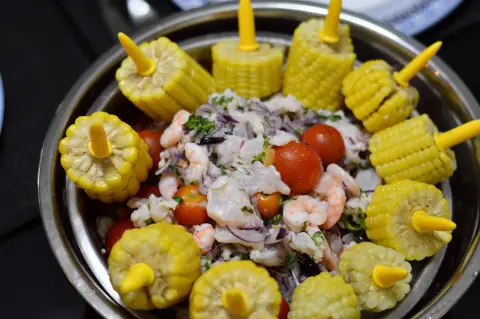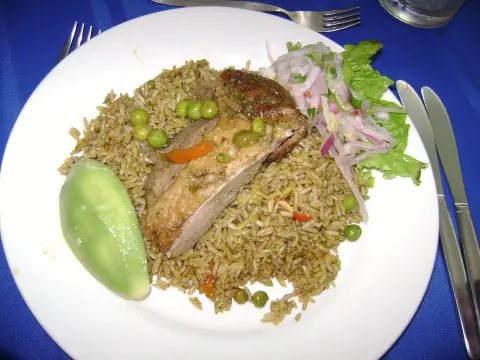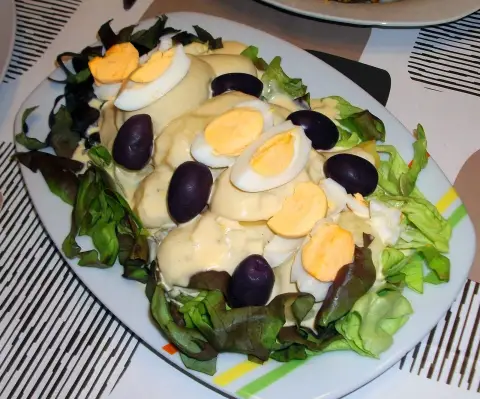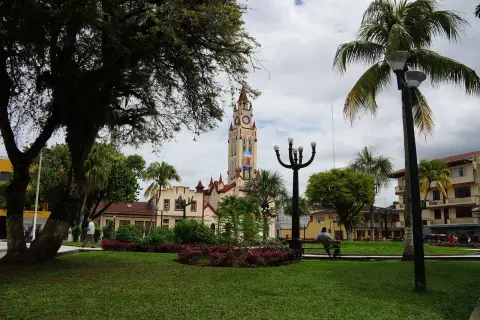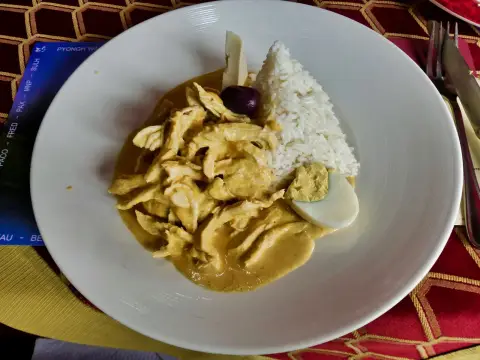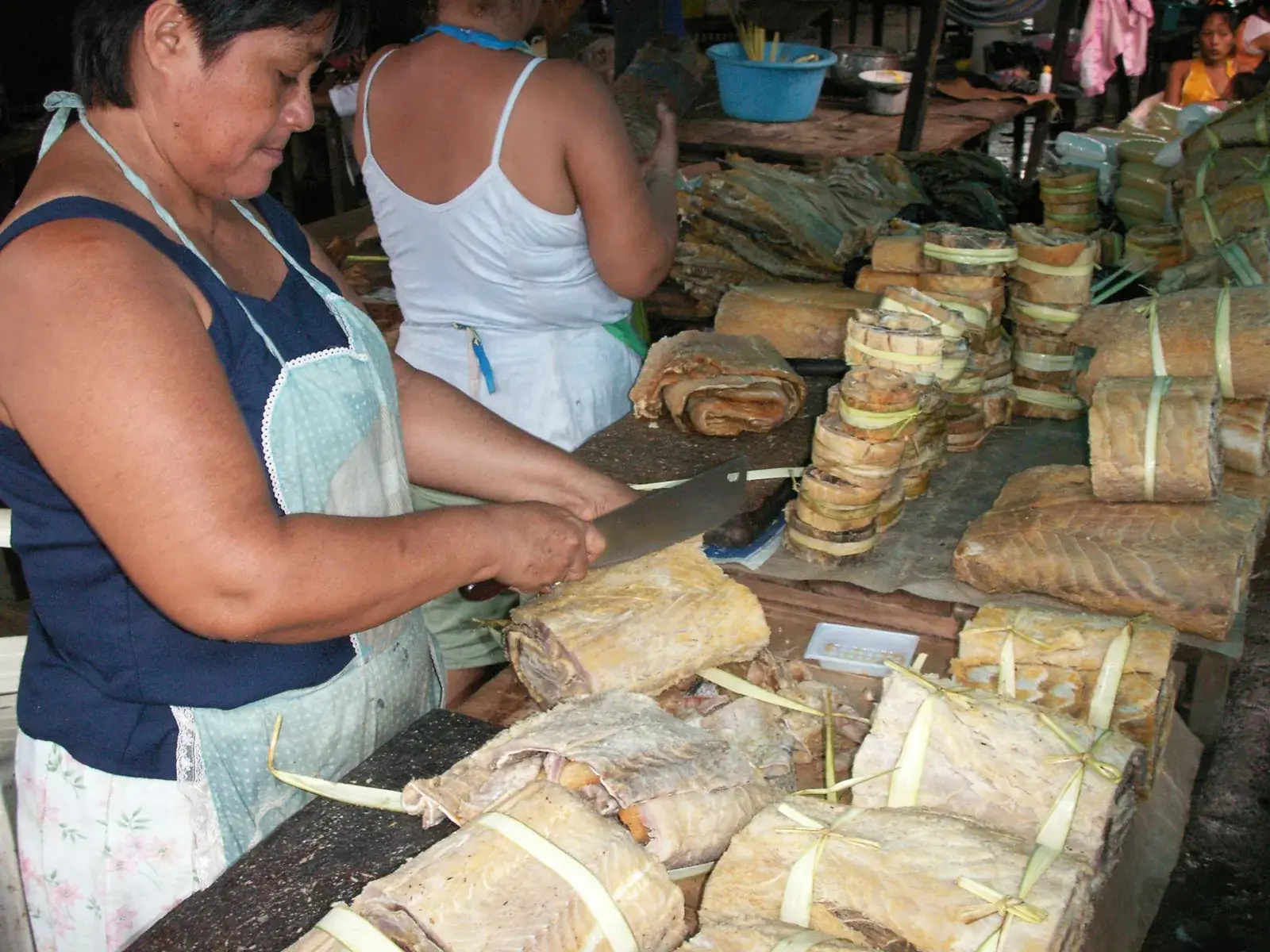
In the Peruvian Amazon, try juane, rice and chicken steamed in a leaf, tacacho con cecina, mashed plantain with cured pork, and fish cooked in a leaf wrap, such as patarashca. Look out for jungle fruit juices and for river fish like paiche. Iquitos and Puerto Maldonado are the main bases, and lodges usually serve set meals. Choose cooked food and bottled or treated water.
Staples of the jungle table
Jungle cooking relies on what grows and swims nearby: cassava, plantain, rice, river fish, palm hearts and a wide range of fruit. Cooking in leaves is common, with the leaf both wrapping and flavouring the food.
Juane is the best-known dish: rice seasoned with spices, with chicken or another filling and an egg, wrapped in a bijao leaf and boiled. It is traditionally linked to the feast of San Juan in June, and you can find it year round in restaurants. Tacacho is a ball of grilled, mashed green plantain mixed with pork fat, often eaten at breakfast or dinner together with cecina, a salted, smoked meat. Inchicapi is a thick soup of chicken, peanuts and maize, and it is more filling than it looks.
Patarashca is fish seasoned with local herbs and chilli, wrapped in a leaf and grilled over embers, and it is simple, fresh and one of the most characteristic dishes.
Fish, fruit and drinks
The Amazon basin has many fish species that never reach the coast. Paiche, a very large river fish, is now often farmed, and it has firm, mild white flesh served grilled or in ceviche. Doncella and other local fish are common on menus. Ask how the fish was sourced when you can, because overfishing is a concern in some areas.
Fruit is a highlight. Camu camu is a sour berry high in vitamin C, aguaje is a palm fruit eaten and drunk in juice form, and cocona and other fruit appear in juices and desserts. Ají charapita, a tiny round chilli, is hot and aromatic and often used in sauces.
Masato, a fermented drink made from cassava, is a traditional beverage in many communities, and visitors may be offered it during community visits. Coffee, cacao and Brazil nuts are important products of the region too.
Tours and activities
Bookable online, chosen for their traveller reviews.
-
★ Top rated From €52 per person
-
★ Top rated From €23 per person
-
Day trip From €38 per person
-
★ Top rated From €85 per person
Eating at lodges and in town
Most jungle lodges serve set meals, three times a day, built around rice, fish or chicken, vegetables and fruit. If you have dietary needs, tell the lodge when you book, since supplies are limited once you arrive. Vegetarian requests are usually handled, but variety can be limited.
In towns such as Iquitos, markets are lively and full of unfamiliar produce. They are fascinating to visit, but they are not the place to improvise with food hygiene: stick to cooked dishes and busy stalls.
Lodges near Puerto Maldonado tend to serve a menu adapted to visitors, with local dishes served alongside familiar ones. Meals are typically included in the package, so the main practical question is dietary rather than cost. Lodges often provide a packed lunch for day excursions, wrapped in a leaf or in a box, and the lodge will tell you what to bring.
Iquitos and the northern Amazon
Iquitos, the largest city in the Peruvian Amazon, is the best place to see the full range of jungle food. Restaurants serve juane, tacacho, patarashca, paiche and local sausages, and markets sell fruit, fish and ingredients that are rare elsewhere. The city's isolation, reached mainly by air and river, means that menus lean on what the surrounding forest and rivers provide.
The market district is where you see how the cuisine fits together: stalls selling live fish, smoked meats, palm hearts and bags of unfamiliar fruit. Some visitors find the sights and smells of the meat and wildlife stalls confronting, and it is worth asking a guide which items are legal and sustainable and which should be avoided.
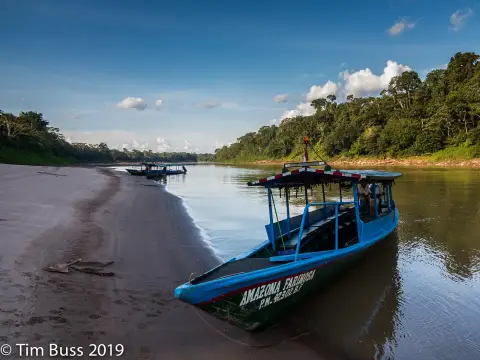
For tours that go into the Pacaya-Samiria reserve, see Pacaya-Samiria to understand what to expect, and meals on river trips are normally prepared by the crew from local fish, rice and plantain.
Puerto Maldonado and the southern Amazon
In the south, Puerto Maldonado is the gateway to Tambopata, and cooking here mixes jungle traditions with influences from the Andes and Brazil. Fish from the Madre de Dios river, Brazil nuts and local fruit are the regional signatures, and restaurants serve juane and tacacho as well.
Brazil nuts are a particular local product. They are gathered from the forest by communities and are a significant source of income for people who live in the region. Buying them from reputable local shops supports sustainable forest use, though you should ask whether they are from certified producers.
The tropical heat means food spoils quickly, so choose restaurants with a steady local trade and avoid pre-prepared dishes left on a counter. For planning, work out where to go in the Amazon before booking.
Eating safely in the heat
Food safety matters more in a hot, humid climate. Choose food that is cooked in front of you and served hot, and be careful with raw seafood, since the combination of heat and distance from the coast makes ceviche less reliable than on the Pacific. Peel fruit yourself and wash your hands before eating.
Ice is often made from treated water at lodges and in established restaurants, but in small stalls it is better to ask or to avoid it. Drink bottled or properly treated water, and use it to brush your teeth. The general guidance in water and food safety applies, and a travel clinic can advise on specific health issues before you go.
If you have a sensitive stomach, start with simple dishes such as grilled fish, rice and plantain, and keep the more adventurous items, such as fermented drinks and street snacks, for when you are settled.
Frequently asked questions
What is juane?
A jungle dish of seasoned rice and chicken, wrapped in a bijao leaf and boiled. It is traditionally linked to the feast of San Juan in June.
Is it safe to eat jungle fish?
Fish that is fully cooked and served hot is generally fine. As anywhere, choose busy, clean places and be careful with raw preparations.
Can I eat vegetarian in the Amazon?
It is possible, particularly with plantain, cassava, rice, beans and fruit, but variety is limited and fish or meat is the default. Tell the lodge in advance. See vegetarian for useful phrases.
What is paiche?
A very large Amazon river fish with firm, white, mild flesh. It is now widely farmed, which reduces pressure on wild stocks, and is served grilled, fried or in ceviche.
What does aguaje taste like?
The fruit of a palm, it has an orange flesh with a tangy, slightly oily taste. It is eaten fresh, made into juice or ice cream and is widely sold in jungle markets.
Is the water safe to drink in jungle towns?
Drink bottled or properly treated water rather than tap water. Lodges normally provide safe drinking water, and it is worth asking what they use.
Should I try masato?
It is a traditional fermented cassava drink, and visitors on community tours are often offered some. It is made by hand and its hygiene varies, so if you have a sensitive stomach you can politely decline.