Two nights is enough to cover Trujillo's colonial centre, the adobe city of Chan Chan, the Huacas de Moche and an evening in Huanchaco. It is a good first stop on the north coast and a gateway to the less-visited archaeology of the region.
In this section
-
 Destination guide
Things to Do in Trujillo
Trujillo is the base for some of the oldest and largest archaeological sites on Peru's north coast, plus a pleasant colonial centre.
-
 Attraction
Chan Chan
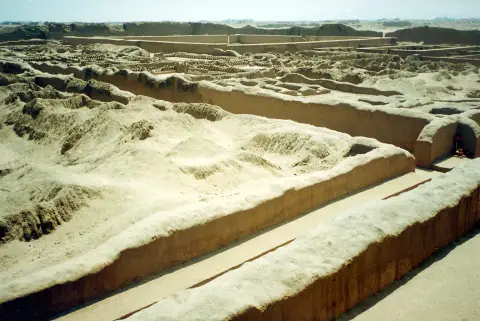
The ruined capital of the Chimú kingdom, a huge adobe complex of walled compounds with carved friezes.
-
 Attraction
Huacas de Moche
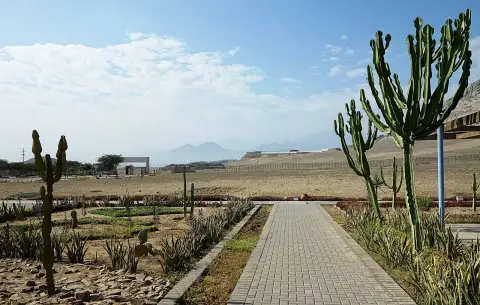
Two adobe temples of the Moche culture, with some of the best-preserved painted reliefs on the north coast.
-
 Attraction
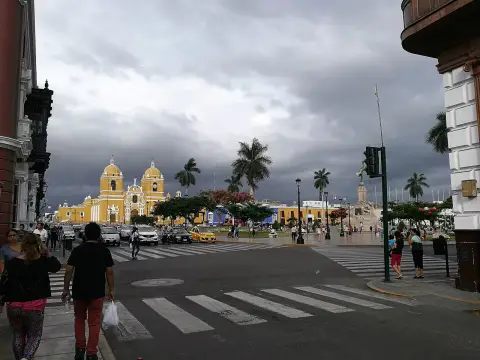
Trujillo Plaza de Armas
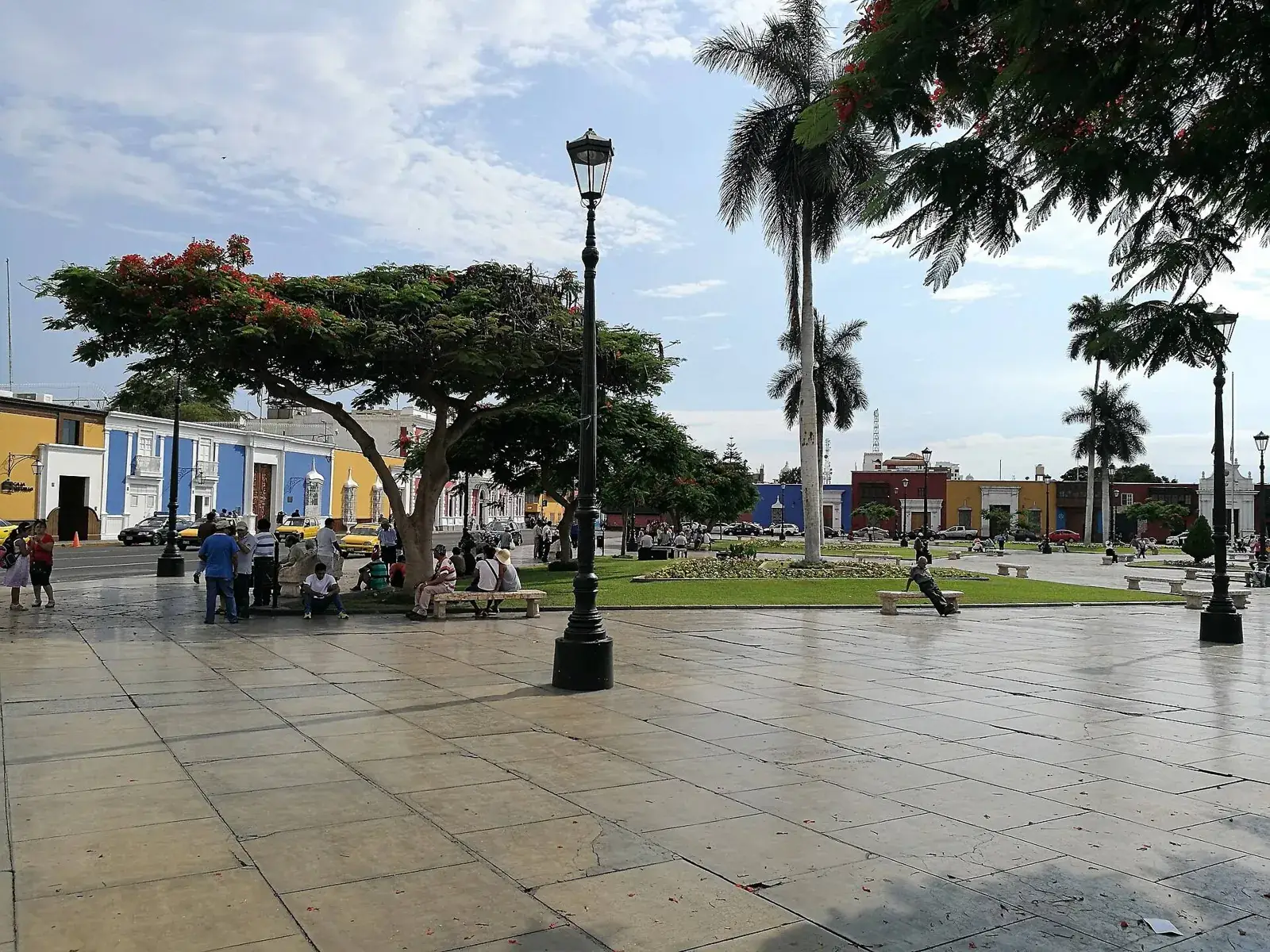
The main square of Trujillo, framed by the cathedral, the town hall and painted colonial mansions, and the natural start of any visit to the city.
-
 Attraction
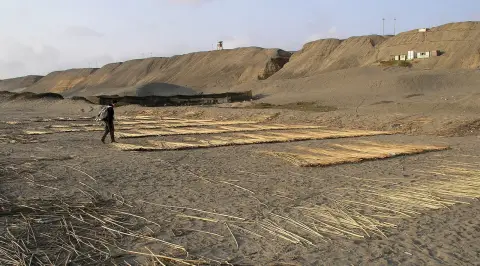
Huanchaco
A fishing and surf town on the Pacific, 14 km from Trujillo, where fishermen still ride reed boats built the way the Moche and Chimú built them.
-
 Attraction
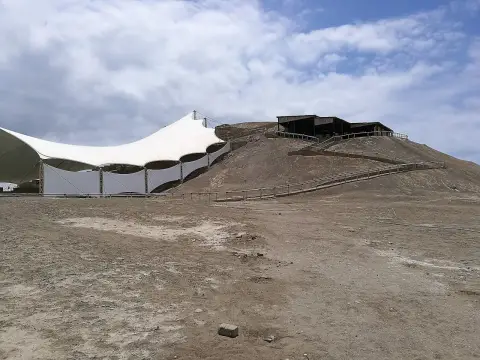
El Brujo Archaeological Complex
A coastal Moche temple complex north of Trujillo, known for its painted reliefs and the museum of the Lady of Cao.
-
 Attraction
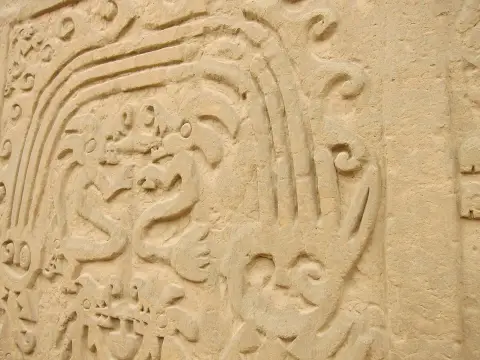
Huaca Arco Iris
A small Chimú adobe temple in La Esperanza, near Trujillo, known for friezes of rainbows and two-headed serpents.
A city of colour and adobe
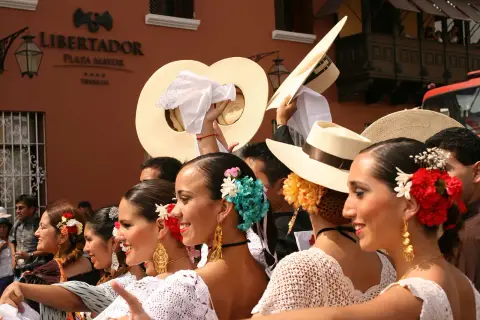
Trujillo's centre is a tidy grid of colonial mansions painted in strong colours, with iron balconies, a large main square and a cathedral. It is a calmer city than Lima, though it is large and busy outside the old grid. The region is known for its dance, the marinera, a courtship dance with handkerchiefs, and for its pride in a long history that predates the Incas.
The north coast was home to the Moche, then to the Chimú, and both left remarkable cities and temples built of mud brick. Because adobe survives only in a dry climate, these sites are possible on the rainless coast but would not have lasted in the highlands. A walk around the centre in the early evening, when the colours are warm and the square fills with families, is a good introduction. See things to do in Trujillo for more ideas.
Chan Chan
Chan Chan was the capital of the Chimú empire and is often described as the largest adobe city in the Americas. It is made up of walled compounds, courtyards and storerooms, with friezes of fish, birds and geometric patterns pressed into the mud walls. Only a part is open, and the site is fragile, as rain and sea air erode adobe. Go with a guide if possible, since the layout is hard to read alone, and bring a hat for the open sun.
The patterns refer to the sea and the coast, which were the foundation of the Chimú economy, and they give the site a character quite different from the stone of the Inca south. Allow a couple of hours, and wear shoes you do not mind getting dusty. A small site museum helps to explain what you are looking at before you walk the compound. The north coast can also be cool and damp in winter, so bring a light layer.
The Moche temples
South of the city, the Huacas de Moche include the Huaca del Sol, a massive pyramid, and the Huaca de la Luna, a temple with brightly painted reliefs of figures and deities. The Huaca de la Luna is the one that is visited, with a guided tour and a small museum nearby. Together with Chan Chan, these are the two big archaeological stops and can be done in a single day by tour or taxi.
The colours of the reliefs are striking because they have been protected by later layers of building: the Moche rebuilt their temples over generations, and the older paint lies behind newer walls. Guides explain how the layers were uncovered. The museum has pottery and metalwork that show the Moche's skills, and is worth a stop even if you are short of time.
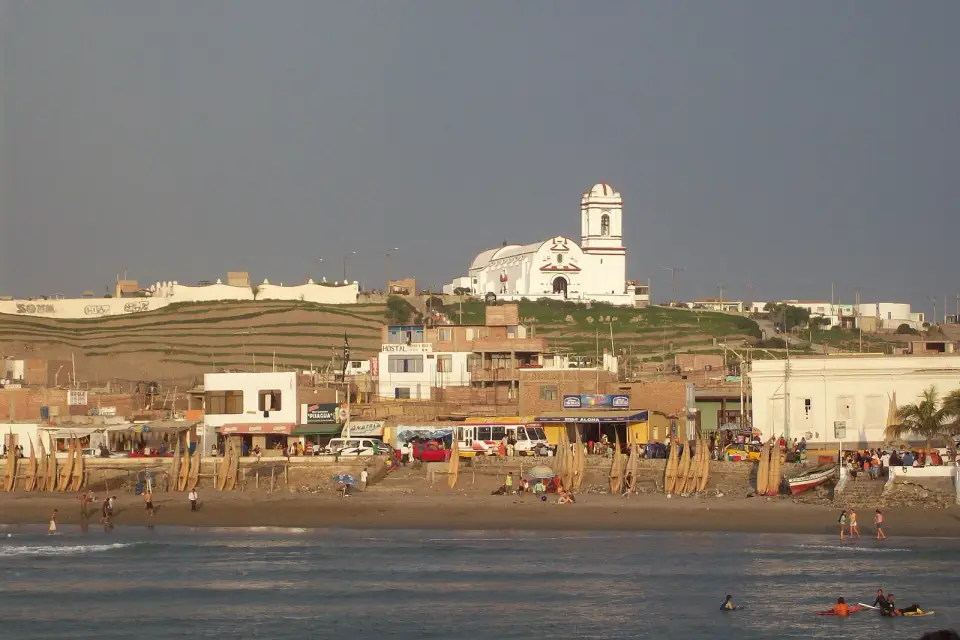
Huanchaco
A short ride away, Huanchaco is a beach town known for its reed boats called caballitos de totora, used by fishermen for centuries, and for its modest surf. It is relaxed, with seafood restaurants and a sunset promenade, and it is a good place to spend the evening after a day of ruins.
Many travellers choose to sleep in Huanchaco rather than the city, because the sea air and the unhurried pace are welcome after a day in the sun. Surf schools and small hostels line the shore, and the town works as a base for either site. The waves are gentle enough for beginners, but the water is cool, and swimming requires care because of currents. What to eat in the north will help you order seafood in the town.
Getting there and when to go
Trujillo is a long bus ride north of Lima, usually overnight, and it also has an airport with flights from the capital; see Lima to Trujillo to compare the two. The climate is dry and sunny, with the warmest weather in the southern summer, roughly December to April. Trujillo can be combined with Chiclayo and the northern highlands in a route that moves inland to Cajamarca or Chachapoyas.
Winter on the coast is often cloudy and cool, but sites remain open and crowds are lower. The north rewards a flexible schedule, since buses leave at various times and some sites close on certain days.
Food and drink
The city and the coast share a northern cooking tradition, with ceviche made from very fresh fish and served at lunchtime, and hearty rice dishes. Local specialities include goat stew and rice with duck in the wider north, and sweet snacks such as king kong pastries. Lunch is the main meal, and many seafood restaurants close in the afternoon.
Chicha, a lightly fermented drink made from maize, is common in the region, although the quality and strength vary. For something safer for newcomers, try fresh fruit juices from the market. Take care with salads and ice if your stomach is sensitive, and follow the advice on water and food safety.
A north coast route
Trujillo is the natural first stop on a northern loop. A typical route runs from Trujillo to Chiclayo, then inland to Cajamarca and Chachapoyas, and returns by air or bus. It can be done in a week or ten days, and it allows an unhurried look at archaeology that most visitors never see.
The northern itinerary lays out a route and tells you how much time each leg needs. If you prefer a beach finish, Máncora is a long journey further north. As with all long trips in Peru, choose a few stops and give them time instead of trying to see everything, and keep a day free for delays.
Map
Where to sleep
-
Trujillo centre
Colonial centre, base for Chan Chan and the Moche temples
A colonial centre around the Plaza de Armas, with museums, restaurants and the best choice of hotels. The easiest base for the archaeological sites by taxi or tour.
Keep in mind: Take a taxi rather than walking between the plaza and the outskirts at night.
Find hotels → -
Huanchaco
Surf village by the sea, a short ride from the city
A surf village with a fishing-boat beach, seafood restaurants and a relaxed, backpacker feel. Chan Chan lies on the way to the city, so the transfer is easy.
Keep in mind: Evenings are quiet and breezy, and there are fewer upmarket hotels than in the city.
Find hotels →
Weather in Trujillo
Forecast: MET Norway
Frequently asked questions
Is Trujillo safe?
The centre is busy and generally fine in daylight, but use the usual precautions with belongings and take taxis at night.
How many days do I need?
Two nights covers the main sites at an easy pace. One night works if you only want Chan Chan and the Moche temples.
Can I visit Chan Chan and Moche in one day?
Yes, either with a tour or by arranging taxis. Start early to avoid the heat.
Is Huanchaco worth the trip?
Yes for an easy evening by the sea, a seafood dinner and a look at the reed boats. If you prefer to be in the city, it is a short taxi ride from the centre.
How do I get from Trujillo to Chiclayo?
By bus or by car along the coast, a journey of a few hours. Buses are frequent, and you can continue to the highlands from Chiclayo. See the northern itinerary for a route.
Do I need a guide at Chan Chan?
It is not compulsory, but a guide helps you understand the layout and the carvings, which are hard to read alone. Guides are usually available at the entrance.
What is the best time to visit Trujillo?
The coast is warm and sunny from roughly December to April. The rest of the year is milder and often cloudy, but the sites can still be enjoyed, and there are fewer people.
Is there altitude in Trujillo?
No. Trujillo is on the coast, close to sea level, so altitude is not a concern. That makes it a comfortable stop before the higher towns of the northern highlands.