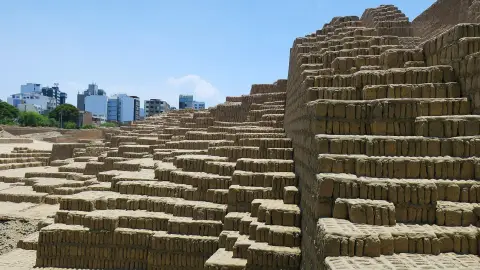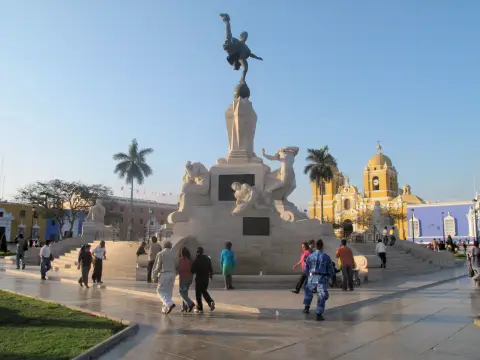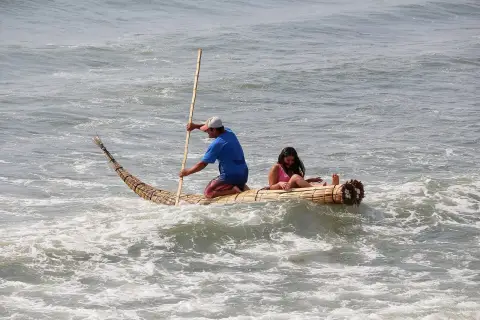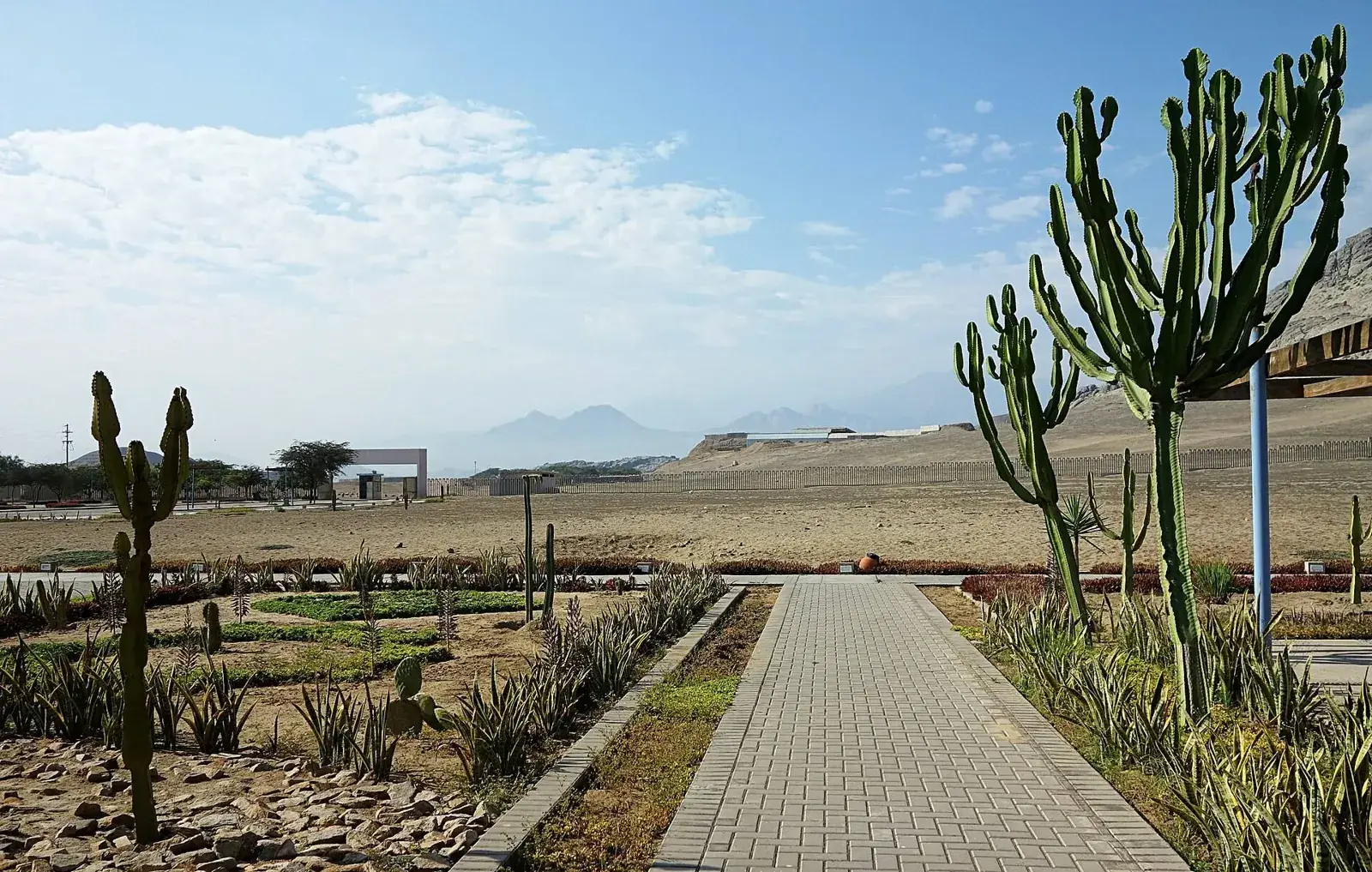
The Huacas de Moche are Moche temples beside the Moche River, a short drive from Trujillo. Its most visited part, the Huaca de la Luna, still has colourful painted reliefs inside a stepped adobe temple. The visit is guided and takes about an hour and a half. The Moche predate the Chimú of Chan Chan, so visiting both shows how the north coast changed over time.
Map
Two temples, one culture
The Moche culture developed on the north coast of Peru in the first centuries of the first millennium and is known for sophisticated ceramics, metalwork and monumental architecture. At this site there are two huacas, or temple mounds, standing a short distance apart: the Huaca del Sol, the larger one, and the Huaca de la Luna. The names were given later and do not describe what they were used for.
The Huaca del Sol is huge but has been heavily damaged by looting and river erosion, and it is mostly seen from outside. The Huaca de la Luna is the one you enter, and it is the reason most people come.
Inside the Huaca de la Luna
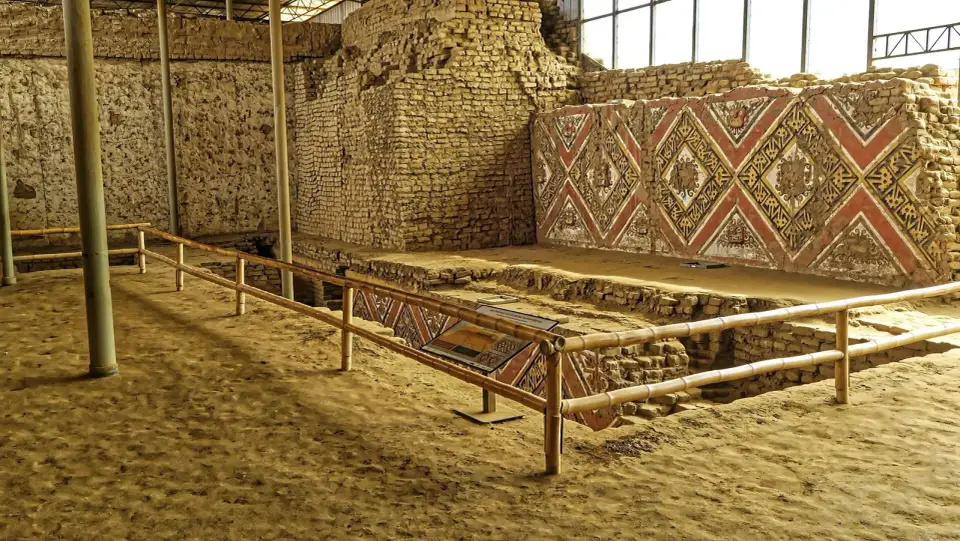
Excavations have shown that the temple was built in stages, with new structures added over older ones. This helps explain why you can see several layers of painted walls. Reliefs show a fanged figure often called the Decapitator, along with animals, waves and geometric designs, in red, white, black and ochre.
Researchers have found evidence of human sacrifice in the plaza in front of the temple, and guides usually discuss this, along with what the Moche may have believed. As with any ancient religion, interpretations are based on evidence from excavations and art, and some details are uncertain.
A small site museum displays objects found at the complex, including ceramics and ornaments. A visit combines a walk around the hill, a climb up to the temple platforms and a guided tour of the painted walls. Part of the site is still being excavated, so the experience changes over time.
Why the colours survive
Visitors are often struck that painted walls survive at all in a mud-brick building thousands of years old. The answer is partly climate and partly the way the temple was built. The coast is extremely dry, and the Moche periodically buried older temples under new construction. The old paintings were therefore sealed away from sun, wind and rain, and emerged when archaeologists removed the later layers.
That is why you can see several layers of decoration at one site, each from a different building phase. It also explains why the colours look fresh: they were hidden for most of their history. The paint is still delicate, and the site is protected with roofs and walkways to limit exposure.
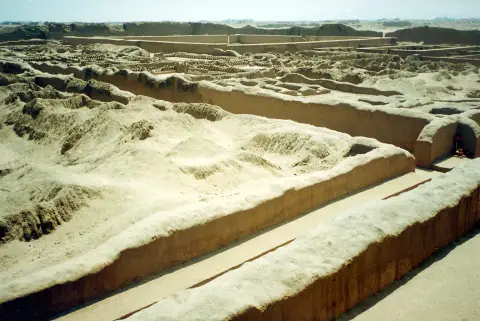
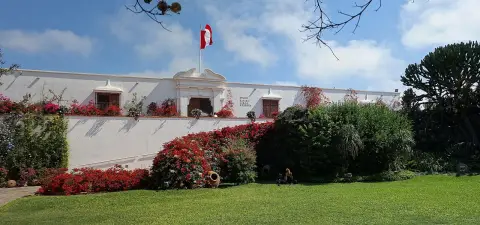
It is a useful comparison with Chan Chan, where the friezes are carved and moulded rather than painted, and with the museum pieces at the Larco Museum, where Moche ceramics show the same figures and scenes on a small scale.
Getting there and planning
The huacas lie about 10 km from the centre of Trujillo, so a taxi, a local minibus or an organised tour is the usual way to reach them. Many tours combine them with Chan Chan in a single half-day or full-day excursion, and some add the beach at Huanchaco.
The visit is by guided tour, and groups form at the entrance, so you will normally join the next available group. Tours may be offered in several languages, but check the availability of English. Wear sun protection and comfortable shoes, as the paths are dusty and the sun is strong, and bring water.
If you have only time for one north-coast archaeological site, choose according to your interest: Chan Chan for the scale and the adobe city, Huacas de Moche for the colour of the painted walls.
The Moche in context
The Moche are best understood through several places rather than one. Here you see the temple architecture and the paintings. In the north, near Chiclayo, the royal tombs of Sipán show the wealth buried with Moche rulers, which you can see at the Lord of Sipán Museum. In Lima, the Larco Museum displays ceramics that show Moche daily life and ritual in detail.
Seeing these in sequence gives a fuller picture. A suggested order for a north-coast trip is described in the north itinerary. See Trujillo things to do for the other sights nearby, from the colonial centre to the beach.
Remember that the Moche left no written record that we can read, so what we know comes from excavations, art and later accounts. Treat strong statements about their beliefs with caution, and enjoy the temples for what is visible.
Visiting well
Go early, when the light is gentle and the groups are small. The climb up the platforms is not long, but it can be tiring in the heat, and the wind can be strong. Follow the guide's route, since parts of the site are closed for conservation or excavation.
Photography is normally allowed, though rules on flash or tripods may apply near the painted walls. Do not touch the walls, since oils from hands damage the paint. Carry water, and wear shoes with a good grip for dusty or uneven surfaces.
If you are travelling from Lima, see Lima to Trujillo for the journey. Allow enough time on the day for the guided tour, the museum and a lunch stop. If you are combining sites, start at the huacas in the morning when the light is best, then move on to Chan Chan.
Where to sleep
-
Find hotels
Trujillo centre
Colonial centre, base for Chan Chan and the Moche temples
-
Find hotels
Huanchaco
Surf village by the sea, a short ride from the city
Frequently asked questions
How long does a visit take?
About an hour and a half for the tour of the Huaca de la Luna and the museum.
Do I need a guide?
The visit to the painted temple is done in guided groups, which is part of the entrance arrangement.
Can I combine it with Chan Chan?
Yes. Many tours visit both in one day, and they show different cultures from different periods.
What is the difference between the Huaca del Sol and the Huaca de la Luna?
The Huaca del Sol is larger but heavily damaged, and visitors mostly see it from outside. The Huaca de la Luna is the one you enter, with painted reliefs. The names are later labels and do not describe their original uses.
Were the Moche the same as the Chimú?
No. The Moche came earlier, and the Chimú built Chan Chan some centuries later. Visiting both shows how the north coast changed. See Chan Chan for the Chimú.
Is the Huacas de Moche suitable for children?
Many children enjoy the colourful walls, but the tour includes stairs and some exposure to sun and wind. Bring water and sun protection, and expect a guided tour that lasts about an hour and a half.
How do I get there from Trujillo?
By taxi, local minibus or tour. A taxi is simple if you agree the waiting time and price in advance. See Trujillo for other transport tips.
Can I take photographs inside?
Usually yes, but rules on flash and tripods can apply near the painted walls. Ask your guide, and do not touch the surfaces.