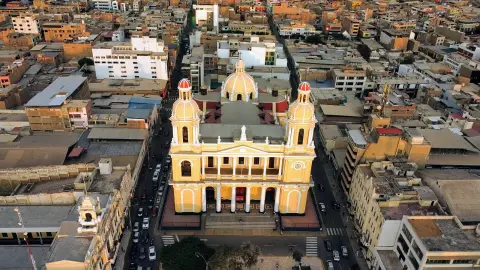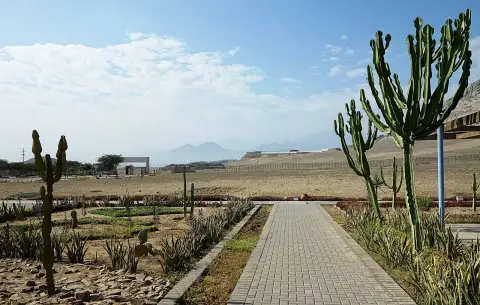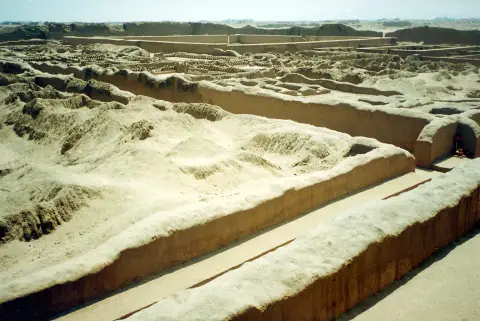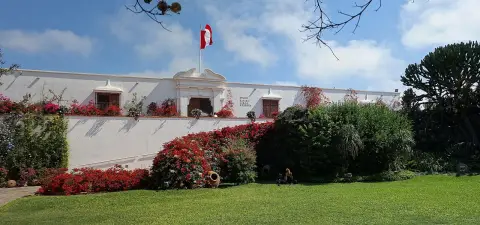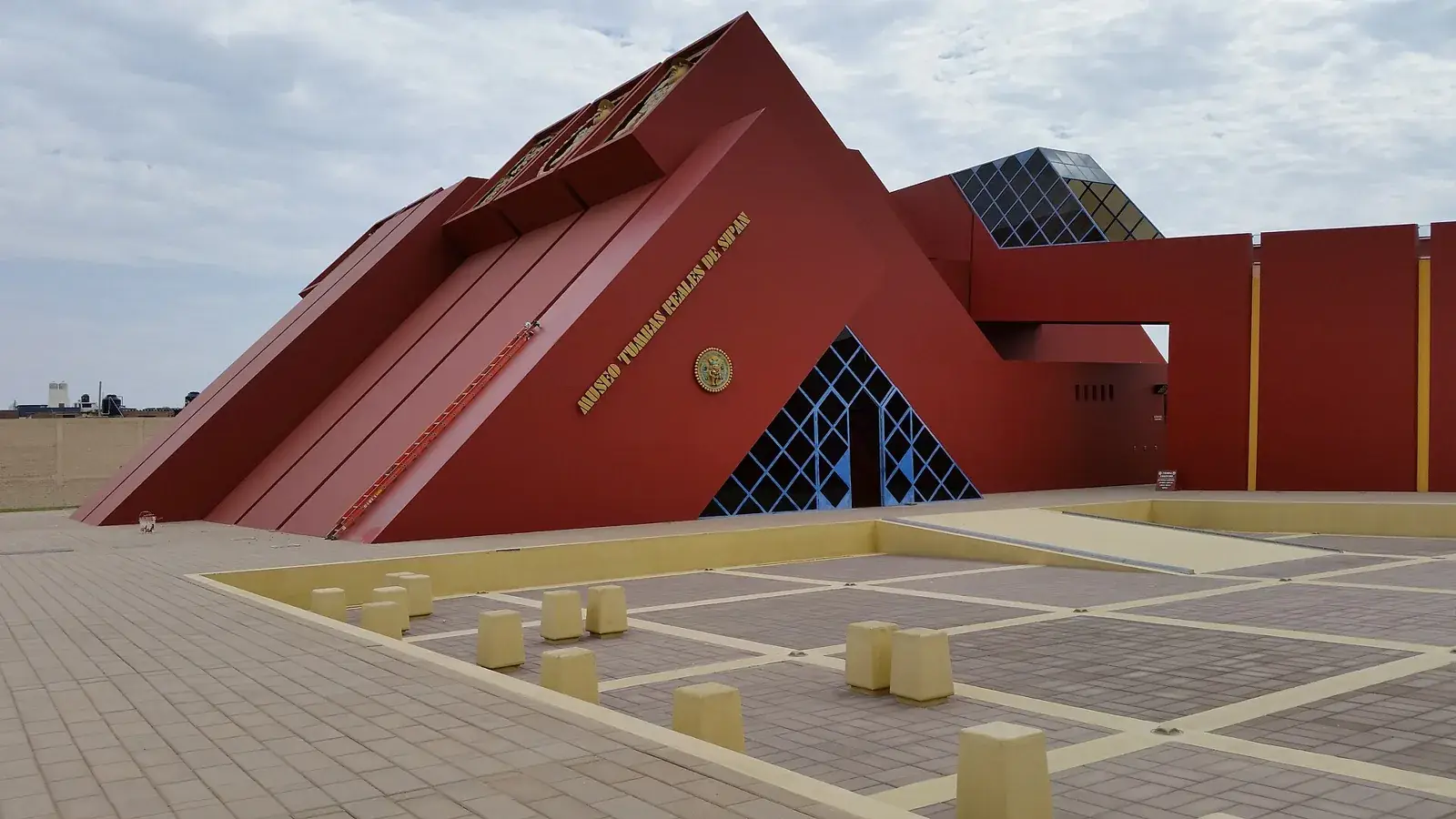
The Royal Tombs of Sipán Museum, often called the Lord of Sipán Museum, is in the town of Lambayeque, a short drive from Chiclayo. It displays objects from the tomb of a Moche ruler found at Huaca Rajada in 1987, one of the most important archaeological discoveries in Peru. Allow two hours, go with a guide if possible, and combine it with the Sipán site or another museum.
Map
The discovery
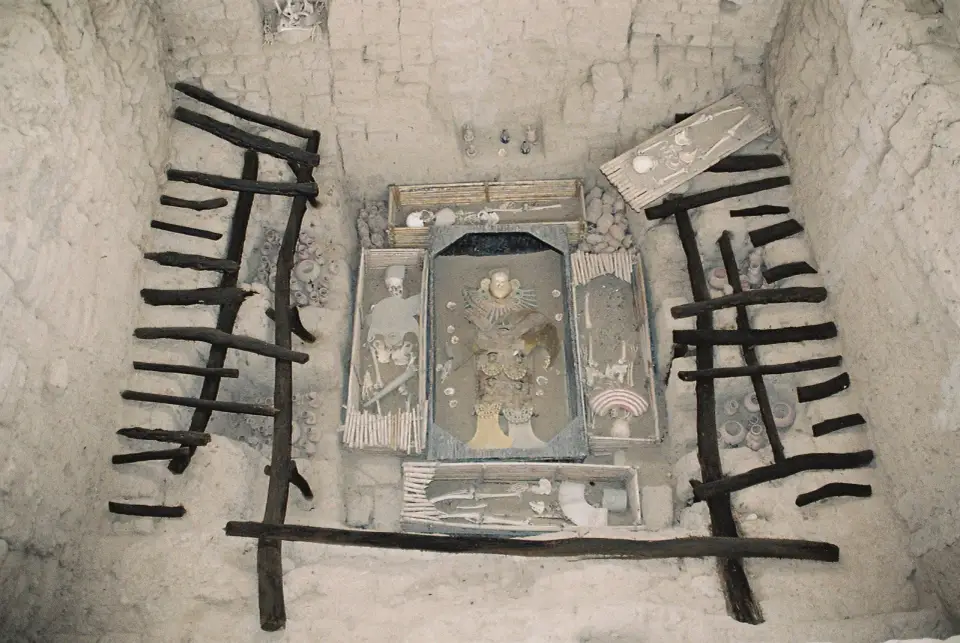
In 1987 archaeologists excavating the Huaca Rajada mound, near the village of Sipán, found an intact royal tomb of the Moche culture. Looters had been active at the site, which gave extra urgency to the dig. The tomb contained the remains of a high-status man, surrounded by offerings and by the bodies of attendants, along with objects in gold, silver, copper and shell.
The finds provided rare evidence of the way Moche rulers were buried and the symbols of their authority. The man is known as the Lord of Sipán, a modern name, and the discovery led to further excavations of other burials at the site, including that of an older ruler. Dating is generally placed in the early centuries of the first millennium, although specific dates are the work of researchers and may be refined.
Inside the museum
The museum is a modern building whose shape recalls the stepped pyramids of the north coast. The visit is designed to begin at the top and work downwards, mirroring the order in which the excavators discovered the burials. The display includes full-scale reconstructions of the tomb, with replicas of the burial as it was found, which helps to understand how the objects were placed.
The most striking items are the ornaments of the ruler: large gold and turquoise pieces, ear ornaments, collars and a headdress. Metalwork on this scale shows the skill of Moche craftspeople. Other rooms show ceramics, textiles and finds from other tombs. Labels are in Spanish and may also be in English.
It helps to see the material from the museum before visiting the site at Huaca Rajada, where the tomb has been reconstructed on the spot. If you prefer to see one or the other, the museum has the original finds, while the site shows the setting.
Planning the visit
Lambayeque is about 10 km from Chiclayo, and taxis or local transport make the trip simple. Allow about two hours in the museum, and more if you add the Huaca Rajada site or the nearby museum in Túcume or Bruning, depending on your interest. Chiclayo is a convenient base for these places, and for the market and food of the north coast.
Cameras are often restricted inside, and bags may need to be left in lockers. Check the rules at the entrance. A guide, either on site or through your hotel, adds context to the displays.
Opening hours and ticket prices are set locally and change, and the museum may close on certain days, which matters if you are travelling between cities on a tight schedule. Because the discovery is so well known, groups can be busy in the middle of the day, so a morning visit is often calmer.
What the finds tell us about Moche rulers
The tomb is valued because it shows how the Moche expressed power. The ruler was buried in rich costume with symbols that carried meaning, and the attendants and offerings around him suggest a society with strong hierarchy and ritual. The ornaments, such as large ear spools, collars and headdress pieces, were made with advanced metalworking, including techniques for working gold and combining metals.
Researchers connect the tomb with scenes shown in Moche ceramics, in which ritual figures wear similar dress and perform ceremonies. This is one reason the Larco Museum in Lima is useful to visit alongside: its portrait vessels and ritual scenes show the world that produced the Sipán burials.
Some details remain debated, including the exact role of the Lord of Sipán and the meaning of particular symbols. Museum labels and guides give the current reading, but treat strong claims as interpretation. What no one disputes is that the discovery transformed understanding of the Moche and the wealth of the north coast.
Seeing the site at Huaca Rajada
After the museum, many visitors want to see where the tomb was found. The Huaca Rajada site lies a short drive from Chiclayo. It has reconstructed burial chambers set into the mound, so you can see how the tomb lay in the earth. Without the original objects, it is less visually dramatic than the museum, but it gives a sense of place.
Visiting the site first and the museum second, or the other way around, is a matter of taste. The museum prepares you for what you will see on site, while the site helps explain why the museum is arranged as it is. Tours from Chiclayo often include both, along with other nearby places such as Túcume, so ask what a tour covers before you book.
Opening times differ for each place, since sites and museums can have different closing days and may not share one ticket. Take water, a hat and sun protection for the site, where there is little shade.
Chiclayo as a base for the north
Chiclayo is a good base for these sights, and it is a lively city for food. See Chiclayo for the city. See food in the north for the dishes to look for in the markets and restaurants.
The Moche circuit continues to the south at Huacas de Moche and Chan Chan, where temples and an adobe capital complete the picture. The north itinerary suggests how to link them with the mountain towns of Cajamarca and Chachapoyas, for those with more time.
Distances between northern cities are long, so plan transfers carefully and allow margins. The north is less visited than the south, which gives a quieter and more local feel, but also means fewer services in smaller places.
Where to sleep
-
Find hotels
Chiclayo
Base for the Sipán tombs, pyramids and the north's food
Frequently asked questions
Where is the Lord of Sipán Museum?
In the town of Lambayeque, a short drive north of Chiclayo.
When was the tomb found?
In 1987 at the Huaca Rajada mound near Sipán, by an archaeological team working at a site that looters had already targeted.
Is the museum or the site better?
The museum has the original finds and reconstructions. The site shows the setting. If you have time for one, choose the museum.
How long do I need at the museum?
About two hours is comfortable. Allow more if you add the Huaca Rajada site or another museum on the same day.
Who was the Lord of Sipán?
A high-status Moche ruler buried in an intact tomb at Huaca Rajada. The name is modern. Researchers continue to study his role and the meaning of the symbols found with him.
Can I take photographs in the museum?
Cameras are often restricted, and bags may need to go in lockers. Check the rules at the entrance, and do not assume flash is allowed.
Is it worth visiting if I have seen the Huacas de Moche?
Yes. The temples near Trujillo show architecture and painting, while the museum shows the wealth and metalwork of the rulers. The two complement each other. See Huacas de Moche.
How do I get from Chiclayo to the museum?
By taxi or local transport to Lambayeque, which is a short ride. Agree the fare before you set off, or use a tour that includes it. See Chiclayo for options.