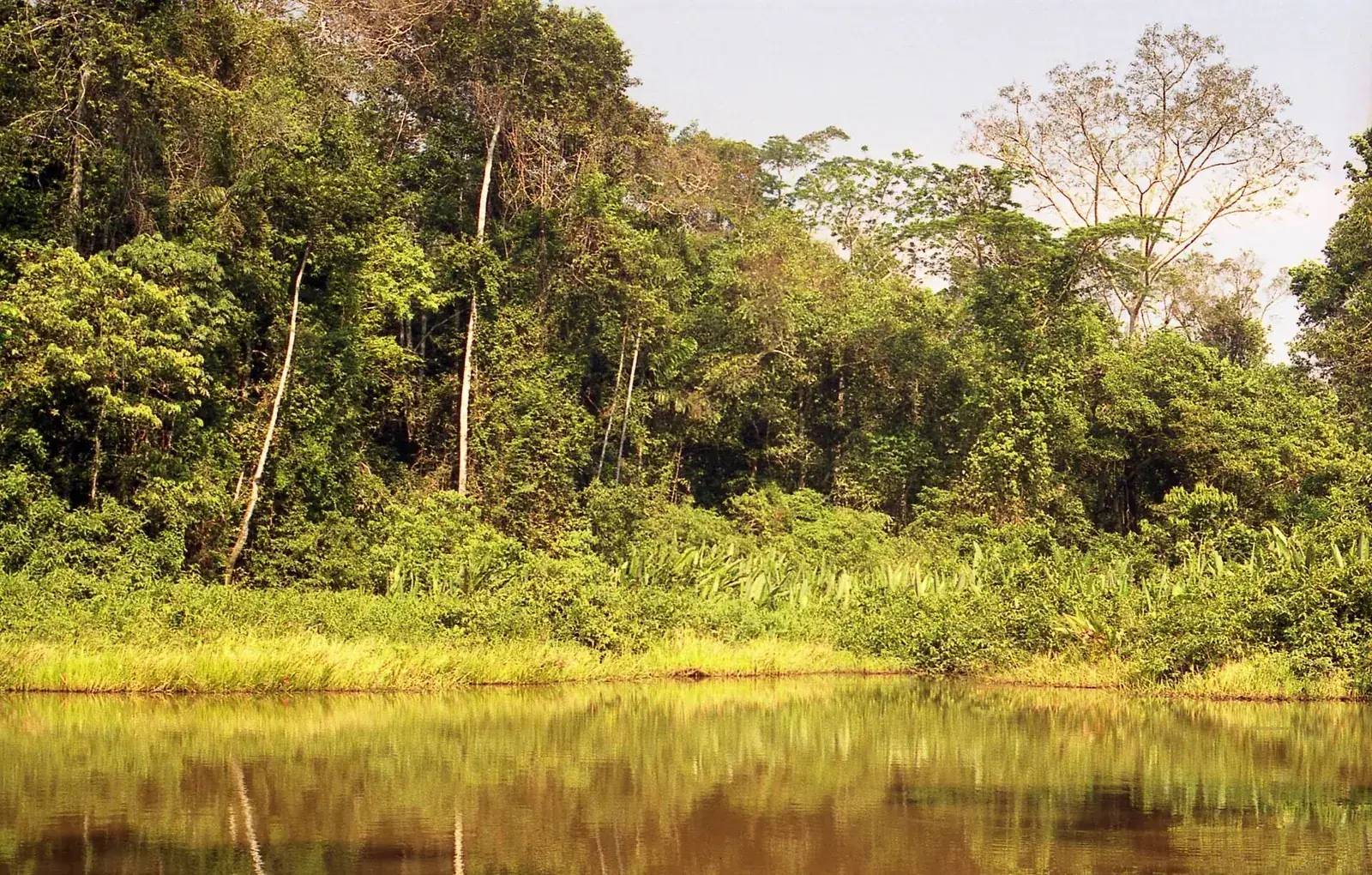
Tambopata is the easiest way to experience the Amazon in southern Peru. Stay at least three nights in a lodge, preferably four, to make the transfers worthwhile. The wildlife is spectacular but not guaranteed, and the experience depends heavily on the lodge and guide. Speak to a doctor or travel clinic well before booking.
In this section
-
 Attraction
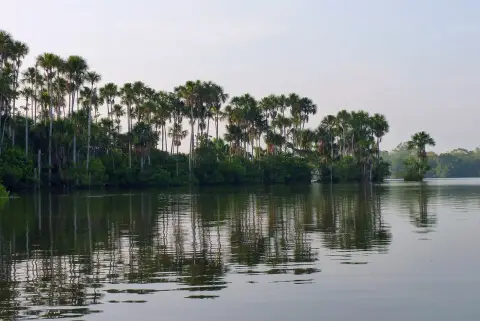
Sandoval Lake
An oxbow lake fringed with palms inside the Tambopata reserved zone, reached by boat, a forest walk and a canoe.
-
 Attraction
Tambopata National Reserve
A large protected tract of lowland rainforest south of the Madre de Dios river, reached by boat from Puerto Maldonado.
-
 Attraction
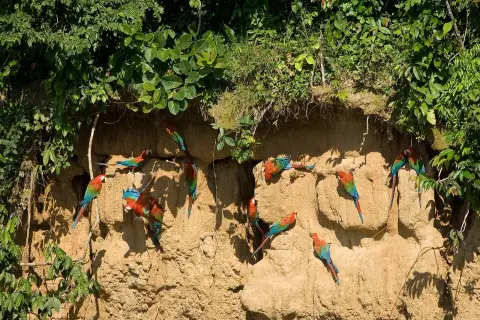
Chuncho Clay Lick
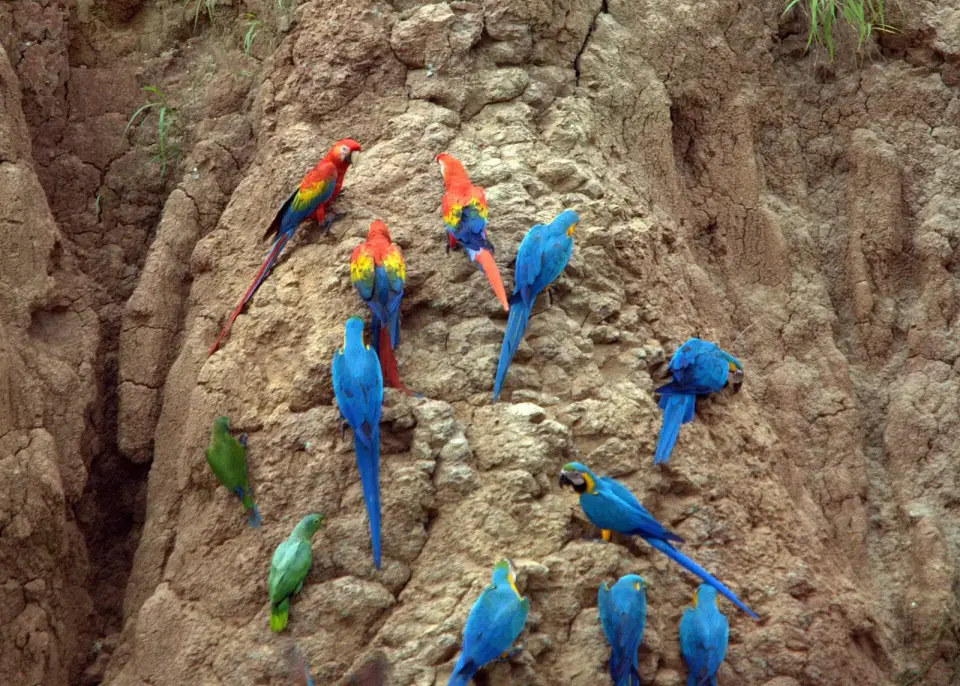
One of the largest macaw clay licks in the Peruvian Amazon, a riverbank wall in Tambopata where parrots and macaws gather in the morning.
The reserve
Tambopata National Reserve and the surrounding areas protect a large stretch of lowland rainforest along the Tambopata river, close to the border with Bolivia. The forest is diverse, with hundreds of bird species, primates, reptiles and insects, and it is one of the best places in Peru for macaws. Lodges sit along the river, some within protected zones and some on community land or private reserves, and they are reached by boat from Puerto Maldonado.
The forest is not a zoo. Animals are mostly shy, and guides know how to find them. Walking slowly, listening and looking up are the skills that a good guide teaches, and a trip with a well-informed guide changes how you see an ordinary tree. Many first-time visitors expect constant encounters and are surprised by how quiet the forest can feel at midday, when most animals rest. The reward comes in the early morning and at dusk, which is why the day is built around those hours. Spend the first morning with your eyes open and your expectations modest, and the forest tends to reveal more than you thought it would.
What a stay looks like
A typical programme starts early with a guided walk when birds are active, then rest in the heat, an afternoon excursion and a night outing by boat or on foot to spot caimans and nocturnal animals. Highlights include the clay licks, where macaws and parrots gather on riverbanks in the early morning, canopy towers for views at treetop height and oxbow lakes where giant otters can sometimes be seen. Lodges provide meals, rubber boots and a guide.
Days are tiring because of the heat and humidity, so lodges build in a long midday break. Expect simple rooms, shared bathrooms in some cases, mosquito nets and limited electricity. Meals are usually served at fixed times, and the cooking draws on local ingredients; eating in the Amazon describes what to expect. Bring patience: the wildlife keeps its own schedule. Guides often share stories about plants used in traditional medicine and building, and these conversations are as valuable as any sighting, so ask questions and listen.
Choosing a lodge
Compare the boat time from Puerto Maldonado: a shorter transfer means more time in the forest, while a longer transfer usually goes deeper into less-disturbed areas. Ask about group size, whether guides are local and trained, and which clay lick and lakes you will visit. Prices and style range from simple lodges to comfortable ones, and the best choice depends more on the guiding than on the rooms.
Puerto Maldonado lodges sets out the criteria, and it is worth reading before you compare brochures. Check what the price includes: transfers, meals, guided activities, park fees and drinks vary between lodges. Ask also about cancellation rules, because flights and river conditions can change plans. A responsible lodge employs local people and respects protected areas, and will happily answer questions on both.
Tambopata, Manu or Iquitos
Tambopata is the quickest to reach and the simplest to organise. Manu is wilder and more remote, with fewer visitors and longer travel. Iquitos offers river cities, long cruises and the vast Pacaya-Samiria reserve. The comparison of where to go in the Amazon helps you decide.
If your trip also includes Cusco and Machu Picchu, Tambopata fits well, because there are short flights between Cusco and Puerto Maldonado. Cusco to Puerto Maldonado describes the journey. If you wonder whether the jungle is worth the time at all, is the Amazon worth it gives an honest view.
Health, insects and water
Long sleeves and trousers in light colours, insect repellent advised by your doctor, a hat and sunscreen are the basics. Ask your lodge about drinking water and follow its guidance. Do not swim in rivers unless the lodge says it is safe, and keep your hands and feet out of leaf litter.
Health and vaccines and water and food safety give general information, but personal advice must come from a doctor or travel clinic. Carry any medication you need in your hand luggage, in the original packaging, and bring a small first-aid kit for blisters and insect bites. Travel insurance with medical evacuation cover is strongly recommended for lodge stays.
When to go
The drier months, roughly May to October, are more comfortable and have easier access. The rainy months, roughly November to April, are hot and wet, with lush forest and active birds. Both seasons have their merits, and the right choice depends on whether you value easy walking or a full, green forest. Ask your lodge which activities are best in your month, and book the longest stay you can afford, since the forest rewards time.
In the dry season, river levels fall, trails are firmer and insects are fewer, but some lakes shrink and animals gather near water. In the wet season, boats reach more places and the forest is full of life, but trails can be muddy and downpours interrupt activities. Whatever the season, flights in this region can be delayed by weather, so leave some margin before an international connection.
Map
Weather in Tambopata
Forecast: MET Norway
Frequently asked questions
How many days do I need in Tambopata?
Three nights is a practical minimum, four gives time to see more without rushing.
Will I see jaguars?
Very rarely. Do not book a trip expecting one, and enjoy the smaller wildlife and the forest.
Is it suitable for children?
Many lodges welcome families, but health advice and the age rules vary, so talk to a doctor and the lodge.
What is a clay lick?
It is an exposed riverbank where parrots and macaws gather to eat clay, which is thought to help their digestion. The best viewing is in the early morning, and sightings depend on the weather and the season.
Is it hot and humid all year?
Yes, though the temperature can drop for a few days in the dry months when cool air arrives from the south. Bring light layers, and a waterproof for rain.
Can I do Tambopata on a budget?
Yes, there are simpler lodges and shared tours that cost less than luxury places. Compare what is included, and be wary of deals that look too cheap, since they may cut guiding or safety.
Can I fly to Puerto Maldonado from Cusco?
Yes, there are short flights, and they are the most common way to arrive. Check schedules, since weather can cause delays. See Cusco to Puerto Maldonado.
Do I need binoculars?
They are highly useful for birds and monkeys in the canopy. Some lodges lend them, but a personal pair is more comfortable and lets you look at your own pace.