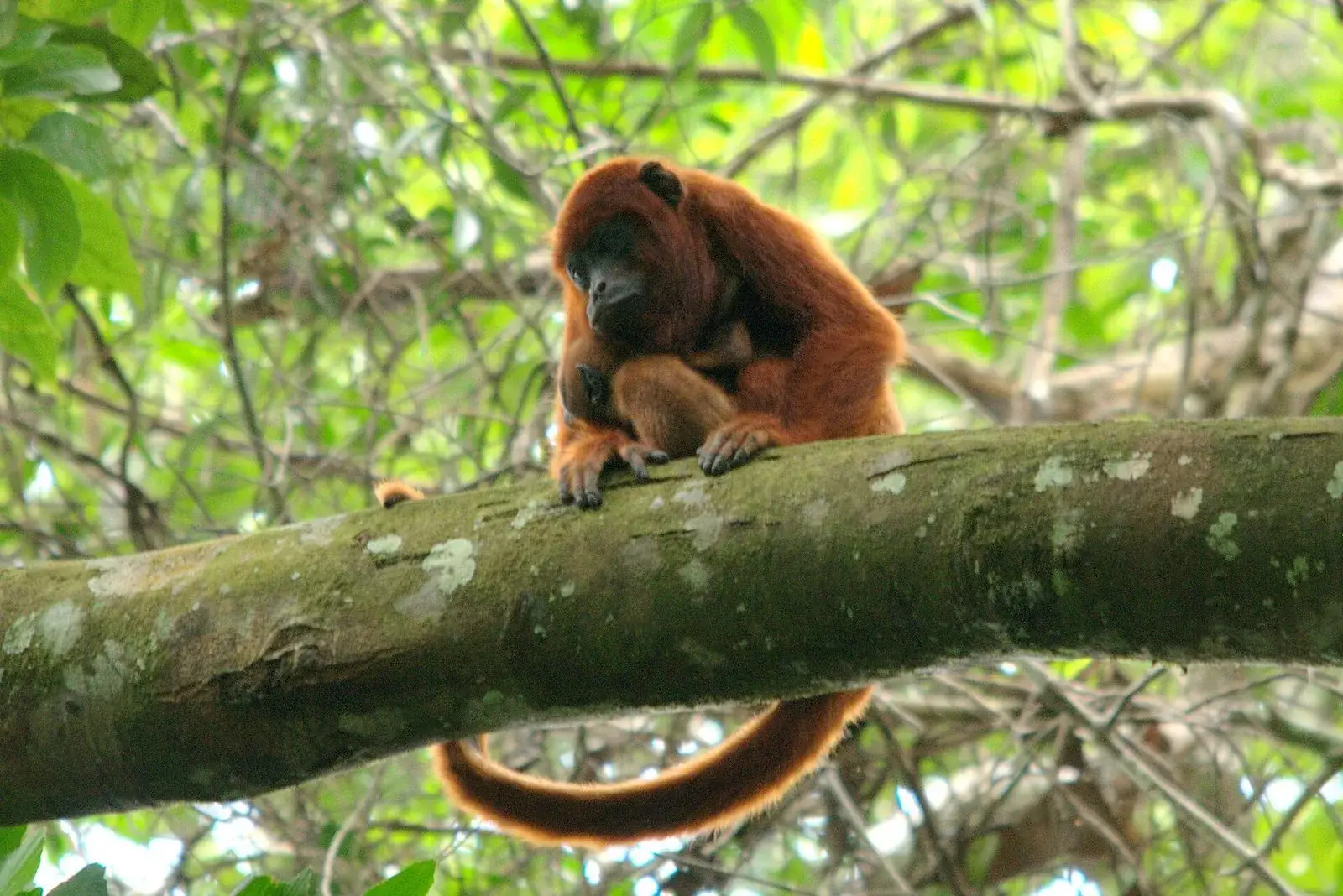
It depends on what you expect. Yes, if you want a completely different landscape from the Andes, enjoy birds, monkeys, insects and forest walks, and can give it three or four days. No, if you are hoping for guaranteed jaguars, dislike heat, humidity and insects, or have only a week and want Machu Picchu to be the focus.
What you actually get
The Amazon offers sensory immersion rather than spectacle. A typical day involves early starts, forest walks, canoe trips, birdwatching and meals at a lodge, with a night walk to find frogs, insects and sometimes larger animals. Many visitors remember the sounds, the scale of the trees and the quiet river time more than any single sighting.
Wildlife is real but not guaranteed. Birds, monkeys, caimans and many insects are commonly seen with a good guide. Larger mammals such as jaguars and tapirs are rarely seen, and anyone who expects them will probably be disappointed. Clay licks where parrots and macaws gather are among the more reliable highlights in the south, depending on conditions.
The costs and compromises
Time: even the most accessible areas need at least three days to be worthwhile, because travel takes a good part of two of them. That is time taken from Cusco, the Sacred Valley or the coast.
Comfort: lodges range from very simple to comfortable, but the environment is hot, humid and buzzing with insects. Electricity, hot water and mobile signal may be limited.
Cost level: a lodge stay is usually priced as an all-inclusive package and often costs more per day than staying in a Peruvian city, though the range is wide. Compare what is included, such as transfers, meals, guides and park fees.
Season: the dry months, roughly May to October, are easier for walking and travel. The rainy season is hotter and wetter, with higher rivers and more mud, though wildlife viewing can still be good.
A day at a lodge
Lodge days follow a rhythm that surprises people used to flexible city sightseeing. Breakfast is early, often before sunrise, because birds and mammals are most active in the cool hours. A morning walk or canoe trip follows, then a long, hot middle of the day for lunch and rest, and a second outing in the late afternoon. After dinner, many lodges offer a guided night walk.
Guides are central to the experience. A good one spots camouflaged animals, identifies calls and explains how the forest works, and the quality of the guiding matters more than the thread count of the bed. Group size also matters: smaller groups see more and disturb less.
Expect to wear long, light clothing, rubber boots supplied by the lodge and a rain jacket, and to leave electronic gadgets behind for part of the day. See Puerto Maldonado lodges to understand how lodges differ and what to ask before you book.
Health, food and water
Most lodges handle meals and drinking water for guests, and food is generally simple but filling. If you have dietary needs, tell the lodge when booking rather than on arrival, since supplies come in by boat. For the general rules, see water and food safety, and for the questions to ask a doctor, health and vaccines.
Insects are the main nuisance. Long sleeves, trousers tucked into socks and repellent make a real difference, and some lodges provide nets over the beds. Heat and humidity also take a toll on people who are not used to them, so drink regularly and rest in the middle of the day.
Distance from medical care is the other consideration. Ask how the lodge handles emergencies, how far the nearest clinic is and how communication works if you are out on the river.
Who should skip it
Skip it on a trip of a week or less where Machu Picchu is the aim. Skip it if you are uncomfortable with insects, humidity or basic facilities, or if you cannot take the health precautions your doctor advises. Skip it if the only thing that would satisfy you is a sighting of a big cat.
Go if you have ten days or more, enjoy nature and birdwatching, want contrast after the highlands, or are travelling with children old enough to enjoy guided walks and boat trips, after asking a doctor about health precautions. A short stay in the southern Amazon from Cusco is the easiest way to try it; see Cusco to Puerto Maldonado route to understand how to get there.
The verdict
Worth it for the right traveller, and a waste of precious days for the wrong one. If you are unsure, ask yourself whether you would rather spend those days walking in a rainforest or exploring another Andean region. For a first trip of ten days or more, many people say the Amazon was the most memorable contrast; for a week, it rarely fits. To choose a region, see where to go in the Amazon, and the Amazon itinerary for how a jungle stay slots into a longer route.
Frequently asked questions
How many days do I need in the Amazon?
Three to four days for the southern lodges including travel is the usual minimum. Remote areas need longer.
Will I see jaguars?
Very unlikely on a normal lodge stay. A good guide will show you birds, monkeys, reptiles and insects, which are far more reliable.
Is the Amazon better in the dry or the rainy season?
The dry season is easier for walking and travel, while the rainy season brings higher rivers and more mud. Wildlife can be seen in both, so choose according to comfort and the rest of your route.
Can I visit the Amazon with children?
Many lodges accept families, but the heat, insects and distance from care need thought. Ask a doctor about vaccines and precautions, and check the lodge's age policy.
Is there mobile signal and electricity at lodges?
Often limited. Many lodges run on generators or solar power for part of the day and have little or no signal, so tell family where you will be and bring spare batteries.
What should I pack for a lodge stay?
Light, quick-drying long clothes, a rain jacket, repellent, a torch, sun protection and a small day bag. Leave unneeded luggage at your hotel in town if the lodge offers storage.
Is a short Amazon trip worth the flight?
Often yes, if you are already in Cusco and can spare three days, because the flight is short. It is harder to justify if you must add a long journey just to see the forest.