Pisac makes a good half day, or a full day if you combine the ruins with the market and a slow lunch. It is the closest valley town to Cusco, so it often forms the start of a Sacred Valley day trip. Sleep here only if you want a quiet small-town base with easy access to the ruins.
In this section
-
 Attraction
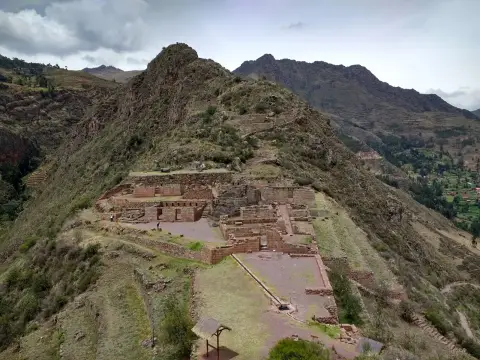
Pisac Inca Ruins
A ridge-top Inca complex above Pisac, known for its curving terraces, a ceremonial sector and tombs in the cliffs opposite.
-
 Attraction
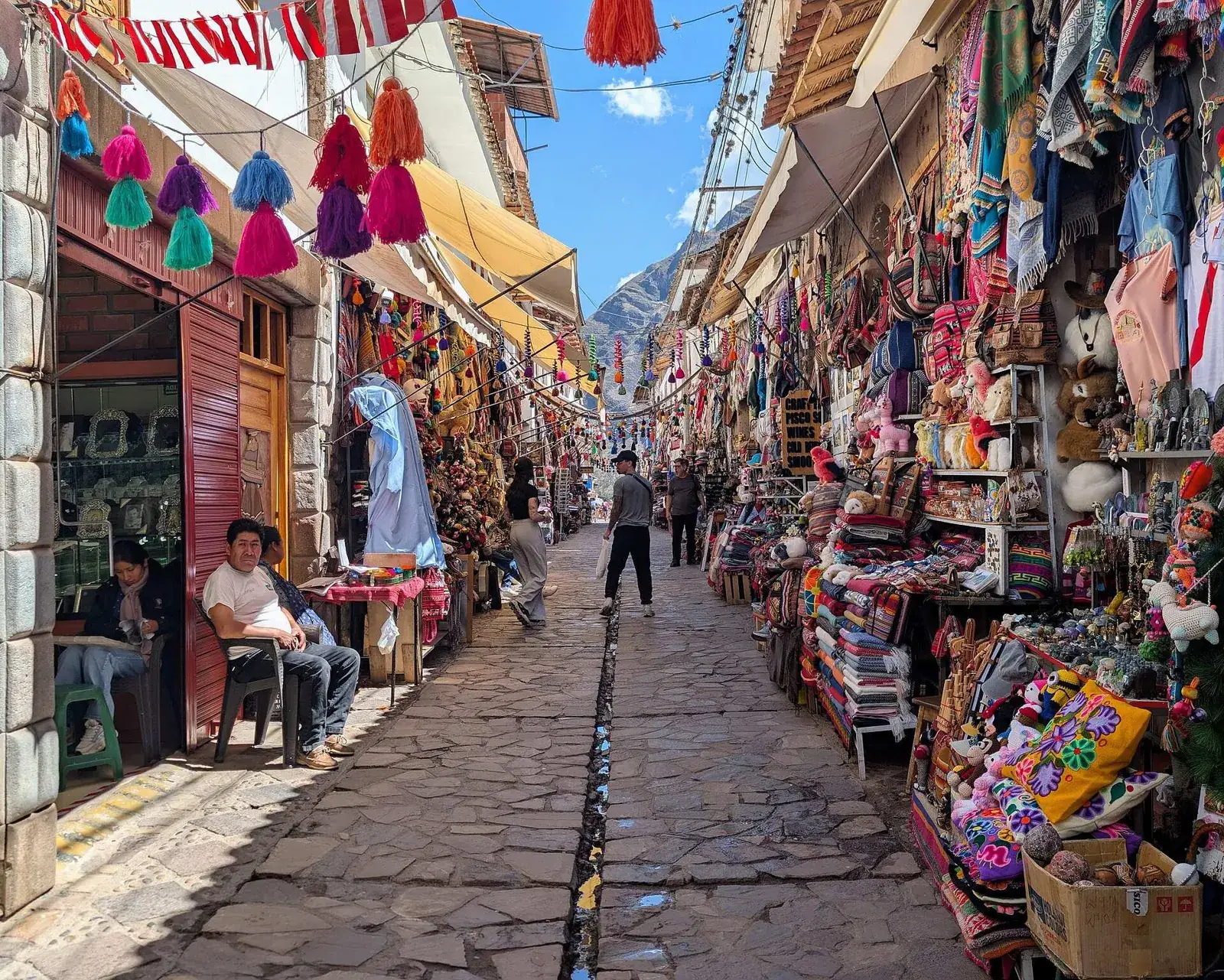
Pisac Market
The Sacred Valley's best-known craft and produce market, busiest on Sunday, in the town below the Inca citadel.
Two Pisacs
There is the village at the valley floor, and there is the ruined Inca citadel high above it, and a visit usually includes both. The village is a compact square with a church, a bakery famous for its clay-oven bread, small cafes and a daily craft market that grows on certain days. The citadel is a mountainside complex of terraces, water channels, a ceremonial area and, on the cliffs above, rows of burial niches.
The two parts are a short drive apart. Walking from the village to the ruins is possible but steep and long, and most visitors take a taxi up and walk down, or the other way round. At about 2,900 m the village is lower than Cusco, but the climb to the ruins still feels strenuous if you have just arrived. Pisac is the first town of the Sacred Valley coming from Cusco, and it sets the tone for the rest of the valley.
The market
The craft market sells textiles, jewellery, ceramics, carvings and souvenirs, and it is one of the most popular in the region. It is busiest on certain days of the week, when people from the surrounding villages come to trade in a more traditional way, and this is when the atmosphere is liveliest. Prices are negotiable, but be polite and do not push for a price that leaves the seller with nothing. Compare quality between stalls, and ask whether items are handmade or machine made.
The market also draws tour groups, so mid-morning can be crowded. Arrive early or late for a calmer visit. See souvenirs in Peru to understand what to buy and what to avoid, including how to recognise real alpaca. Keep small notes handy, since many sellers cannot change large bills.
Tours and activities
Bookable online, chosen for their traveller reviews.
-
★ Top rated From €23 per person
-
★ Top rated From €22 per person
-
★ Top rated From €23 per person
-
★ Top rated From €17 per person
The ruins
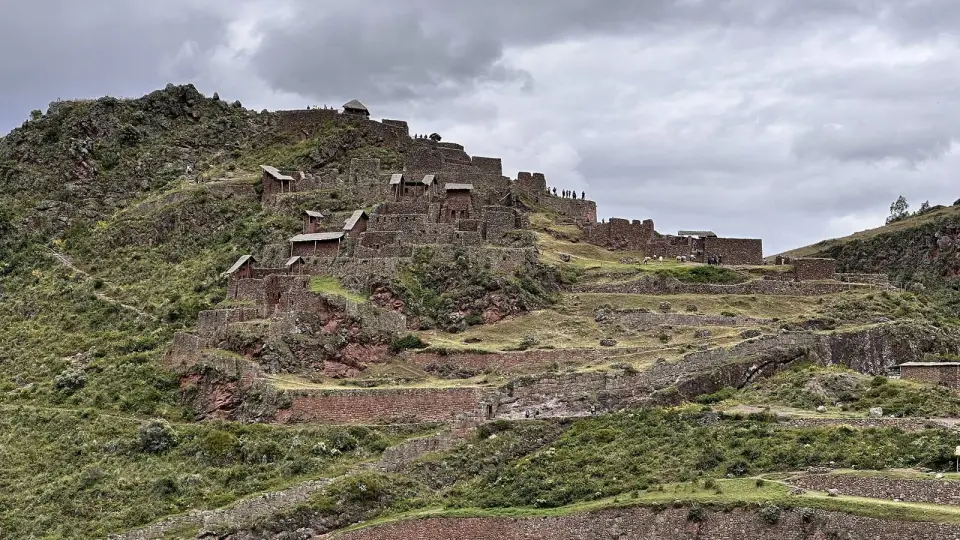
The citadel is spread across a ridge with long views over the valley. Its terraces step down the slope in curved lines, and a path winds through gateways and tunnel-like passages cut into the rock. Allow a couple of hours and bring water, a hat and sun protection, since there is little shade. The site is covered by the regional tourist ticket.
Paths are uneven and sometimes exposed, so wear shoes with grip and take care near edges, especially in wet weather. A guide can explain the function of the different sectors. See Sacred Valley tours to understand what guided days include. Start early if you plan to walk back down to the village. Because the paths are uneven and there is little shade, a calm pace and plenty of water make the visit far more comfortable.
Fitting Pisac into your trip
Pisac works best as the first stop of a full valley day: market in the morning, ruins before lunch, then on to Urubamba or Ollantaytambo. If you are staying in the valley, a night here is calm, and the village has a selection of small guesthouses. Many travellers prefer to stay in Urubamba or Ollantaytambo and visit Pisac in daylight.
A common plan is to visit Pisac and then the salt pans of Maras and the terraces of Moray the same day, but that is a lot of driving and walking. If time is tight, choose Pisac plus one other stop and give each enough time. See where to stay in the Sacred Valley for the pros and cons of each town.
Getting here and when to go
Pisac is roughly an hour from Cusco by road, with frequent shared transport; see Cusco to the Sacred Valley to compare the options. The dry season, roughly May to September, gives the clearest views. The rainy months, roughly November to March, can make the paths slippery. The altitude is lower than Cusco but you will still feel the effort on the steep paths if you have just arrived.
Take layers, because mornings are cold and the sun is strong by midday. For a first-time visitor, an early start from Cusco avoids the crowds and the midday heat, and leaves time for lunch in the village before the drive onward.
Food and the bakery
The village is known for its clay-oven bread, baked in large traditional ovens, and for the empanadas sold by the loaf or by the piece. These are a cheap and pleasant snack, and a good reason to arrive hungry. Cafes around the square serve coffee, juices and light meals, and several restaurants cater to groups on tours.
Lunch is the main meal, and kitchens close early in the afternoon. For a slower, more local meal, walk a couple of streets away from the square, where menus are shorter and prices lower. Vegetarians can usually find simple dishes, though traditional cooking leans on meat. For the regional dishes you may see on the menu, see food in Cusco.
Pisac or somewhere else
If you have only one day in the valley, many travellers choose Ollantaytambo over Pisac for its better-preserved town and fortress. If markets and views appeal more, Pisac is the better pick. A two-day visit can include both, with a night in between.
Think also about whether you need a Sacred Valley base at all. The comparison of the Sacred Valley and Cusco as a base helps you decide. See altitude sickness to understand why a night in the valley can ease the first days in the Andes.
Map
Where to sleep
-
Pisac
Market days, ruins and an easy half-day from Cusco
A market town with a citadel above it and small hotels around the main square. It is the easiest first stop in the valley and a good base for crafts and for walking among the terraces.
Keep in mind: Market days bring day trippers, evenings are quiet, and it is the farthest town from the Machu Picchu trains.
Find hotels →
Weather in Pisac
Forecast: MET Norway
Frequently asked questions
Is Pisac worth visiting if I have limited time?
Yes if you enjoy markets and Inca terraces. If you only have a day in the valley, you might prioritise Ollantaytambo.
Which day is best for the market?
The larger market days are in the middle and at the weekend, but days and hours can change, so ask locally before planning around one.
Can I walk up to the ruins?
Yes, but it is a long, steep climb. Most people take a taxi up and walk back down.
How long do I need in Pisac?
Half a day covers the market and a quick look at the ruins, and a full day allows a slower visit with lunch. Add a night only if you want a quiet base.
Can I get from Pisac to Ollantaytambo?
Yes, by shared taxi, bus or private car, with a change in Urubamba on public routes. The journey takes some time, so allow flexibility in your plan.
Is Pisac good for buying souvenirs?
It is one of the best places in the valley for crafts, but prices are not always lower than in Cusco. Compare stalls, bargain politely and check quality.
Is the Pisac ruin tiring?
The paths are uneven and at altitude, so it is moderate effort for most people. Take your time and bring water, and avoid doing it on your first morning in the Andes.
Do I need a guide for the ruins?
It is not compulsory, but a guide adds context that signs rarely provide. Choose one carefully and agree the price in advance.