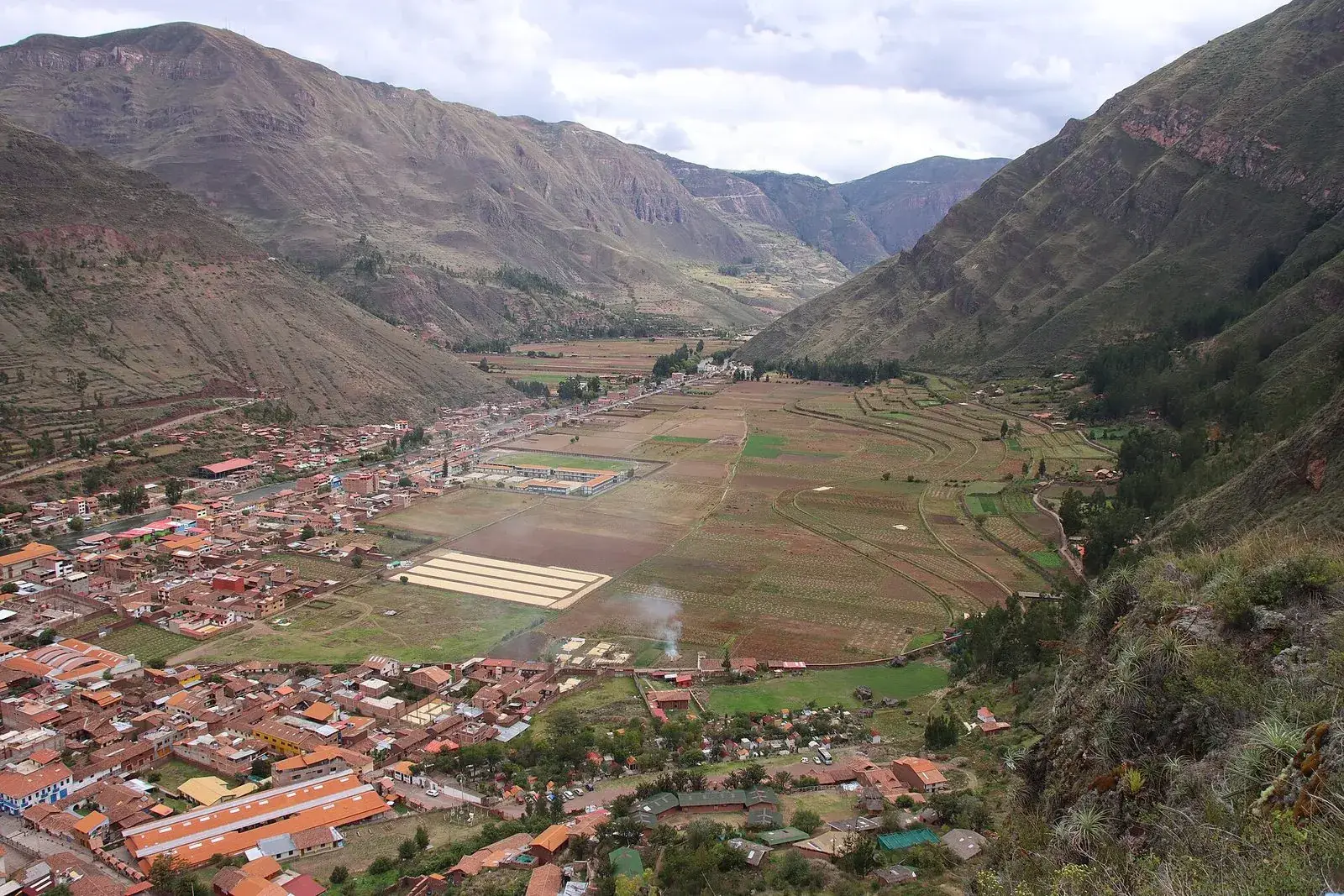
Sleep in the Sacred Valley first if you arrive from the coast, are sensitive to altitude, or want a quiet start before Machu Picchu. Base yourself in Cusco if you want restaurants, nightlife, easy tour pickups and the widest choice of hotels. For a stay of five nights or more, splitting the time is usually the best answer.
The criteria
Altitude: Cusco is at about 3,400 m. The valley floor towns such as Urubamba and Ollantaytambo are roughly 500 to 600 m lower, which is enough to make the first nights noticeably easier for many people.
Time: the valley is not next door to the city. Getting between Cusco and the valley's main towns takes anything from about an hour to a couple of hours by road depending on the town and the traffic, so every change of base costs part of a day.
Effort: Cusco's streets are steep and the air is thin. The valley is flatter, greener and more relaxed, but you will usually need a car or a driver to get around between villages.
Cost level: the range in both places runs from simple hostels to luxury lodges. Cusco has more budget options, while the best-known valley lodges are at the upper end.
Crowds: Cusco is busy in high season, particularly around the central streets. The valley is quieter in the evenings, though the main sites and markets still fill up with day-trippers.
Season: in the rainy months, both are affected by occasional road or rail disruption, and the valley is greener but muddier. The dry season is the busiest period in both places.
Risk: altitude is the main one, and it is lower in the valley. Night-time safety is the concern in Cusco after dark, as in any busy city, so take the usual precautions.
How the two bases feel
Cusco is a city of cobbled lanes, markets, museums and a busy restaurant scene, with the Inca and colonial layers close together. You can do a great deal on foot, and almost every operator has a presence there. It is the better base if you want choice, evening life and flexibility. See Cusco accommodation for the main neighbourhoods.
The Sacred Valley is a string of small towns, farms and terraced hillsides. Ollantaytambo is the practical choice for the Machu Picchu train because it is a stop on the route, and many travellers like it for its Inca streets and its fortress above the village. Other towns suit those who want space, views and a slower pace, often with a hotel as the main reason to stay. See valley accommodation for how the towns differ.
Getting between the two
The road from Cusco into the valley is well used, and the choice of vehicle matters less than the time of day. Shared transport, taxis and private transfers all make the run, and the pass above the valley can slow traffic when roads are busy or when work is under way. See Cusco to Sacred Valley route for the main options and what to check.
Because the valley sits on the way to the train, many itineraries run Cusco, then valley, then Machu Picchu, then back to Cusco for the flight out. That pattern means you pass through both bases anyway, and the real decision is how many nights to give each. If you leave Cusco on a morning train, you will probably be glad of a valley night beforehand rather than a pre-dawn transfer.
Day trips and tours from each base
Cusco is the better launch point for the big mountain days: the pickups for Rainbow Mountain and Humantay, the Salkantay trek and most multi-day treks begin in the city, often well before dawn. If you are sleeping in the valley, you will have to travel to the city to join some of these, or arrange a pickup in advance with the operator.
The valley is stronger for the sites that sit along it: Pisac and its market, the terraces at Moray, the salt pans at Maras and the fortress at Ollantaytambo. These can be reached from Cusco on a full-day tour, but you spend a large part of the day in a vehicle. Staying in the valley gives you the sites at their quietest, early and late. See Sacred Valley tours to understand how these outings are usually organised.
Eating, evenings and daily comfort
Cusco is the clear winner for evenings. There are many restaurants at every price, bars, live music and late-opening cafés, and a wider range of foods for people with dietary needs. The streets are lit and busy until late, though the usual precautions apply.
Valley towns are quieter after dark. Many travellers eat at their hotel or a few restaurants nearby, and some places close early outside peak season. That suits people looking for sleep and views, but can feel limiting after three or four nights. Services such as cash machines, pharmacies and laundry are more limited outside Cusco, so sort out money and supplies before heading down.
Weather matters too: nights are cold in both, but valley days are usually warmer and sunnier than in the city.
Verdict by traveller type
Short trip, three nights or fewer: pick one base. Cusco if you want the city; Ollantaytambo if you mainly want Machu Picchu and ease.
Arriving by air from Lima: consider heading straight to the valley, then returning to Cusco later in the trip once you have adapted.
Families and older travellers: the valley is usually the more comfortable first stop, with Cusco added once everyone has adapted.
Budget travellers and nightlife lovers: Cusco, which has the widest range of low-cost places to stay and eat.
Hikers heading for Rainbow Mountain, Humantay or the Salkantay trek: Cusco is more practical, since most pickups start there, but give yourself a couple of nights at altitude before the big days.
The answer changes if you are taking an early train, in which case a night in Ollantaytambo can save a stressful departure from Cusco. For more on the rail options, see Machu Picchu trains.
Frequently asked questions
Is it worth changing hotels between Cusco and the valley?
For a stay of five nights or more, usually yes. On a shorter trip the time lost moving between bases often outweighs the gain.
Which base is better for Machu Picchu?
The valley, specifically Ollantaytambo, is closer to the train departure points. Cusco is workable but means a longer transfer on the day.
Should I sleep in the valley on my first night in Peru?
For many people arriving from sea level, yes. A night or two at roughly 2,800 m is a gentler step than landing at 3,400 m in Cusco, though individual reactions vary. Read altitude sickness first.
Which valley town is best to stay in?
Ollantaytambo suits train connections and walkable streets; Urubamba suits a quiet, central base with more services. Pisac is better for its market and a slower pace. See Sacred Valley to compare them.
Can I do Machu Picchu as a day trip from Cusco?
It is possible with an early start and a late return, but it makes for a very long day. A night in the valley or in Aguas Calientes is more comfortable and usually safer against delays.
Is the Sacred Valley cheaper than Cusco?
Not necessarily. Cusco has more budget hostels, while valley lodges are often aimed at higher budgets. Compare specific listings for your dates.
Do I need a car in the valley?
A car or driver makes it easier to reach sites between towns, but shared transport and taxis cover the main routes. If you stay in one town and do day trips on a tour, you may not need one.