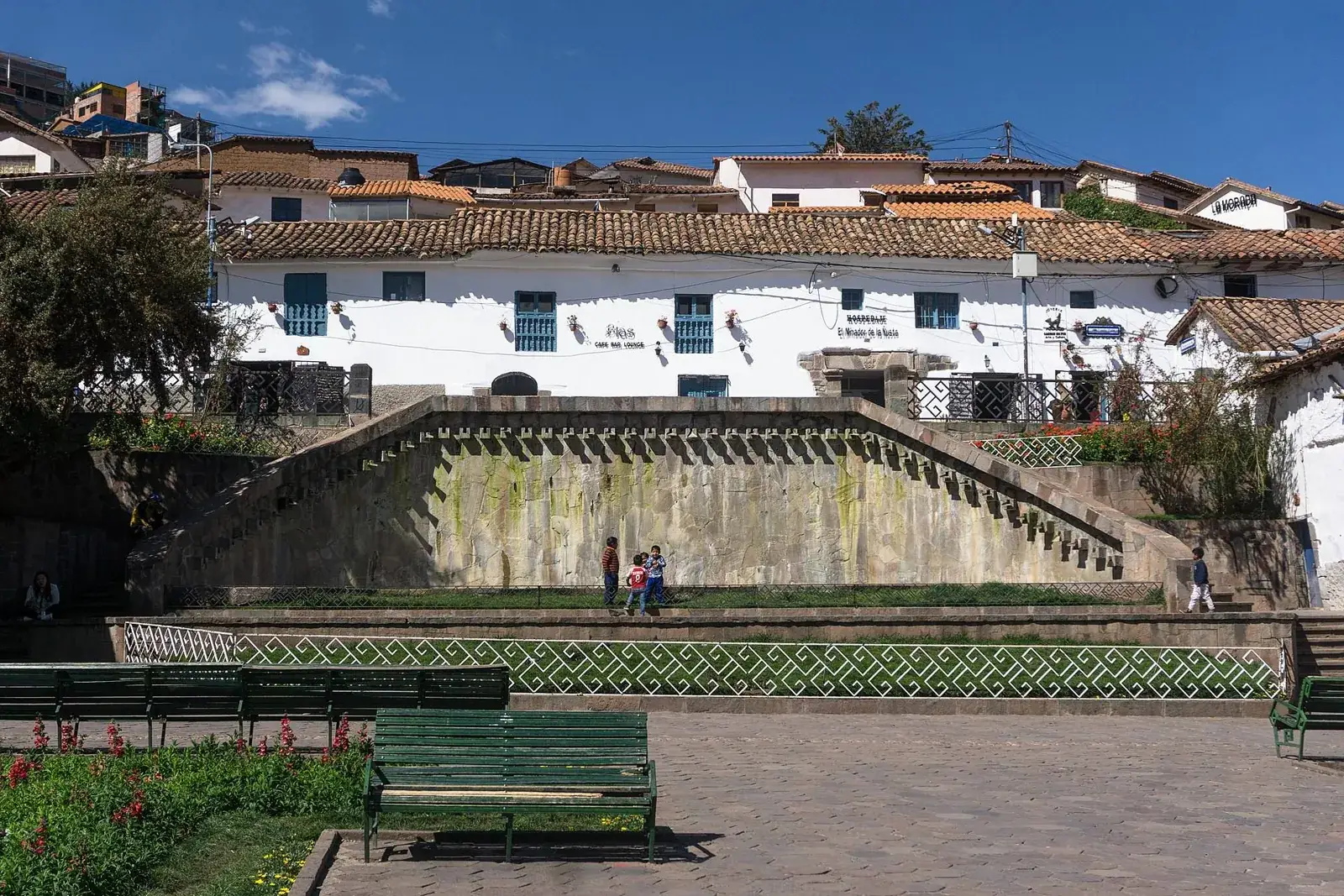
Most visitors do best in or just below San Blas, or on the streets around the Plaza de Armas. San Blas has the charm and the views but also steep climbs; the Plaza area is flat and convenient but louder. Whichever you choose, ask about heating, oxygen support and how many stairs lead to the room, because the altitude makes all three matter.
If you are sensitive to altitude, sleeping in the lower Sacred Valley for the first nights is a real alternative.
The layout of the centre
Cusco's historic centre is compact and sits in a bowl, with the Plaza de Armas at the bottom and neighbourhoods climbing the hillsides on every side. The practical result is that distances look short on a map but feel long on foot, because many streets are steep and the air is thin. When you compare areas, think in terms of gradient as much as distance.
Almost everything visitors want is within a short walk of the plaza: the cathedral, the Qorikancha, restaurants, tour offices and the San Pedro market. The sights on the hills above the city, such as Sacsayhuamán, are reached by taxi or a steep climb. For the wider picture of how the city works as a base, see Cusco.
Because the centre is so small, the real decision is rarely about distance to the sights. It is about noise, gradient, warmth and how you feel arriving with a suitcase at the end of a long travel day.
San Blas: views and climbs
San Blas is the artisans' quarter, a tangle of narrow lanes above the plaza with small workshops, cafés and some of the best views of the red-tiled roofs. Many travellers fall for it first, and it has a more village-like feel than the streets below.
The price is the hill. Reaching a guesthouse high in San Blas with luggage, on your first day at altitude, is hard work, and stone steps are slippery when wet. Ask whether a taxi can reach the door. Lower San Blas, near the small square, gives you the atmosphere with a much easier walk home.
The district is also quieter late at night than the streets around the plaza, which helps if you are a light sleeper, although some cafés and bars along the main lanes stay lively into the evening. A room facing the street can pick up noise, so ask for one at the back or on an upper floor.
Around the Plaza de Armas and Santa Ana
The streets around the plaza are the most convenient: flat, close to restaurants, close to the main bus and train connections by taxi, and easy to navigate after dark. The downside is noise from bars and street sellers, so request an interior room or one on an upper floor facing a courtyard.
Towards the Santa Ana area and the San Pedro market the pace is more local, with cheaper food and cheaper rooms, though the streets are busier and need more care with belongings, particularly around the market and the station area. It suits travellers on a budget who do not mind a plainer setting.
Whichever of these you choose, walk the route from the hotel to the plaza in daylight before you go out at night, and note which streets are well lit. For general advice on keeping valuables secure, see safety.
Types of places to sleep
Cusco has a wide spread of lodging, from converted colonial houses with courtyards to modern hotels, small family guesthouses and hostels with dormitories. Colonial houses are atmospheric but can be cold, with thick stone walls and high ceilings that hold the night chill. Modern buildings are often warmer and easier to heat.
Hostels suit solo travellers and anyone who wants to meet others, and many organise group excursions, though their rooms can be noisy. Guesthouses run by families are often the most welcoming and the best value, and the host usually knows the most helpful tricks for coping with altitude in the first days.
Read recent reviews for comments on heating, hot water and noise, since these are the points that vary most between places that look similar in photos. Do not rely on a single review: look for patterns across several months.
Arriving and settling in
From the airport the ride to the centre is short, but your first hour at altitude can feel harder than the distance suggests. Arrange a pick-up through your hotel if you can, and read the notes on Cusco airport so you know what to expect at arrivals. Ask the hotel to hold your luggage if your room is not ready, since flights from Lima often land early in the day.
On the first afternoon, rest, drink water or coca tea, and eat something light. Short walks in the flat centre are fine. Save the hills, the big meals and any alcohol for the second day. Sleeping at 3,400 m gives a frank account of what the first nights are like for many people, and altitude sickness explains the symptoms that are worth taking seriously.
An alternative: sleep lower first
If altitude worries you, consider spending your first nights in the Sacred Valley, which lies roughly 500 to 600 m lower, and visiting Cusco afterwards. This ordering suits travellers heading straight to Machu Picchu, since the trains and roads leave from the valley side. Where to stay in the Sacred Valley covers the towns and styles on offer, and the comparison of the valley or Cusco as a base weighs the trade-offs.
Staying in the valley means less choice of restaurants and a longer ride for city sights, but quieter nights and cooler air at a gentler height. Many travellers split their time: two nights in the valley, then two or three in Cusco before any high trek, with the tours from Cusco booked after they have settled.
Practical checks before booking
Cold nights are the rule, so look for heating that is described as such rather than assumed, and for a hot-water supply that does not run out. Check whether a pick-up from the airport is offered, since the transfer is short but the first arrival can be tiring. If you plan an early start for the train to Machu Picchu or a trek, ask whether breakfast is available before dawn or whether a packed one can be prepared.
Book ahead for June, around the Inti Raymi festival, and for the high-season months of July and August, when the better-located rooms sell out first. If your plans may change, choose a rate with free cancellation, since flights and strikes can disrupt arrivals. Ask about luggage storage, too: many travellers leave bags behind while trekking or visiting Machu Picchu and return to the same hotel afterwards.
Where to sleep
-
Plaza de Armas and historic centre
Everything on foot, at the price of noise and crowds
Everything is on foot: the main square, the cathedral, Qorikancha, restaurants, tour offices and shops. It is the easiest choice for short stays and for the first nights, when walking uphill is tiring.
Keep in mind: Expect tourist prices, street noise and late bars near the square. Ask for a room facing the inner courtyard.
Find hotels → -
San Blas
Artisans' quarter with steep lanes and views, a short walk uphill
The artisans' quarter: steep cobbled lanes, small boutique hotels, workshops and cafés with views over the red-tiled roofs. The Plaza is a short walk downhill. A good fit for couples and for anyone who likes character.
Keep in mind: The way back is uphill and steep, which is hard on the first days at altitude, and some lanes are too narrow for cars.
Find hotels → -
All of Cusco
Compare every area and price level in one search
Not sure yet? Search the whole city and filter by price, rating and distance from the centre.
Keep in mind: Prices change a lot from one area to the next, so check on the map where each hotel is.
Find hotels →
Hotels on the map, with prices
Frequently asked questions
Is it better to stay in San Blas or near the Plaza de Armas?
San Blas is more atmospheric and quieter at night, but steep. The Plaza area is flatter and more convenient. For a first night at altitude, a flatter location is easier.
Do I need a hotel with oxygen?
It is not essential for most healthy visitors, but it can help if you sleep badly at height. Ask exactly what is offered, and speak to a doctor if you have a medical condition.
Can I book hotels in Cusco on arrival?
In the low season it is often possible, but in June to August and around major festivals the better rooms sell out, so book ahead.
How many nights should I book in Cusco?
Two to three nights cover the city, and a total of four to six is more realistic if you add Machu Picchu and a recovery day. Hotels often let you store bags while you are away on a trek.
Is it safe to walk back to my hotel at night?
Busy streets around the plaza and lower San Blas are usually fine in the evening, but avoid empty lanes and steep unlit steps. Take a registered taxi if you are tired or have been drinking, since altitude amplifies alcohol.
What area is best for a budget traveller?
The streets towards Santa Ana and the market area usually offer lower prices, as do hostels near the centre. Check the location after dark and whether the room has heating before you pay.
Does my room need a lift?
A lift or ground-floor room is a real advantage on arrival and for people with heart or lung conditions, since stairs at 3,400 m are tiring. Ask before booking, because many colonial buildings have only stairs.