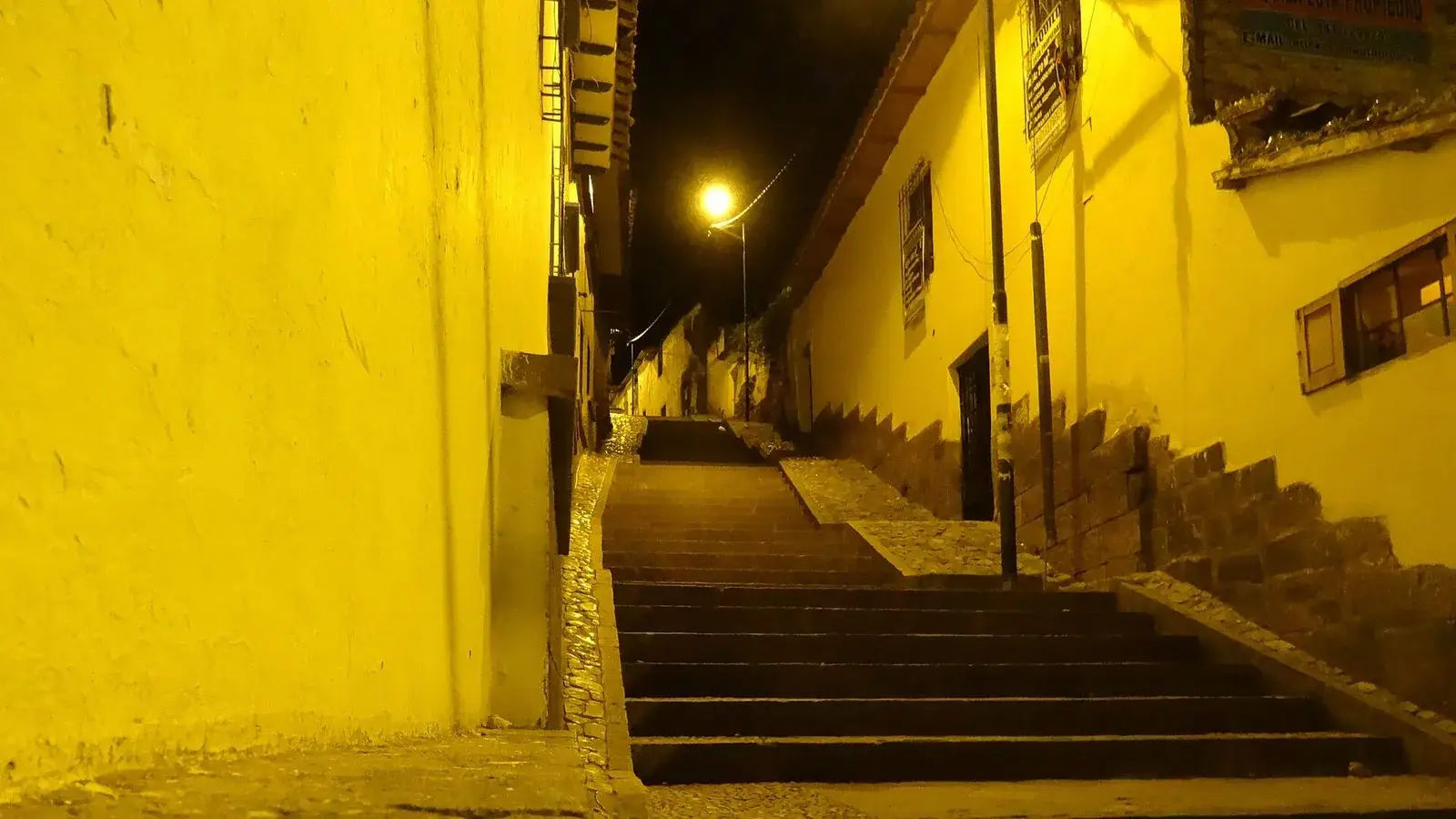
At the altitude of Cusco, around 3,400 m, many people sleep lightly for the first nights, wake often, have vivid dreams or feel breathless when lying down. It is common and usually eases within a few days. Light meals, no alcohol, plenty of water and a slow first day help.
This is general information, not medical advice. Anyone with a health condition should ask a doctor before travelling.
What the air is like
At about 3,400 m the air contains noticeably less oxygen per breath than at sea level. The body responds by breathing faster and, over days, by changing how it carries oxygen. During sleep, breathing slows and can become uneven, which is one reason sleep is disturbed in the first nights. A pattern of breathing with pauses followed by deeper breaths is common at altitude and can feel alarming if you wake in the middle of it.
Dry air, cold nights and unfamiliar noises add to the effect. Many hotels in Cusco have heating limited to a portable heater or a hot-water bottle, because buildings were not designed for it, and nights can be cold throughout the year. Cusco hotels explains what to ask for when booking.
What people commonly notice
The usual list is short: light sleep, waking up several times, a dry mouth and nose, a mild headache in the morning, vivid dreams, a feeling of needing to take a deep breath and a faster heartbeat than normal when moving around. These often peak on the first or second night and ease over the following days. They do not mean you are unfit; fitness has little to do with who is affected.
Some people feel nothing at all, and the difference between individuals is large and not very predictable. Previous experience at altitude is not a guarantee either way. Altitude sickness explains the difference between this ordinary discomfort and the symptoms that need attention.
A typical first night, step by step
A common pattern runs like this. You arrive in the afternoon, feel a little light-headed, eat a small dinner and go to bed early. You fall asleep within the usual time, then wake after two or three hours with a dry mouth and a sense that you have not quite caught your breath. You drink some water, sit up for a minute, and drift off again. The rest of the night is broken into short stretches.
In the morning you may feel tired but not ill. The second night is often similar, and by the third or fourth most people sleep much better. This is a general picture, not a promise: some people sleep soundly on the first night and others find the whole stay difficult. If symptoms are getting worse instead of better, treat that as a reason to seek advice.
Habits that tend to help
Keep the first day slow, with short walks and long breaks. Drink water through the day and eat lighter meals, particularly in the evening. Skip alcohol, which depresses breathing and worsens sleep, for the first nights. Sleep with the head slightly raised if that is more comfortable, keep the room warm but ventilated, and give yourself time to wake and rest in the morning.
Coca tea is widely offered in Cusco hotels and many visitors drink it, though it has no guarantee to prevent altitude symptoms, and it is not suitable for everyone. Ask a pharmacist or doctor about any medicine for altitude before using it. Avoid sleeping pills and heavy sedatives unless a doctor has advised otherwise, because they can slow breathing.
Plan the itinerary around sleep
The easiest way to make the first nights better is to choose where you sleep. Many travellers go first to the Sacred Valley, which lies lower, and come to Cusco after two nights. Others take a day or two in Arequipa on the way. Avoid booking a very early start, such as a hike or the Machu Picchu train, the morning after your first night at height.
If you are on a trek schedule, add a day. Fatigue from poor sleep adds up, and a hard day on little sleep is the situation most likely to go wrong. The 7-day itinerary and the Sacred Valley show how to use the valley as the first stage, and acclimatisation explains the same logic for treks.
Choosing a hotel room for the altitude
A few small choices make the nights easier. A room on a lower floor avoids stairs, which matter more than usual in the first days. A quiet room away from the street helps with light sleep, since the narrow colonial streets carry noise. A room with a working heater, extra blankets or a hot-water bottle makes the cold less of a factor. If a hotel offers oxygen on request, ask how it is supplied and who handles it.
Do not rely on one factor. A quiet, warm room does not remove the effect of altitude, but it removes other causes of poor sleep, which makes it easier to tell what is the altitude and what is the room. Cusco hotels lists the main areas and what each is like at night.
When to ask for help
Most of what is described here is uncomfortable but not dangerous. The line is crossed when symptoms get worse instead of better, when they appear at rest, or when they include confusion, difficulty walking, a persistent wet cough, severe headache that does not respond to simple measures, or vomiting. In those cases, tell your hotel and a doctor, and plan to descend.
Hotels in Cusco are used to guests with altitude problems and can often call a doctor or arrange a transfer. Do not wait for a trek or a tour to begin before deciding; it is far easier to rest early than to leave a group on a high trail. Travel insurance that covers altitude and medical transport is worth checking before the trip.
Frequently asked questions
Is it normal to wake up gasping at night?
Waking with a feeling of breathlessness is a known effect of breathing changes at altitude. If it is frequent, severe or comes with other symptoms, seek medical advice.
Should I sleep somewhere lower?
It is a common and sensible strategy. The Sacred Valley is lower than Cusco, and sleeping there first is popular.
Do hotels have oxygen?
Some do, and some offer it on request. Ask your hotel when booking. It can relieve discomfort but is not a substitute for medical advice.
How many nights does it take to sleep normally again?
Many people sleep better after three or four nights, but this varies. If sleep does not improve or symptoms worsen, ask a doctor.
Does age or fitness change how I sleep at altitude?
Fitness does not reliably protect you, and young and old travellers are both affected. Previous altitude experience helps only a little, so plan the same way whoever you are.
Is it better to arrive in Cusco in the morning or the evening?
A morning arrival gives you the day to adjust before the first night, while an evening arrival means a long night straight away. Either works if the first day is kept light.
Can I take medication to sleep better at altitude?
Ask a doctor first. Some sleeping medicines can slow breathing, which is a concern at height, and some altitude medicines have side effects and are not suitable for everyone.