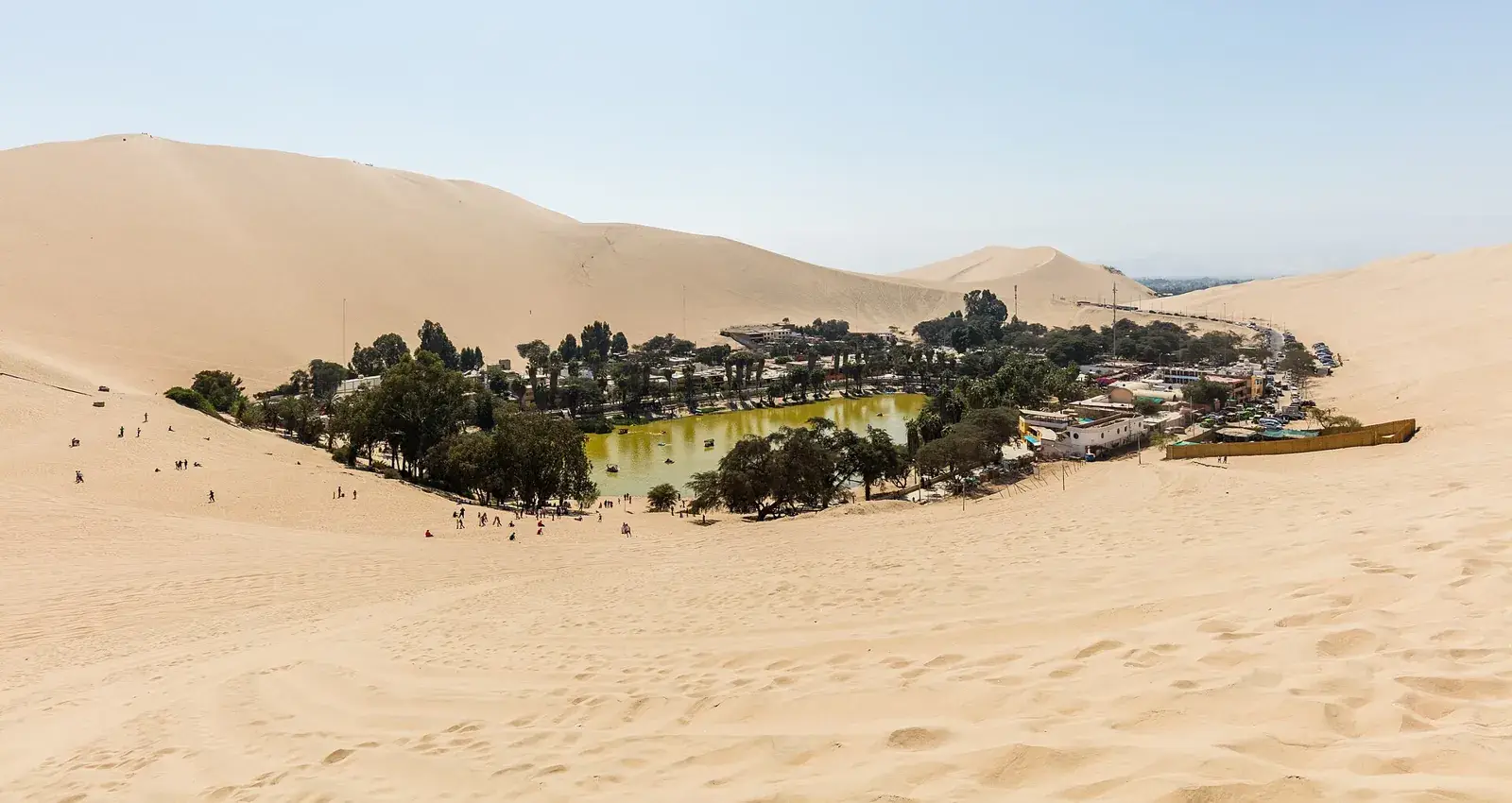
Huacachina deserves one night, or a long afternoon if you are passing through. Ica itself is a working city with little for tourists beyond its wineries and a museum, so most visitors stay at the oasis. Add a visit to a pisco producer if you are interested in how the national spirit is made.
In this section
-
 Destination guide
Where to Stay in Huacachina
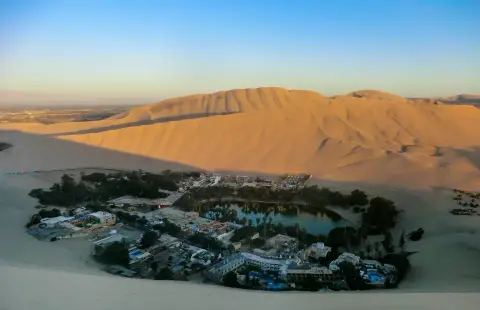
Huacachina is a tiny desert oasis ringed by dunes, and the choice is between its party-leaning lagoon and the calmer city of Ica.
-
 Attraction
Huacachina Oasis and Lagoon
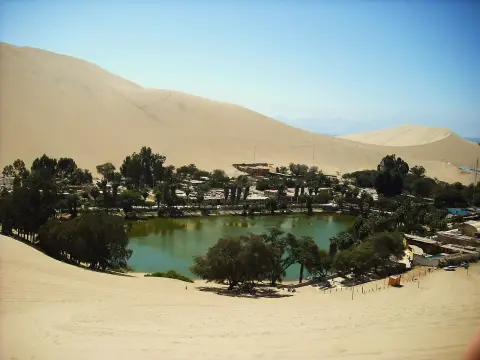
A small natural lagoon with palms and a promenade, in a bowl of huge sand dunes a few kilometres from Ica.
-
 Attraction
Ica Regional Museum
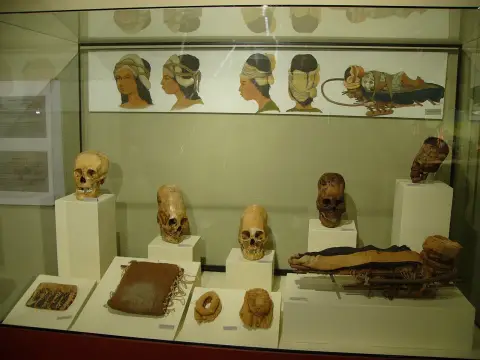
A regional archaeology museum in Ica with Paracas and Nasca collections, mummies and a model of the Nazca Lines.
-
 Attraction
Sanctuary of the Lord of Luren
The pilgrimage church of Ica's patron crucifix, the Señor de Luren, whose October procession is the biggest religious event of the region.
The oasis and the city
Huacachina is a small lagoon with palm trees and a ring of cafes, hostels and hotels, set in a bowl of very tall dunes. It looks like a postcard and knows it: the village is entirely about tourism, with a lively backpacker side and a few quieter places. Ica, a short drive away, is the commercial centre of a green valley in the middle of desert, where irrigation supports grapes, asparagus and other crops.
You do not need to see Ica itself. If you want a regional museum or a market, a taxi from the oasis makes it an easy half-day. Where to stay near Huacachina explains why most travellers choose the oasis over the city, and when the city is the more practical base.
Dune buggies and sandboarding
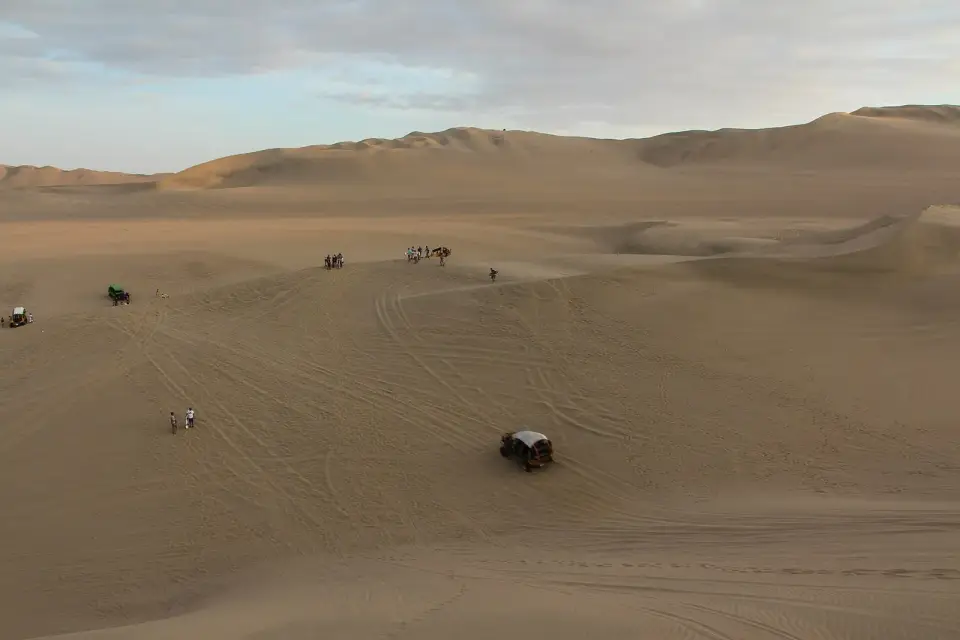
The signature activity is a ride in a dune buggy, a large open vehicle that surges over the dunes and stops at the top of slopes for sandboarding, usually lying down on a board. It is a thrilling, bumpy ride and at sunset it is very popular. Choose an operator with working seatbelts and roll bars, and do not pressure the driver for stunts. Wear closed shoes, sunglasses and a scarf, because the sand gets into everything.
If you prefer a quieter option, you can climb the dunes on foot and watch the sunset from the ridge, though the walk is tiring in soft sand. Start early enough to be back before dark, carry water and leave valuables at the hotel, since cameras and phones suffer in the sand. Is Huacachina worth it helps you decide whether the buggy ride is for you.
Tours and activities
Bookable online, chosen for their traveller reviews.
-
From €26 per person
-
Day trip From €35 per person
-
Day trip From €40 per person
-
Day trip From €148 per person
Pisco and wine
The Ica valley has long made wine and pisco, a grape spirit that Peru considers a national drink. Several producers around the town open to visitors, showing the presses, stills and barrels, and offer tastings. Some are small family bodegas and some are large industrial plants, so check which type you are visiting. If you drive afterwards, remember that pisco is strong.
The main styles of pisco and how the classic sour is made are worth knowing. Most tastings take an hour or so, and many are bundled into half-day tours with a dune ride, which is convenient but leaves little time for either. If pisco interests you, give the tasting its own slot rather than squeezing it in before a buggy ride.
How long, and how it fits with Paracas and Nazca
One night at the oasis is plenty. A common route is Lima, then Paracas for the islands, then Huacachina, then Nazca for the lines, then on to Arequipa by night bus or flight. That route can be done in three or four days, but it involves a lot of road time, and a sensible alternative is to choose just two stops. The comparison of Paracas and Huacachina can help you decide.
Whichever combination you choose, be realistic about transfers. Buses between these towns are frequent, but each leg takes hours and leaves you tired. Starting from Lima, Lima to Huacachina gives an idea of travel times, and Lima to Nazca covers the road further on.
Weather and what to expect
The area is dry and sunny nearly all year, and real rain is rare enough to be a talking point when it comes. Midday in summer, roughly December to March, can be hot enough to make buggy rides uncomfortable, while winter evenings are cooler. Wind can lift sand into the air in the afternoon, and tours may change schedules accordingly.
Mornings are often the best time for photographs, but buggies are most popular at sunset, so plan your time around the light. In winter, low cloud on the coast can flatten sunsets, and the dunes can feel cold once the sun drops. Carry a light jacket even in summer, because the temperature falls quickly after dark.
Staying the night
The oasis has everything from dormitories to comfortable hotels, and most of it is within walking distance of the lagoon. Noise can be an issue: some hostels have loud bars that run late, so ask about this when you book if you want a quiet night. Quieter hotels exist on the edge of the village or in Ica.
Because the main activity takes place in the late afternoon, many visitors arrive at midday, ride at sunset and leave the next morning. That timetable suits those on a tight route, and it is a reason not to stay longer unless you want to rest. The differences are explained in more detail in Huacachina accommodation.
Respecting the desert
The dunes and the lagoon are fragile. Leave no rubbish, avoid walking in marked restricted areas and do not drive buggies close to the water. The lagoon itself has had water-level problems in the past, and the village depends on managing it carefully.
Treat the desert as a landscape, not just a playground. Many visitors never see the dunes in the quiet hours after sunrise, when the sand is cool, the wind is low and the surface holds the crisp ripples that the day's traffic will soon erase. A short early walk, before the first buggies leave, shows a very different side of the place and costs nothing. Take a quiet moment on the ridge, away from the engines, to appreciate how remote the dunes feel once you leave the lagoon behind. Dress modestly in the village, and ask before photographing local people.
Map
Where to sleep
-
Find hotels
Huacachina
Lagoon among dunes, built for dune buggies and sandboarding
-
Find hotels
Ica
The city for more space and local life, a short ride from the oasis
Weather in Ica
Forecast: MET Norway
Frequently asked questions
Is Huacachina touristy?
Yes, it is purpose-built for visitors, with hostels, bars and tours. Quieter accommodation exists, but do not expect a remote village.
Are the buggy rides safe?
They carry real risks, like any off-road driving. Choose an operator with safety equipment and ask about the vehicle before you board.
Do I need to stay overnight?
One night is ideal because the buggies are best at sunset. You could also visit as a day trip from Paracas or on the way to Nazca.
How do I get to Huacachina from Lima?
Direct buses run from Lima to Ica, and a short taxi ride takes you to the oasis. The journey takes several hours. See Lima to Huacachina for options.
Can I swim in the lagoon?
It is generally discouraged. The water is not clean or deep, and the lagoon is mainly decorative. Most hotels have pools if you want to cool off.
Is sandboarding difficult?
No. Most people lie on a board and slide head-first or sit and ride. Standing is harder, and boards are often basic. Wear long sleeves and trousers to protect against sand burns.
Can I see the Nazca Lines from Huacachina?
Not directly. The lines are further south around Nazca, so you would continue by bus. See the Nazca for the options.
Is Huacachina good for families?
It can be, but the buggies are bumpy and suit older children better than toddlers. Check seatbelts and age limits with the operator, and keep an eye on sun and heat.