The Sanctuary of the Lord of Luren is the church in the city of Ica that houses the wooden crucifix venerated as the patron of the region. It is a place of living devotion rather than a sightseeing monument, so it suits travellers who want to see the everyday and festival side of Ica. Allow thirty to forty-five minutes, dress modestly, avoid Mass times unless you are attending, and try to be in Ica in October if you want to see the procession.
Map
What the sanctuary is
The Sanctuary of the Lord of Luren (Santuario del Señor de Luren) is the main place of worship for a wooden crucifix that the people of Ica regard as their protector. It stands in the city of Ica, not at the oasis, and it belongs to the working life of the town: families stop here on their way to market, people light candles for an illness or an exam, and on feast days the streets around it fill with pilgrims.
For a visitor it is a different kind of stop from the sights described on the Ica and Huacachina page. There are no ruins and no entrance spectacle. What the church offers is a look at how devotion is lived in the Peruvian south coast, which is usually missing from a quick trip to the dunes. If you only have a few hours in Ica, it is one of the few stops in the city that shows something of the place itself, and it takes little time.
History of the image and the church
The cult goes back to the 16th century. According to the usual account, the encomendero Nicolás de Ribera ordered a chapel built on his estate in the lower part of the Ica valley in 1556, to teach the Catholic faith to the Indigenous people who worked there. A small crucifix served first. Some years later, a life-size carved Christ was bought in Lima by a Franciscan friar and sent south, reaching Ica in 1570. The name Luren is generally explained as coming from the Quechua word for the lower part of the valley.
A popular legend adds drama: in one version the crate with the image was thrown overboard in a storm and washed ashore; in another a muleteer lost the mule that carried it and found it at the place where the church was later built. Treat the stories as tradition rather than record. The documented history includes a fire in 1918 that destroyed the old adobe-and-wood church and badly burned the image, which was then restored, and the 2007 earthquake, which damaged the sanctuary severely and led to a rebuilding to modern earthquake standards.
Tours and activities
Bookable online, chosen for their traveller reviews.
-
From €26 per person
-
Day trip From €35 per person
-
Day trip From €40 per person
-
Day trip From €148 per person
What you see on a visit
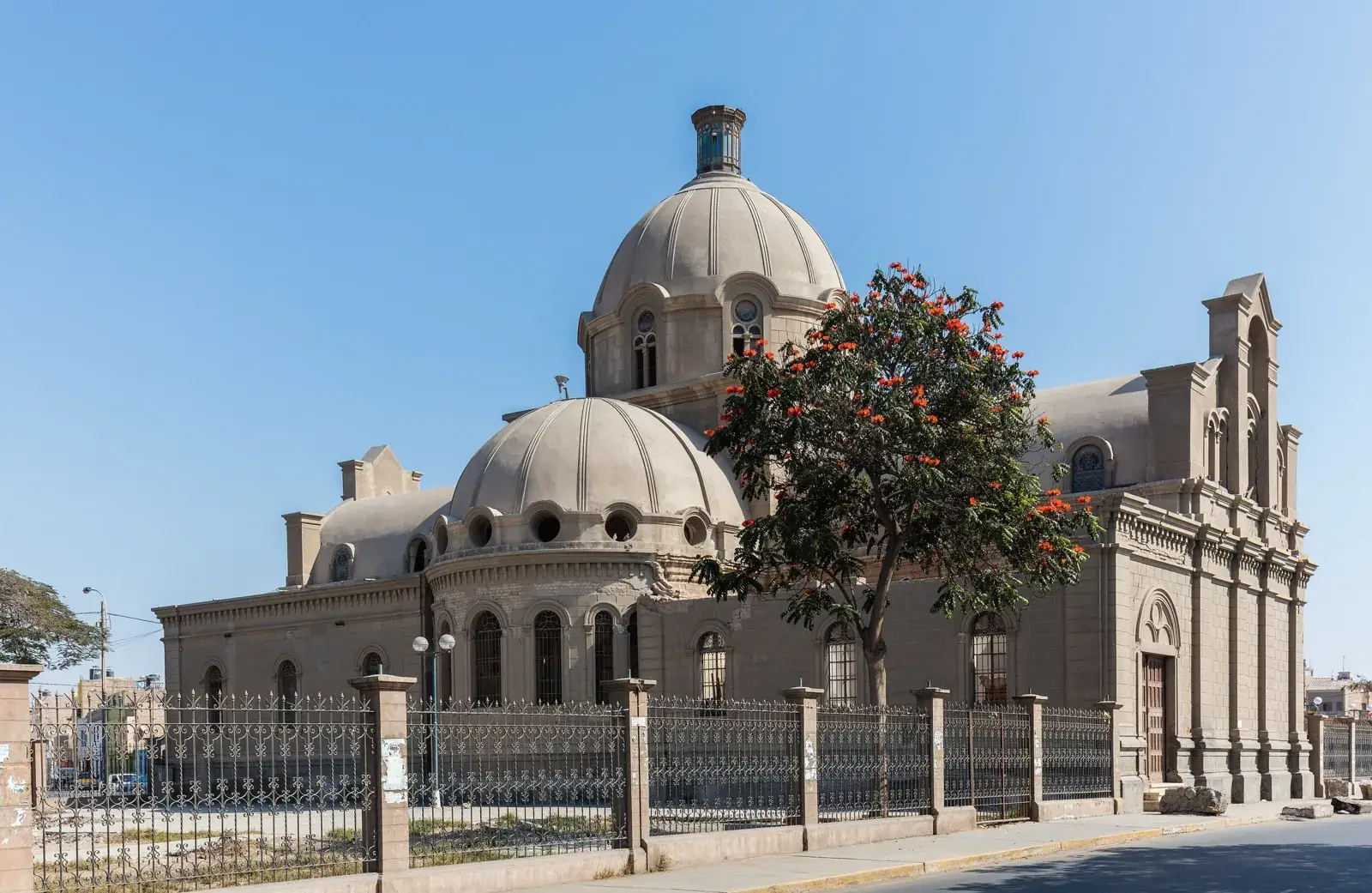
The present building is a rebuilt church, so expect a recent, solid structure with a bright interior rather than an old colonial one. The focus is the crucifix above the altar, the image people come to see, and the benches in front of it are rarely empty. Candles, flowers and printed prayers are sold around the entrance, and on a normal day you will see individuals and families sitting quietly or kneeling.
Look for the votive offerings and thanks left by devotees, and for the framed pictures of the procession, which show the scale of the festival better than any text. Whether a museum or side rooms are open to visitors, and whether the image can be viewed from close by, depends on the parish and on the day, so ask politely at the door rather than assuming. Photography inside is a matter of the church rules and of other people's privacy; check the signs and never use a flash.
The October procession
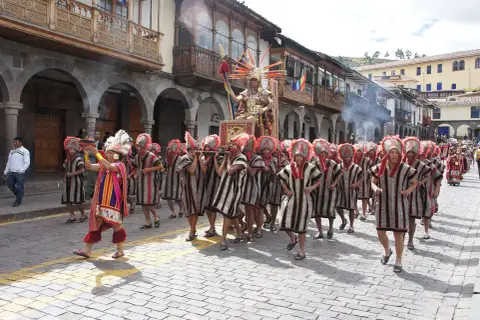
The great event of the year is the festival of the Lord of Luren in October, the biggest religious celebration in the Ica region. The image is taken down from the altar, carried out on a large platform and paraded through the streets of the city by teams of bearers, with brass bands, incense and thousands of followers. The main procession leaves in the evening of the Monday after the third Sunday of the month and is reported to last through the night and into the next day, with a second shorter procession on a later Sunday. The festival and its processions were declared cultural heritage of the nation in 2015.
Dates and times are set by the parish and the brotherhood each year and have differed between sources, so check with the sanctuary or local news before you plan around them. If you are in Ica at the time, expect crowds, closed streets and full hotels. A quieter, smaller procession is also held on Good Friday. Both are acts of worship, not performances, and visitors who stay at the edge and keep their distance are welcome.
Getting there from Huacachina and Ica
The sanctuary is in the city centre of Ica, a few kilometres from the oasis of Huacachina. From the oasis, a taxi is the simple way, and the ride is short; in Ica itself the church is within a modest walk or taxi fare of the main plaza. If you arrive on a long-distance coach, as explained in Lima to Huacachina and the page on long-distance buses, you will arrive in the city before you reach the oasis, which makes the church an easy first stop with your bags left at the terminal or hotel.
Agree the fare with a taxi driver before you set off, or use a ride-hailing app if it works in the city, and check taxis and ride-hailing for the general rules. Ica is flat and at low altitude, so there is no effort involved apart from the heat in the middle of the day. The city sits in the desert, and summer afternoons can be hot, which is another reason to visit in the morning.
When to go and how long to stay
Thirty to forty-five minutes is enough for a normal visit, longer if you want to sit in the church or if there is a service you wish to follow. Morning is the best time, when the heat is moderate and the church is calm. Opening hours, Mass times and any restriction on tourists during services are set by the parish and change, so check locally or ask your hotel. Sundays, major feast days and the weeks around October are busy.
Plan the visit around the rest of your day. A morning in the city, with the church, a pisco producer described under pisco in Peru and lunch, fits well before an afternoon at the lagoon and dunes, with the sunset over the sand. The church is free to enter as far as is known, but a small donation in the box is appreciated. Do not count on card payment for candles or for anything sold outside.
Etiquette and who it suits
Enter as you would in any Catholic church in Peru: shoulders and knees covered, hat off, phone silent, voices low. Do not walk in front of people who are praying, and do not photograph worshippers at close range. If a Mass is in progress, wait at the back or come back later, as explained in Peruvian etiquette. During the festival, keep a close eye on your bag and phone in the crowd; the general advice in common scams applies.
The sanctuary suits travellers curious about religion and popular culture, anyone spending a day in Ica, and families who want a stop that is not a tour. It is less rewarding for people who expect colonial architecture or a museum; for that, the city has other places, and the capital has much more. Wheelchair access is likely to be easier than at older churches, but it is worth confirming on the spot.
What to combine it with
Ica is the base for a short, varied day. Pair the sanctuary with the oasis and a dune ride, which are covered in the Huacachina page and in the debate on whether Huacachina is worth it. If you are choosing between the coast and the desert, Paracas versus Huacachina lays out the trade-offs, and you can see Paracas or Nazca on the next days.
For accommodation near the oasis or in the city, see where to stay in Huacachina. If your trip overlaps with a religious holiday or a local festival, the calendar in festivals and holidays gives the national dates, but the Luren festival itself should be confirmed locally.
Where to sleep
-
Find hotels
Huacachina
Lagoon among dunes, built for dune buggies and sandboarding
-
Find hotels
Ica
The city for more space and local life, a short ride from the oasis
Frequently asked questions
Is the Sanctuary of the Lord of Luren worth visiting?
Yes, if you are already in Ica and curious about local religious life. It is a living church with a short history that explains why the city fills in October, but it is not a monument with long guided tours. Half an hour is enough.
Who is the Lord of Luren?
He is a wooden crucifix, venerated as the patron of Ica and of the surrounding region. The image arrived in the valley in the 16th century and was restored after a fire in 1918. Devotees consider it a miraculous protector, particularly against earthquakes and illness.
When is the Lord of Luren festival?
The main festival is in October, with a long overnight procession on the Monday after the third Sunday and a second procession on a later Sunday. A smaller procession takes place on Good Friday. The exact times change every year, so confirm with the parish or local media.
Is there an entrance fee?
Entry to the church is normally free, and visitors are welcome outside service times. A donation is customary, and candles and printed prayers are sold nearby. Anything beyond that, such as a museum, should be confirmed on site.
What should I wear to visit?
Cover your shoulders and knees, take off any hat and keep your voice low. Avoid beachwear, even though Ica is hot. In the dry heat a light long-sleeved shirt and trousers are comfortable and respectful.
Is it far from Huacachina?
It is a short taxi ride from the oasis, since Huacachina is on the edge of the city. You can combine both in a morning and afternoon, with the church earlier while the heat is moderate. The dunes and the lagoon are the afternoon plan.
Can I take photographs inside?
Check the signs and ask if in doubt. Avoid flash, and do not photograph worshippers or services without permission. Outside, the church and the plaza can be photographed freely, including during the procession from a respectful distance.