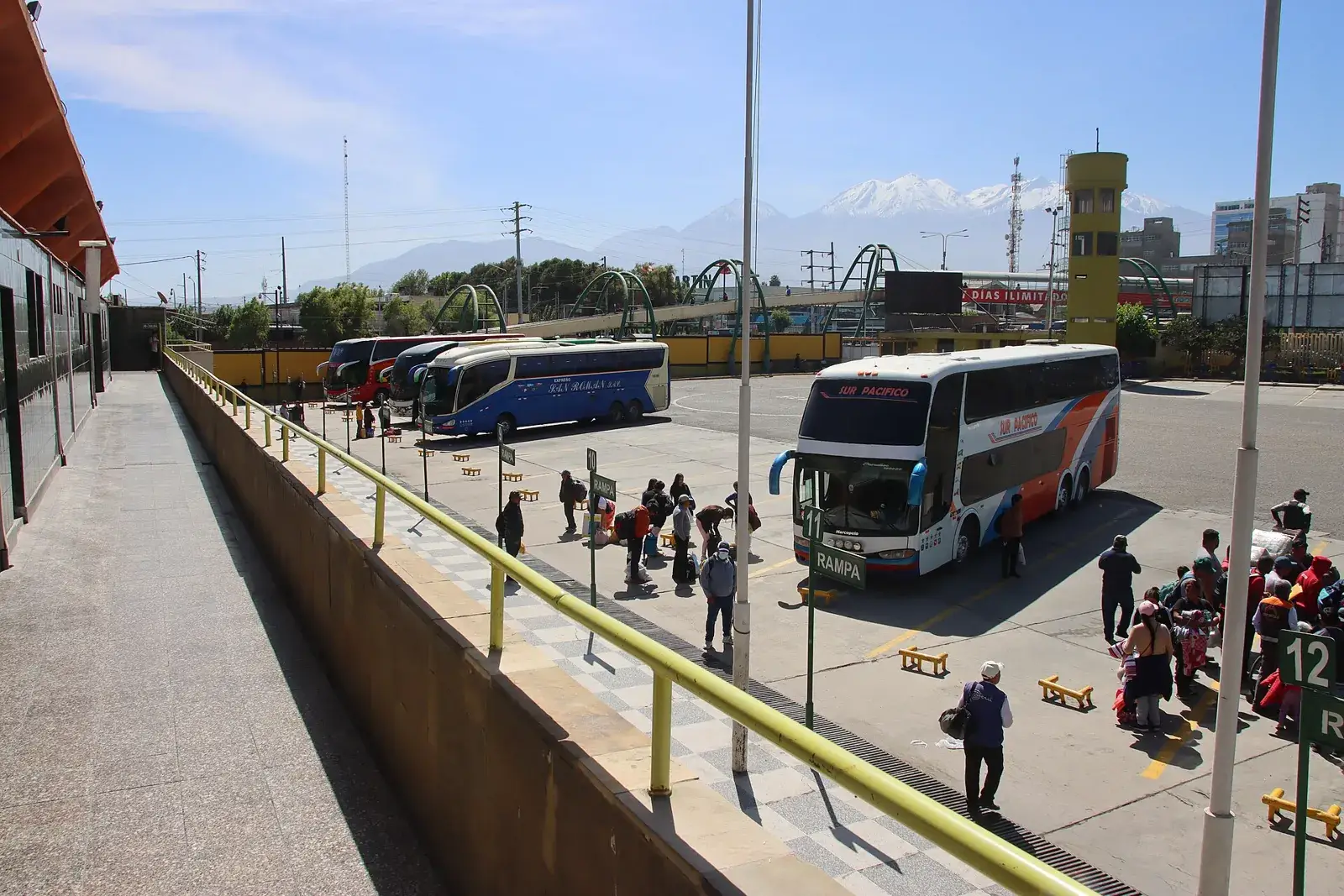
Long-distance buses are the backbone of Peruvian travel and the cheapest way to cover long distances. Seats range from basic to fully reclining, and the better services are comfortable enough for a night journey. Choose a higher class for any trip over about six hours, prefer daytime travel on mountain routes, and book with the company directly or through an agency you trust.
How the system works
Peru has no single national bus company. Many private operators run their own routes, and most have their own terminals, which in a big city can be spread across different districts. Always check which terminal your bus leaves from, and how long it takes to reach it in city traffic. In Lima, for example, the journey to a departure point can itself take an hour.
Buses cover nearly every route in the country, from the coast to the high Andes. Tickets can be bought at the terminal, online with some operators, or through travel agencies, usually with a small commission. Bring your passport: operators commonly record passenger details, and some check them at boarding.
Seat classes
The cheapest services have ordinary seats with limited legroom and often more stops, picking up passengers along the way. Mid-range services offer semi-reclining seats, and the top tier, often called cama or suite, has deep reclining seats, blankets, a meal service and sometimes a lower deck with fewer seats. For overnight journeys the extra comfort is worth paying for. Quality also varies by operator, so ask other travellers or read recent reviews for the specific route.
Bring a jumper even on the coast: air conditioning can be strong, and mountain routes are cold at night. An eye mask, earplugs and a small neck pillow weigh almost nothing and make a night journey easier, and a bottle of water is useful on services that do not provide one.
Practical tips
Luggage goes in the hold against a numbered tag; keep the tag. Toilets on board are not always usable on cheaper services, and long journeys include scheduled stops. Journey times quoted by companies are optimistic on mountain roads, so add margin and never plan a tight connection. Arrive at the terminal early, as some operators close boarding on time. When the bus arrives in a high town such as Cusco or Puno after a night on the road, remember that you may be at altitude immediately.
Keep a small day bag with the essentials, because the hold is not accessible during the journey. Charge your phone before departure, since not every bus has working sockets, and download offline maps so you can follow progress if a stop is unclear.
Routes where the bus is the right tool
On the south coast the bus is the obvious choice. The ride from Lima to Paracas and onwards to Ica and Huacachina follows a single main road with frequent departures, and the trip to Nazca is longer but still comfortable on a good service. The long run from Lima to Arequipa is an overnight option for travellers who prefer not to fly.
In the highlands, the bus links Cusco with Puno, Arequipa and the Sacred Valley, and it is the usual way to move between neighbouring Andean cities. On mountain routes, a daytime service lets you see the scenery and reduces the risk of arriving at an unfamiliar town in the middle of the night.
Choosing a company and a departure
Companies differ widely in vehicle age, driver practice and handling of luggage and delays. Ask recent travellers, read dated reviews for the exact route, and prefer operators that sell tickets in a proper office with a fixed address. Services marked as direct or non-stop should stop only for scheduled breaks; the slower ones that collect passengers along the road can add hours.
Think about the arrival time as well as the departure. A bus that reaches a city at three in the morning leaves you with a taxi at an awkward hour and, if your hotel does not allow early check-in, nowhere to go. Many operators let you stay in the terminal waiting area or arrive at a reasonable hour if you choose the right departure. Where the schedule matters, ask the company when the bus is expected to arrive, not only when it leaves.
Strikes, delays and when not to take the bus
Roadblocks in southern Peru can stop buses for hours or days. When protests are announced, travel by road is the first option to give up, and you should have an alternative, such as a flight, ready. Landslides in the rainy season can also close mountain roads. Check strikes and road blockades and ask your hotel or the bus company before departure.
For personal security, the general advice on the safety applies on buses as well: keep your valuables on you, travel in daylight where possible and avoid leaving bags unattended during rest stops. Compare buses with flights honestly: if the road trip costs an extra day you cannot spare, the plane is the better choice.
Frequently asked questions
Are Peruvian buses safe?
Most are, and millions of people use them. Risks are road accidents on mountain routes and theft on some cheaper services, so choose a reputable operator and travel by day on the most winding roads.
Can I book buses online?
Many operators and some booking sites sell tickets online, but not all, and not always in English. Terminals and agencies remain a common way to book.
Is it worth paying for the top class?
On overnight and long routes, yes: reclining seats and better service make a real difference. On short daytime hops the basic class is usually fine.
Do I tip the driver or luggage handlers?
It is not expected for drivers. A small coin to someone who helps with heavy bags is a courtesy rather than an obligation. For the general customs, see tipping.
Where does my luggage go and is it safe?
Large bags go in the hold against a numbered tag. Keep documents, money, electronics and medication with you, and use a small lock on zips. Never put valuables in the overhead rack if you plan to sleep.
How early should I get to the terminal?
Operators usually ask for arrival before the departure time to load luggage and check passengers, and some have strict boarding closes. Ask when you buy the ticket, and add extra time for city traffic.
Are there toilets on the bus?
Many higher-class buses have one, though it may be reserved for emergencies or locked on some services. Plan for the scheduled stops, and carry tissues and hand gel.