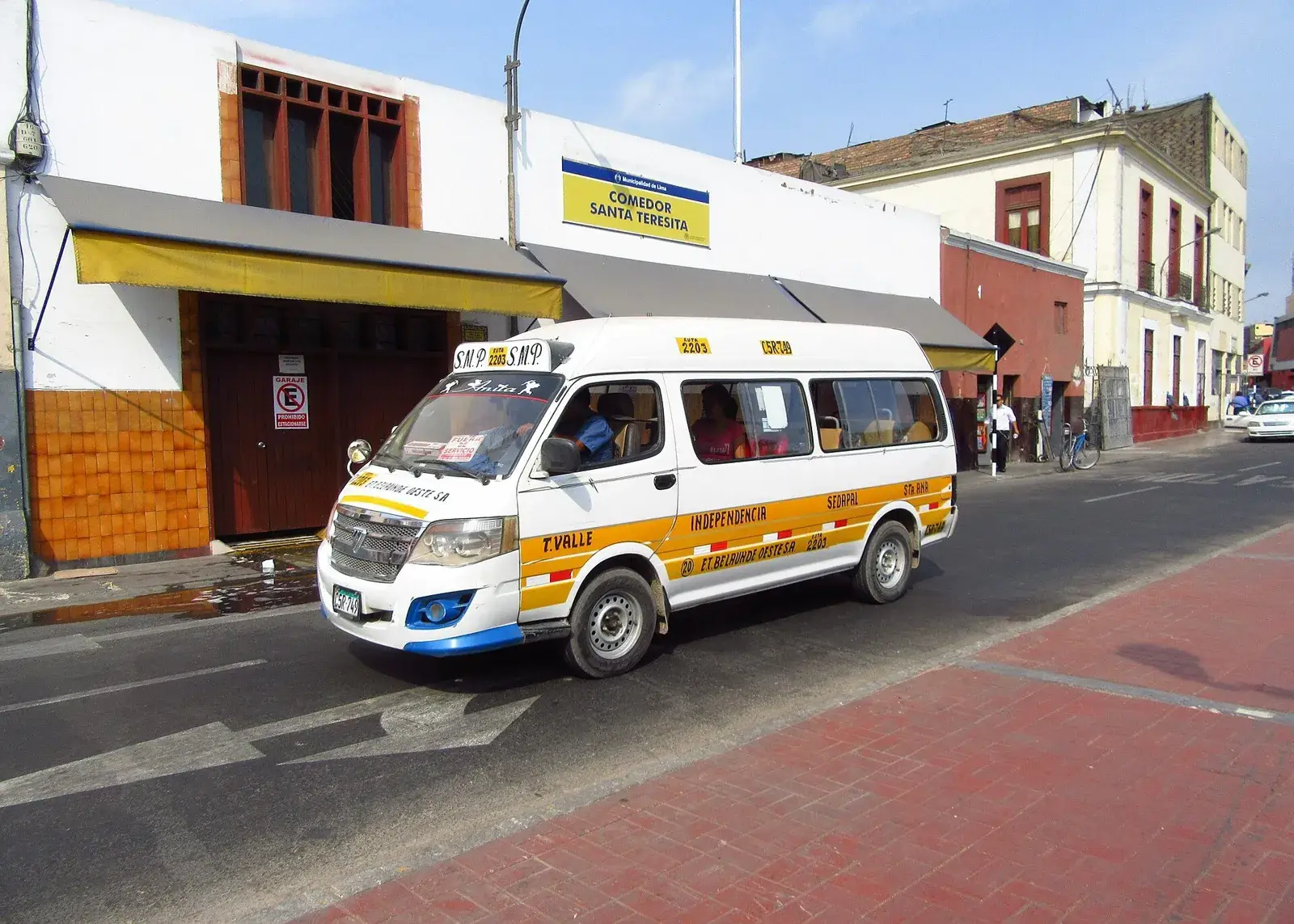
Collectivos are shared taxis or minibuses that run fixed routes and leave when full. They are the standard way to cover short distances between towns, such as in the Sacred Valley, and are cheaper and more frequent than private taxis. Expect little comfort and no luggage space, ask the fare before getting in, and take a taxi instead if you carry heavy bags.
What they are
A collectivo can be a saloon car carrying four passengers, a minivan or a larger minibus, often called a combi. All work on the same principle: they run between two points, wait at a known stop until they fill and then go. In a Peruvian town you will often see people calling out the destination from the door. Fares are low and usually fixed for the route, though visitors are sometimes asked for more, so check what others pay.
They are not scheduled. At busy times and on popular routes you wait only minutes, while on quiet routes or late in the day you may wait much longer, or find nothing running. That is the trade-off for the low price: flexibility on the part of the passenger, and none on the part of the vehicle.
Where you are likely to use them
The Sacred Valley is the classic case: vans link Cusco with Pisac, Urubamba and Ollantaytambo, and run along the valley between those towns. In Lake Titicaca country, minibuses link Puno with the shore towns. On the coast and around Lima, combis serve city routes. They also take you to trailheads and small villages the long-distance buses skip.
Each route has its own stop or yard, usually not marked on any map. Ask at your hotel, or ask a local for the place to catch a vehicle to the town you want. Cusco to the Sacred Valley shows how the system fits into the wider journey.
Tips for using them
Carry small coins and notes, because change for large notes is rare. Tell the driver your stop early; many will drop you at any safe place along the road. Big backpacks may be strapped to the roof or refused, and you may be asked to pay for the space. If you are not sure, ask the price and the final stop before sitting. For a group of three or four, a private taxi is often only slightly more expensive per person, and far more comfortable.
A few words of Spanish go a long way here. Knowing how to ask where the vehicle goes, how much it costs and where to get off removes most of the uncertainty; Spanish phrases lists the ones that matter.
How to find the right vehicle
In most towns the stops cluster near markets, the main road out of town or a small terminal. A conductor or driver will call the destination, and the name is usually shown on a card in the windscreen. If you cannot find one, ask a shopkeeper rather than a stranger on the street, and confirm the name of the final stop with at least one person before you board.
Do not rely on a web search or a map app for the exact stop, because these places move and change. The best source is your hotel, a tour operator or a traveller who used the route that week. Take a photo of the vehicle's plate or registration before you set off if you travel alone, and share it with someone.
Cost compared with other options
Collectivos are normally the cheapest way to cover short distances, with a lower fare than a taxi and often below a bus ticket for the same stretch. They shine on routes of an hour or less, where the wait to fill the vehicle is short. On longer distances, a proper long-distance bus is more comfortable, has more reliable timetables and is often little different in price.
If you are weighing a tour against doing the Sacred Valley independently, collectivos are what make independent travel possible, with a day plan built around one town at a time. The price difference with a tour is large, but you take on the planning, the waiting and the occasional uncertainty yourself.
Combining collectivos with taxis
A practical approach is to use a collectivo for the main leg and a taxi at either end. In the valley, for example, you might ride a van from Cusco to Urubamba, then take a taxi to a site off the main road. The combination keeps the cost down while avoiding long walks on busy roads with heavy bags.
For a group, a private driver for the whole day may work out similar in price and gives you the stops you want. Taxis and ride-hailing explains how to agree a fare and what to avoid, and getting around Peru helps put shared transport in context.
Strikes, holidays and late hours
Shared transport thins out in the evening, on Sundays in small places and on local holidays, and it stops when a strike or blockade closes the road. Do not plan a late return by collectivo to catch a flight or a train the next morning; leave a night's margin or arrange a private car for the last leg.
If you find yourself waiting at dusk with no vehicle, return to the town where you have a bed rather than hoping for a lift. Strikes and road blockades explains how disruptions develop and how to find out about them.
Frequently asked questions
What is the difference between a collectivo and a combi?
In practice, a collectivo is usually a shared car, and a combi is a minibus. Both run fixed routes and leave when full.
Are collectivos safe for tourists?
They are used by locals every day, but crowding and fast driving are the main concerns. Avoid them at night and on long mountain stretches.
Can I put big luggage in a collectivo?
Usually not comfortably. Small bags fit; for large backpacks a taxi or bus is better.
How do I know when to get off?
Tell the driver or conductor your stop when you board, and ask them to call it. Follow the progress on an offline map if you can, and stay alert near the end of the route.
Do collectivos run at night?
Fewer do, and the ones that run late may leave less often. For night journeys, particularly on mountain roads, a pre-booked car or a hotel's recommended driver is a safer choice.
Can I reserve a seat in advance?
Generally not. You turn up at the stop and join the next vehicle that leaves. If you need certainty, a private transfer or a tour is the alternative.
What should I pay?
Ask other passengers or your hotel what the normal fare is, and have the exact amount ready. Visitors are occasionally quoted more, so a polite question about the price before you sit down helps.