Spanish is the main language in Peru, and English is spoken mostly in tourist hotels and by some guides. A few phrases make a real difference: greetings, please and thank you, how much, where is, the bill and numbers. Speak slowly, smile and use a translation app for harder moments. Quechua is widely spoken in the Andes.
Greetings and politeness
Hola means hello. Buenos días is good morning, buenas tardes good afternoon and buenas noches good evening or good night. Por favor is please, gracias thank you and de nada you are welcome. Disculpe or perdón gets someone's attention or excuses you. Mucho gusto means nice to meet you, and hasta luego is see you later.
Say "no entiendo" if you do not understand, and "¿habla inglés?" to ask whether someone speaks English. "Más despacio, por favor" asks them to speak more slowly. These phrases pair with the customs in the etiquette, where a greeting on entering a shop matters as much as the words themselves.
Getting around and asking for things
¿Dónde está...? asks where something is: ¿dónde está el baño? is where is the toilet. ¿Cuánto cuesta? or ¿cuánto es? asks the price. La cuenta, por favor is the bill. ¿A qué hora sale el bus? asks when the bus leaves. Quiero ir a... means I want to go to. Aquí, por favor tells a driver where to stop.
Agree the fare before getting in a taxi: ¿cuánto hasta...? Numbers are very useful: uno, dos, tres, cuatro, cinco, seis, siete, ocho, nueve, diez, then cien for a hundred. Un sol is one sol, and for notes and coins, see money. For where these phrases come in handy, see taxis and apps.
Food, health and emergencies
Soy vegetariano or vegetariana tells a kitchen you do not eat meat; add sin carne, sin pollo or sin pescado if needed, because some dishes include small amounts of meat in stock. Soy alérgico or alérgica a... states an allergy. Sin hielo means without ice, and agua sin gas is still water.
For health, me siento mal means I feel unwell, necesito un médico means I need a doctor, and me duele... says that something hurts. ¡Ayuda! means help, and llame a la policía means call the police. Keep an offline translation app and your emergency contacts handy.
Peruvian words and Quechua
Peruvians use a few words that you will not see in textbooks. Chévere or bacán means cool or great, and "ya" is a flexible yes or okay. A "combi" is a minibus, and a "colectivo" is a shared taxi. "Piqueo" is a snack or sharing plate and "menú" is a set lunch.
In the Andes, many people speak Quechua. A friendly greeting is "allillanchu", and thank you is "sulpayki" or "yusulpayki", though spelling and usage vary between regions. Trying a word is always appreciated, but do not worry about perfection.
At the restaurant and market
In a restaurant, "una mesa para dos, por favor" asks for a table for two, and "la carta" is the menu. "¿Qué me recomienda?" asks for a recommendation, and "para tomar" means to drink. Ordering the "menú" gets the set lunch, usually a starter, a main and sometimes a drink, which is a good way to taste local food at a fair price; see tipping for what to leave. See Lima food for dishes to ask for by name.
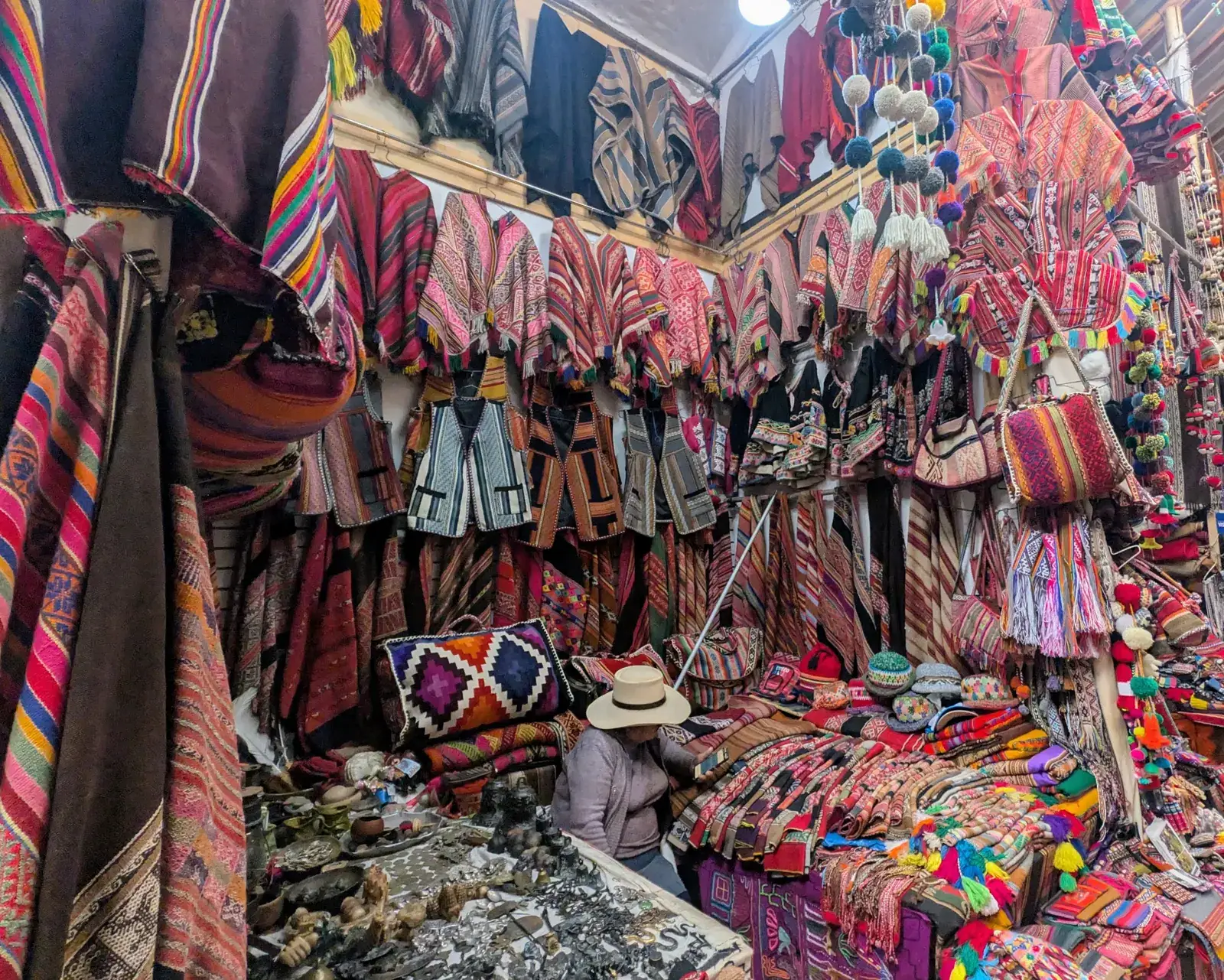
At the market, "¿cuánto por todo?" asks the total, "¿me hace un descuento?" asks for a discount and "lo llevo" means I will take it. "Un poquito" is a little, and "otro" is another. Greet the seller before you ask, and say "gracias, voy a pensarlo" if you want to think about it.
On buses, in hotels and at sites
On buses and in minibuses, "baja" is the call for a stop, and "me baja en..." asks the driver to let you off at a place. In hotels, "tengo una reserva a nombre de..." says that you have a booking under a name, and "¿puede guardar mi equipaje?" asks whether they can store your luggage. "¿Hay agua caliente?" asks if there is hot water, and "¿a qué hora es el desayuno?" asks when breakfast is.
At archaeological sites and museums, "una entrada" is one ticket, "boleto" is another common word and "¿se puede tomar fotos?" asks if photography is allowed. In Cusco, guides and shop staff often speak a little English, but a Spanish greeting always helps.
Pronunciation and learning tips
Spanish is pronounced as it is written. Vowels are short and clear: a as in "father", e as in "bed", i as in "machine", o as in "more" and u as in "rule". The letter h is silent, j sounds like a throaty "h", ll is usually like "y", and the double r is rolled. Peruvian Spanish is generally clear and moderately paced, with less dropping of letters than in some other regions, which makes it relatively easy to follow.
A few weeks of regular practice with an app and a phrase list before you go gives good results. Download the Spanish language pack in a translation tool so that it works offline, as the apps suggests. Keep phrases short, and use gestures and a smile; solo travellers will find more habits in the solo female. Locals value the effort more than the accuracy.
Frequently asked questions
Do I need to speak Spanish in Peru?
Not for tourist hotels and tours, but basic Spanish helps in markets, buses and small towns.
Is Peruvian Spanish hard to understand?
It is generally considered clear and moderately paced, especially in Lima.
What language is spoken in Cusco?
Spanish and Quechua, with English in the tourist trade.
How do I say thank you in Quechua?
Commonly sulpayki or yusulpayki, though spelling and pronunciation vary by region. A guide or host will happily teach you the local form.
What does the word combi mean?
A combi is a small minibus used for local transport in cities and towns. A colectivo is a shared taxi that leaves when full.
Should I use usted or tú?
Usted is the polite form and a safe default with strangers, older people and in formal settings. Tú is used with friends and younger people, and locals will invite you to use it.
Which phrase is most useful on day one?
Probably ¿cuánto cuesta? for prices and the polite greetings, as they help in taxis, shops and restaurants. Add ¿dónde está...? and por favor and you can get through most simple exchanges.