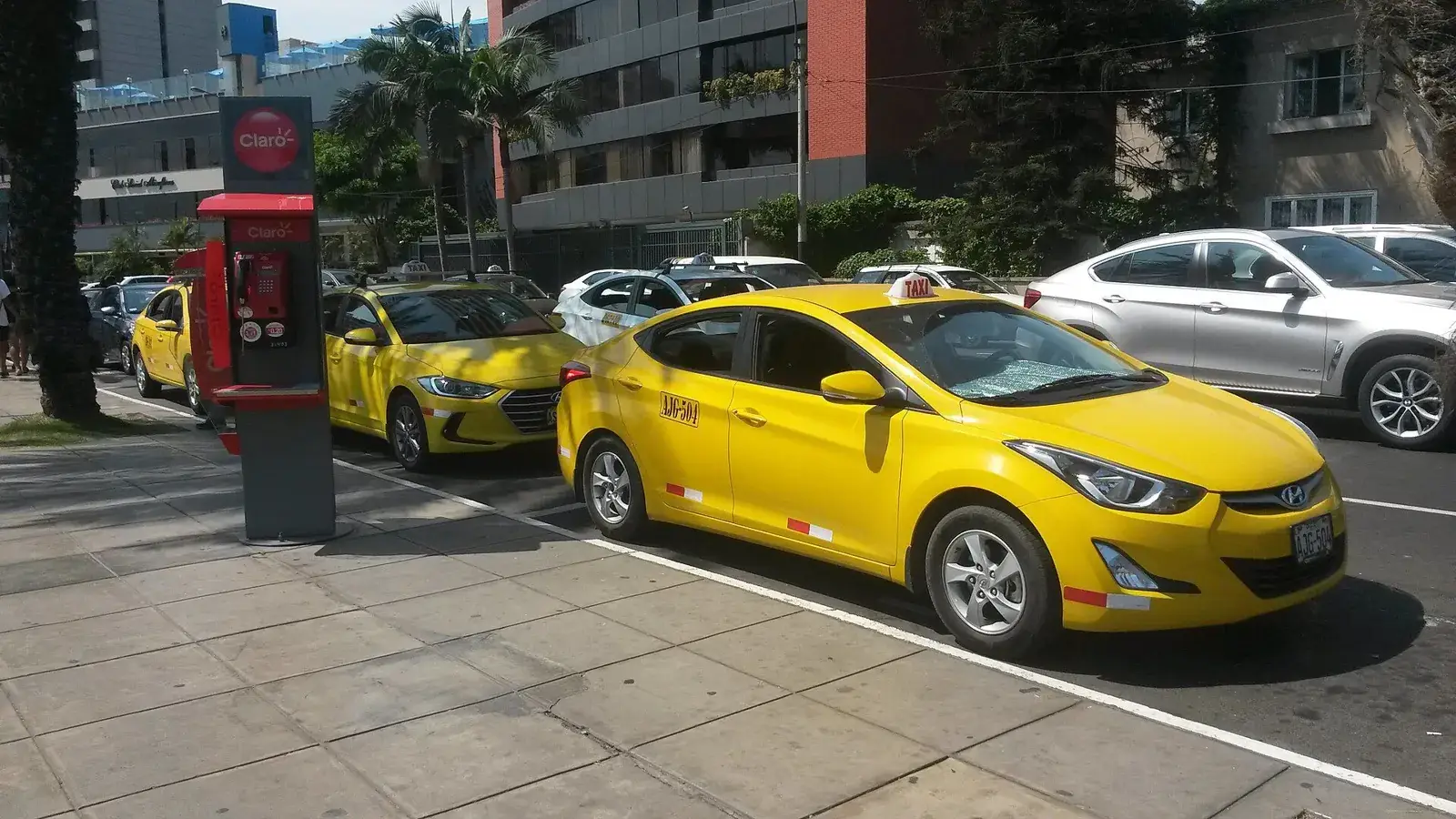
Taxis in Peru are mostly unmetered, so the golden rule is to agree the fare before you get in. Ride-hailing apps such as Uber, Cabify and inDrive work in Lima and several other cities and give you a recorded trip and a price in advance. At night and at airports, an app or a taxi arranged by your hotel is the safer choice than a car hailed in the street.
Street taxis
Most taxis have no meter. You say the destination, the driver quotes a price, and you can bargain a little. The better habit is to ask your hotel or restaurant what a normal fare is for the trip, then offer that amount. Short trips are cheap compared with Europe or North America, and the difference between a fair price and a tourist price is small in absolute terms but easy to avoid. Carry small notes and coins, because drivers often have no change for large ones.
In Cusco, Arequipa and other Andean cities, taxis are the usual way to reach sites outside the walkable centre, and a negotiated return fare with waiting time is common.
Apps
Uber, Cabify and inDrive are used in Lima, and also in cities such as Cusco and Arequipa. On some apps you propose a price and drivers accept or counter, so the fare is settled in advance. Check the plate and driver's photo before you get in, ride in the back and use the app's trip-sharing feature. Local rules on app pick-ups at airports and bus terminals change, and in some cities taxi drivers object to apps, so drivers may ask you to sit in the front or to say you are a friend. Follow your own judgement.
You will need mobile data or Wi-Fi to order a car. For the options, see SIMs and eSIMs, and useful apps mentions other tools worth installing before you go.
Other kinds of ride
Mototaxis, three-wheeled motorcycles with a passenger seat, are common in small towns and the Amazon, and are fine for short trips. They offer little protection in a collision and no luggage space. Shared minibuses and collectivos, covered separately in collectivos, are the cheap alternative on fixed routes.
In large cities there are also radio taxis dispatched by phone or app and company taxis with a recognisable name and number on the roof. A company car booked through a hotel is normally the safest street-level option, since the driver is known to the staff and a record of the booking exists.
Agreeing the fare in practice
Before you get in, state the destination clearly, ask the price and confirm that it is for the whole trip, not per person. If you are unsure of the number, note it down or show it on your phone. When you arrive, pay the agreed amount and no more, handing over the right note to avoid a long search for change. If the driver tries to renegotiate halfway, stay calm; you can still pay the agreed fare and leave.
For longer excursions, such as a half-day to nearby ruins, a driver can wait for you while you visit, and the price is normally set for the entire trip. Settle the waiting time and the return point at the start and pay when you are back. Avoid paying in advance beyond a small deposit.
Airport and terminal rides
Airports and bus terminals are where visitors are most exposed to overpricing and unofficial drivers. Use the official taxi counters or a pre-booked transfer, and treat anyone who approaches you inside the terminal with caution. For what is available at each, see Lima airport transfers and the Cusco airport.
At bus terminals, taxis wait outside and quote high prices to people with luggage. Walk a little way from the entrance, ask a nearby shop or your hotel to call a car, or use an app. If you arrive in the small hours and your hotel does not answer, wait inside the terminal in a lit area rather than taking the first offer outside.
Cash, change and small details
Taxis nearly always expect cash, and small notes are valuable. A driver who cannot give change for a large note may simply wait for you to find a smaller one, or may claim no change at all. Withdraw cash in advance from a machine you trust and keep a few small notes ready, as explained in money and ATMs.
Some apps allow card payment, but the cash option is common. Keep the receipt or screenshot of the fare if you may need to dispute it. Tipping is not expected; rounding up is a small courtesy. For general habits that keep you out of trouble, see common scams and safety.
Frequently asked questions
Do taxis in Peru use a meter?
Mostly not. Agree a price before the trip, and ask a local what is reasonable.
Which ride-hailing apps work in Peru?
Uber, Cabify and inDrive are widely used in Lima, and they work in several other large cities. Availability varies by town.
Should I tip a taxi driver?
It is not expected. Rounding up the fare is welcome but optional.
Is it safe to take a taxi at night?
Safer options are an app ride with a recorded driver, or a car sent by your hotel or restaurant. Avoid hailing cabs in the street late at night, especially outside bars, and do not share the car with strangers.
Can I pay by card in a taxi?
Rarely. Plan to pay in cash, in small notes. Some app rides allow card payment.
What is a mototaxi?
A three-wheeled motorcycle with a covered seat for passengers, used for short trips in small towns and parts of the Amazon. It is cheap and convenient but offers little protection and no space for luggage.
What should I do if a driver demands more than we agreed?
Stay calm, repeat the agreed price and pay it. If you feel unsafe, walk to a busy, well-lit place such as a hotel or shop. Next time, note the plate number or use an app.