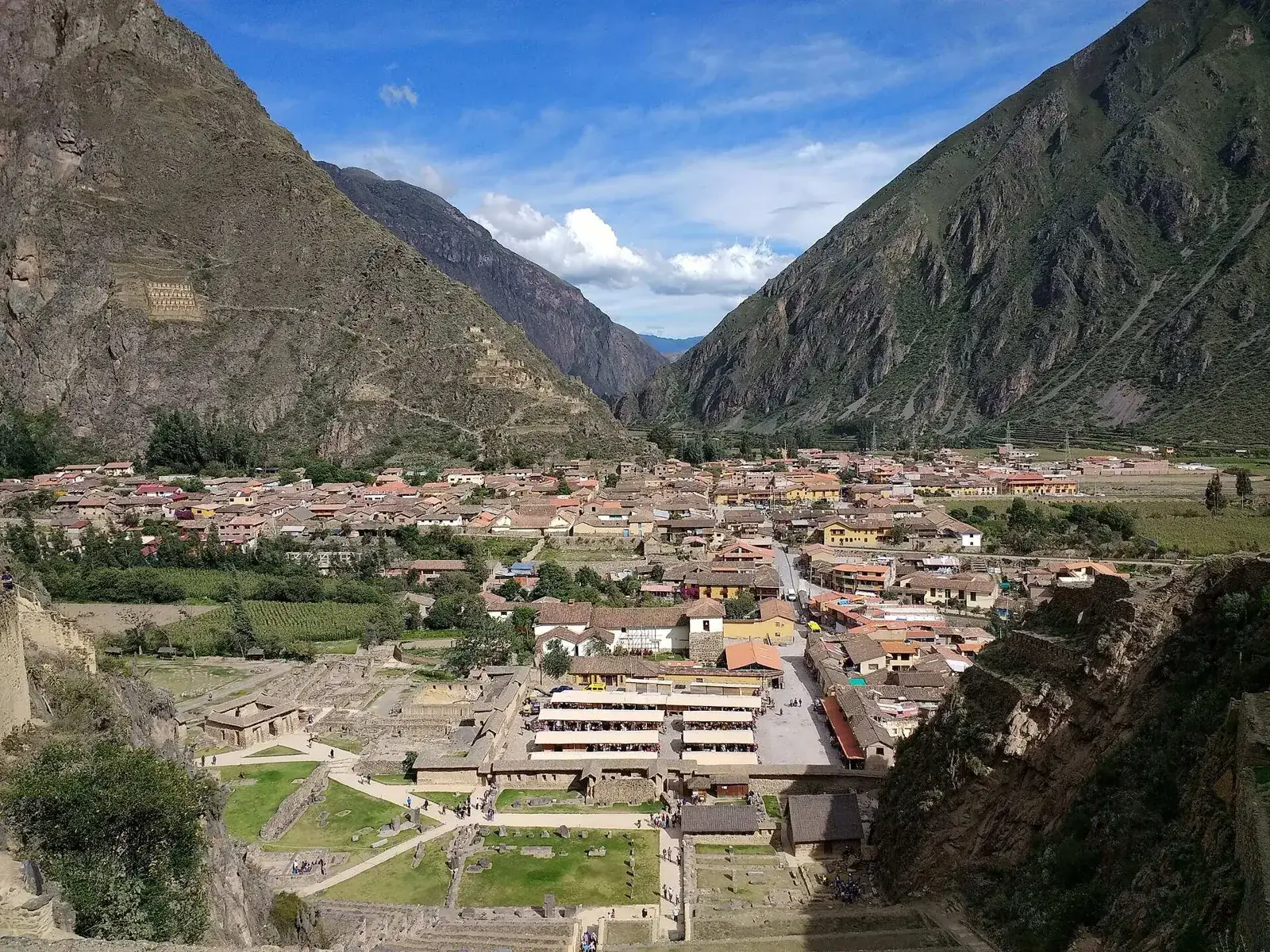
Ollantaytambo is worth a night, not just a transfer. It is the most intact Inca town in the valley, it has an impressive fortress, and it is the main station for trains to Machu Picchu. Sleeping here before an early train is much easier than starting in Cusco.
In this section
-
 Attraction
Ollantaytambo Archaeological Site
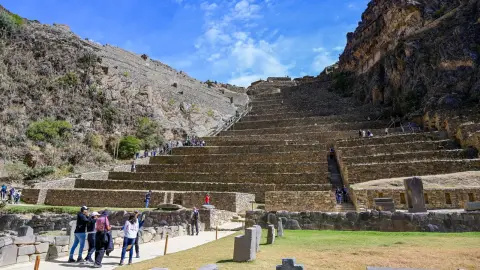
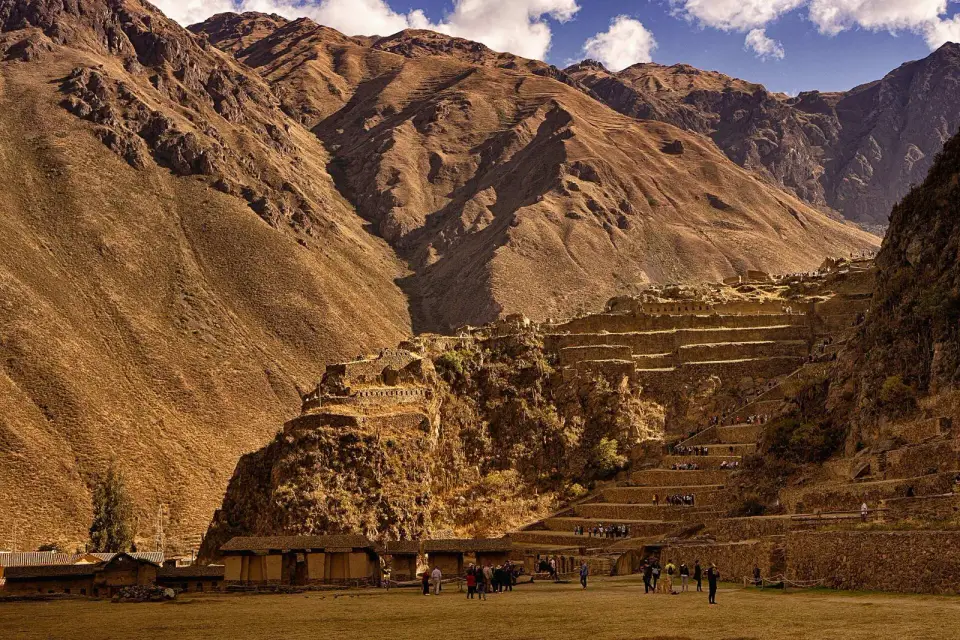
The terraced temple hill above Ollantaytambo, where the Incas won a rare battle against the Spanish.
-
 Attraction
Pinkuylluna Ruins
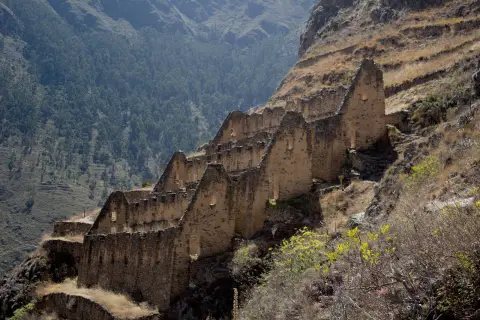
Inca storehouses perched on the ridge opposite the Ollantaytambo fortress, reached by a short, steep walk from town.
-
 Attraction
Ollantaytambo Old Town
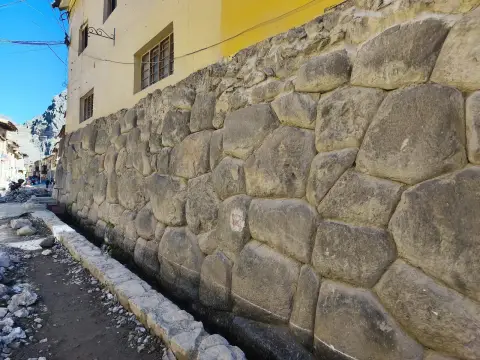
The compact Inca street grid of Ollantaytambo, still lived in, with stone walls and water channels beside the lanes.
A town built by the Incas
Most of the old centre follows an Inca grid of narrow cobbled lanes, with stone channels still carrying water along some of them. Houses built on Inca foundations are lived in by families today, which gives the place a feeling of continuity that many ruins lack. The main square is small, and the lanes behind it are best explored on foot in the early morning or evening, when the day trippers have gone.
The town is also associated with a well-known episode of resistance against the Spanish in the sixteenth century, which is part of why it has a strong sense of local identity. The layout makes it easy to navigate on foot, and it is rare in the valley for a town to be so compact. Ollantaytambo sits at about 2,790 m, a good deal lower than Cusco, which is one reason it is a comfortable first night in the highlands.
The fortress
Above the town, a steep staircase of agricultural terraces climbs to a temple area with enormous, finely fitted stone blocks, some transported from a quarry on the opposite side of the valley. The climb is short but steep, and at this altitude it is tiring for the first day. The site is covered by the same regional tourist ticket system as other major sites in the area. Go early to avoid the tour groups that arrive mid-morning.
The view from the top gives a clear sense of why the Incas chose the spot: the valley narrows here, and the site controls the approach from both directions. Look across to the opposite hillside, where storehouses cling to the slope, and to the faces of rock where later visitors have traced figures. Read about the Sacred Valley to see how the fortress fits among the other sites.
Tours and activities
Bookable online, chosen for their traveller reviews.
-
From €107 per person
Ollantaytambo
Private Sacred Valley Day Trip with Local Guide
-
From €107 per person
Ollantaytambo
Moray and Maras Day Tour from Ollantaytambo to Cusco
-
Day trip From €54 per person
Ollantaytambo
Moray ATV Tour from Cusco with Salt Mines and Tasting
-
From €65 per person
Ollantaytambo
Private Half-Day Maras and Moray Tour from Ollantaytambo
Why it works as a base
Ollantaytambo is where the train line to Machu Picchu begins for many visitors. Sleeping here means walking to the station rather than a long early transfer, and it is a more pleasant place to wait. It is also lower than Cusco, so it can help with acclimatisation. Restaurants are small and cluster around the square and the main street, and the pace of the evening is quiet.
Some trekking routes also start or end in this area, including parts of the Inca Trail, so you may see porters and hikers around town. For the services from the station, see trains to Machu Picchu, and for how Ollantaytambo compares with other bases, where to stay in the Sacred Valley.
How long to stay
One night is enough to see the fortress and the town, with a morning train onward. Two nights let you add nearby sights, such as the terraces of Moray and the salt pans of Maras, or simply rest. If you arrive late at night, skip the fortress until the next morning.
People heading to Machu Picchu should think about the return as well as the outward leg. If you come back from Aguas Calientes on a late train, a second night here saves a rushed transfer to Cusco. Many travellers regret leaving the town after a single hurried evening, so give it at least one slow dinner and one early-morning walk.
Getting here
Ollantaytambo is a drive from Cusco of about one to two hours, with options by shared taxi, bus or private transfer, and from Urubamba and Pisac by local transport. The train station is within walking distance of most accommodation, though there is some distance between the town and the station, so check with your hotel. See Cusco to the Sacred Valley to compare the transport options.
The dry season, roughly May to September, is the busiest and clearest period. Trains are in demand, and narrow lanes can be congested when large groups pass through at the same moment. Walk early or late to enjoy the town at its calmest.
Eating and evenings
Evenings are quiet. Small restaurants around the square serve Peruvian staples and some simple international dishes, and the cooking is usually good enough, though not remarkable. Ask what time the kitchen closes, as many places shut early, especially if you have an early train.
After dinner there is little to do beyond a walk along the lanes, which are pleasantly lit and almost empty. Pack a warm layer, because nights are cool even in summer. Carry a small torch for the uneven cobbles. The relaxed rhythm is part of the appeal, and it is one reason travellers prefer Ollantaytambo to the busier base in Aguas Calientes for a restful night.
Mistakes to avoid
Do not treat Ollantaytambo as a station stop only. Many visitors arrive just before a train and leave without seeing the fortress, which is a pity. Do not climb the fortress at midday in the dry season, when the sun is fierce and the terraces offer no shade. Do not leave your luggage allowance for the end: the trains have limits, and the hotel can store the rest.
Do not assume a taxi will be available at dawn; arrange your transfer the day before. Finally, do not underestimate the altitude on your first day, even though it is lower than Cusco. Weighing a Sacred Valley or Cusco base can help you choose where to sleep.
Map
Where to sleep
-
Ollantaytambo
Early trains to Machu Picchu and a walkable old town
Stone-paved lanes, a large fortress above the town and the station for the trains. Small hotels, hostels and a few lodges are all within walking distance of the main square.
Keep in mind: It is a small town with little nightlife, and the streets near the station are busy in the morning.
Find hotels →
Weather in Ollantaytambo
Forecast: MET Norway
Frequently asked questions
Is Ollantaytambo better than Aguas Calientes as a base?
They do different jobs. Ollantaytambo is the better place to stay for a calm evening and an early train, and Aguas Calientes is the place to be next to the ruins.
Is the climb to the fortress hard?
The steps are steep and the altitude is noticeable, but it is short and can be done slowly.
Can I visit as a day trip?
Yes, from Cusco or the valley, but you will see it better by staying at least one night.
How long does the fortress take to visit?
Allow about two hours with photographs and a slow pace. The climb itself is brief, but the terraces and the temple area reward time. Take water and sun protection.
Can I walk from Ollantaytambo to Machu Picchu?
There are multi-day routes, including the Inca Trail, which require permits booked well ahead. Walking along the railway to Aguas Calientes is also possible, but it is long and the track is used by trains.
Where do the trains to Machu Picchu leave from?
Many leave from the station at Ollantaytambo, though some services start in Cusco. Check your ticket for the exact station and time. See Machu Picchu trains for details.
Is Ollantaytambo expensive?
Prices are moderate, with a wide range of lodging from basic to luxurious. Food in small restaurants is reasonable, but prices rise near the station and in high season.
Is Ollantaytambo noisy?
The town is quiet at night, though trains and early-morning departures can bring some noise. Ask your hotel about the room location if you are a light sleeper.