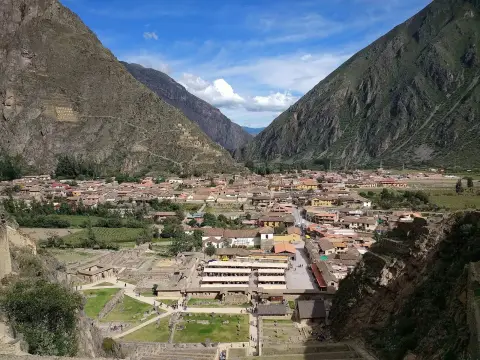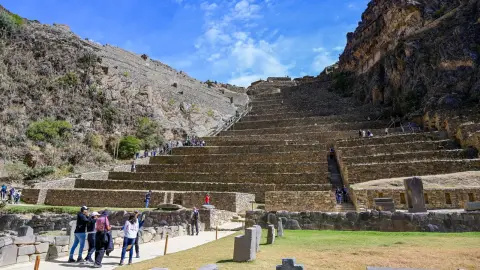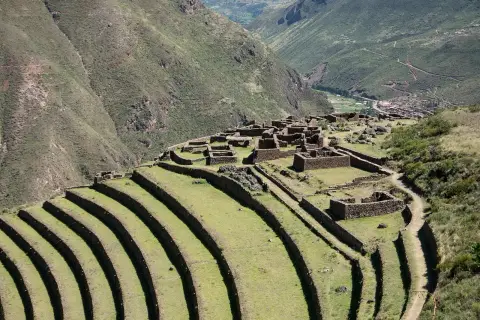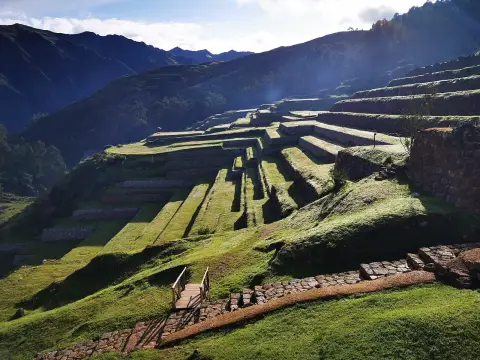
Pinkuylluna is the mountain ridge directly behind the town of Ollantaytambo, with rows of Inca stone storehouses (*qollqas*) built into its slope. The walk up from the streets of town is short but steep and exposed, usually quoted at roughly 30 to 60 minutes one way, and it is generally described as free to enter, though you should confirm that locally. It gives the best view over the town and the fortress opposite, and it is quieter than the main site. Go early, bring water and sun protection, and take your time because of the altitude.
Map
What Pinkuylluna is
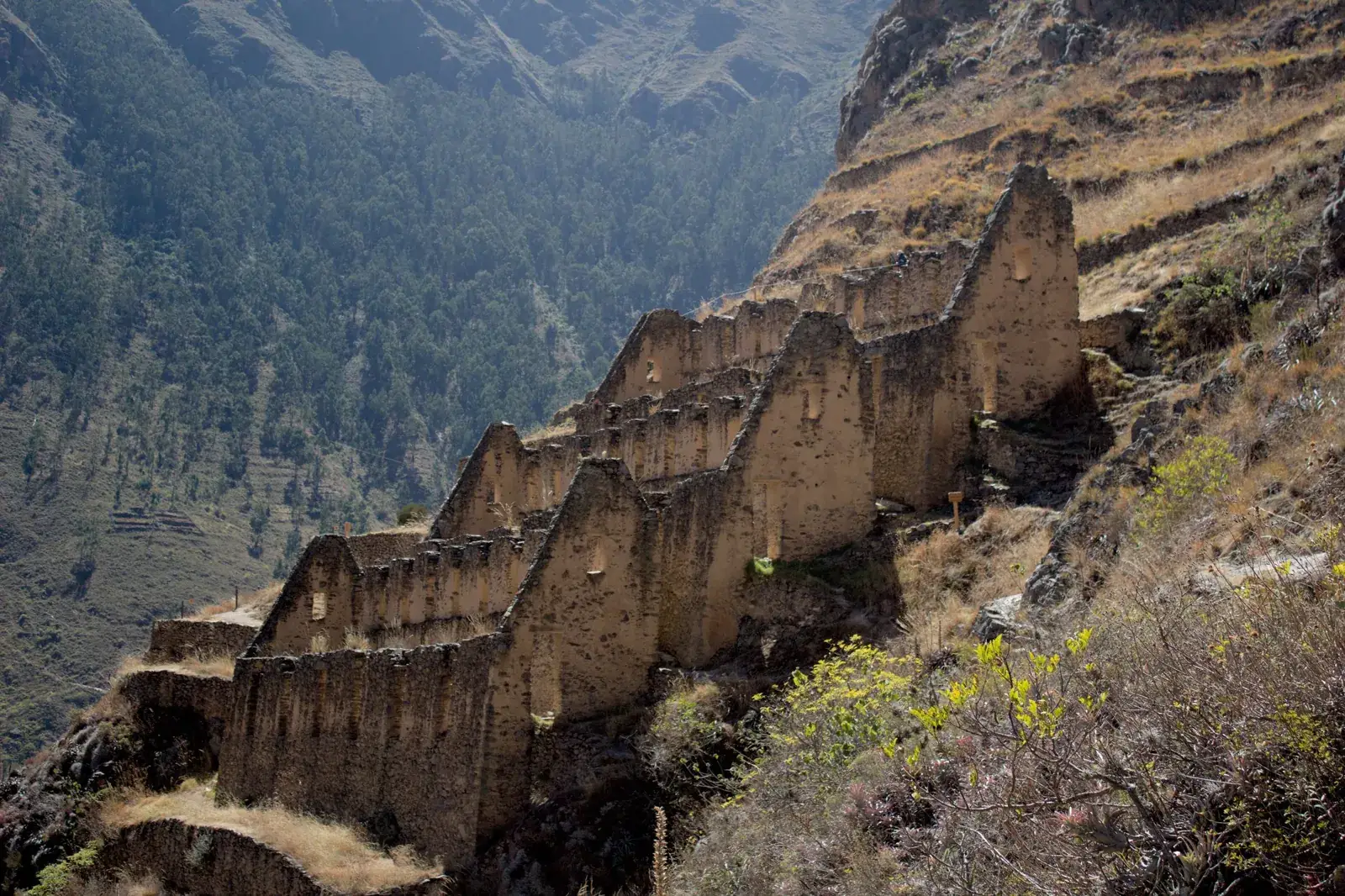
Pinkuylluna is the steep hill that rises on the north side of the village of Ollantaytambo, facing the terraced temple hill described on the fortress page. On its flank sit several groups of rectangular stone buildings with gabled walls and small windows. These are Inca storehouses, known by the Quechua word *qollqas*, where grain, potatoes and other produce were kept for the state and for the estate that the Inca rulers maintained here.
The buildings are not a separate town and were never homes. They are the warehouses of a working royal estate, and what makes them worth the effort is where they stand: high on a cold, windy slope, looking straight across the valley at the main site. Pinkuylluna has no article of its own in most reference works and is usually treated as part of the wider Ollantaytambo complex, so do not expect a ticket office, a museum or a long signed route.
Why the storehouses stand so high
The position was a design choice. Higher ground is colder and more exposed to wind, and the Incas used that to keep stored food from rotting. Wikipedia's article on Ollantaytambo notes that the high, windy and cold location of the storehouses protected their contents against decay, and that the buildings had ventilation arrangements: grain was poured in through windows on the uphill side and taken out through windows on the downhill side.
Seen from the path, the logic is easy to follow. The walls are built of fieldstone set in mud mortar, with doorways and window openings that face the draught, and the groups are arranged one above another on the slope. In the Inca state, such depots held surplus from the terraces below and fed workers, soldiers and ceremonies, so a set of storehouses this size says something about how important Ollantaytambo was.
Tours and activities
Bookable online, chosen for their traveller reviews.
-
From €107 per person
Ollantaytambo
Private Sacred Valley Day Trip with Local Guide
-
From €107 per person
Ollantaytambo
Moray and Maras Day Tour from Ollantaytambo to Cusco
-
Day trip From €54 per person
Ollantaytambo
Moray ATV Tour from Cusco with Salt Mines and Tasting
-
From €65 per person
Ollantaytambo
Private Half-Day Maras and Moray Tour from Ollantaytambo
The walk up
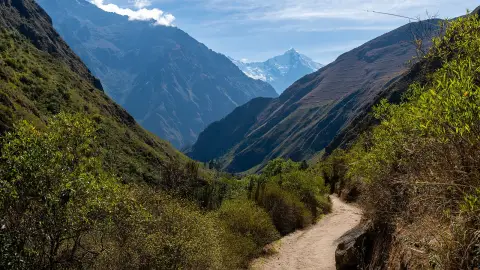
The path begins at the edge of the old town, on the street that leads uphill from the plaza, where a sign and a flight of stone steps mark the start. Maps do not always put the entrance in the right place, so face the hill from town and look for the stairs rather than following a pin blindly. After the first steps the route climbs in switchbacks, with uneven stone and loose earth in places.
Published estimates for the climb vary a lot, from about 30 minutes for a fit walker to an hour or more, and some hikers who stopped often at every storehouse report a couple of hours for the whole visit. The sensible figure is therefore to allow one to two hours return, including time at the top. At about 2,790 m the town is not as high as Cusco, but the slope is steep, so rest often. The upper levels are a bit rougher than the lower ones, and the last stretch to the highest group is a scramble for some people.
What you see at the top
The first reward is the view. From the storehouses you look down on the roofs and the grid of narrow lanes of the town, which keeps the Inca street plan, and across to the terraces and Temple of the Sun on the other hill. That makes this a good place to understand the layout before or after you visit the main site: the river, the fortress, the town and the valley mouth all fit in one frame, and the train line can be seen below.
Higher up, groups of storehouses sit on ledges, and you can walk among the walls, look into the doorways and see how thick the stonework is. Above the storehouses, many visitors are shown a figure on the rock face across the valley, popularly called the Inca face or Tunupa, a pre-Inca deity in some accounts. It is a matter of local belief and tradition rather than established archaeology, and the shape is hardest to make out at midday, easier when the light is low. Take care near drops, because the ledges are narrow and have no barriers.
Tickets and access
Sources broadly describe the Pinkuylluna storehouse trail as free, with no ticket office, and some add that you may be asked to sign a logbook at the start and that it is open in daylight hours. That is different from the main fortress, which has been covered by the Cusco tourist ticket (*boleto turístico*); see the fortress page for how that works. Whether the Pinkuylluna trail needs a ticket, or whether a guard checks one, has been reported inconsistently, so ask at your hotel or at the tourist office in town before you go.
Do not count on a fixed closing time either. Hours, rules and even the route can change after rain, repairs or conservation work, and the authorities have the right to restrict access to the walls. Keep to the paths, do not step onto the storehouse walls and do not take stones or souvenirs.
When to go and what to bring
Go early in the morning. The slope faces the sun for much of the day, there is almost no shade, and by late morning it is hot in the dry season, roughly May to September, when mornings are cold but days are clear. In the rainy months, roughly November to March, the stone steps are slick and the ridge can be in cloud, and a wet path is the main reason to postpone. Late afternoon is also pleasant, but check how long you have before dark, because the descent is awkward in poor light.
Bring more water than you think you need, since it is mainly available near the start, along with a hat, sun cream, a light jacket for the wind and shoes with real grip rather than flat trainers. A small first-aid kit and a charged phone are sensible. The packing list covers the basics, and the altitude page explains what to do if you feel unwell on the way up.
Who it suits and the safety side
Pinkuylluna suits anyone in reasonable health who can climb steep steps for half an hour or more. It is not a good choice for people with knee trouble, serious fear of heights or no time to acclimatise. Children can do it if they are steady, but keep them close at the edges. Do not try it in bad weather or after heavy rain.
Hiking alone is common here, though a short, quiet trail is a place to be careful: tell someone where you are going, go during busy daylight hours, and avoid the climb late in the day. General precautions are on the safety page. Because the ledges are narrow, do not climb up the walls for photographs, and stay behind any rope or barrier if one is in place. A local guide is not required for this walk, but one is useful if you want the history of the storehouses explained.
Combining it with the fortress and the train
Most people pair Pinkuylluna with the main site. The usual sequence is to climb the storehouses first, early and while the air is cool, then cross town for the fortress, or to do the fortress at opening time and Pinkuylluna later in the day. Together they take most of a morning, so they suit a stay of a night or more; a rushed hour before a train is not enough for both.
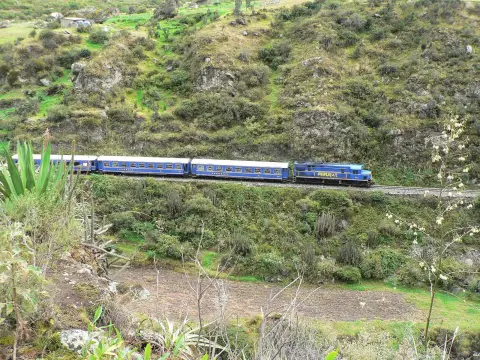
Because the Machu Picchu trains leave from the Ollantaytambo station, many travellers fit the walk in on the way in or out, as explained under trains to Machu Picchu and trains in Peru. Check your departure time and leave a margin. In a wider plan, the town fits between Cusco and Machu Picchu, with Moray and other stops covered in the Sacred Valley tours page and the Sacred Valley overview. If you are heading to the Inca Trail, the walk is also a fair test of how you handle the slope.
Where to sleep
-
Find hotels
Ollantaytambo
Early trains to Machu Picchu and a walkable old town
Frequently asked questions
Is Pinkuylluna free?
Several sources describe the storehouse trail as free to enter, sometimes with a logbook to sign at the start, while the main fortress is covered by the Cusco tourist ticket. Because reports differ, ask at your hotel or the tourist office in Ollantaytambo.
How long does the Pinkuylluna hike take?
Estimates for the climb range from about 30 minutes to an hour, with a return visit usually taking one to two hours. Slow walkers and people who stop at every storehouse can take longer.
Is the Pinkuylluna climb difficult?
It is short but steep, with uneven stone and loose earth in places and no shade. Most reasonably fit people manage it at their own pace, but it is a poor choice for anyone with bad knees or a fear of heights.
Is Pinkuylluna better than the main Ollantaytambo site?
They are different. The fortress has the finest stonework and the big temple wall, while Pinkuylluna offers the view over the town and the fortress, with fewer people. Most visitors do both, as laid out on the fortress page.
What are the buildings at Pinkuylluna for?
They are Inca storehouses (qollqas) for grain and other produce. Their cold, windy position and ventilation openings helped keep the food from spoiling.
Do I need a guide for Pinkuylluna?
No guide is required for the walk itself, and the path starts in town. A guide helps if you want the history of the storehouses and the site explained, and many Sacred Valley tours mention it.
What is the face on the mountain opposite?
Visitors are often shown a face-like shape in the rock, called the Inca face or linked to the deity Tunupa. It is a local tradition and belief, not something archaeologists have established.