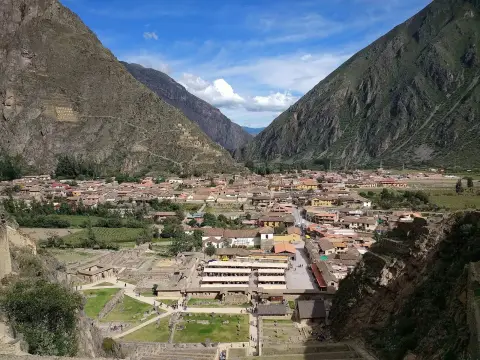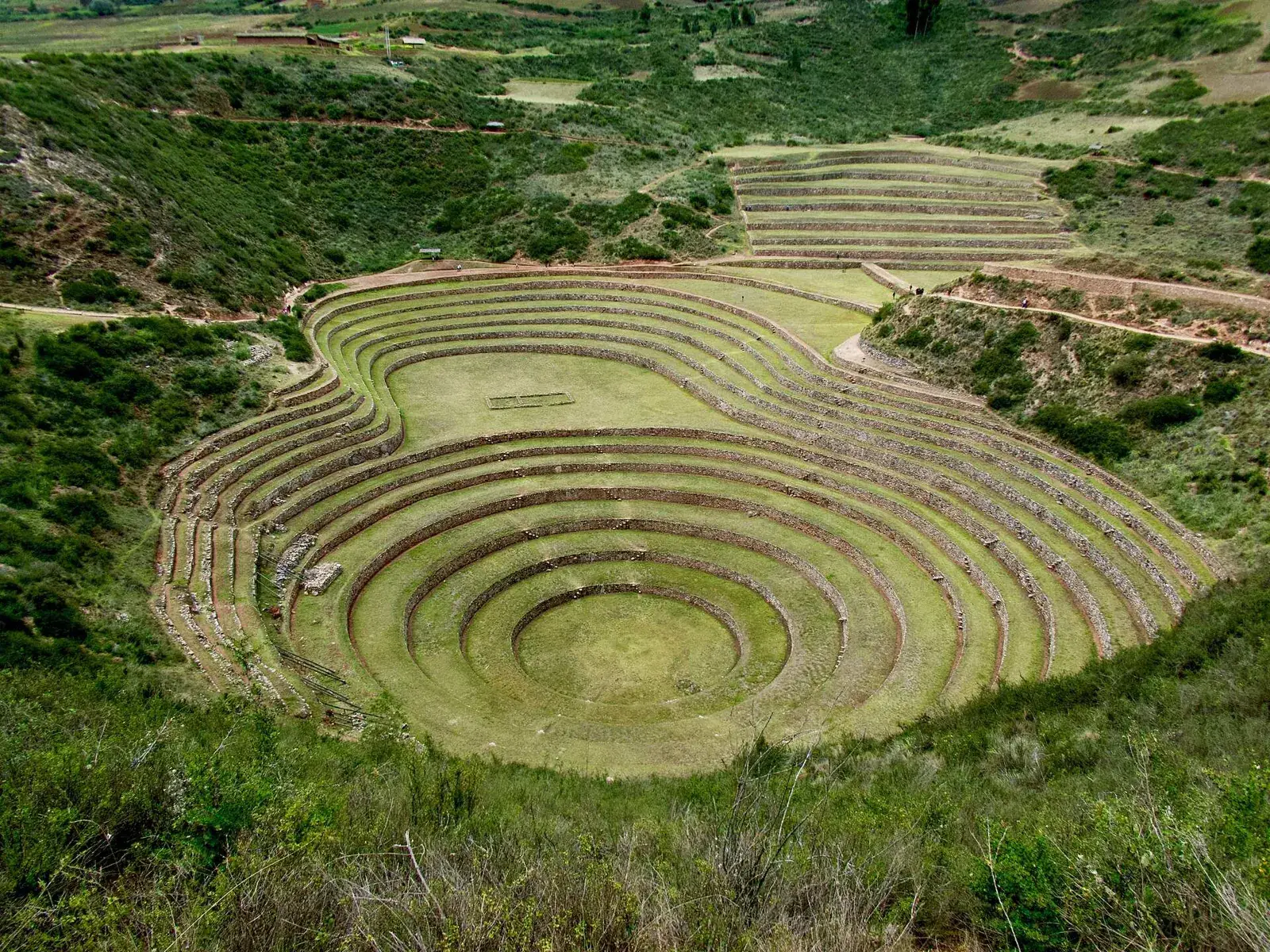
Moray is a group of large, circular terraced depressions on a high plateau above the Sacred Valley. It takes about 45 minutes to an hour to see, and is almost always combined with the Maras salt mines. The site looks striking from the rim and rewards a short walk, but how the Incas used it is debated, so treat any single explanation as a theory.
Map
What you will see
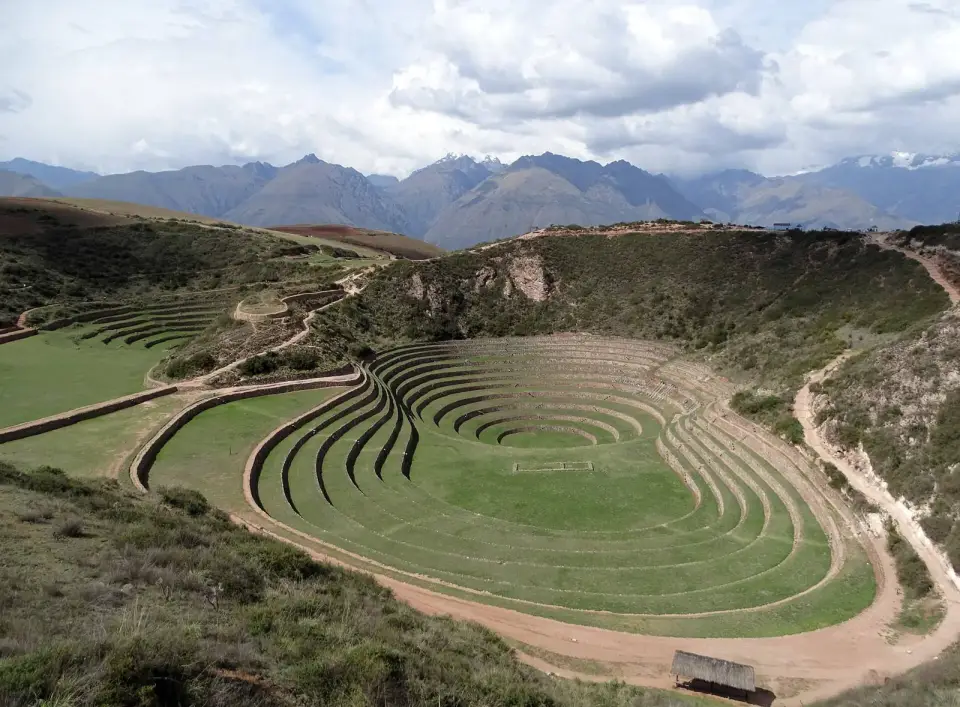
Moray sits on a plateau north-west of Cusco, above the floor of the Sacred Valley. The main attraction is a series of natural hollows that were shaped into concentric terraces, so that from above they look like amphitheatres cut into the earth. The largest is the one that appears in most photographs. Narrow stone steps built into the walls let people climb between levels.
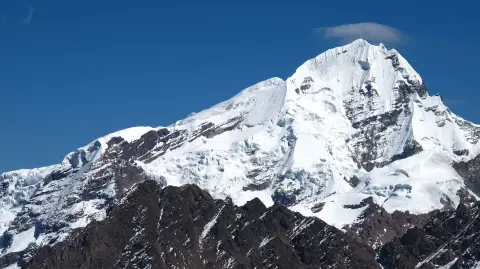
The scale is easier to appreciate from the rim, and you can also walk down into one of the terraces, depending on the access rules in force. A path around the rim gives different angles, and the surrounding farmland and distant snow peaks add to the setting.
What was it for?
This is the question every guide is asked, and the honest answer is that nobody knows for certain. A popular explanation is that Moray was an agricultural experiment station, where crops were tested in different microclimates. The idea is based on the fact that temperature varies between the terraces on different levels, so that the bottom can differ noticeably from the top. Other researchers have suggested ceremonial uses, or a combination of purposes, connected to water management and farming.
Be cautious about claims presented as fact on site, such as precise temperature differences or statements that the Incas developed new crop varieties here. Those are interpretations rather than established findings, and a good guide will say so.
Tours and activities
Bookable online, chosen for their traveller reviews.
-
From €107 per person
Sacred Valley
Private Sacred Valley Day Trip with Local Guide
-
From €107 per person
Sacred Valley
Moray and Maras Day Tour from Ollantaytambo to Cusco
-
Day trip From €62 per person
Sacred Valley
Moray ATV Tour from Cusco with Salt Mines and Tasting
-
From €65 per person
Sacred Valley
Private Half-Day Maras and Moray Tour from Ollantaytambo
Why the shape works
Whatever the purpose, the engineering is impressive and easy to appreciate without any theory. Each ring is a stone-faced terrace holding back soil, and the rings step down towards a flat floor. Because the hollow is a bowl, cold air tends to settle at the bottom while the upper rings catch more wind and sun, so conditions differ from level to level. That is the basis of the microclimate idea.
Visitors who look closely will notice the stone stairways set into the retaining walls. They are built as small projecting stones, which allowed people to move between levels without using paths that would have eroded the terrace edges. Drainage is a quieter feature: water had to leave the bowl somehow, and the structure is generally interpreted as having been designed with that in mind.
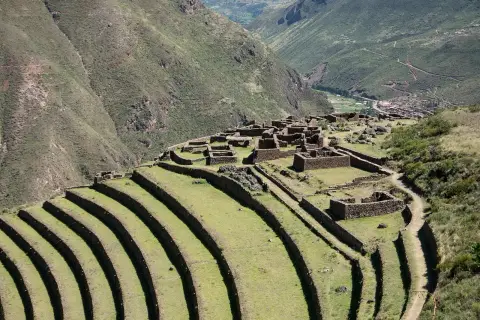
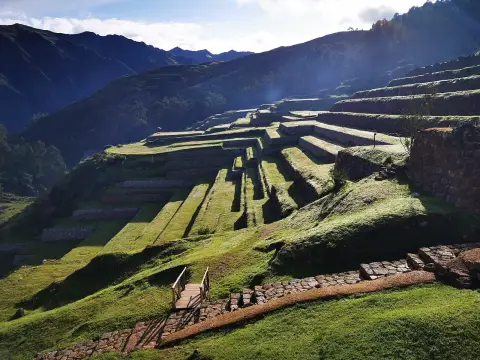
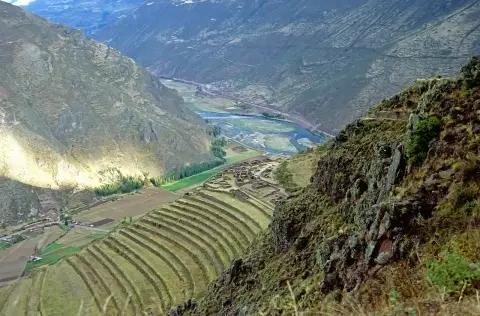
The same terracing skills are visible at working sites elsewhere in the valley, including at Pisac and Ollantaytambo, where terraces climb the hillsides in a more familiar form.
Getting there and fitting it in
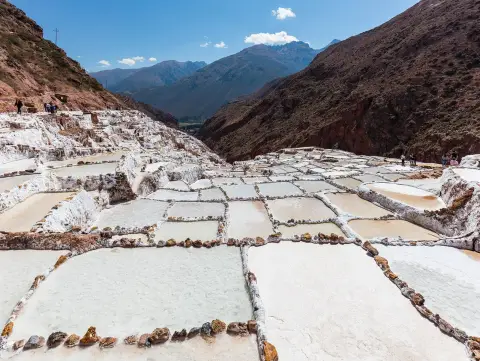
Moray is usually visited as part of a half-day or full-day tour of the Sacred Valley that also includes the Maras salt mines, and often a stop in Chinchero or Ollantaytambo. Doing it independently is possible with a taxi from Urubamba or a local transport arrangement, but the road is rural and taxis may need to wait for you, so agree the plan clearly before you set off.
The plateau is high, over 3,500 m, so the site is cooler and thinner in oxygen than the valley floor, and the sun is strong. Bring a jacket, sun protection and water. The area is exposed, and weather can change quickly, so a layer for wind or rain is sensible.
A visit is a good fit for a day when you want scenery rather than a long hike, and it works well after you have spent a night or two acclimatising. The ground around the terraces can be slippery after rain, and the steps are uneven.
Choosing between a tour and going alone
A tour is the simplest option. The operator handles the road, the timing and the entrance arrangements, and a guide can explain the terraces. Sacred Valley tours describes the usual formats and what to confirm before booking, including whether entrance fees are included in the price.
Going alone gives you flexibility, which matters if you want the site at a quiet moment. The difficulty is the last stretch of road: public transport towards Maras is local and infrequent, and taxis do not always wait. If you hire a driver, agree the waiting time and the total price before you leave, and confirm that the driver will take you on to the salt pans.
Keep an eye on timing. Light is better in the morning and late afternoon, and midday tour groups can fill the viewing points. Check the arrangements with your Sacred Valley hotel as well, since local hosts often know a driver who will do the circuit at a fair rate.
Altitude and weather on the plateau
Because Moray is higher than the valley floor, visitors coming up from Urubamba or Ollantaytambo gain several hundred metres in a short drive. That is not a dramatic jump, but if you are coming straight from Lima or have only just arrived in Cusco, you may feel it as breathlessness on the steps or a mild headache. Take it slowly and drink water.
The weather deserves respect too. On a clear day the sun at altitude is strong and the wind can be cold even when it is warm elsewhere. In the rainy season, roughly November to March, afternoon showers are common and the grass and steps become slippery. In the dry season, mornings can be cold and the middle of the day pleasant.
If you are still adjusting to altitude, read the advice on altitude sickness before choosing how much to fit into a day, and consider Cusco as a base for the first nights rather than going straight to the valley.
Common mistakes at Moray
The most common mistake is expecting to spend half a day. The terraces are impressive, but the site is compact, and most visitors are done within an hour. Treat Moray as one stop on a larger loop rather than the whole outing.
Another is treating the guide's theory as settled fact. Statements about exact temperature differences, or the idea that crops were bred here, are interpretations. Enjoy the explanation, but remember that it is not proven.
A third mistake is ignoring the rules. Access to the terraces can be restricted, and walking on or climbing the retaining walls damages them. Follow the signs and the staff instructions on the day.
Finally, do not forget a layer. The plateau is exposed, and visitors who arrive in a T-shirt after a warm morning in the valley often wish they had brought a jacket. A hat and sun protection are just as useful.
Where to sleep
-
Find hotels
Urubamba
Central, with the most choice and the easiest road links
-
Find hotels
Ollantaytambo
Inca town with the trains to Machu Picchu
-
Find hotels
Pisac
Market town with a citadel above it, closest to Cusco
-
Find hotels
Yucay
Quiet and green between Urubamba and Ollantaytambo
Frequently asked questions
How long do I need at Moray?
Most visitors spend 45 minutes to an hour. Add time if you want to walk the rim or take photographs in good light.
Can I visit Moray and the Maras salt mines on the same day?
Yes, and this is the standard combination. They are close to each other, so tours often visit both in a half day or as part of a longer Sacred Valley itinerary.
Is a ticket needed for Moray?
Access arrangements for Sacred Valley sites change, and some are linked to a regional tourist ticket. Ask the tour operator.
Is Moray worth visiting?
Yes, if you like landscapes and unusual archaeology. It is smaller than the big Inca citadels and has less to explore, but the circular terraces are unlike anything else in the valley. Pair it with the salt pans to make a full half day.
Can I walk down into the terraces at Moray?
This depends on the rules in force, which have varied over time. Some visitors have been allowed to descend by the stone steps, while at other times access has been limited. Follow the signs and the guard's instructions.
Does Moray affect altitude sickness?
It is higher than the valley floor, so you may notice breathlessness on the steps. If you are still adapting, go slowly and see altitude sickness.
Can I visit Moray by public transport?
It is possible to reach the area by local transport, but connections are limited and the last stretch is rural. Most visitors take a tour or hire a taxi that waits. Compare the options on our Sacred Valley tours.
What is the best time of day to visit Moray?
Morning or late afternoon usually gives softer light and fewer tour groups. Midday is busiest and the sun at altitude is strong, so bring sun protection whichever time you choose.