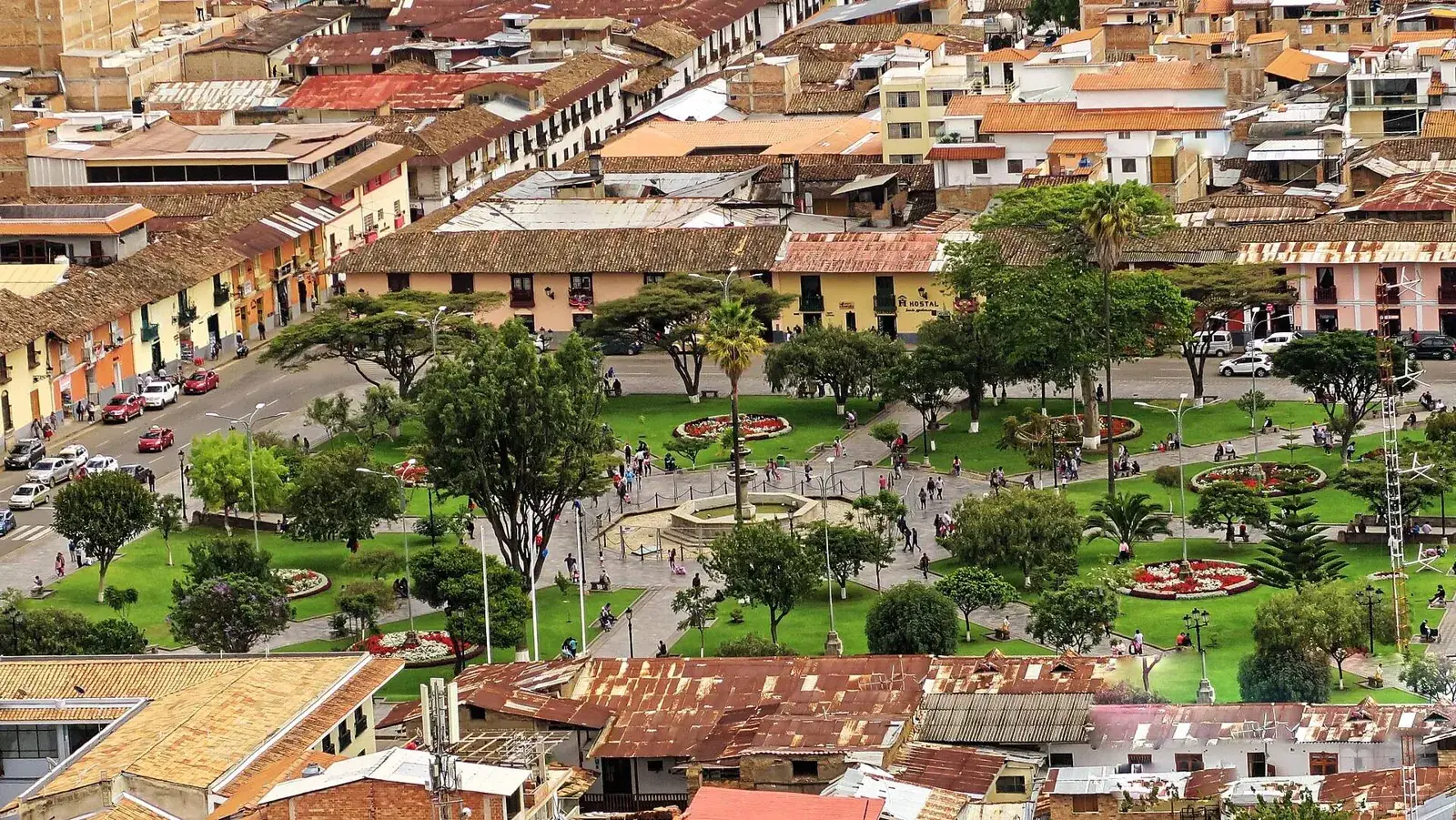
Cajamarca needs two nights. It is a small, friendly colonial town with a turning-point in history on its main square, thermal baths, a high-altitude aqueduct site and excellent dairy cooking. At about 2,700 m, it is gentler than the southern Andes. Include it if you are exploring the north beyond the coast.
In this section
-
 Attraction
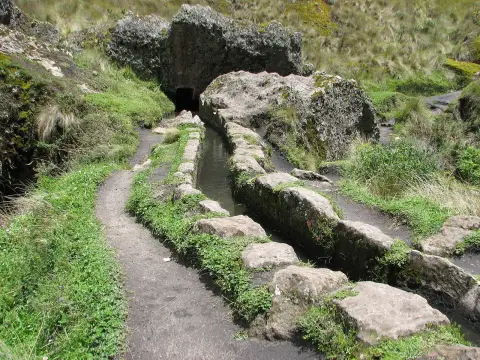
Cumbemayo
A high plateau above Cajamarca with a very old water channel cut into volcanic rock and a forest of wind-carved stone pillars.
-
 Attraction
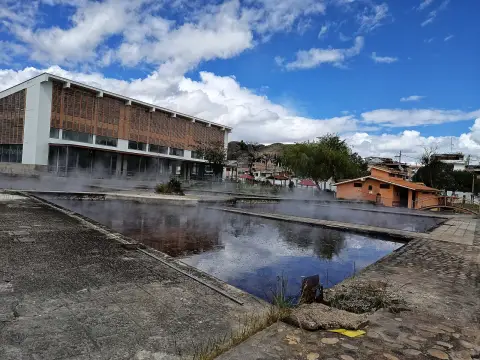
Baños del Inca
Hot springs about 6 km from Cajamarca, linked by tradition to Atahualpa, with private pools and a historic Inca pool.
-
 Attraction
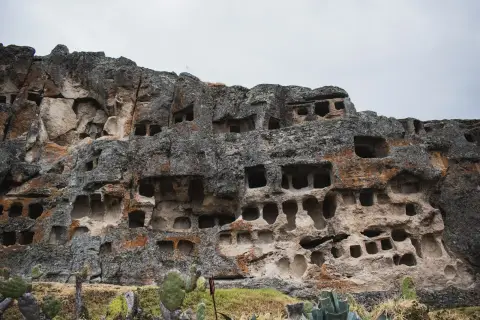
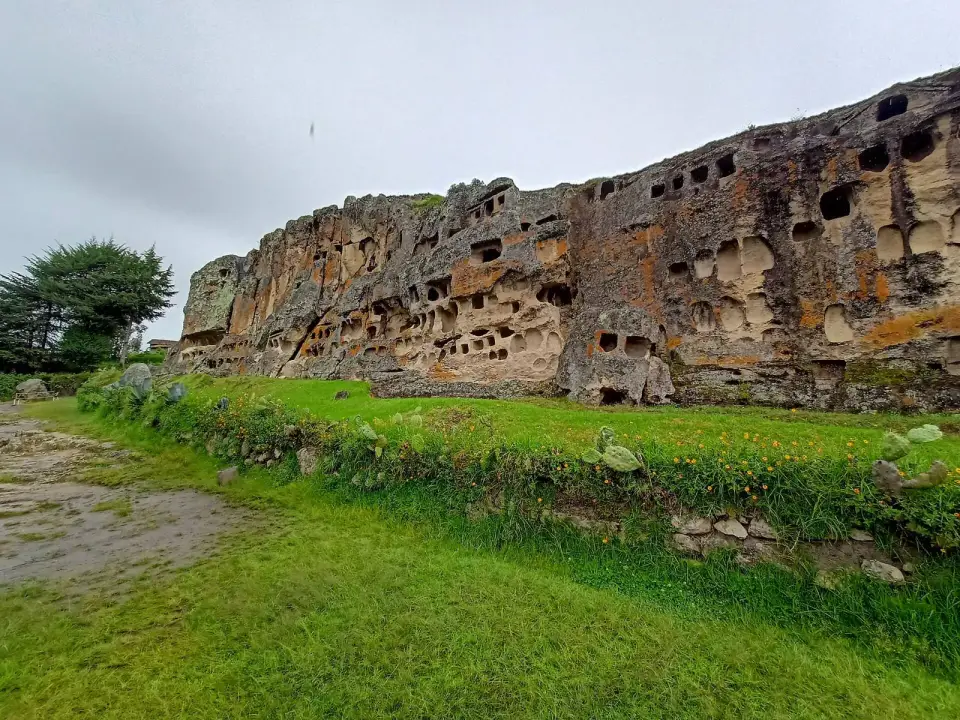
Ventanillas de Otuzco
A pre-Inca necropolis of hundreds of window-shaped burial niches carved into a rock wall a short ride from Cajamarca.
-
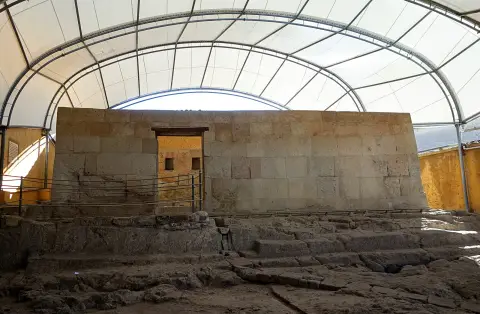 Attraction
Ransom Room
The one Inca building still standing in Cajamarca, linked by tradition to Atahualpa's captivity and ransom in 1532-1533.
-
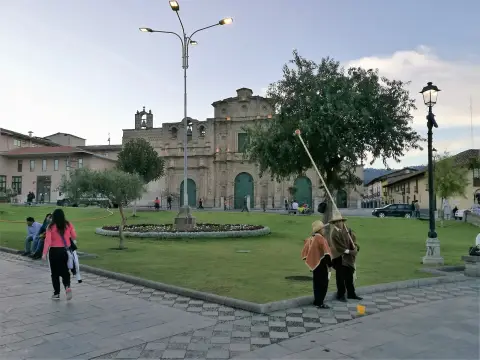 Attraction
Plaza de Armas and Cathedral
The main square of Cajamarca, where Atahualpa was captured in 1532, framed by a Baroque cathedral and the San Francisco church.
Where history turned
In November 1532, the Inca ruler Atahualpa met Francisco Pizarro and a small Spanish force in Cajamarca. The Spanish ambushed the Inca party, captured Atahualpa and held him for ransom. He was later executed, an event that marked the beginning of the end of the Inca empire. Visitors can see the Ransom Room (El Cuarto del Rescate), where the Inca is said to have offered to fill a room with gold and silver, though historians note that the room as it stands may not be the original.
The story gives the town a quiet weight, and it is worth reading about before you arrive. Standing in the plaza, you are on the ground where the encounter began, and local guides tell the story from a Peruvian point of view, which can differ from the accounts you may know. The town makes a thoughtful counterpoint to the Inca heartland around Cusco.
The town
The centre is a compact set of colonial churches built of carved stone, with arcaded streets and a main square lined with a cathedral and convent. Hills surround the town, and the Santa Apolonia viewpoint gives an easy overview. Cajamarca is also known for its carnival in February, a boisterous festival of water and music, which fills hotels.
Unlike Cusco, it is relatively uncrowded, and walking around feels unhurried. Churches here tend to be modest in size but rich in stone carving, and many have no admission charge, though opening hours vary and some close in the middle of the day. Cafes and small restaurants around the plaza make good stops, and evenings are cool and pleasant. If you plan a visit during carnival, book accommodation early and expect noise.
Baths and stone channels
The Baños del Inca are thermal springs a short ride from town, where private pools can be rented. The Inca is said to have used them. Further out, at around 3,500 m, Cumbemayo has a long channel cut precisely into volcanic rock and a landscape of rock formations that look like a forest of stone. It is usually visited on a half-day tour, with a walk, so bring a jacket and good shoes. Ventanillas de Otuzco, rows of burial niches in a hillside, are another short trip.
The channel at Cumbemayo is thought to be very old, and its straight lines and sharp turns have puzzled researchers. The walk is not hard, but the altitude is higher than in town, so go slowly. Take water, a hat and a waterproof layer, because weather can change quickly. See altitude sickness for general advice for higher excursions.
Food
The surrounding highlands are dairy country, and cheese, manjar blanco (a sweet milk spread) and cream-based desserts are specialities. Try a regional cheese platter, a stew with local potatoes and a tamal. Restaurants vary, so ask your hotel which places have the local dishes.
Breakfast is a good time to try a local tamal with coffee, and mid-afternoon tea with cake and cheese is a regional habit. Cheese shops in the town sell the local products that are easy to carry, though check airline and border rules if you plan to take food home. The wider regional cuisine, from the coast to the highlands, is covered in eating in the north.
Getting there and when to go
Cajamarca is reached by road from Trujillo and Chiclayo, usually by bus over a mountain road, and by flights from Lima to its small airport; see flying in Peru and buses to choose between them. The dry season, roughly May to September, has clear days and cool nights. The wetter months, roughly December to March, are green but bring rain and possible road delays.
Plan buffer days if you are travelling by road in the rainy season, since landslides and delays are more frequent. Nights can be cold even in the dry season, so pack warm clothes. Check carnival dates if you want to join the festival or avoid it, and book ahead in either case.
Where to stay and how long
Hotels and guesthouses are concentrated around the main plaza, some in restored colonial houses with courtyards. Rooms around the plaza are convenient for evening walks, though they can be noisy at weekends, so ask for an interior room if you value sleep. Because the town is small, most sights are walkable, and taxis are cheap for the baths and other excursions. Two nights gives time for the plaza, the Ransom Room, the baths and a half day at Cumbemayo. A third night allows a slower pace or a trip to the countryside.
Meals are good value, and a local coffee or hot chocolate in a courtyard cafe is a pleasant way to warm up after sunset. Prices are moderate, and the atmosphere is quieter than in the large southern cities. Pack layers: days can be warm in the sun, but nights are cool. Sleeping at 2,700 m is rarely a problem, but a headache on arrival is possible, so rest on the first afternoon and drink water.
Cajamarca in a northern route
Cajamarca fits naturally between the coast and the cloud forest. A common route runs from Trujillo to Cajamarca, back down to Chiclayo and then onward to Chachapoyas, or in the opposite order. The northern itinerary sets out the stops and the time each takes.
Long road legs are part of the experience, so allow enough days and avoid tight schedules. Because the region is less visited, services are simpler than in the south, and information is best gathered locally. Ask at your hotel about road conditions and about which bus companies are reliable on the day you travel.
Map
Where to sleep
-
Cajamarca
Colonial highland town with thermal baths nearby
A compact colonial centre with a main square, churches, restaurants and many hotels. Thermal baths and the countryside around the city are a short ride away.
Keep in mind: Evenings are cold, and some older hotels have little heating, so ask before booking.
Find hotels →
Weather in Cajamarca
Forecast: MET Norway
Frequently asked questions
Is Cajamarca worth visiting?
Yes if you want history without crowds. It also fits well in a route between the north coast and Chachapoyas.
Is altitude a problem?
Less than in the south, but some visitors notice it, especially at Cumbemayo. Take it slowly.
How long is the journey from the coast?
Several hours by road from Chiclayo or Trujillo, over winding roads.
Is the Ransom Room authentic?
The room is traditionally identified as the one Atahualpa offered to fill, though historians question whether it is the original. It remains a powerful place to learn about the story.
When is the Cajamarca carnival?
It is held in February, usually in the days before Lent, with dates that change each year. Expect crowds, water games and loud music, and book ahead.
Are the Baños del Inca worth a visit?
They are a pleasant, easy excursion, and renting a private pool is a relaxing way to end the day. Facilities and prices change.
Can I fly to Cajamarca?
Yes, there are flights from Lima, although services change from time to time. Consider flying in and returning by road to see more of the north.
Is Cajamarca good for families?
Yes, the town is calm and walkable, and the baths and the countryside appeal to children. Keep an eye on the altitude on excursions, and bring warm clothes for evenings.