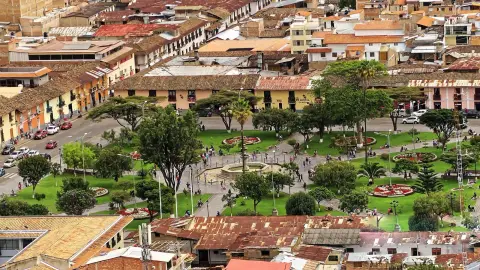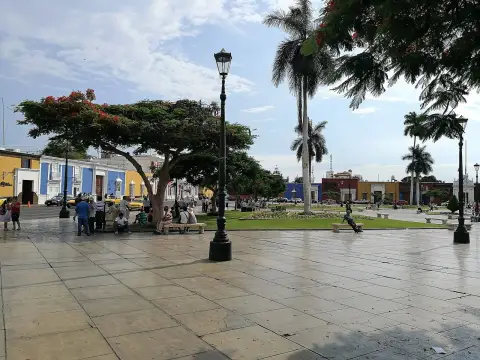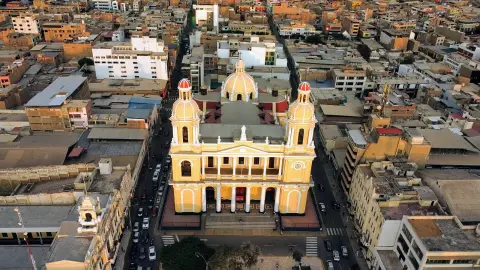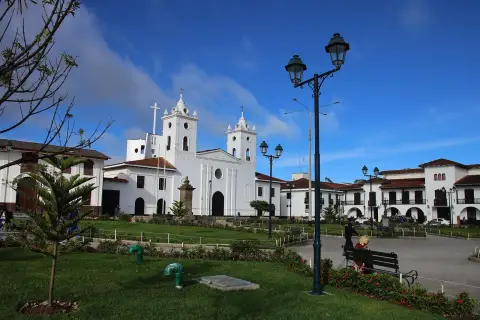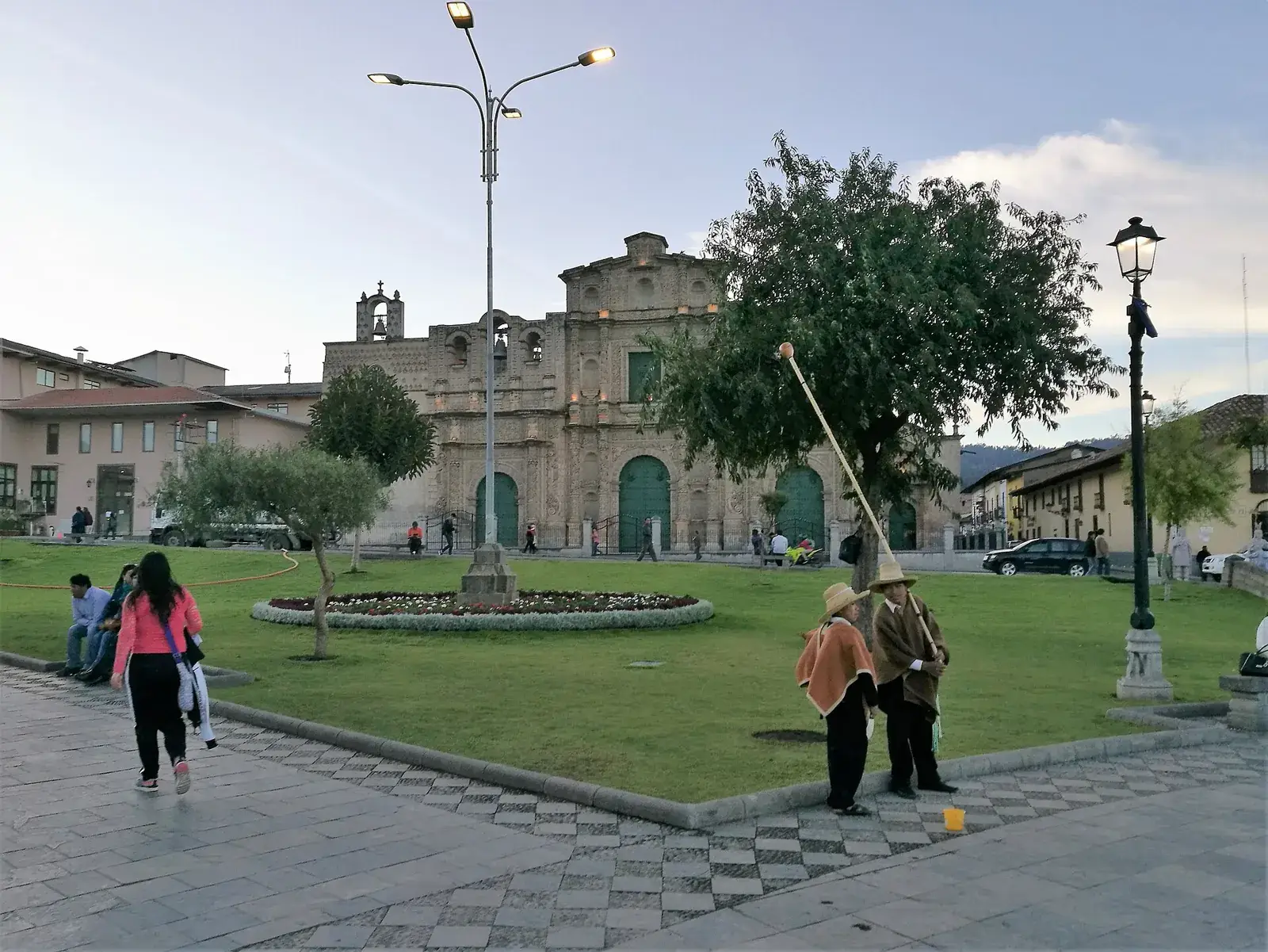
The Plaza de Armas is the centre of Cajamarca and the best place to start. It is the square where the Inca ruler Atahualpa was captured by Pizarro's men in 1532, and it is now a calm, walkable space with a stone fountain, benches and two grand churches. Allow one to two hours for the square, the Cathedral facade and the San Francisco church, and come back in the evening when the stonework is lit.
Map
Where the Inca empire changed hands
Every walk through Cajamarca begins here. In November 1532 the Inca ruler Atahualpa came to the town with a large retinue and met Francisco Pizarro's small Spanish force. The Spaniards attacked, killed many of the Inca's attendants and took him prisoner, and he was executed the following year. The Spanish accounts and the Andean memory of the event differ in detail, which is why local guides are worth hearing.
Little of the Inca-era layout survives above ground. Descriptions of the colonial town speak of a large walled square with an Inca platform called an ushnu at one corner, but today the plaza is a modern public garden, so the history has to be imagined from the setting rather than read from the stones. The background to the encounter is told in the Spanish conquest and in the Inca empire, and reading either before you arrive makes the square far more meaningful.
The square today
The plaza is a large, open rectangle of lawns, flower beds, trees and paved paths, with a stone fountain in the middle that dates from the colonial period. Locals sit on the benches, shoe-shiners and ice-cream sellers work the corners, and on many evenings there are families, students and small cultural events. It feels more like a living room for the town than a monument.
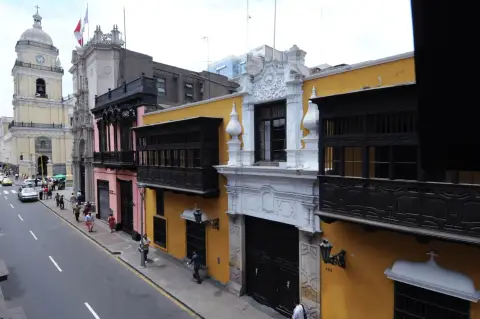
Around it are arcaded streets with shops, cafes, banks and municipal buildings, and in the morning the square is busiest with people on errands rather than tourists. Because the town is compact, almost everything of interest is within a few blocks, and the plaza works as a fixed point for finding your way. Pavements can be uneven, and the square is lit at night, which makes it a pleasant, usually safe place to walk, though the usual care with phones and bags applies.
The Cathedral
On one side stands the Cathedral of Santa Catalina, the main Catholic church of the town. Construction began in the 17th century and the building was raised to cathedral status in the following decades, and it was declared a national cultural heritage monument in 1972. It is Baroque in style, but its most striking element is the carved stone facade, with dense relief in a warm grey-brown stone and three arched doors.
Look at the roofline: instead of tall towers, the facade carries bell gables, and the bells themselves were cast in the 18th century. This restrained silhouette, combined with the lavish carving, is typical of the northern Andean Baroque and quite different from the churches of the southern highlands described in colonial architecture. The interior is known for its carved and gilded woodwork, but opening hours and the rules on visiting during services change, so check at the door.
San Francisco and the religious art museum
A short walk from the square, the Church of San Francisco is the second great stone facade of the centre. The present building was started at the end of the 17th century and took many decades to finish, and its three-tier Baroque front rewards a slow look. The towers were completed only in the 20th century, so the church shows how a project could stretch across generations.
The convent beside it holds a museum of religious art, with paintings and sculpture from the colonial period, and the small Chapel of the Virgin of Sorrows next door honours the patron saint of Cajamarca. Combine the church and museum with the plaza in one morning. If you are interested in colonial art in general, museums in Peru gives context, and ticket prices and opening hours for the museum should be checked locally.
Best time and how long to stay
A first visit takes one to two hours: a loop around the square, the Cathedral facade, San Francisco and a coffee under the arcades. Add time if you enter the museum or want to follow the town's history on foot to the nearby Ransom Room, a short walk from the plaza, which is covered on the Cajamarca guide.
Light is best in the late afternoon, when the facades warm up, and again after dark when they are illuminated. The dry season, roughly May to September, brings the clearest skies but cold nights, while the wetter months, roughly December to March, are green and showery. On major religious days and during the February carnival the square fills with processions, music and crowds, so see Peruvian festivals and book rooms well ahead if you plan to be there.
Getting there and fitting it in
Most visitors stay in hotels within a few blocks of the plaza, so you can simply walk out of the door. From the airport or the long-distance bus terminals a short taxi ride reaches the centre. Reaching Cajamarca itself usually means a flight from Lima, see flying in Peru, or a mountain bus from the coast, see buses in Peru and the routes from Trujillo and Chiclayo.
The plaza is the natural first stop on a two-night stay, before the baths and the countryside excursions. It also fits a longer northern circuit towards Chachapoyas, described in the northern itinerary. At about 2,700 m the altitude is mild, but see altitude sickness if you arrive straight from the coast and feel a headache on the first evening.
Where to sleep
-
Find hotels
Cajamarca
Colonial highland town with thermal baths nearby
Frequently asked questions
What happened in the Plaza de Armas of Cajamarca in 1532?
The Spanish force under Francisco Pizarro captured the Inca ruler Atahualpa here, after a surprise attack on his retinue. He was held for ransom and executed in 1533, an event that opened the way to the fall of the Inca empire. Read the Spanish conquest for the wider story.
How long do I need for the plaza and Cathedral?
One to two hours covers the square, the Cathedral facade and San Francisco. Add another hour for the religious art museum or a slow lunch under the arcades.
Can I go inside the Cathedral?
Usually yes, outside service times, but hours vary and some areas may be closed to visitors. Dress modestly and be quiet during Mass. If the doors are shut, the carved facade is the highlight anyway.
Is the Plaza de Armas safe at night?
It is busy and lit in the evening and generally comfortable, with locals sitting out. Take the usual precautions with phones and bags, and take a taxi back if you are far from your hotel late at night.
Is there an entrance fee for the plaza?
No, the square is a public space. Some churches and the museum may charge for entry, so check locally.
What is the best time of day to see the plaza?
Late afternoon gives warm light on the stone, and after dark the facades are lit. Mornings show everyday life, with the square full of residents going about their errands.
Can I combine the plaza with other sights on the same day?
Yes. The Ransom Room and the churches are within walking distance, and the thermal baths and countryside sites can be added in the afternoon by taxi or tour. See the Cajamarca guide for the full list.