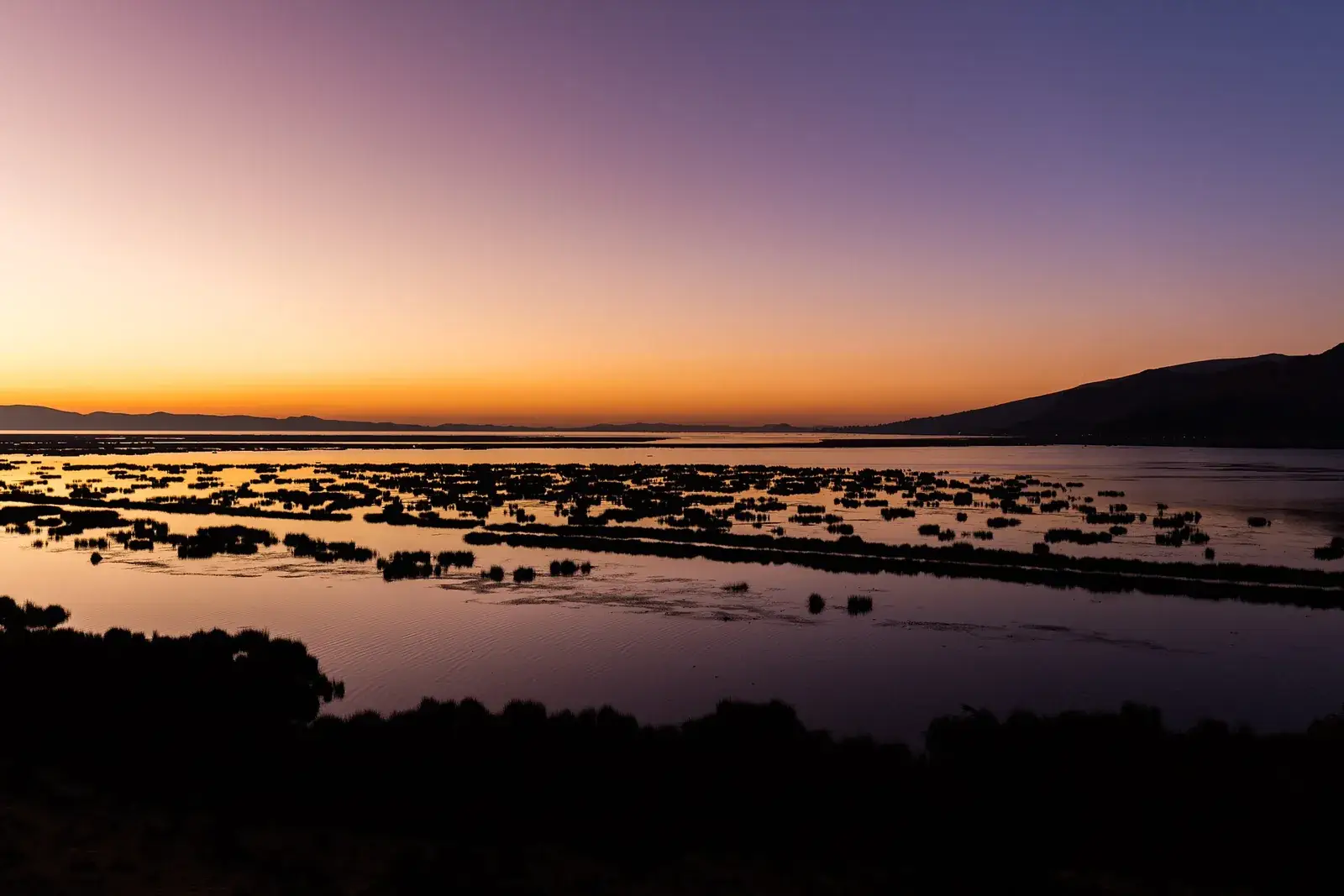
Give Lake Titicaca two days and one night if you can: a day on the Uros, Taquile and Amantaní islands with a homestay, and a morning at the ruins of Sillustani. The lake sits at about 3,800 m, so be acclimatised first. A rushed half-day tour sees the islands but not much of the life on them.
In this section
-
 Attraction
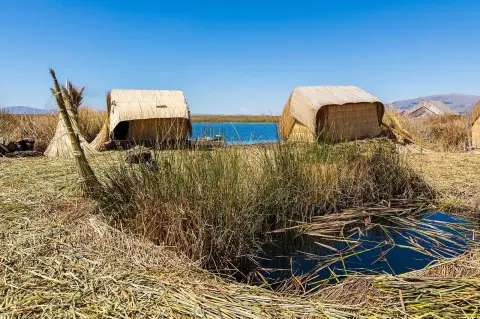
Uros Floating Islands
Islands built from totora reeds near Puno, home to Uros families who now rely heavily on tourism.
-
 Attraction
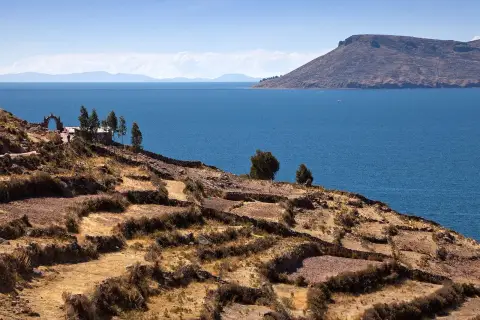
Taquile Island
A quiet island known for its terraced hills, community tourism and distinctive knitted and woven textiles.
-
 Attraction
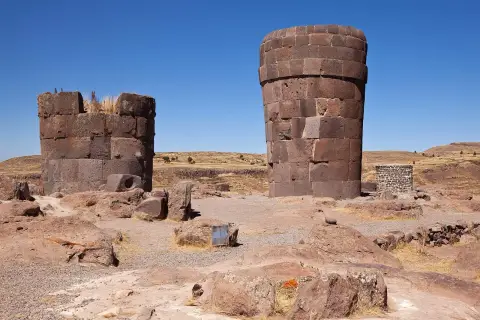
Sillustani
Tall stone burial towers on a windswept peninsula, an easy half-day trip from Puno.
-
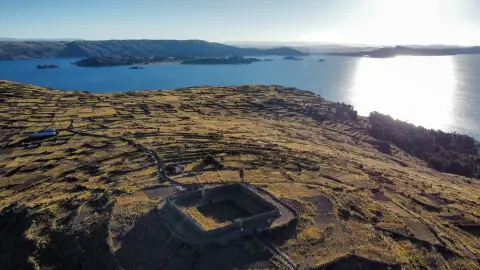 Attraction
Amantaní Island
A round, terraced Quechua island on Lake Titicaca where visitors sleep in family homes and climb to two hilltop temples at sunset.
The lake
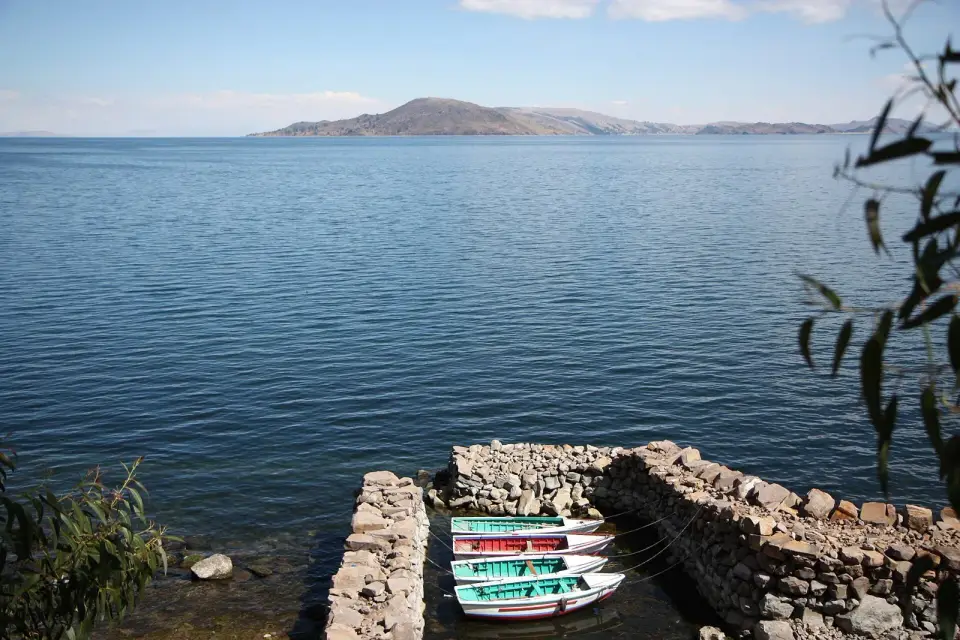
Lake Titicaca is so large that from the shore it looks like a sea, with a hard blue colour under the thin, bright air. It lies on the border between Peru and Bolivia, and the two countries share its islands, myths and reed-boat traditions. In Andean tradition it is the birthplace of the sun and of the first Inca.
On the Peruvian side almost everything starts from Puno. The lake itself is cold, and swimming is not part of the visit. Its reputation as one of the highest large navigable lakes in the world adds to the sense of an unusual, high place. The light is intense, the horizon is wide and, at dawn and dusk, the water takes on shades of silver and deep blue that explain why the lake is central to Aymara and Quechua stories.
The islands
The Uros are communities living on islands built from layers of totora reed, with reed houses and boats. They are the closest to Puno and the most visited, and the experience can feel staged, so ask about how the community benefits. Taquile is a larger natural island, known for its knitting tradition and terraced slopes, and for a communal way of life with distinctive dress. Amantaní offers homestays in family houses, with simple food and a quiet evening. Staying overnight gives a better sense of the place than a quick visit.
Be mindful that cameras and tourism can be intrusive. Ask before taking photographs of people, and buy craftwork directly from the makers. See responsible travel for general guidance on how to visit communities without causing harm.
On the shore
Sillustani, a short drive from Puno, has tall stone burial towers called chullpas on a peninsula above a lake, built by pre-Inca and Inca peoples. Late afternoon light is the best. Other lakeside towns and viewpoints can be added by car, but most visitors keep to the islands and Sillustani.
The shoreline also has a quieter side that most tours skip: small farming villages, reed beds full of birds and market towns where Aymara and Quechua remain the languages of daily life. If you have a spare half day, a driver can take you to one of these places for a slower look at the lake without the boat crowds.
Peru or Bolivia
You can see the lake from either side. The Peruvian side offers the floating islands and the homestay culture, and the Bolivian side has Copacabana and the Isla del Sol. Many travellers cross the border between the two as part of a longer route. See crossing to Bolivia for the practicalities.
Whether to cross depends on your wider route. The Bolivia itinerary shows how the lake fits into a trip that continues south. See Cusco to Puno to understand how to reach the lake from the main Andean circuit. If Bolivia is not on your list, the Peruvian side alone is a satisfying two days.
A realistic two-day plan
On day one, take a morning boat from Puno to the Uros islands, continue to Taquile or Amantaní, and spend the night with a family. Eat the simple dinner, walk to a viewpoint for sunset and go to bed early, since the cold arrives quickly. On day two, take the early boat back after breakfast, rest and then visit Sillustani in the afternoon light.
If you prefer to stay in Puno, a day boat trip plus a separate half day to Sillustani works well. Pack a small bag for the island, since baggage is carried by hand up steps and paths, and leave the rest at your hotel in Puno. Whichever plan you choose, book through a reputable operator and ask what is included and how long you will have on each island. Compare options for where to stay in Puno, and avoid squeezing too much into a single short day.
Buying crafts and food on the islands
Knitted hats, textiles and reed crafts are sold directly on the islands, and buying from the makers is the most direct way to support the communities. Prices are fair when you take time, and quality varies. Taquile is particularly known for its knitted hats and woven belts.
Meals on the islands are simple: usually soup, fish or eggs, potatoes, and herbal tea. Bring snacks and water in case the menu does not suit you, and tell your host about any dietary needs in advance, since options are limited. If you plan to take gifts to a host family, ask your operator what is appropriate, since practical items such as fruit or school supplies are more useful than sweets. See souvenirs for more ideas.
When to go
The dry season, roughly May to September, offers clear days and cold, sometimes freezing nights. The wetter months, roughly November to March, bring cloud and afternoon storms. The lake and its surrounding festivals peak in early February, around the Candelaria celebrations in Puno.
The best photographs are in the dry season, when the air is clear and the water deep blue, but the nights on the islands are then at their coldest. Bring a warm sleeping layer, even if your host provides blankets. For a wider view of seasons, read dry season.
Map
Weather in Lake Titicaca
Forecast: MET Norway
Frequently asked questions
Is a one-day Lake Titicaca tour enough?
It covers the main islands, but with little time on each. An overnight stay on Amantaní or Taquile is a much richer experience.
Are the Uros islands too touristy?
They are heavily visited, but they are still a real community. A small group and a respectful attitude improve the visit.
How cold does it get?
Days can be pleasant in sun, but nights are cold all year, and can reach freezing in the dry season.
How do I get to Lake Titicaca?
Most visitors fly to Juliaca or take a bus to Puno from Cusco or Arequipa, then take a boat from the Puno harbour. See Cusco to Puno to compare the options.
Can I swim in Lake Titicaca?
The water is very cold, and swimming is not part of a normal visit. Some hotels have heated pools for those who want to warm up.
Do I need to book the homestay in advance?
Operators usually arrange it as part of the package, and it is normally easy to book a day or two ahead. In busy periods such as the dry season, book earlier.
What language do islanders speak?
Aymara, Quechua and Spanish are all heard around the lake, depending on the community. A few words of Spanish and a friendly greeting help. See Spanish phrases for the basics.
Is the lake suitable for older travellers?
Yes, with care. The altitude, the cold and the steps on the islands are the main challenges. Check with a doctor beforehand and keep the pace gentle.