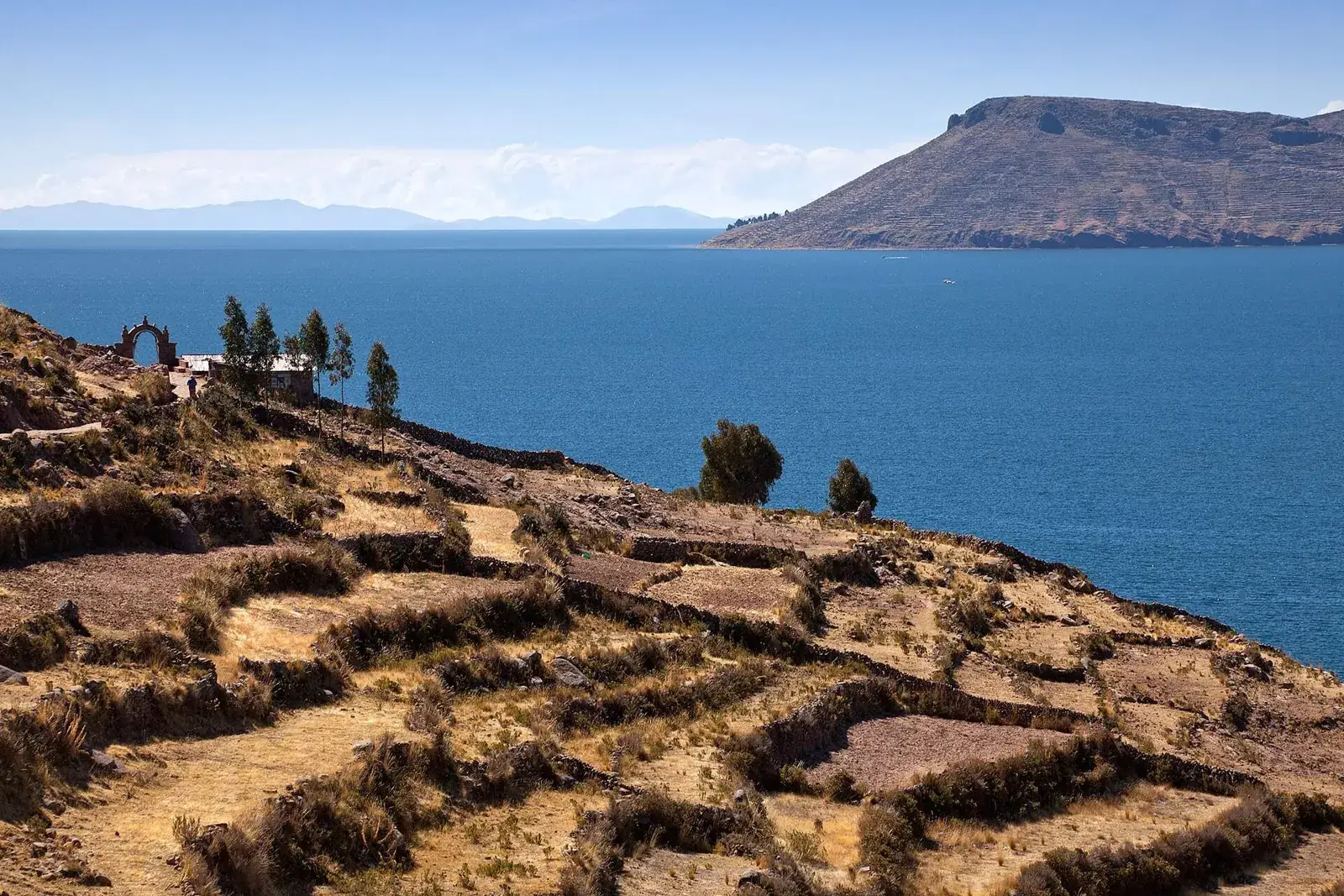
Taquile is an island in Peruvian Lake Titicaca, several hours by boat from Puno on a typical tour, known for its community-run tourism and its textile tradition. Plan a full day or an overnight stay. The island involves a walk uphill at around 3,900 m, with fine views, simple meals and a slower pace than the Uros islands.
Map
Knitting and weaving
Taquile is known for its textiles. In the island's tradition, men knit and women spin and weave, and clothing signals status and age. Men wear knitted caps whose colours and design carry meaning, and wide woven belts are part of everyday and festive dress. UNESCO has recognised the textile art of Taquile as part of humanity's intangible cultural heritage.
The textiles are sold through a cooperative shop on the main square. Buying there supports local producers, and quality is generally considered high. Prices reflect the work involved, so avoid bargaining as hard as you might in a market. For how to judge what is hand-made, see souvenirs.
Walking the island
Boats arrive at a landing point, and a path of stone steps climbs to the main village. The climb is steep, and at this altitude it feels harder than the distance suggests, so go slowly and take breaks. There are no cars on the island, and paths link terraced fields, stone arches and small settlements.
From the higher parts, there are wide views across the lake, with Bolivian mountains visible on a clear day. The sky and water are strikingly blue, and the light is strong, so sun protection is essential even when it feels cool.
Lunch is typically simple, based on local trout, quinoa and potatoes, served in family-run restaurants. Vegetarian choices are possible but plain. Island accommodation is available in family homes, which allows a quieter evening and sunrise. Facilities are basic, nights are cold and electricity can be limited, so bring a torch and warm clothing.
Community tourism on the island
Tourism on Taquile is organised by the community rather than by outside businesses, and that shapes the visit. Families take turns hosting visitors, restaurants are run by island families and the cooperative sells the textiles. The system aims to spread income fairly, and it is one reason the island has kept a calmer feel than places with large commercial operations.
As a visitor, you are expected to follow the island's rhythm. Meals can take time, and menus are limited. Do not expect varied choices or fast service. If you stay overnight, you will be a guest in a family home, so accept simple food and share the evening with people who may speak Quechua or Spanish rather than English.
The practical lesson is to pay fairly and without haggling hard, to ask before taking photographs of people, and to follow the guidance of your hosts about where to walk. Responsible travel explains how spending in places like this reaches local families.
Getting there
Boats run from Puno, and the crossing takes a few hours, so a day trip leaves little time on the island. Combining Taquile with the Uros islands is a common arrangement, but it makes the day long and gives each stop less time. If you have time, an overnight stay is a better way to experience the island, as most day visitors arrive and leave within the same hours.
You can book through agencies in Puno, with prices that vary according to what is included. Ask whether the island entrance fee and lunch are included, and how long you will have on the island. Boat quality and safety standards vary, so choose operators with life jackets and a good reputation, and avoid the roughest weather days when the lake can be choppy.
Altitude, weather and what to pack
Taquile is at roughly 3,900 m, a little higher than Puno, and the steps from the landing to the village are the part most visitors find hardest. Do not attempt the climb in a hurry, and pause often. If you arrived in Puno only a day or two before, you may feel the effect more. For the symptoms and what to do about them, see altitude sickness.
The weather is changeable. Days can be warm in the sun and cold in the shade, and the wind on the water adds a chill. Layers, a windproof jacket, a hat, sunscreen and sunglasses are the basics. Bring water and snacks, since island supplies are limited and prices can be higher than on the mainland.
For an overnight stay, add a torch or head-lamp, a warm sleeping layer, small notes in soles and a plastic bag for rubbish. Do not rely on cards or cash machines on the island, and plan your cash accordingly before you leave Puno.
Choosing between Taquile and other trips
For travellers with a day or two around Puno, the choice often comes down to character. The reed islands are quick and visual, Taquile is slower and more about walking and textiles, and Sillustani is about archaeology and landscape. Each takes a different amount of time and suits a different kind of traveller.
If you enjoy walking, village life and a quiet evening, Taquile is the best of the three. If you have limited time or dislike boats, the burial towers at Sillustani make a shorter outing by road. For all the options and how they fit together, see Lake Titicaca.
Where you stay in town matters too. Where to stay in Puno describes the areas, and a warm, comfortable room helps after a night on the island or a cold boat day.
Frequently asked questions
Is Taquile worth visiting?
Yes, if you want a quieter, more traditional experience than the Uros islands and enjoy walking. The long boat time makes it best with a relaxed schedule.
Can I stay overnight on Taquile?
Yes, with island families. Conditions are basic and nights are cold, but it is a good way to see the island without the day crowds.
How long is the boat from Puno?
A few hours each way on a typical tour. Ask your operator for the current duration.
Is it possible to visit Taquile and the Uros islands in one day?
Yes, many operators offer this combination. It is a long day with limited time at each stop, so overnight on Taquile is a better option if you have the time.
What should I buy on Taquile?
The cooperative shop sells hand-made textiles, including caps, belts and woven bags. Prices reflect the work, so do not haggle hard. Check the tag or ask about who made an item.
Are there cash machines or card payments on Taquile?
Do not count on them. Bring enough cash in small notes for meals, textiles and any fees, and plan for the whole trip before you leave Puno.
Is Taquile suitable for children or older travellers?
The steps and altitude make it tiring for anyone who is not used to them. Take it slowly, rest often and consider an easier trip such as Sillustani if mobility is limited.
What language is spoken on Taquile?
Residents speak Quechua and Spanish. English is limited, so learn a few Spanish phrases. A short greeting and thanks are welcome.