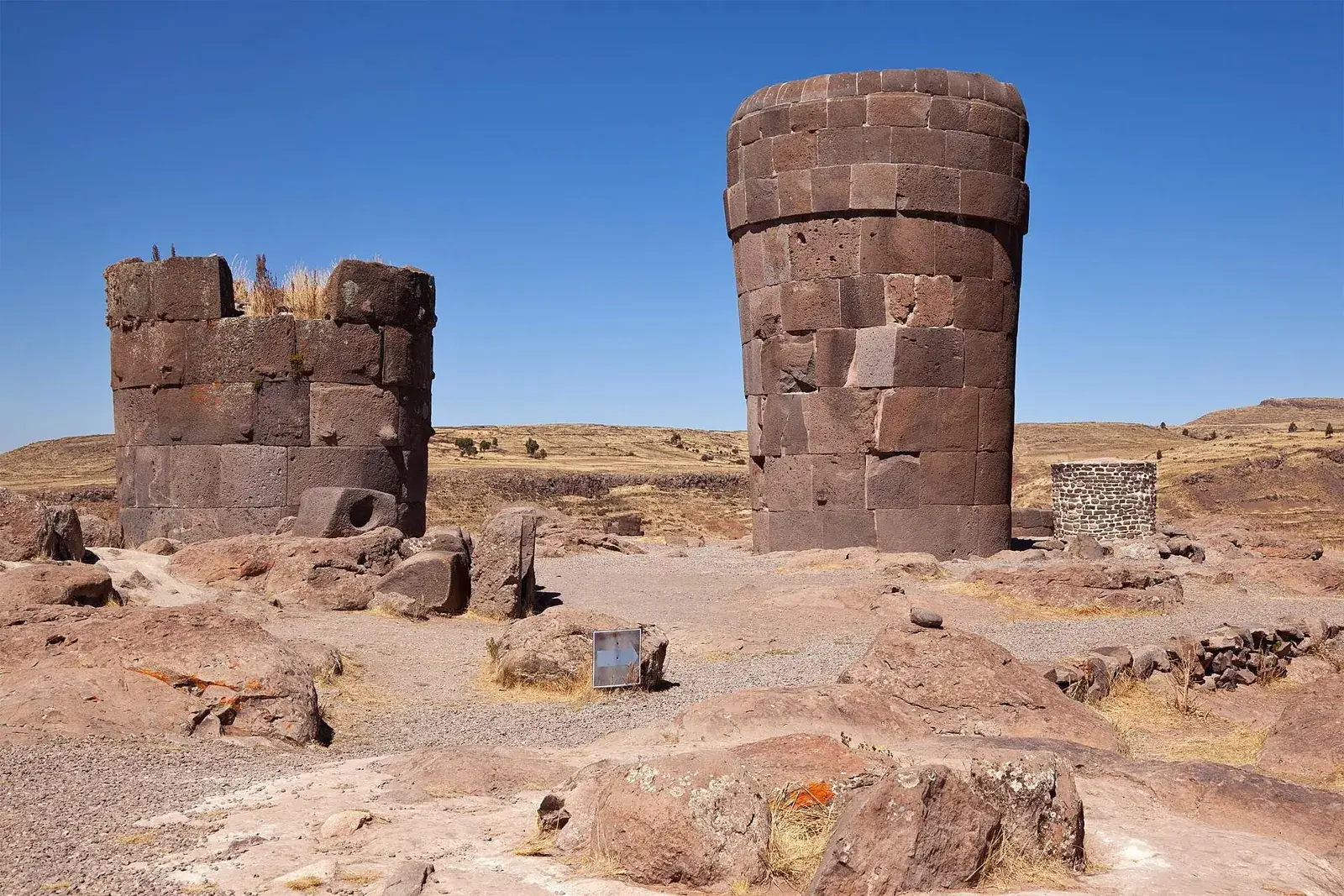
Sillustani is an archaeological site of tall stone burial towers called chullpas, on a peninsula in Lake Umayo, a short drive from Puno. Plan a half day, ideally late in the afternoon when the light is warm. The towers are associated mainly with the Colla people and were later affected by Inca expansion, but the finer details of their use are debated.
Map
What chullpas are
A chullpa is a funerary tower used for burying important people, often along with offerings. Chullpas are found across the high Andes of the Titicaca basin. At Sillustani they stand on a hill overlooking the lake, and some are impressively tall, built with finely cut stones that become slightly wider towards the top.
The site is usually attributed to the Colla people, who dominated the area before the Incas. Some towers show Inca-style stonework, which suggests that Inca builders were active here after the area was conquered. A few towers are unfinished, with stone blocks and ramps left behind, which helps visitors understand how they were built. The dating of individual towers, and the exact beliefs behind them, remain topics of study, so treat precise explanations with some caution.
The setting and the visit
The towers stand on a peninsula in Lake Umayo, which is smaller and quieter than Titicaca itself. The landscape is open, with grasslands, grazing animals and wide skies. The wind can be strong, and the site has little shade.
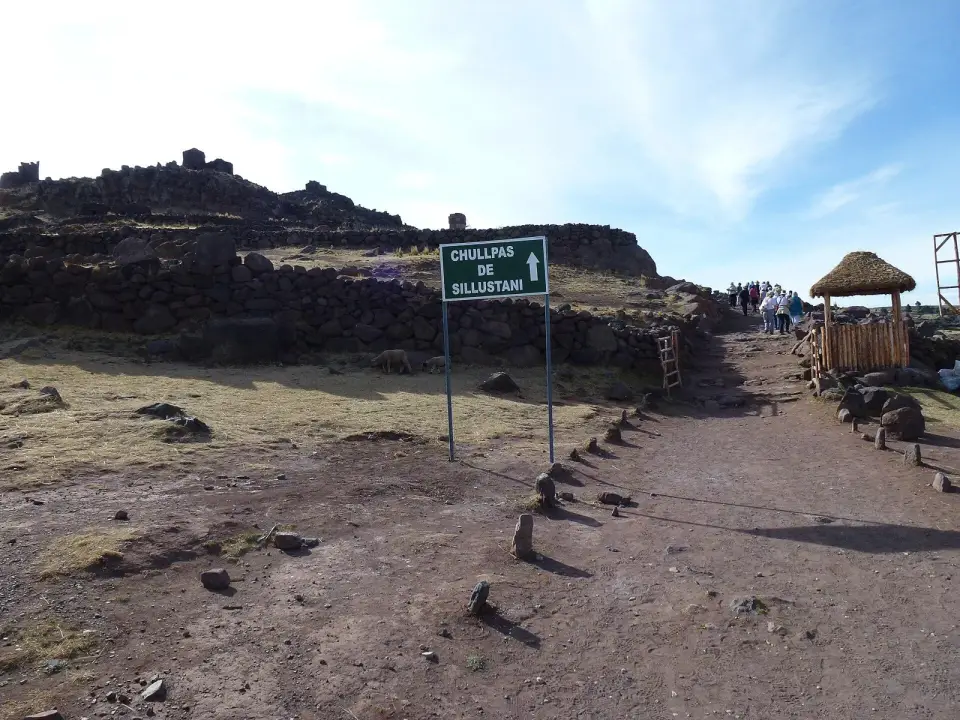
Visits are usually done in about two hours on site, following a path around the peninsula with a guide who explains the towers and local traditions. In places you can see decorative details, such as a carved lizard on one tower, which guides often point out. Local women often sell textiles and crafts near the entrance, and buying a small item is a way to support the community.
The late afternoon is a favourite time because the light brings out the colour of the stone and the lake. Tours that go in the afternoon leave Puno after lunch and return around dusk, and the road is short enough to fit into a day with other plans.
How the towers were built
One of the appeals of Sillustani is that the construction methods are visible. The stonework in the best-preserved towers is tightly fitted, with blocks shaped to curve smoothly, and the tower widens as it rises. The builders worked without mortar in the best examples, and the result has stood for centuries in a harsh climate.
The unfinished towers are the best teachers. A ramp of earth and stone remains beside the structure, and the blocks are visible in different stages of shaping. This supports the explanation that stones were hauled up a ramp and set from above. As with all such reconstructions, it is a reasonable reading of the evidence, not a recorded account.
Each tower was a burial place for a group or family of high status, and bodies were placed inside along with goods. The exact customs and the social structure behind them are still being studied. If a guide speaks with certainty about how many people were buried in a tower or what each offering meant, treat it as a general interpretation rather than a firm fact.
Practical planning
Sillustani is about 30 km from Puno by road, and most travellers join a half-day tour. Going independently with a taxi or private driver is possible and offers flexibility on timing, but agree on a price and waiting time in advance.
The site lies at around 3,900 m, and the high-altitude sun and cold wind mean that you should bring layers, a hat, sunscreen and water. The walk is not long, but it includes gentle climbs. If you are still adjusting to altitude after arriving in Puno, walk slowly and take rests.
An entrance fee is usually charged, and it may or may not be included in a tour price. Ask when you book. If you are choosing between excursions around Puno, Sillustani suits travellers interested in archaeology and landscape, while Taquile and the Uros islands suit those interested in lake life and community tourism.
Is it worth the trip?
For most visitors who like archaeology or photography, yes. The towers are unlike anything on the main Inca circuit, and the empty landscape gives a different feel from the crowded sites near Cusco. It is also a relaxed outing: the walking is gentle, the drive is short and no boat is needed.
It is less rewarding for those who want a lot of explanatory signs, because the site is mostly about the structures and the setting. A guide makes a difference, and many tours include one. Travellers who have limited time in Puno often choose between Sillustani and the lake trips, and the best answer depends on what you value. People who dislike boats or cold wind on the water may prefer this half day by road.
See things to do in Puno for other options in town, and Puno or Arequipa if you are deciding how many nights to give the lake before moving on.
Combining Sillustani with a Puno stay
Sillustani suits an afternoon in a Puno stay, after a slow morning that avoids exertion at altitude. A common plan is to spend the first day acclimatising in town, take a boat trip on the second and visit the towers on the third. See Puno stay to understand where to sleep and how to keep warm at night.
If you are short of time, one lake excursion plus Sillustani gives a good picture of the region in two half days. The broader Lake Titicaca area shows how the pieces fit together, and the advice on altitude sickness is worth reading before you plan strenuous days.
Dress for wind and sun. The best light is late in the day, but that is also when the wind can be coldest, so a warm layer and a hat are as important as sunscreen.
Frequently asked questions
How far is Sillustani from Puno?
About 30 km by road, a drive of roughly 30 to 45 minutes. Tours usually take a half day.
Who built the Sillustani towers?
They are mainly attributed to the Colla people, with Inca influence visible in some towers. Details of dating and use are still studied.
When is the best time to go?
Late afternoon gives warm light on the stone and the lake, though the wind can be cold.
Is Sillustani worth it compared with the Uros islands?
They are different. Sillustani is an archaeological and scenic trip by road, while the Uros islands are a short boat visit with a community focus. If you can, do one of each and see Uros islands for what to expect.
Can I visit Sillustani independently?
Yes, with a taxi or a private driver. Agree the price and waiting time before you set off, and check whether the entrance fee is separate. Many visitors prefer a tour for the guide.
What does the word chullpa mean?
It refers to a funerary tower of the Titicaca region, used to bury people of high status. The word is also used for similar structures elsewhere in the Andes.
How long should I spend at Sillustani?
About two hours on site is typical, and a half day including the drive. Add time if you like photography or want to walk slowly because of the altitude.
Is the site suitable for children?
The walk is gentle and the setting is open, so many children enjoy it. The wind and altitude can tire them, so bring layers and water. See Taquile for a more demanding option.