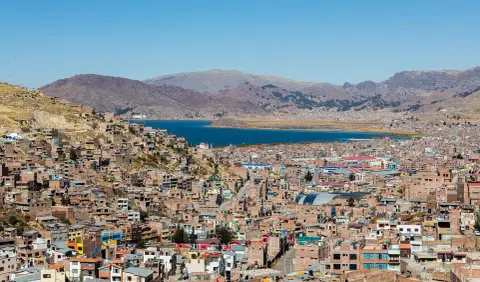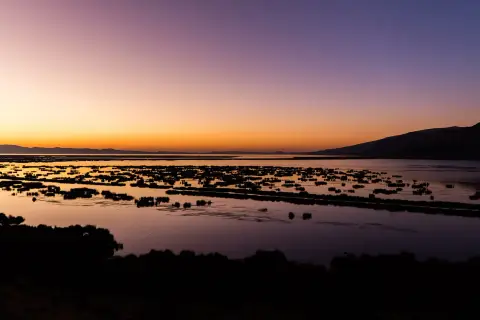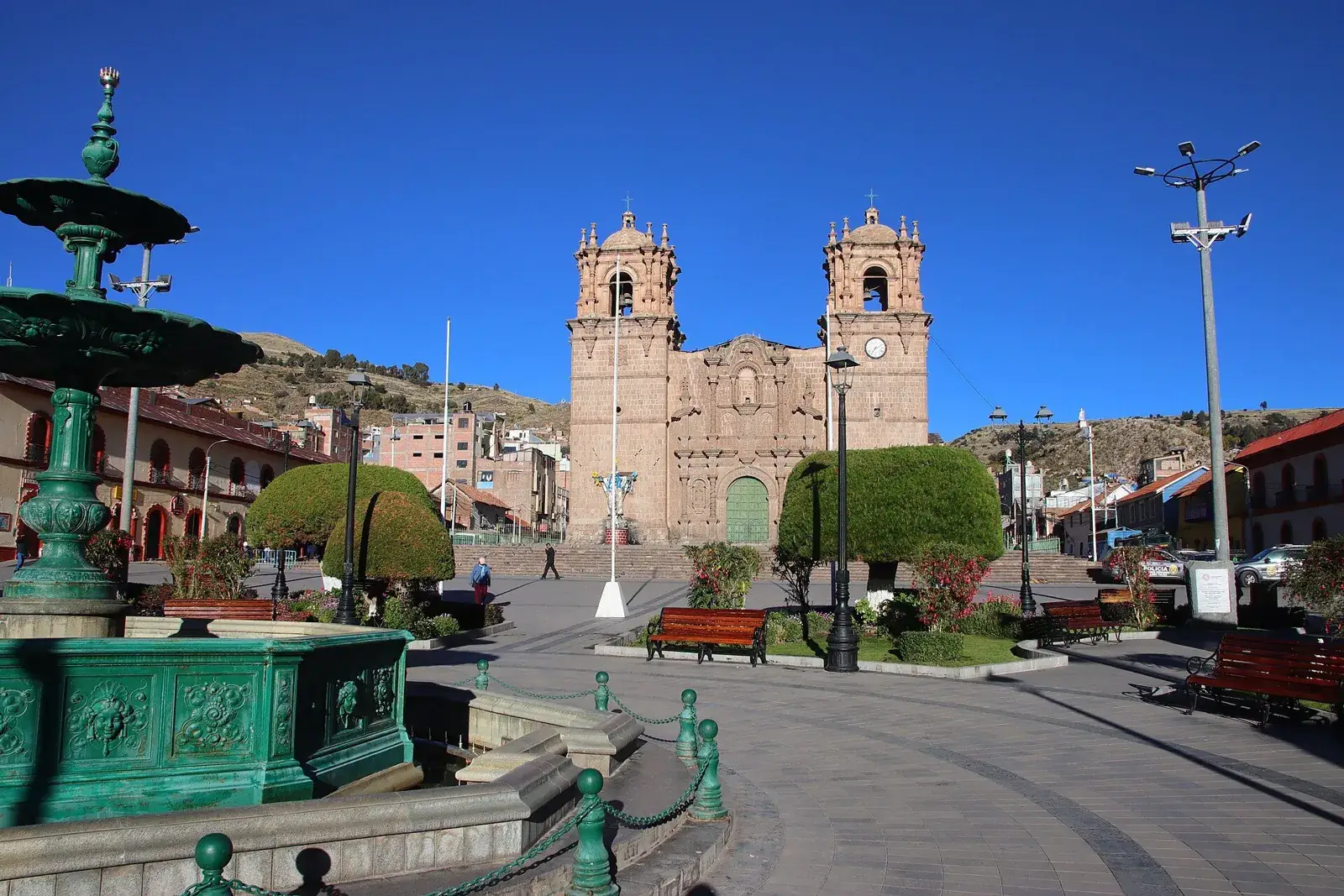
The main things to do around Puno are a boat trip on Lake Titicaca to the Uros floating islands and Taquile, a half-day visit to the Sillustani burial towers, a walk around the plaza and the Jirón Lima, and a climb to a viewpoint above town. One to two days is enough. Puno is also one of Peru's great folklore centres.
At 3,800 m, take things slowly and carry warm layers, because the sun is strong and the nights are cold.
On the lake: the Uros and Taquile
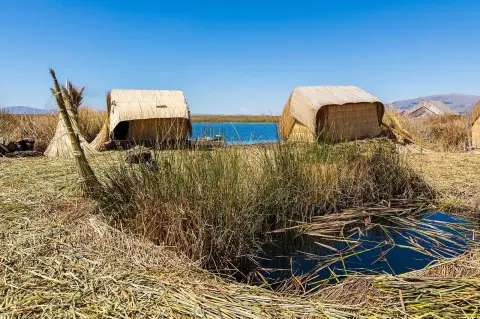
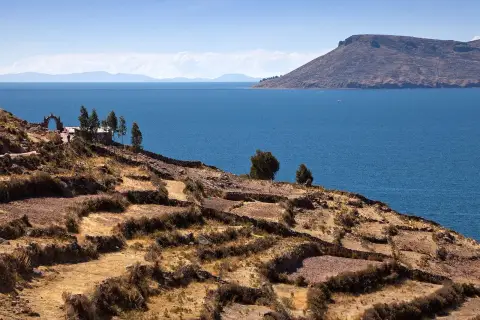
Most visitors take a boat from the port to the Uros floating islands, a group of man-made islands built from layers of reeds, where families live and sell crafts. The visit is short and commercial, and it is best treated as an introduction to a unique way of life rather than a remote encounter. Further out, Taquile is a larger island with stone paths, terraced slopes and a long textile tradition, in which men knit and the weavings are recognised internationally.
Half-day trips usually cover the Uros only, while a full day or an overnight stay adds Taquile and possibly Amantaní. Boats are slow, so the journey is part of the experience.
The wider area, including options for longer stays on the water, is described in Lake Titicaca. Bring a warm layer, a windproof jacket and sun protection, since the open deck is exposed and the sun at this height is intense.
Sillustani and the Altiplano
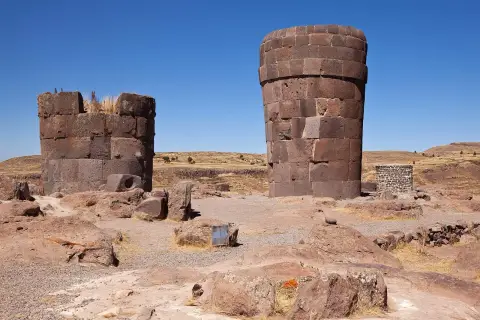
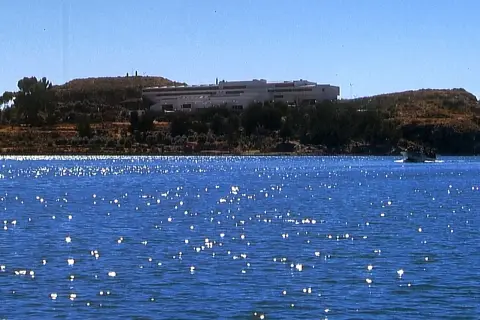
Sillustani, on a lake peninsula about 30 kilometres from Puno, is known for its tall burial towers, called chullpas, built by pre-Inca and Inca-era peoples. The setting by Lake Umayo is as striking as the stonework. A trip usually takes a half day and is best in the afternoon, when the light on the towers is warmest.
The journey crosses open Altiplano, with grazing llamas and alpacas, adobe farms and wide skies. If your guide stops at a family home on the way, treat it as an opportunity to see rural life, and buy crafts only if you want them.
Afternoon winds can be strong at the site, so carry a layer even if the morning was warm. Many travellers combine Sillustani with an early morning boat trip, using the same day for both the water and the land.
Tours and activities
Bookable online, chosen for their traveller reviews.
-
★ Top rated From €23 per person
-
★ Top rated From €23 per person
-
Day trip From €41 per person
-
From €8 per person
In town
Puno's plaza and cathedral are plain from the outside but worth a short visit. Jirón Lima, the pedestrian street, links the plaza to the lake and has cafés and craft stalls. For a view, walk or take a taxi up to the Mirador Kuntur Wasi, a hilltop lookout with a condor statue and a panorama over the town and the lake.
Several small museums cover the region's history, textiles and the Spanish colonial period, and they are a good option if the weather is cold or wet.
Evenings are best spent in a warm restaurant with local dishes such as trout from the lake. The climb to the lookout is steep, and the air is thin, so go slowly or take a taxi, and carry a warm layer for the descent after dark. For ideas on where to sleep close to all of this, see where to stay in Puno.
Music, dance and festivals
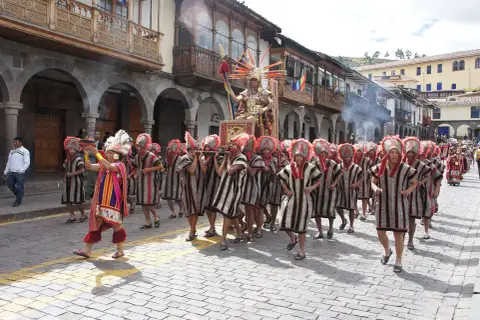
Puno is known as the folklore capital of Peru, and the dances and costumes of the Altiplano are central to local life. The biggest celebration is the Virgen de la Candelaria festival each February, with days of parades, bands and dance competitions. Outside the festival, you can often see dance performances in restaurants and cultural venues, and hear pan pipes in the streets.
If you plan to visit during the festival, book rooms, buses and boat trips far ahead and expect crowds, closed streets and a very different atmosphere. The festivals and holidays calendar lists the main dates for planning, and local shops and offices may close on public holidays.
Arriving, leaving and combining stops
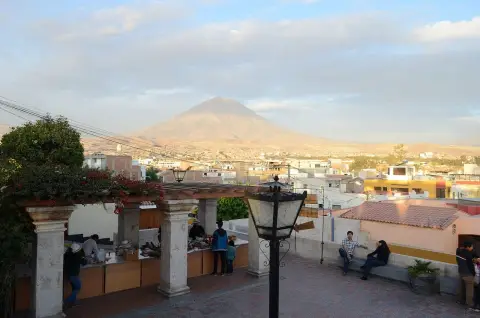
Most visitors reach Puno from Cusco, a long day by bus or a scenic tourist train, or from Arequipa. To compare the choices, see Cusco to Puno, and Puno or Arequipa helps you decide how to split time if you cannot fit both. From Puno, travellers continue overland to Bolivia, and the Peru and Bolivia itinerary shows how to add the crossing to a longer trip.
Because of the altitude and the cold, arrive with a margin. A night in a lower town before Puno, such as in the Sacred Valley or Arequipa, makes the first night easier.
Weather and what to pack
The dry season, roughly May to September, brings clear days and very cold nights, while the wetter months bring afternoon showers and a little more warmth. At any time of year, plan for strong sun and cold wind on the water, so pack layers, a hat, gloves, sun cream and a waterproof shell. To cope with the first day, see altitude sickness.
Sunglasses matter on the lake, where the glare is strong, and a head torch helps if you are planning an overnight on one of the islands.
Frequently asked questions
How many days do I need in Puno?
One full day for the Uros and Taquile, and a half day for Sillustani, so one to two days.
Is a visit to the Uros islands authentic?
It is a working community that depends on tourism, so expect a presentation of their life and craft sales rather than a quiet encounter.
When is the best time to visit?
The dry season, roughly May to September, has clear days but very cold nights.
Is it worth staying a night on Taquile?
It can be memorable if you are comfortable with basic rooms and cold nights, and it gives time to walk the paths without the day-trip crowds. For most travellers a day trip is enough.
Can I do Puno as a day trip from Cusco?
Not sensibly. The journey is long, and you would see little of the lake. Plan at least one night.
Is Puno safe to walk around?
The centre is generally comfortable by day. Take care with bags in busy areas, and use a taxi at night, especially on steep, unlit streets.
What should I eat in Puno?
Lake trout, quinoa soup and other highland dishes are common. Take care with water and ice, as for anywhere in Peru.