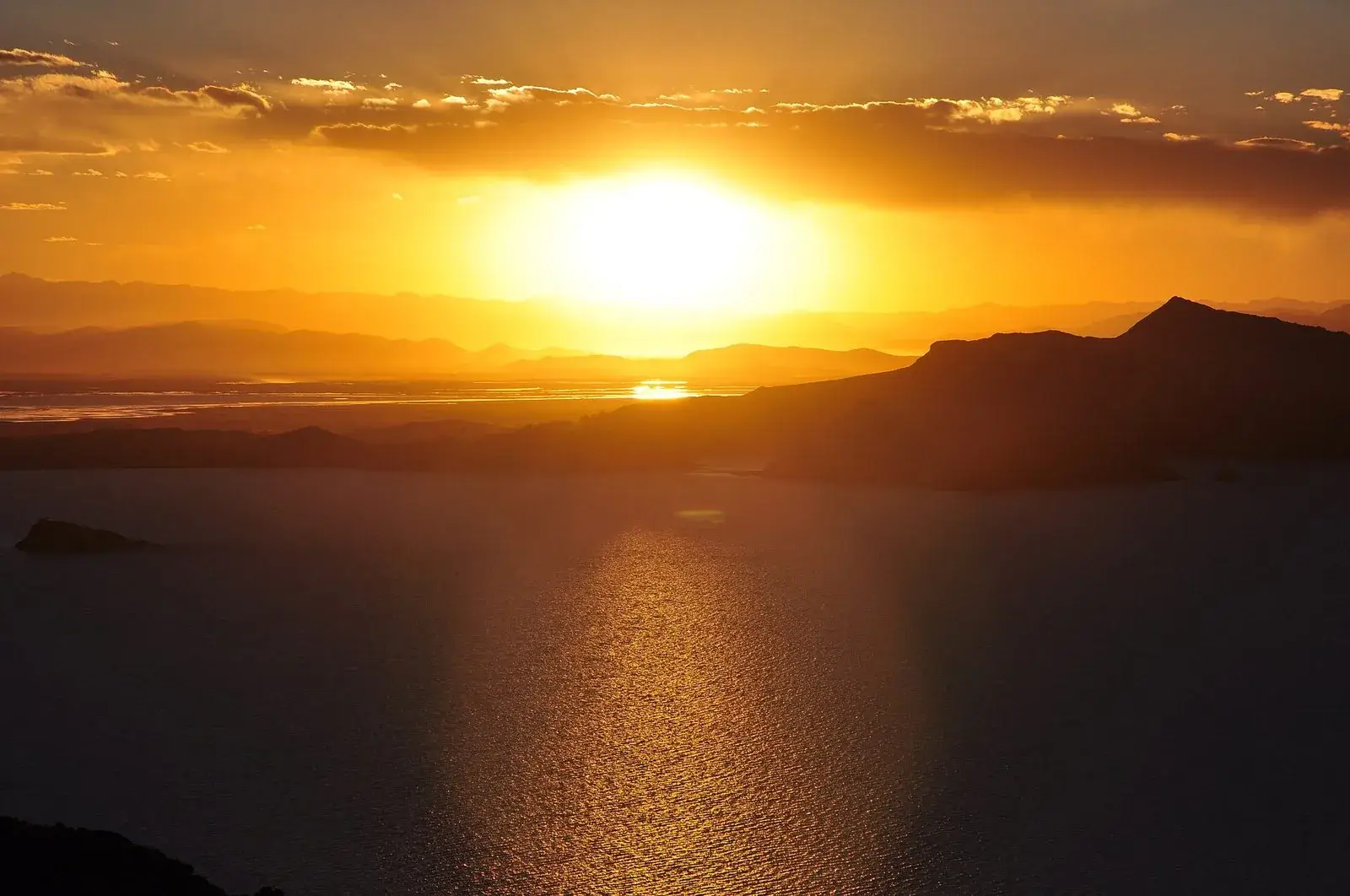
The natural Peru and Bolivia route runs one way: Lima, Cusco and Machu Picchu, then Puno on Lake Titicaca, across the border to Copacabana and on to La Paz. It takes about two to three weeks, and almost the whole second half is above 3,500 m.
Treat it as a one-way trip, plan the border crossing in daylight and check entry requirements for your nationality beforehand.
Why the route runs one way
Lake Titicaca is shared between Peru and Bolivia, and the land crossing near the lake is the most travelled link between the two countries. The route therefore flows along the lake: from Cusco to Puno, across the border and on to Copacabana and La Paz. Starting in La Paz and travelling the other way is just as good, but the altitude profile is less gentle, because you begin very high.
Because the trip ends in a different country, you need an international flight home from La Paz or a neighbouring city, or a return to Peru. Look at flight prices and the cost of a one-way trip before choosing. For the crossing, see the Bolivia border, and the 21-day route shows how the same lake section looks on a Peru-only trip.
Before you book: documents and the flight home
Settle the entry rules for both countries before you buy anything. Whether you need a visa for Bolivia depends on your passport, and the rules change, so see entry requirements. Carry the passport in a place you can reach, because it is checked at both posts, and keep a printed copy of onward travel in case the officer asks.
The flight home is the next decision. A one-way flight from La Paz or a nearby city can cost more than a return to Lima, and an open-jaw ticket, arriving in Lima and departing from La Paz, is often the simplest if the airline allows it. Book the Peruvian part first: the Machu Picchu ticket and train, then the flights, then the border leg, whose transport can usually be arranged a day or two ahead.
Days 1 to 8: Lima, Cusco and Machu Picchu
Begin as the 7-day route does: a night in Lima, a flight to Cusco, two nights in the Sacred Valley, a night near Machu Picchu and two days in Cusco. This is the gentlest way to build up altitude before the long, high second half of the trip. If you have extra days, add a few for a trek or Arequipa.
Day eight is the last in Cusco, so use it for the part of the city you have not yet seen and keep the evening for packing. See Cusco for the sights. See sleeping at 3,400 m to understand what to expect from the nights, which matter more in the second half of this route than in the first.
Days 9 to 11: Cusco to Puno and the lake
Travel from Cusco to Puno by the sightseeing day bus, by train where it operates, or by a short flight. Puno lies at roughly 3,800 m, higher than Cusco. Spend two nights, using one day for the Uros islands, Taquile or Sillustani. Keep the pace slow, because the first night at this height is the one many travellers find hardest.
To compare the three ways, see Cusco to Puno, and for where to stay and eat, Puno. The lake boat day is the better use of the first morning, since the afternoon wind on the water is cold. If you feel unwell on arrival, skip the boat and rest; the lake will still be there tomorrow.
Days 12 to 14: the border and Copacabana
Take a bus or a shared transfer from Puno to the border, about three hours depending on traffic and the formalities. You leave Peru at the exit post and enter Bolivia at the entry post, which are close to each other, and then continue to Copacabana on the lake shore. Do the crossing in daylight, carry your passport, any required visa or documents and small change, and check that the transport company covers the whole journey, including the border.
Copacabana is a good place for a rest day. From here, boats go to the Isla del Sol, which is worth a night with simple accommodation. For how the Peruvian and Bolivian sides of Lake Titicaca differ, and for those who want to see both, Taquile island is a useful comparison.
Days 15 to 17: La Paz
From Copacabana, buses reach La Paz in several hours, with a crossing of the lake narrows by ferry. La Paz sits in a deep canyon and is higher than any city on the Peruvian side. Give it two nights, with cable-car rides, markets and viewpoints. After that, you can continue to the Uyuni salt flats, fly home, or return to Peru by the same road if your ticket requires it.
Take the first day easily, because the airport and the upper districts are far higher than the centre, and the first hours often bring a headache. For general information to discuss with a doctor, see altitude sickness, and for how to return if your plan changes, the Peru and Bolivia crossing.
Money, language and what changes across the border
Bolivia has its own currency, so change a small amount before the crossing or withdraw at an ATM in Copacabana, but keep some US dollars or Peruvian soles for emergencies and for the first transport. Prices are generally lower than in the tourist parts of Peru, though they vary by place and season. The exchange and card situation has changed in recent years.
Spanish is the common language on both sides, and Aymara and Quechua are widely spoken near the lake. Etiquette is similar, with a greeting before a question and a polite tone in markets. Time zones and holidays differ, so plan bus and ferry schedules against the right date, and keep a margin for the border, which can be slow on public holidays.
Frequently asked questions
Do I need a visa for Bolivia?
It depends on your nationality, and the rules change. See the entry requirements for your passport well before travelling.
Is it better to go Peru to Bolivia or the reverse?
Peru to Bolivia is gentler, because you adapt in the Sacred Valley and Cusco first. The reverse starts very high.
Can I cross the border in a day from Puno?
Yes. A direct bus or transfer from Puno to Copacabana is possible in a day, but leave early and allow for delays.
How long should I spend in Bolivia on this route?
Three to five nights covers Copacabana, the Isla del Sol and La Paz. With more time, add the salt flats of Uyuni, which need at least two or three extra days.
What currency do I need in Bolivia?
Bolivian bolivianos. Exchange conditions change, so carry a small reserve of another major currency.
Is the border crossing safe?
It is a well-used route. Use a reputable company, cross in daylight, keep your documents on you and ignore anyone who offers to change money at a bad rate or to speed up the process for a fee.
Can I fly from Cusco to La Paz instead?
A flight is possible, but it is usually through Lima or another hub and costs more than the land route. The land route is the one that shows the lake.