For most travellers, the tourist bus is the best option: it takes roughly 8 to 10 hours with stops, but the stops at Andahuaylillas, Raqchi and the La Raya pass are part of the point. A regular bus makes the 390 km in about 6 to 8 hours, the tourist train is a full day of scenery, and flying is slow and costly. All routes cross a pass at about 4,300 m.
The road and the landscape
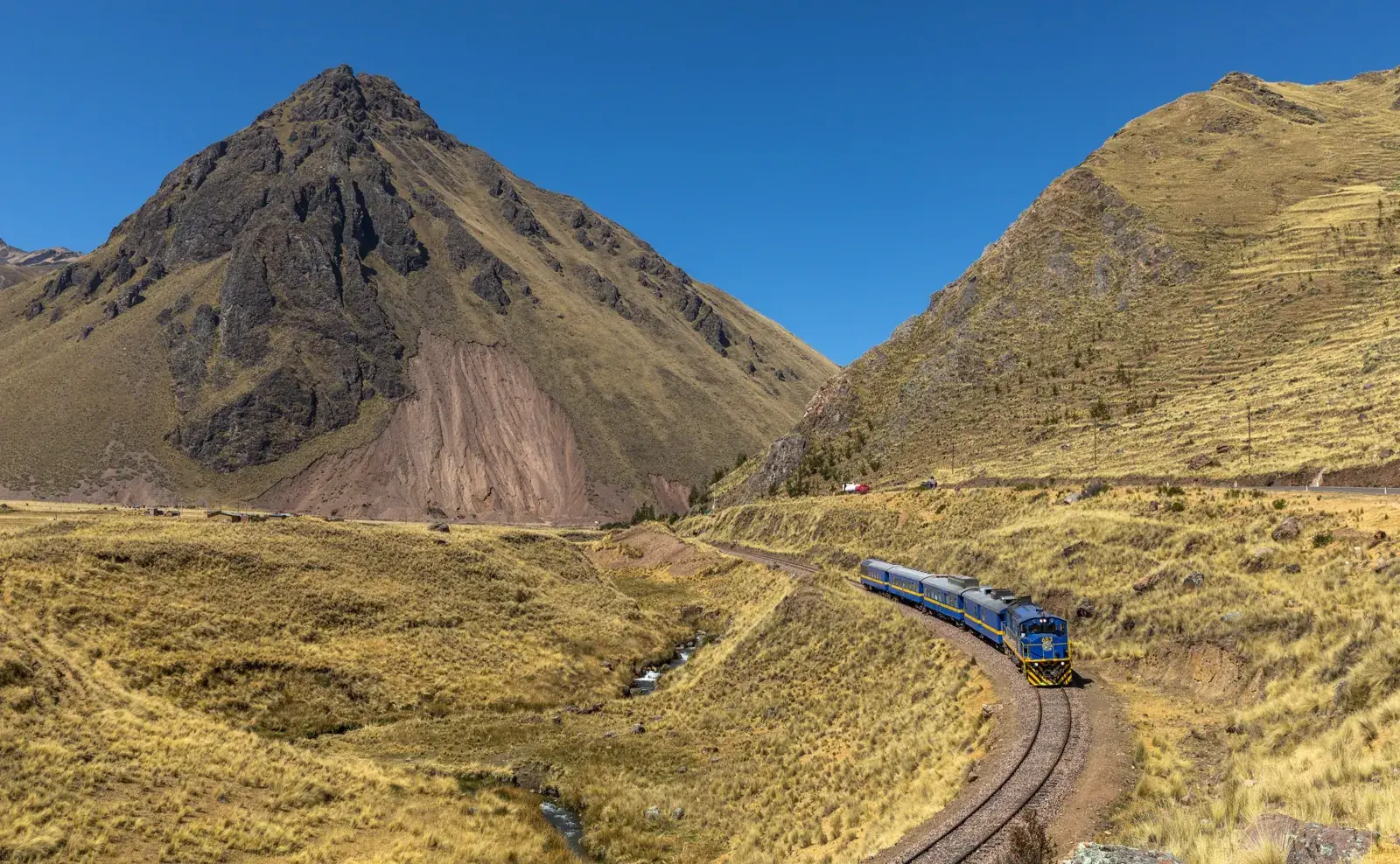
The road runs south-east from Cusco through the Vilcanota valley, climbing steadily to La Raya, the watershed pass at about 4,300 m, then crossing the high plateau, the altiplano, before reaching Juliaca and Puno on Lake Titicaca. The total is about 390 km. Along the way you pass the Andahuaylillas church, the Inca temple of Raqchi and herds of llamas and alpacas, with snow-topped peaks near the pass. It is one of the finest overland journeys in Peru.
Tourist bus
Tourist buses leave in the morning with a guide and stop at several sights, with lunch included in many cases. The day lasts around 8 to 10 hours, and they cost more than a regular bus, though much less than the train. The stops allow you to see Andahuaylillas, Raqchi and La Raya. The downsides are limited time at each stop and a pace you do not control. Check what is included before booking.
Entrance fees to the sights are sometimes extra, and the order of the stops can change. Ask the seller what is covered, and whether the bus continues to your hotel in Puno or stops at the terminal. A seat on the correct side of the bus helps for views near the pass.
Regular bus, train and flight
Ordinary buses make the journey in roughly 6 to 8 hours, without sightseeing stops. They are the cheapest and fastest road option, with day and night services. The tourist train runs on set days, takes about a full day, and offers lunch, panoramic carriages and a stop at La Raya, at a much higher price. It is a trip in itself rather than just transport.
Flying is rarely worth it. Cusco and Puno have no direct link, so you would connect in Lima to reach Juliaca. This takes longer than the bus, so only consider it if you must. See domestic flights for the network.
Choosing between the four
If you want the scenery and the history, take the tourist bus, which turns the transfer into a day of sightseeing and gets you to Puno in the late afternoon. If you want to arrive early and have a free afternoon, take a regular bus in the morning. If the journey itself is your idea of a holiday, and the budget allows, the train is the comfortable choice.
Compare the options honestly in terms of time. A regular bus gives you more of Puno; the tourist bus gives you more of the road. To choose between companies, see long-distance buses. See how much time you really lose travelling for the day in context.
What the tourist stops offer
Andahuaylillas is known for its church, often described as a richly decorated colonial building. Raqchi is an Inca site with a large temple wall and storehouses, and a place where local craft is sold. La Raya is a high pass with a market and views, a short stop for photographs and the thin air. Together they give a cross-section of the southern highlands.
If you travel by regular bus you miss these stops, but you can visit some on a separate day trip from Cusco. Check Cusco for options, and plan the tourist bus if you want them on the way.
Arriving and moving on
Both buses and trains arrive in Puno, from where taxis serve the lakeside hotels. Take the first evening slowly. See Puno for the town. See Lake Titicaca for the island trips that most people book for the next morning.
From Puno you can continue to Bolivia, see crossing to Bolivia, or return north-west to Arequipa. If you are going the other way, from Puno back to Cusco, the same options apply in reverse, and many travellers choose a different mode to see something new.
Frequently asked questions
Which is the best way from Cusco to Puno?
The tourist bus for scenery and stops, a regular bus for speed and cost, and the train for the experience. Flying is rarely sensible.
Is it safe to travel by night?
Daytime is better for the views and for road safety on the high plateau. Night buses run, but fog and cold are factors.
How high is La Raya?
About 4,300 m, the high point between the Cusco and Titicaca basins.
Can I book the tourist bus in advance?
Yes, through agencies in Cusco and sometimes online. Compare what is included, such as lunch, entrance fees and hotel drop-off, before paying.
Are there fewer services in the rainy season?
Services run all year, but landslides and weather can cause delays. Leave a buffer if you have a connection the next day.
Is the train worth the price?
If you value the journey, the lounge car and the scenery, yes. If you only need to get to Puno, a bus is far cheaper and quicker. See trains for context.
Can I go from Cusco to Arequipa instead?
Yes, by bus or by flight through Lima. The overland journey is long, as Cusco to Arequipa explains.