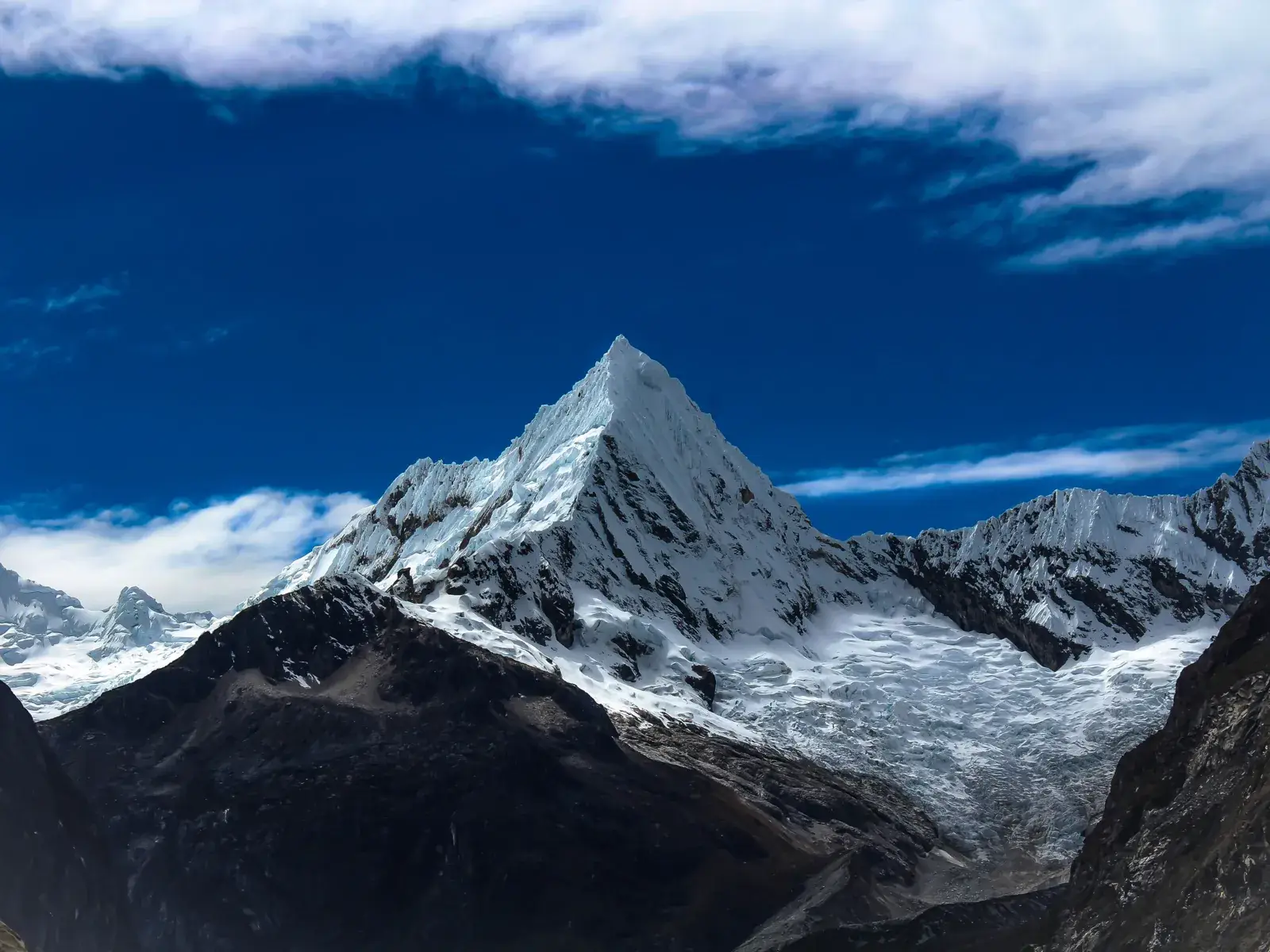
The Cordillera Blanca is a hiking destination, not a sightseeing one. Plan at least four to five days around Huaraz, with acclimatisation days first, and go in the dry season. You can see the range from the valley in a day trip, but its real reward is on the trails to the lakes, passes and glacier viewpoints. Speak to a doctor before planning high-altitude hikes.
In this section
-
 Attraction
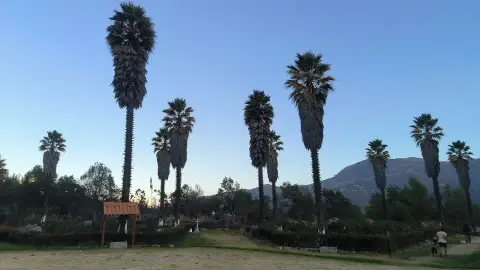
Yungay Memorial
The buried site of old Yungay, now a national cemetery and memorial in the Callejón de Huaylas, visited on the way to the Llanganuco lakes.
The range
The Cordillera Blanca forms a long white wall on the east side of the Callejón de Huaylas valley. It contains Huascarán, the highest mountain in Peru, and many other peaks over 6,000 m, as well as the largest concentration of tropical glaciers in the world. Much of it is protected as Huascarán National Park, which is a UNESCO biosphere reserve and World Heritage site, and a park fee applies to many trails.
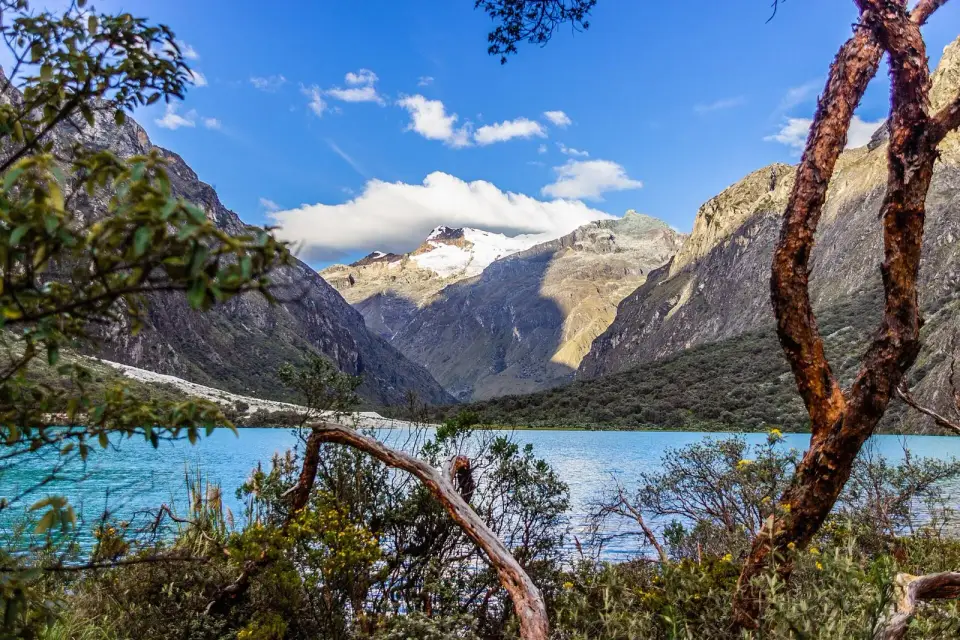
Photographers and casual visitors alike are drawn by the scale: from Huaraz the whole skyline of snow peaks fills the horizon on a clear morning, and a short drive brings you to lakes where the peaks are reflected in still water. You do not need to be a mountaineer to enjoy the range, but you do need to respect it. Glaciers here are retreating, and the lakes beneath them are a reminder of change. Some routes and viewpoints change over time as ice and rock move. The range is also a source of water for the valley below, which gives its glaciers and lakes importance beyond the scenery. Most visitors base themselves in Huaraz, which has the agencies, gear shops and transport to reach the trailheads.
Day hikes
Laguna Churup is a short, steep acclimatisation walk with a final scramble. Laguna 69 is the best-known day hike, a long walk to a deep-blue lake under a glacier. Laguna Paron, reached by road with a short walk, is a large turquoise lake framed by peaks. The Llanganuco lakes are easy roadside viewpoints. The Pastoruri glacier area is a high-altitude excursion that is a short walk from the road but affected by climate change.
Choose day hikes in an order that builds up your body. Start low, move to a moderate outing and keep the hardest day for when you have been in the mountains for several days. Things to do in Huaraz offers more outings, including lower-effort options for rest days. Rest days matter as much as the hikes themselves, because the body adapts to altitude while it recovers.
Tours and activities
Bookable online, chosen for their traveller reviews.
-
Day trip From €29 per person
Cordillera Blanca
Laguna 69 Hike from Huaraz via Llanganuco Valley
Multi-day treks
Santa Cruz is the classic four-day trek through valleys and over a high pass, with campsites and views of well-known peaks. It is usually done with an agency, which supplies guides, arrieros (muleteers) and equipment. The Huayhuash circuit lies in a neighbouring range and is longer and more remote. Both need good fitness, proper acclimatisation and reliable operators. Local access arrangements and community fees can change, so check them with your agency.
Independent trekking is possible on some routes, but the combination of altitude, weather and route-finding makes a guide worthwhile for most visitors. Weigh the benefits of local knowledge, safety and shared logistics before deciding. How to choose a trekking agency gives questions to ask.
Acclimatising sensibly
The central rule is to climb gradually. Spend the first days in Huaraz at around 3,000 m, take short walks and drink water. Add a moderate hike to between 3,500 and 4,000 m before attempting anything higher. Do not drink alcohol on the first nights and sleep lower than the highest point you reached if you can.
If you develop a severe headache, confusion, vomiting or difficulty breathing at rest, descend and seek medical help. Trek acclimatisation covers a sensible build-up, and altitude sickness explains the symptoms. Neither replaces medical advice, so speak to a doctor or travel clinic before the trip, particularly if you have an existing condition.
Gear and weather
Temperatures swing from strong sun at midday to well below freezing at night above 4,000 m. Layers, a windproof shell, a warm hat and gloves, sun protection and robust boots are essential. A sleeping bag rated for low temperatures is needed on multi-day treks, and rental gear should be checked before you leave town.
For the essentials, see trekking gear. Mountain weather changes fast, and afternoon cloud and storms are common, so start early and plan to be off exposed ground by early afternoon. Carry a waterproof layer even on days that begin clear, and keep your phone charged as a safety measure.
Seasons
The dry season, roughly May to September, is the main trekking window, with cold nights and clear mornings. The wet season, roughly November to March, brings snow at height, mud and cloud, and reduces visibility and safety on high routes. Even in the dry season, afternoon weather can turn quickly.
June to August is the most popular period, so popular campsites and agencies can be busy and good guides are booked up. The shoulder months, particularly May and September, often combine decent weather with fewer people. Rain and snow can also close mountain roads and make trails slippery, so travel insurance that covers delays and trekking at altitude is sensible. Whatever the season, ask your agency about road and trail conditions before you commit to a route.
Map
Weather in Cordillera Blanca
Forecast: MET Norway
Frequently asked questions
Do I need a guide?
For day trips with transport, many people book through an agency. For multi-day treks and high routes, a licensed guide is strongly recommended.
How many days do I need?
Four to five days around Huaraz covers acclimatisation and a couple of hikes. A full trek needs a week or more.
Is the Cordillera Blanca suitable for beginners?
Some hikes are short and easy, but the altitude makes everything harder. Start small and build up.
What is the highest mountain in the Cordillera Blanca?
Huascarán, at about 6,768 m, is the highest in Peru and the highest in the tropics. Climbing it is a major expedition, but viewing it from lakes and viewpoints is straightforward.
Is there an entrance fee for the national park?
Yes, a fee applies on many trails, and the amount and the way it is collected change from time to time. Ask your agency or the park offices for current details.
Can I do Laguna 69 without a guide?
Many people do it with an agency for the transport, and the trail is well marked. The altitude and weather are the main risks, so go prepared. See Laguna 69 for more.
What should I bring for a multi-day trek?
Warm layers, a good sleeping bag, boots, sun protection, a head torch and your own medication. Many agencies supply tents and food. Ask what is included, and check the gear.
Are the glaciers disappearing?
They are retreating, as in most tropical mountain regions, and some features that were once easy to reach have changed. Treat photographs from older guidebooks with caution.